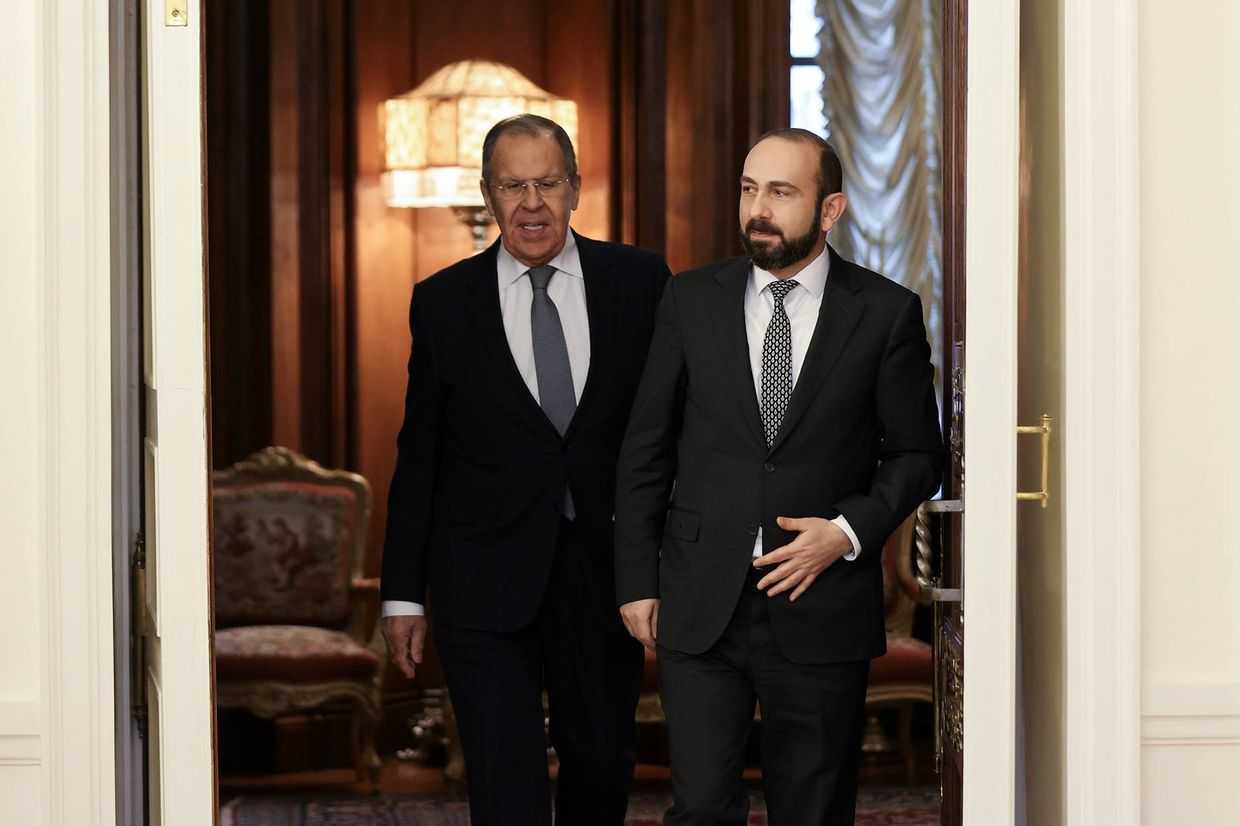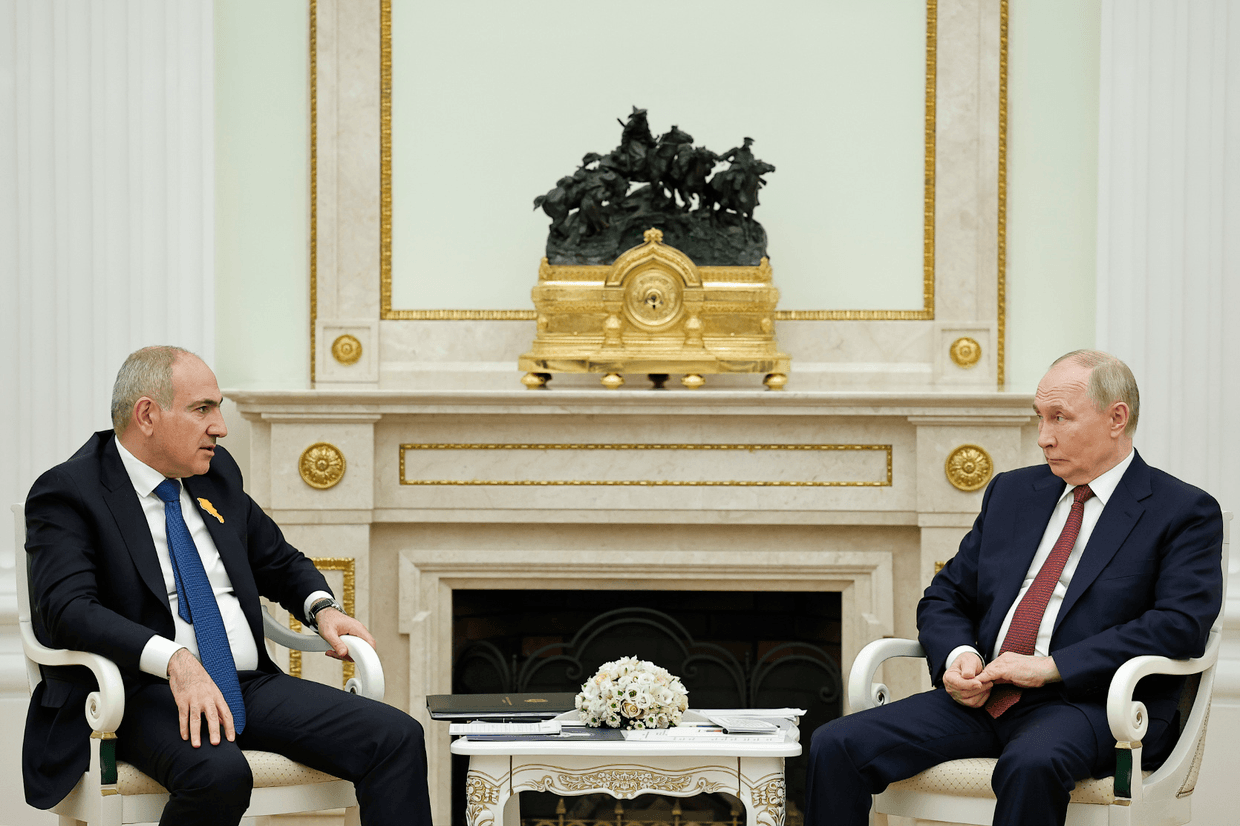
Armenian Prime Minister Nikol Pashinyan met with Russian President Vladimir Putin in Moscow on Wednesday. The sides discussed bilateral issues, as well as Armenia’s relations and ongoing projects with the EU and the US. Putin again manipulated the Collective Security Treaty Organisation (CSTO)’s inaction against the Azerbaijani attack on Armenia in 2022.
The two leaders made lengthy televised remarks, which in total lasted around 20 minutes.
Both parties praised bilateral relations, with Putin calling them ‘special’ and formed ‘over centuries’, and Pashinyan assessed them as ‘very deep, very important for us’.
Putin also praised their economic relations saying that they were ‘developing at a good pace’. He compared Armenia’s trade turnover with that of Azerbaijan, saying that it was $4.9. billion, unlike Armenia, which complied in 2025, it was $6.4 billion.
However, this was a significant drop from the 2024 figure, which amounted to $11 billion. While Russia has attributed the trade decline with Armenia’s warming relations with the EU, economists have suggested that a sharp decline in Armenia’s re-exports of Russian gold was behind the drop.
 Arshaluys Barseghyan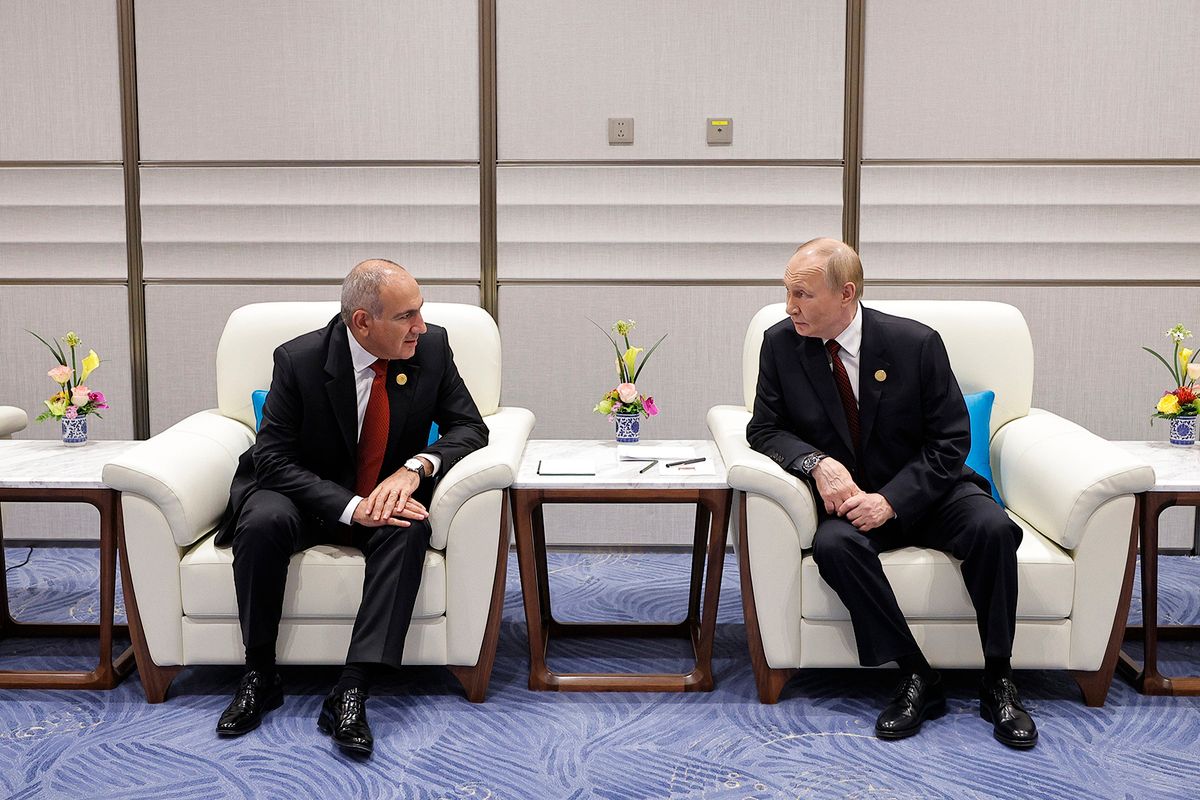
Following his meeting, Pashinyan assessed the visit as ‘very successful’ in a weekly press conference on Thursday.
‘We have reached concrete agreements in several areas; in fact, we have secured specific agreements across our entire agenda, from culture to military-technical cooperation’, Pashinyan said.
However, following the meeting, Russian Deputy Prime Minister Aleksei Overchuk accused Armenia of coming ‘very close to the point where we will have to restructure our economic relations with this country’.
As Pashinyan arrived in Moscow, a protest was held against him near the Armenian Embassy in Moscow, while at the hotel, a man approached Pashinyan, requesting that he pose with his child for a photo so that they would always remember who ‘handed over’ Nagorno-Karabakh.
EU vs EAEU
During the talks, Putin stated that Russia views the developing relations between Armenia and the EU with ‘complete calm’. At the same time, Putin underscored the impossibility of being in a customs union with the EU and the Eurasian Economic Union (EAEU).
Arshaluys Barseghyan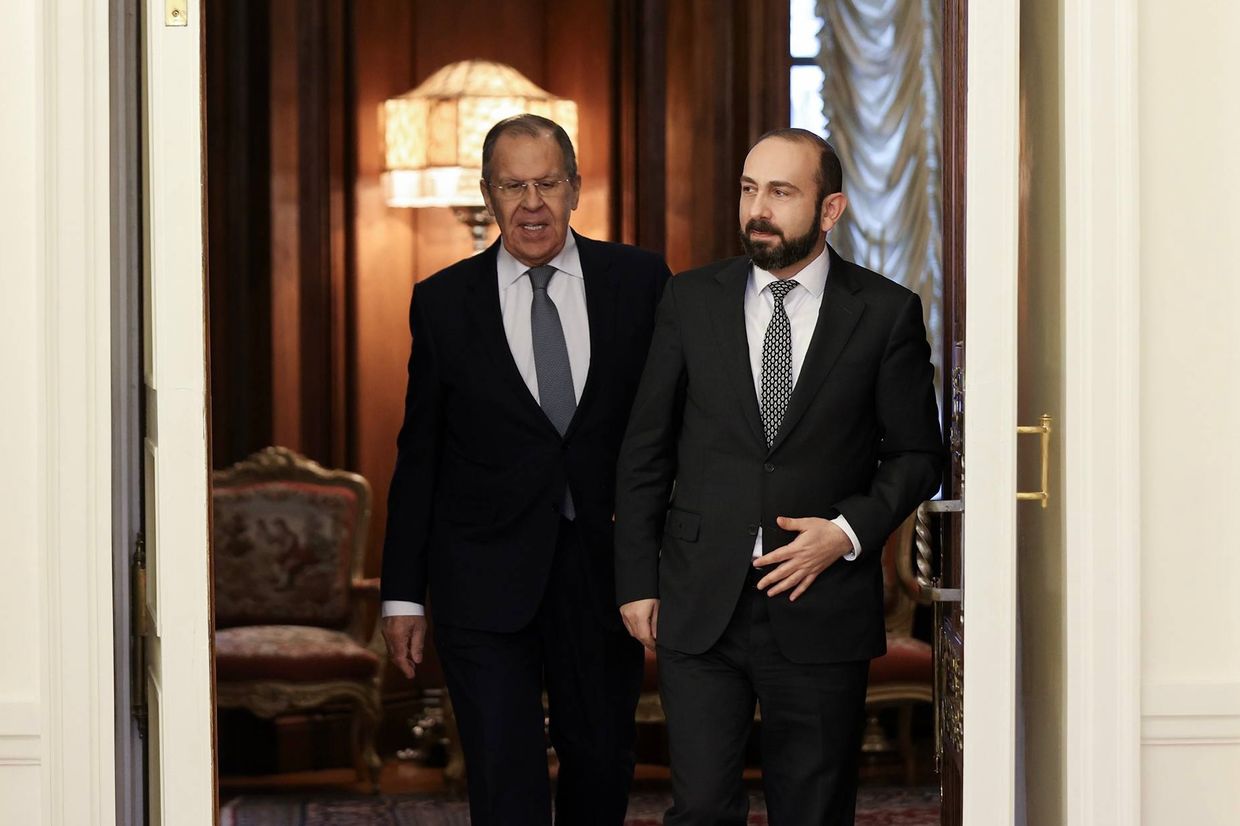
‘It is simply impossible. And the issue is not even political, but purely economic in nature’, Putin said.
In turn, Pashinyan noted that they were aware of the incompatibility, ‘but what we are doing and the agenda that we have are, at least for the moment, compatible’.
‘And as long as there is an opportunity to combine these agendas, we will continue to combine them. And when the processes reach the point where it will be necessary to make a decision, I am sure that we, I mean the citizens of Armenia, will make that decision’, Pashinyan said.
He further assured that in that context, Armenia’s relations with Russia ‘have never been and will never be questioned’.
Putin repeat his manipulation regarding the CSTO’s inaction
Armenia ‘froze’ its membership in the CSTO in February 2024, citing the refusal of the alliance to aid Armenia in the face of Azerbaijani attacks in 2021 and 2022.
However, Putin shifted the blame to Pashinyan’s government’s recognition of Nagorno-Karabakh as part of Azerbaijan in Prague in 2022.
‘The CSTO’s intervention in this process, which has acquired an intra-Azerbaijani nature, was simply absolutely wrong in this matter, related to the reunification of Karabakh, if we consider it part of Azerbaijan’, Putin said.
Putin repeated earlier remarks he had made at the CSTO summit in Kazakhstan in 2024, which Armenia had boycotted, when he claimed that the CSTO had no involvement in the developments in Nagorno-Karabakh and further insisted that ‘there was no aggression against Armenia’.
The statement caused outrage in Armenia at the time. Armenian fact-checkers quickly debunked the claims, proving that Armenia did not ask for help from the CSTO during the Second Nagorno-Karabakh War in 2020, but instead appealed for military assistance during the Azerbaijani attack on Armenia in September 2022.
In his response during Wednesday’s meeting, Pashinyan insisted that in 2022, ‘CSTO mechanisms should have been activated, but they were not activated, and this, of course, led to the situation that we have in relations with the CSTO’.
Arshaluys Barseghyan
Discussion on Karapetyan’s arrest
Putin also appeared to touch on Russian–Armenian tycoon Samvel Karateptyan’s criminal case in the context of Armenia’s upcoming parliamentary elections on 7 June.
He noted that in Armenia there were ‘many political forces that have a pro-Russian position’ and that Russia would like them to ‘be able to participate in this domestic political work during the elections’.
‘Some, I know, are in places of detention, despite the fact that they have Russian passports’, Putin said. He added that they did not intend to interfere in Armenia’s domestic affairs, ‘but we would like them to at least be able to participate in this domestic political process’.
He appeared to be referring to Karapetyan, who has been placed under house arrest since December 2025.
Karapetyan has been charged with calling for a coup following a statement in support of the Armenian Apostolic Church amid the government–Church confrontation that escalated in May 2025.
‘If the politicians fail, then we will participate in our own way in all of this’, Karapetyan said to News.am back in June 2025.
Although Karapetyan has been named the candidate for Prime Minister of his newly formed Strong Armenia party, he is ineligibility for the role according to current legislation.
Pashinyan emphasised Armenia’s democratic nature and civil freedoms in his response, noting that according to Armenian legislation, ‘only those citizens who have exclusively Armenian passports can participate in these elections’.
‘That is, with all due respect, but persons with Russian passports, according to the constitution of the Republic of Armenia, cannot be either a candidate for [MP] or a candidate for Prime Minister. There are no restrictions here’, Pashinyan concluded.
Tigran Grigoryan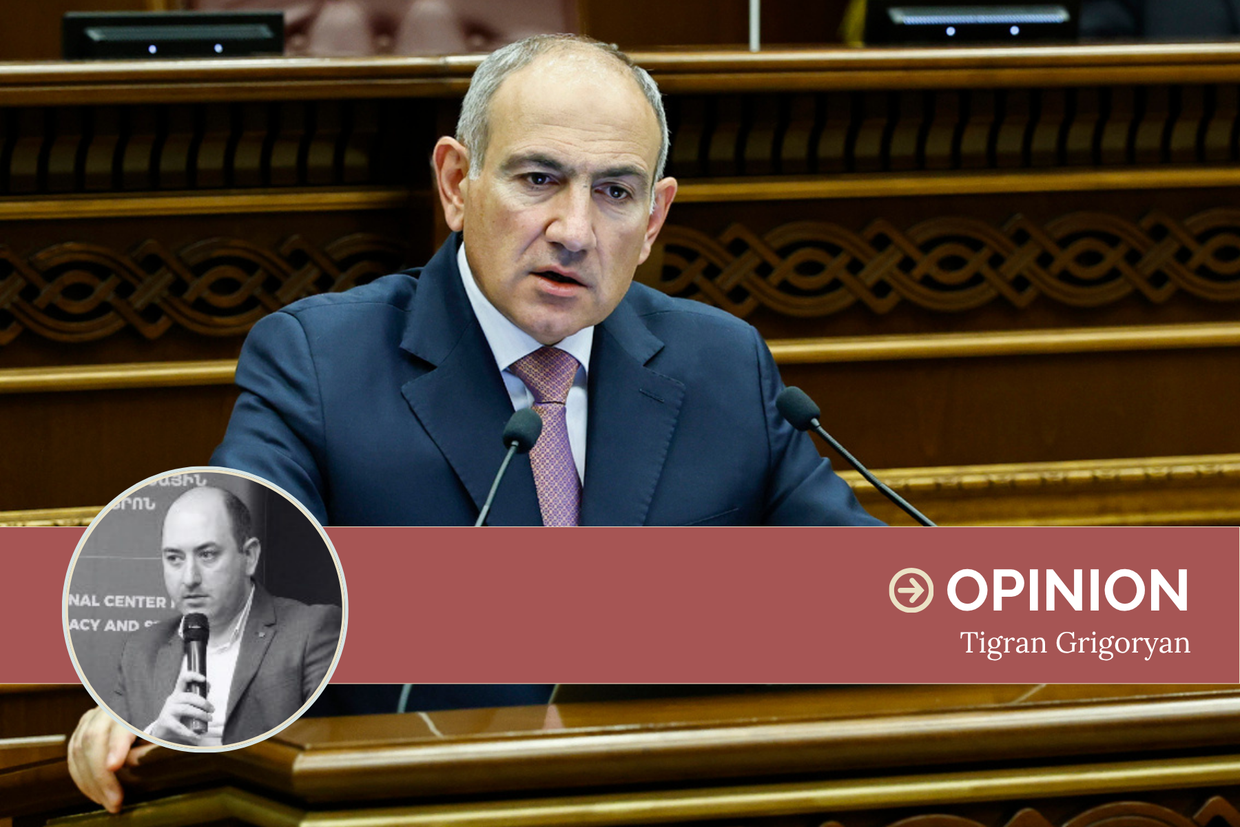
Armenian railway management
In his Thursday press briefing, Pashinyan said that during the meeting with the Russian side, they ‘discussed in detail’ Armenia’s proposal of the transfer of the management rights of Armenia’s railway network — currently held by Russia — to a third party.
In February, Pashinyan said that a country with ‘friendly relations’ with both Russia and Armenia could ‘purchase the concession management rights’ of Armenia’s railways, which are currently under Russian management as part of a 30-year concession agreement signed in 2008.
Pashinyan cited Armenia’s ‘loss of its competitive advantage’ with the railways being managed by Russia.
On Thursday, Pashinyan said that they ‘agreed to continue the discussions’ regarding this issue.
At the same time, he stated that Armenia did not have any intention to unilaterally terminate its railway concession with Moscow.
However, Russian Deputy Prime Minister Overchuk told the Russian state-run media outlet TASS there were ‘no objective reasons for selling’ the South Caucasus Railway concession to a third party.
‘What we are witnessing in the turmoil surrounding the railway concession fits into the political logic of the Armenian leadership’s proclaimed rapprochement with the EU, which is experiencing economic decline and is transforming into a military-political bloc hostile to Russia’, Overchuk stated.
He also claimed that the agreement on the Trump Route, intended to connect Azerbaijan to its exclave of Nakhchivan through Armenia, ‘upset the regional balance’.
Separately, Russian Foreign Ministry spokesperson Maria Zakharova expressed Moscow’s readiness ‘not only to provide expert assessments, but also to cooperate in a number of fields’ with Armenia regarding cyber attacks.
The comment came in response to a statement from Armenian Foreign Minister Ararat Mirzoyan in March.
Responding to a question about the possibility of requesting similar support from Russia to tackle hybrid attacks, as they did from the EU, Mirzoyan noted — ‘If Russia has its own experience in combating hybrid attacks and is ready to share it, we are not against it. Let them share it, and we will see what kind of experience it is’.
Arshaluys Barseghyan