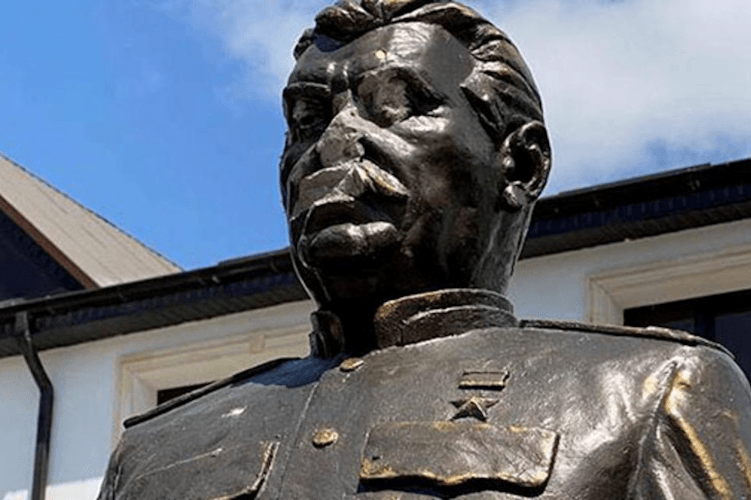
In a survey conducted by the Russian Field research centre, 3% of respondents in the North Caucasusian Federal District have named Soviet dictator Joseph Stalin as an ideal regional leader, with some naming fictional Western characters such as the Hulk, the T-800 from the Terminator, and Rambo as being positive role models for ‘an ideal leader’.
The poll was conducted among 2,100 respondents, focusing on regional leaderships in the North Caucasus — including Daghestan, Chechnya, Kabarda–Balkaria, Karachay–Cherkessia, Ingushetia, North Ossetia, and the Stavropol region.
According to the survey, 61% of the respondents positively assessed the performances of their respective regional leaders.
Chechen Head Ramzan Kadyrov ranked the highest among all leaders in the North Caucasus, with only 3% of respondents giving him a negative rating. The least satisfied region is North Ossetia with 40% of satisfaction with their leader Sergei Menyailyo.
The survey found that the most important quality a leader should have was caring for ordinary people at 42%, topping first in Ingushetia, Chechnya, and then North Ossetia at between 47%–50%. This was followed by integrity and honesty (27%) and strong character (15%). Other characteristics gained significantly smaller shares. For example, the experience of fighting in the full-scale invasion of Ukraine in all regions received 6% of the result.
At the same time democratic mechanisms were less frequently emphasised. The fight against corruption, order, control of officials, and legality only received 1%.
The survey also highlighted the importance of local identity. A majority of respondents (51%) said that the regional head should be from their own republic, while 31% said it was not essential. This opinion was more prominent in Ingushetia (68%) and Chechnya (66%), while for residents of Karachay–Cherkessia the admissibility of a leader from another region was the lowest at 39%.
Religious identity produced more mixed responses. Around 45% of respondents said that the regional leader should be secular, and only 37% expressed the need for a more religious one.
According to the survey, 70% of Chechen respondents found religiosity to be a core value in a leader, followed by Ingushetia at 56%. People aged 18–29 were more likely to view religiosity as an important factor in a leader at 48%, while respondents of older age groups supported secular leadership (51%).
When asked to name a specific example of an ideal leader, most respondents found it difficult to name a specific example (67%) or gave abstract descriptions (20%).
Among those who named specific characters, Stalin was cited by 3% of respondents, making him the most mentioned historical figure in the dataset, leading with 7% in North Ossetia and 4% in Dagestan.
Respondents in Chechnya (4%) and Ingushetia (6%) named fictional Western characters such as the T-800 from Terminator, Rambo, or the Hulk.
The vast majority of the respondents in North Caucasus (78%) also said they are proud to be Russian citizens.
 Elizaveta Chukharova