Armenia, Azerbaijan, and Georgia tread carefully as Iran conflict explodes
The three countries of the South Caucasus have remained on the sidelines amidst the US–Israeli attack on Iran.


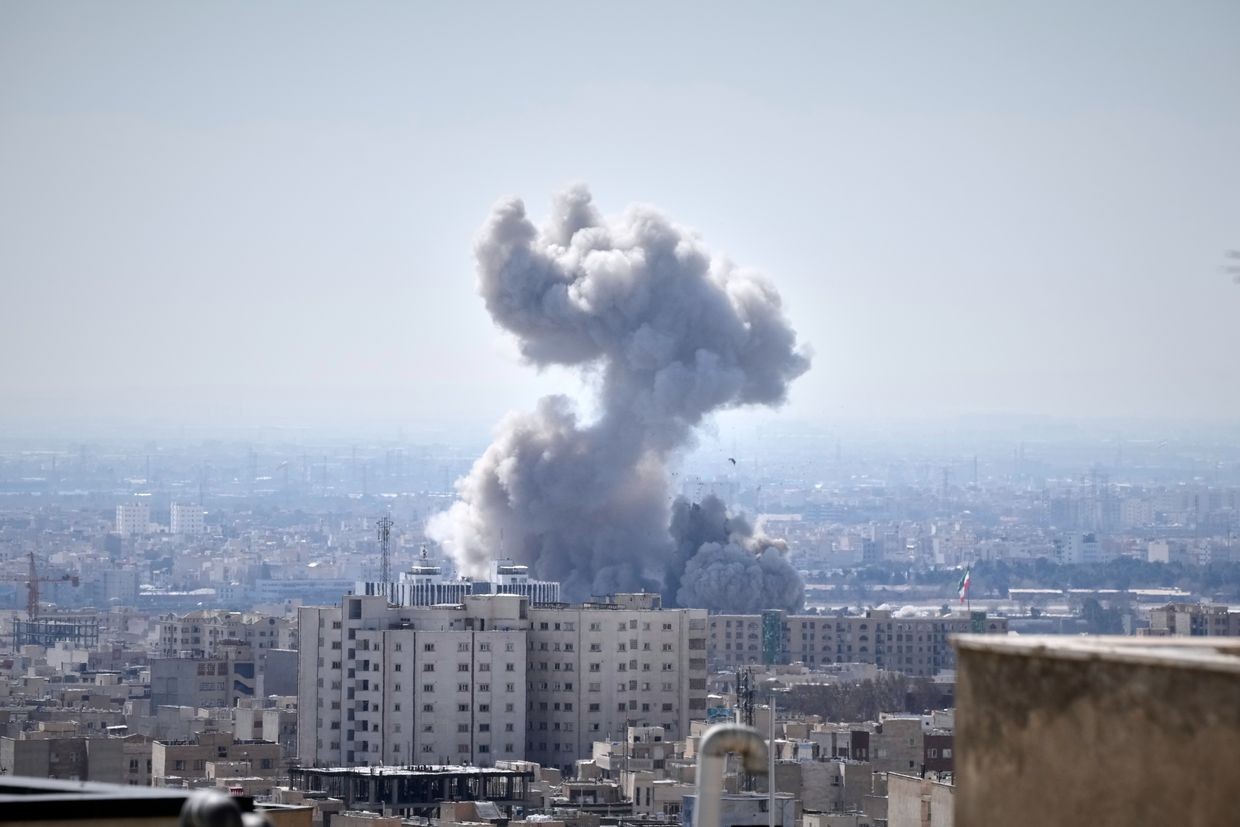
As the US–Israeli war against Iran entered its third day on Monday, drawing in at least 12 different countries in the region, the governments of Armenia, Georgia, and Azerbaijan have continued to hedge their bets.
Issuing vague statements expressing concern, as well as offering condolences, including, in some cases, over Iran’s Supreme Leader Ayatollah Khamenei, who was killed in US-Israeli airstrikes on Saturday.
As one of the three major powers in the region — along with Russia and Turkey — Iran has complex ties with all the nations of the South Caucasus, encompassing trade, defence, energy, and inter-ethnic ties. The rather vague and tepid reactions from Tbilisi, Yerevan, and Baku indicate that despite the pariah status that Iran has achieved in relation to much of the world, the South Caucasus is not willing to fully turn its back on such an important regional player.
Armenia: Pashinyan eats corn as the Middle East goes up in flames
Armenia has good relations with Iran, sharing an open border, unlike with Turkey and Azerbaijan. There is also a modest population of ethnic Armenians in Iran, numbering some 60,000 to 80,000, according to various estimates.
Armenia’s government programme for 2021–2026 describes the bilateral relations as ‘special’, adding that Yerevan is seeking to ‘to further develop’ ties. Despite Armenia fostering closer bonds to the West, including the US, Armenia has continued to maintain its cordial relationship with Iran.
On Saturday — the same day the war began — Prime Minister Nikol Pashinyan, accompanied by Foreign Minister Ararat Mirzoyan and other senior officials, launched an intra-party campaign across Armenia to determine the order of the first 50 candidates on the ruling Civil Contract party’s electoral list through an internal vote.
Throughout the campaign tour, Pashinyan documented the trip via Facebook Live broadcasts. However, two videos showing Pashinyan and Parliamentary Speaker Alen Simonyan eating piroshki and corn during the trip drew the most attention.
The clips generated criticism from opposition figures, who considered the timing of sharing such content to be inappropriate. In response, members of the ruling Civil Contract party argued that the opposition was dissatisfied precisely because Armenia was not engaged in an armed conflict this time, but instead enjoying a period of peace. These conditions, they said, allowed officials to travel and eat piroshki and further called on opponents to appreciate the established peace.
During one of the live broadcasts, Pashinyan invited Mirzoyan to comment on the Middle East developments. However, his remarks were cut short due to technical difficulties.
Separately, in response to the developments, Armenia on Saturday established a working group to assess the conflict’s potential impact on Armenia.
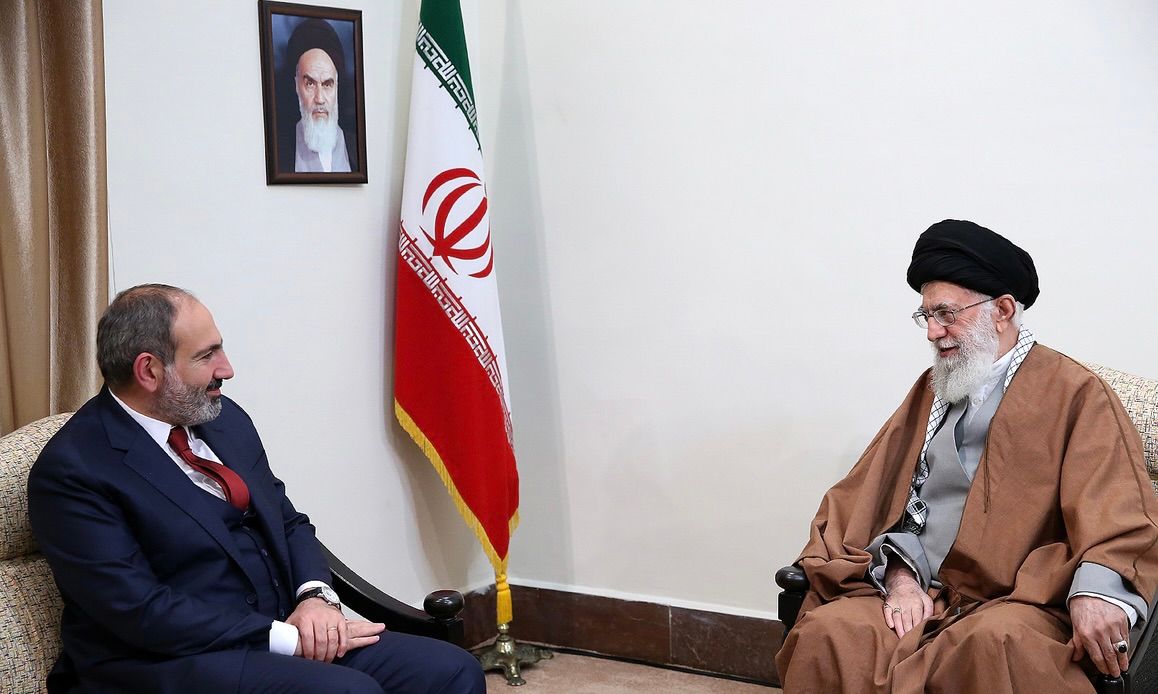
The next day, Pashinyan chaired a Security Council meeting, during which the attendees were briefed about ‘events taking place around’ Iran, as well as the activities of the interdepartmental working group established.
‘The participants of the meeting expressed deep regret over the painful developments, expressed their condolences for the victims, and emphasised the need for the speedy establishment of peace’, the official statement read.
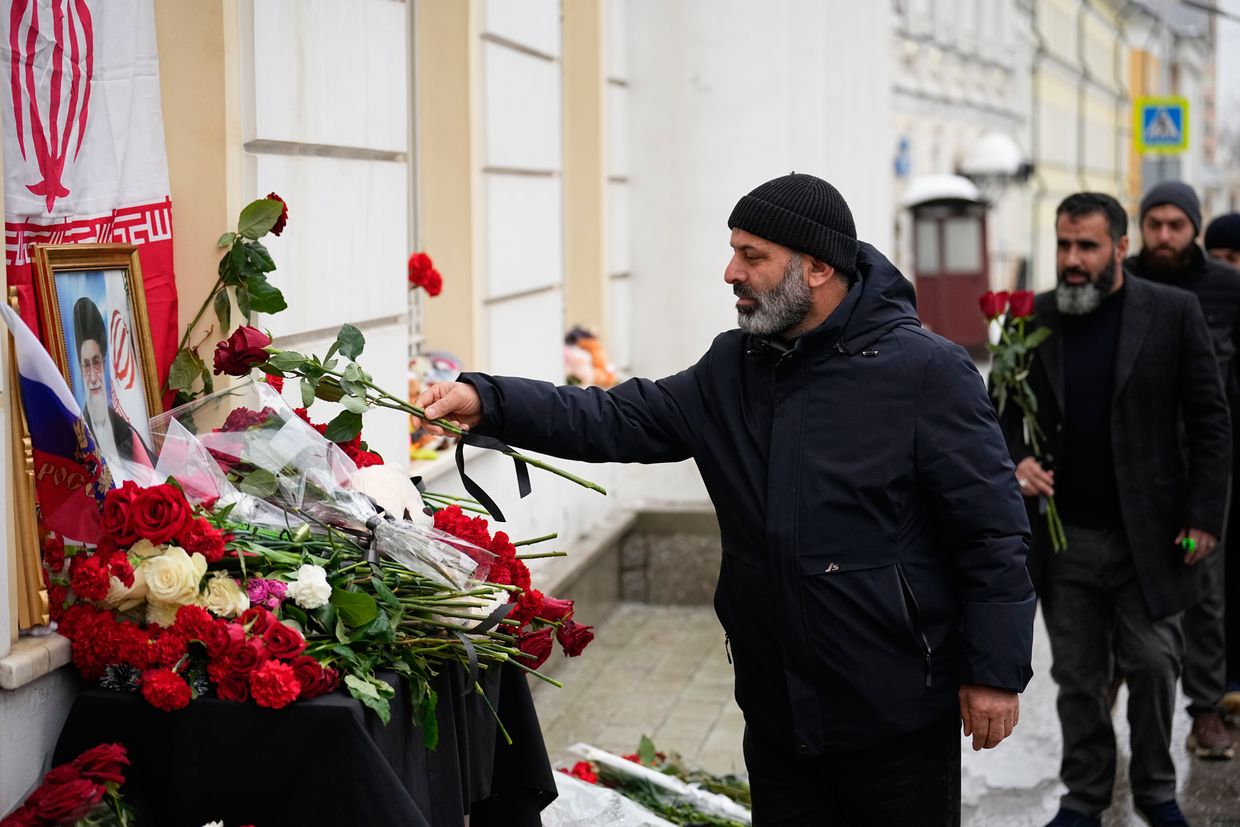
Armenia sent condolences to Iran only on Monday, with Pashinyan saying that they were following the developments ‘with deep concern’. He additionally praised Khamenei for his ‘personal role’ in the development of Armenia–Iran relations.
‘At this difficult moment, we sincerely hope for the swift restoration of peace and stability in the Middle East. Taking this opportunity, I wish you patience and strength, and to the friendly and neighbouring people of Iran, peace and resilience’, the letter concluded.
That same day, Mirzoyan had a telephone conversation with his Iranian counterpart Seyyed Abbas Araghchi, during which Mirzoyan ‘expressed his condolences to the families of the victims in Iran, emphasising the importance of reducing tensions and reaching a peaceful resolution’.
They also discussed humanitarian issues, the Armenian Foreign Ministry noted.
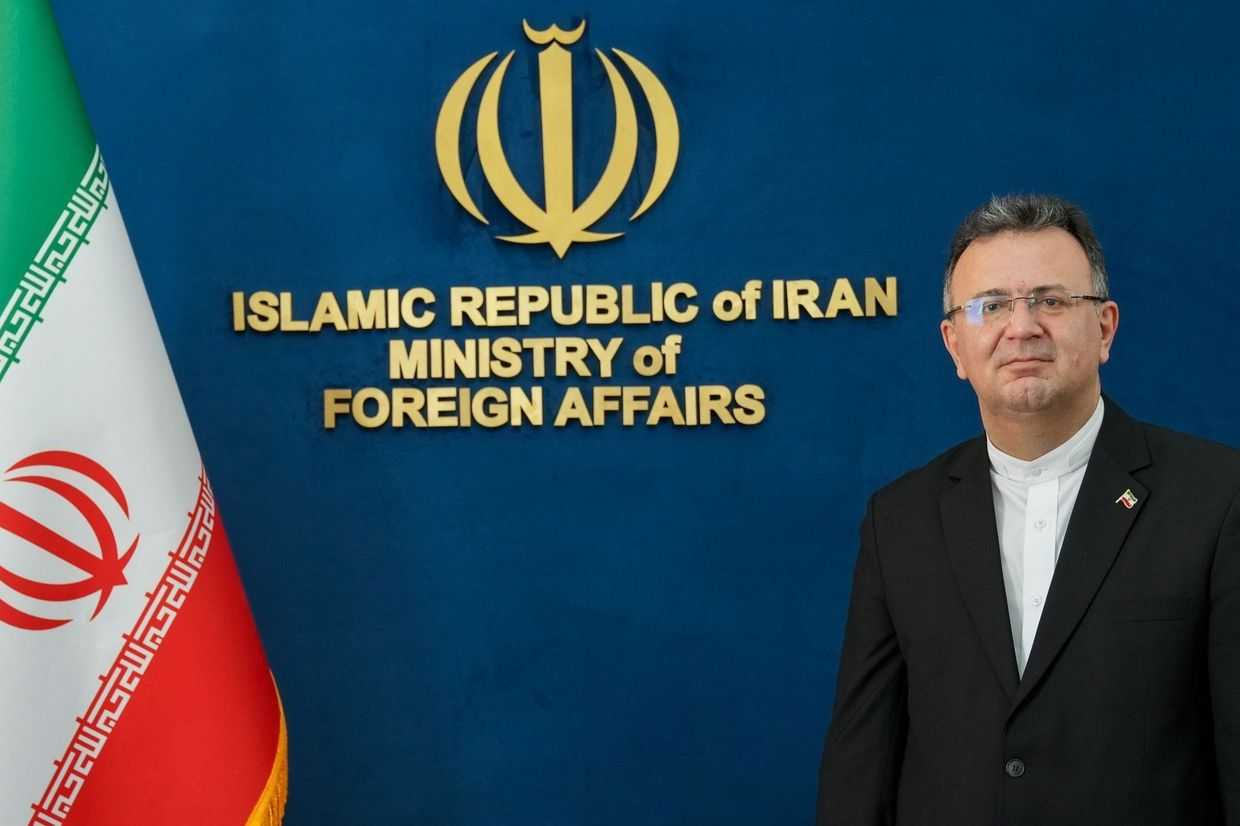
On Monday, Khalil Shirgholami, the Iranian Ambassador to Armenia said the border with Armenia had been closed for 24 hours ‘due to problems with the systems operating at the border’, but added that the land border had reopened as of Monday morning and that ‘traffic is flowing smoothly in both directions’.
Armenia’s rather cautious approach has highlighted the implications of Yerevan’s changing geopolitical stance, particularly its growing friendship with Washington.
In contrast to Yerevan’s outright condemnation of Israeli actions during the brief war with Iran in June 2025, there has been a clear avoidance of any straightforward condemnation.
 Arshaluys Barseghyan
The main factor affecting Armenia’s cautious and mild reaction to the ongoing hostilities in Iran is the US participation from the first stage of the war, Tigran Grigoryan, a political analyst and the head of the Regional Centre for Democracy and Security, told OC Media.
‘The Washington summit [in August 2026] has changed the situation on the ground in the region and is a very important card for the upcoming elections for the ruling party. That is why we should not expect the kind of language that was used during the 12-day war [in June 2025] when Armenia very explicitly condemned Israel’s attack against Iran’, Grigoryan said.
Grigoryan anticipated that Armenia’s ‘cautious approach’ would continue, adding that the likely strongest reaction from Yerevan would be to call for a diplomatic solution.
Referring to Mirzoyan’s call with his Iranian counterpart on Monday, Grigoryan suggested that it was likely a response to the Azerbaijani side’s sending condolences for the killing of the Ayatollah.
Despite the apparent decision to stay above the fray for now, even rhetorically, Grigoryan said the war has the potential to have real implications for Armenia.
‘The ongoing war can disrupt trade routes, other [transit routes] connecting Armenia with the Gulf countries and other parts of the world. Iran is also an important transit area for Armenian weapons, for example, purchased from India’.
‘A lot of things will of course depend also on the lengths of this operation, of this war. So there are various scenarios if we're talking about shorter term conflict and long-term conflict’, he concluded.
Georgia: ‘At least we’re not eating piroshki like Pashinyan’
The Georgian government released an official statement on the conflict only on Monday morning, expressing condolences to some parties and solidarity with others.
After voicing deep concern over the military escalation, Tbilisi first extended condolences to Iran, noting that ‘the ongoing military activities have claimed the lives of many individuals, including the Supreme Leader, other political leaders, numerous innocent civilians, and dozens of children’.
The statement then expressed condolences to Israel and the Jewish people ‘over the loss of civilian lives’, as well as ‘full solidarity with the Arab Gulf countries, with whom Georgia maintains distinguished partnerships’.
‘We hope that peace will soon be restored in the Middle East and that military actions will be replaced by diplomacy and political dialogue’, the government added, concluding by reaffirming its readiness to ensure the safety of its own citizens in the region.
The US was not mentioned in the statement in any form.
The All-Georgia Muslim Supreme Religious Administration also expressed condolences, but drew a sharp contrast by characterising the attack as ‘terror and aggression by an alliance of evil’ and calling Khamenei’s death a ‘shocking loss’.
Earlier, on Sunday, the Foreign Ministry also issued a brief statement highlighting the importance of a diplomatic resolution to the conflict and the protection of Georgian citizens in the region.
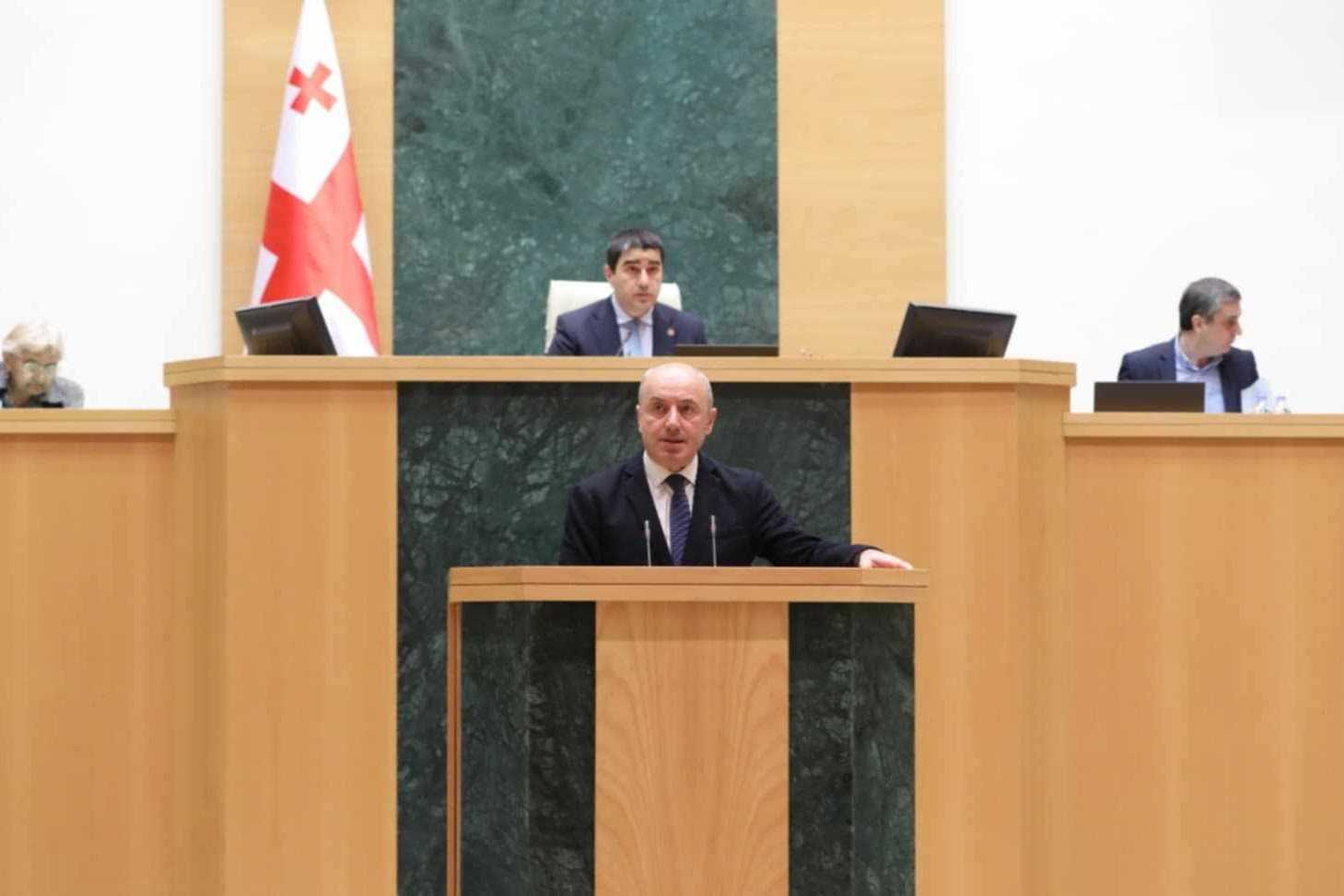
Some members of the ruling Georgian Dream party were asked by journalists about the conflict — MP Nino Tsilosani was questioned whether the government had held any meetings regarding the situation, noting that Armenia had convened a National Security Council session on the topic. In response, Tsilosani said that ‘all threats and risks are under the highest control’, and to illustrate that Georgia would not follow Armenia in everything it does, she cited a video of Prime Minister Nikol Pashinyan eating a piroshki, mistakenly referring to the food as a cheburek, another savory pastry common in the region.
‘The Prime Minister of Armenia was even eating cheburek, or how was that? [Soon] after the war started […] So we certainly don’t intend to do the same as Armenia. We have our own risk-mitigation mechanisms’, she said as quoted by IPN.
Although Georgia and Iran are not bound by a close partnership, some have pointed to signs of Tbilisi’s ‘political and economic rapprochement’ with Tehran.
Indeed, Transparency International — Georgia’s 2025 report noted that, amidst deteriorating relations with Georgia’s traditional Western partners, the ruling Georgian Dream party has been strengthening ties ‘with non-democratic regimes, including Iran’.
In the past, the authorities have drawn the ire of pro-Western critics for their actions toward Iran, including 2024 visits by Prime Minister Irakli Kobakhidze to express condolences over the death of late President Ebrahim Raisi, followed by his attendance at the inauguration of the new president, Masoud Pezeshkian.
Although these visits are regarded as ‘symbolic’ by Giorgi Sanikidze, Director of the Institute of Oriental Studies at Tbilisi-based Ilia State University (ISU), he placed much greater emphasis on the nature of Monday’s statement, which included condolences to Iran and specifically mentioned the death of Khamenei.
Sanikidze compared this statement to the one released by then-Foreign Minister Davit Zalkaliani after the January 2020 killing of the influential Iranian general Qasem Soleimani in Baghdad by the US. The day after the killing, Zalkaliani condemned the attack by demonstrators on the US embassy in Baghdad, which preceded the targeting of Soleimani, stating that the ‘US has the legitimate right to defend its citizens’.
‘Within [six] years, we have such a different reality’, Sanikidze told OC Media. ‘This difference is a very significant one between today’s statement and the earlier [one]’.
In his words, ‘It sounds like the [latest] statement maintained a neutral position’, mentioning Israel and the Gulf countries alongside Iran.
‘Naturally, Georgia is not a player that can actively engage in these processes, but in my view, this neutral position — taking neither side — is not really justified’, he added, explaining that if Georgia has a pro-Western course — as the authorities continue to claim — ‘it should support Western policy’.
Sanikidze explains the difference he observed between the statements as a result of both Georgia’s recent tensions with the West and ongoing democracy backsliding, rather than any dramatic positive change in relations with Iran.
Shortly before the outbreak of the conflict, on 11 February, Georgia’s Deputy Foreign Minister Lasha Darsalia noted that Tbilisi was ready to continue its cooperation with Iran to ‘advance a positive agenda in the region’, emphasising what he called ‘Iran’s steadfast support for Georgia over the years’.
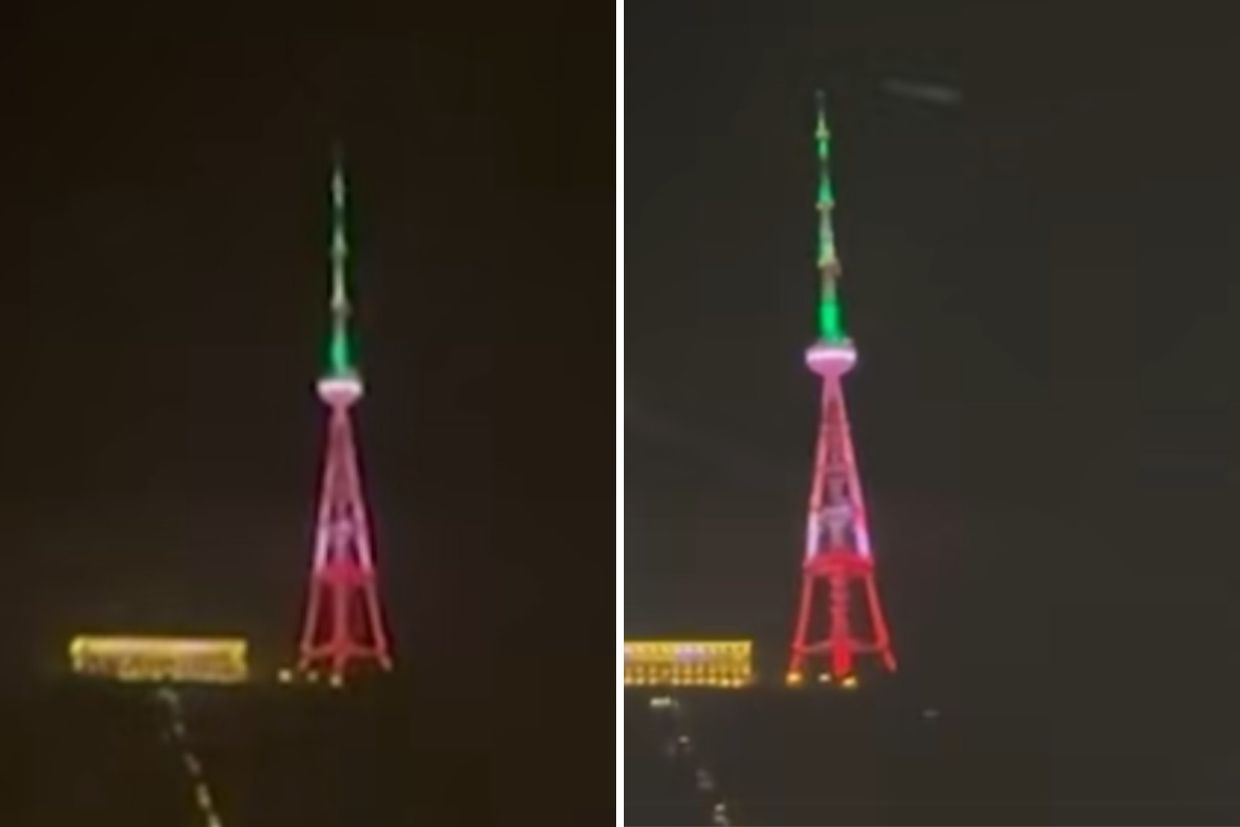
Darsalia made this statement at an event marking the 47th anniversary of the Islamic Revolution of Iran, held at a hotel in central Tbilisi, while the Tbilisi TV Tower was illuminated in the colors of the Iranian flag. The celebrations occurred soon after Iranian authorities’ brutal crackdown on anti-government protests in January.
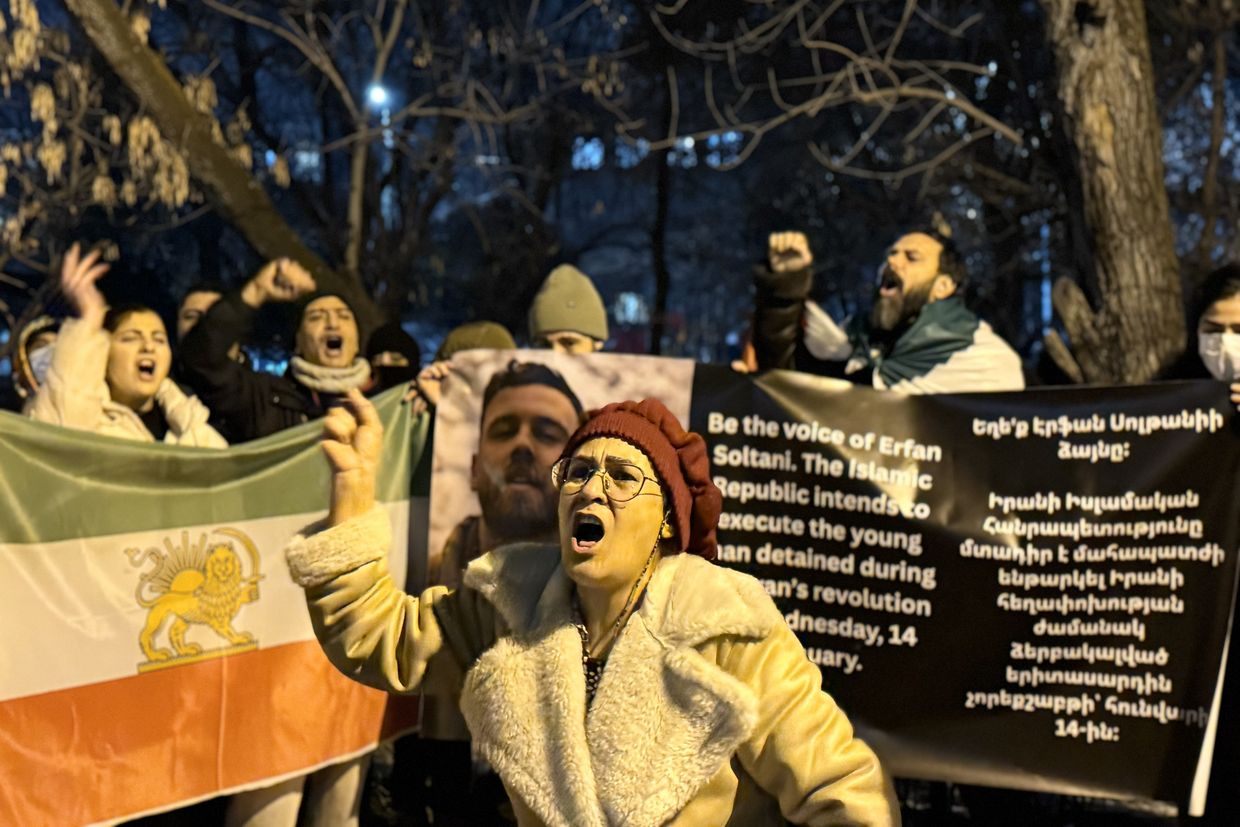
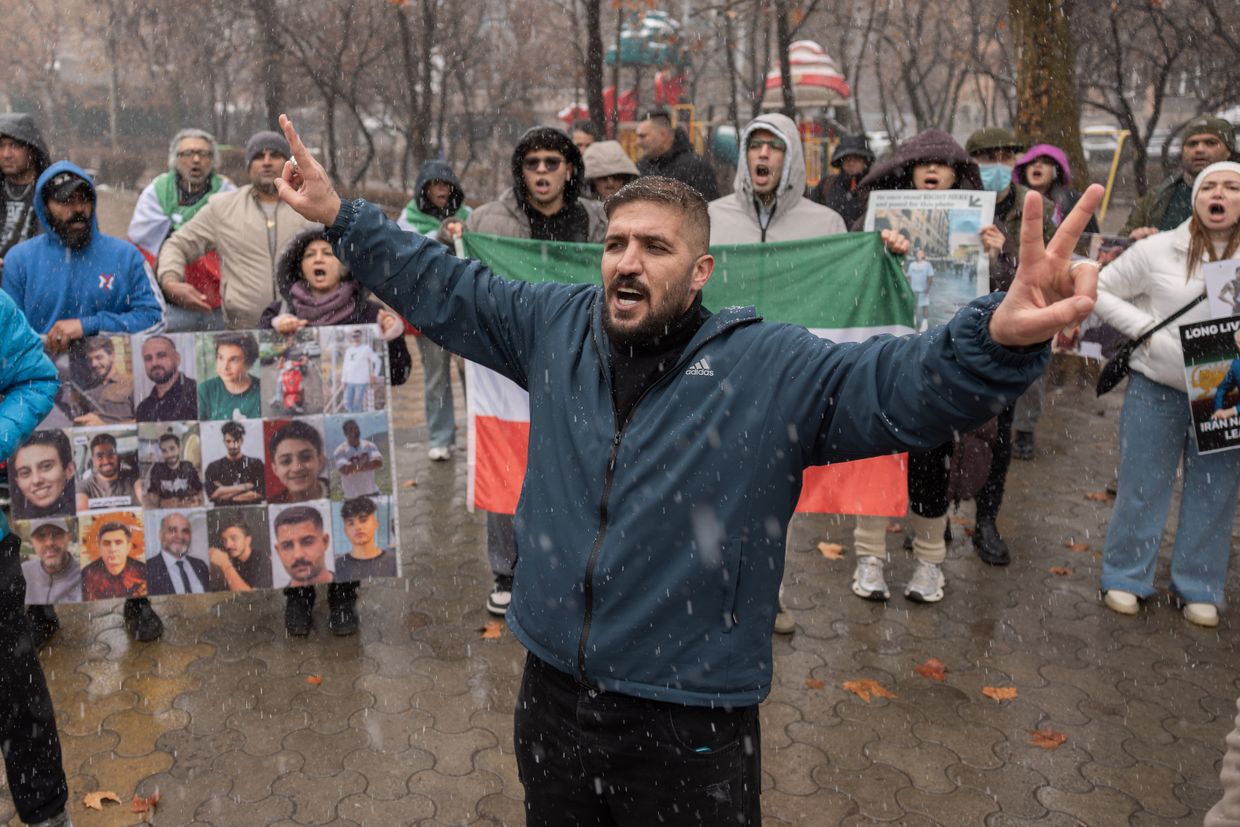
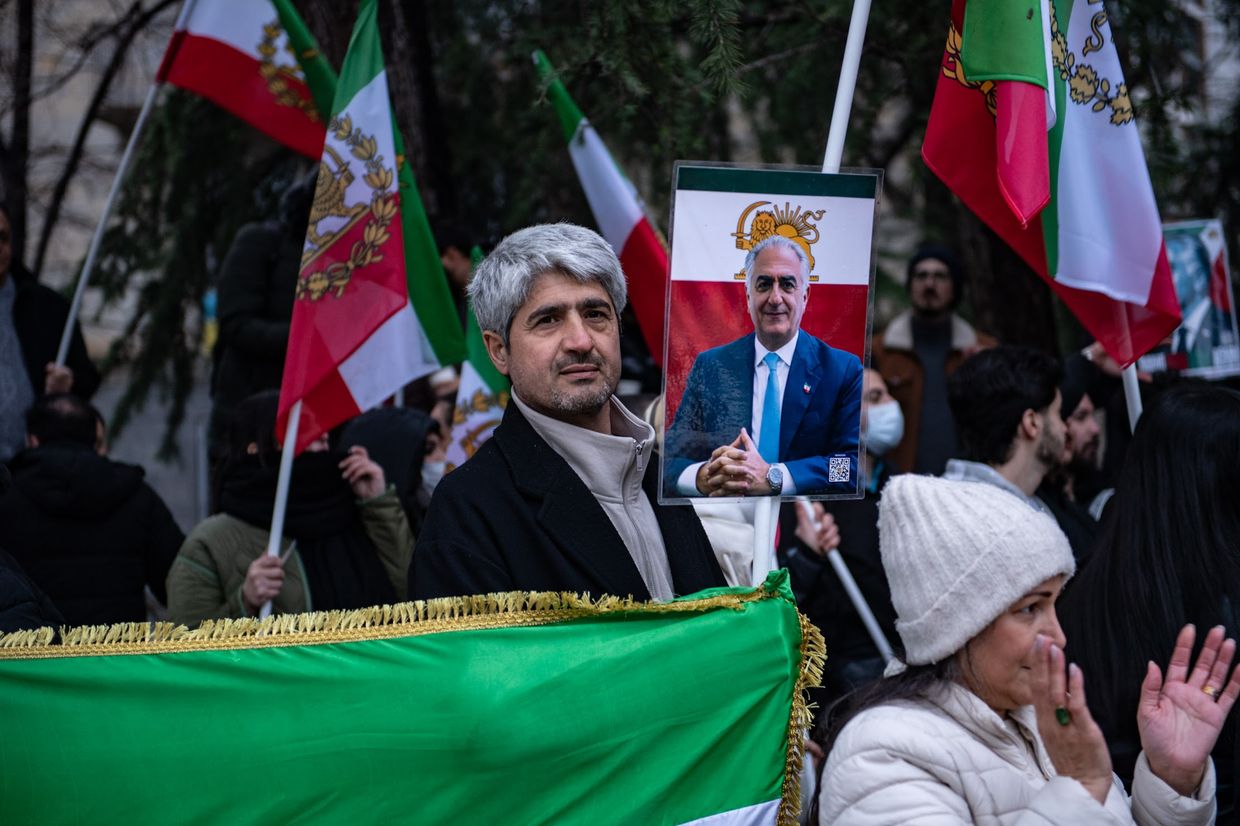
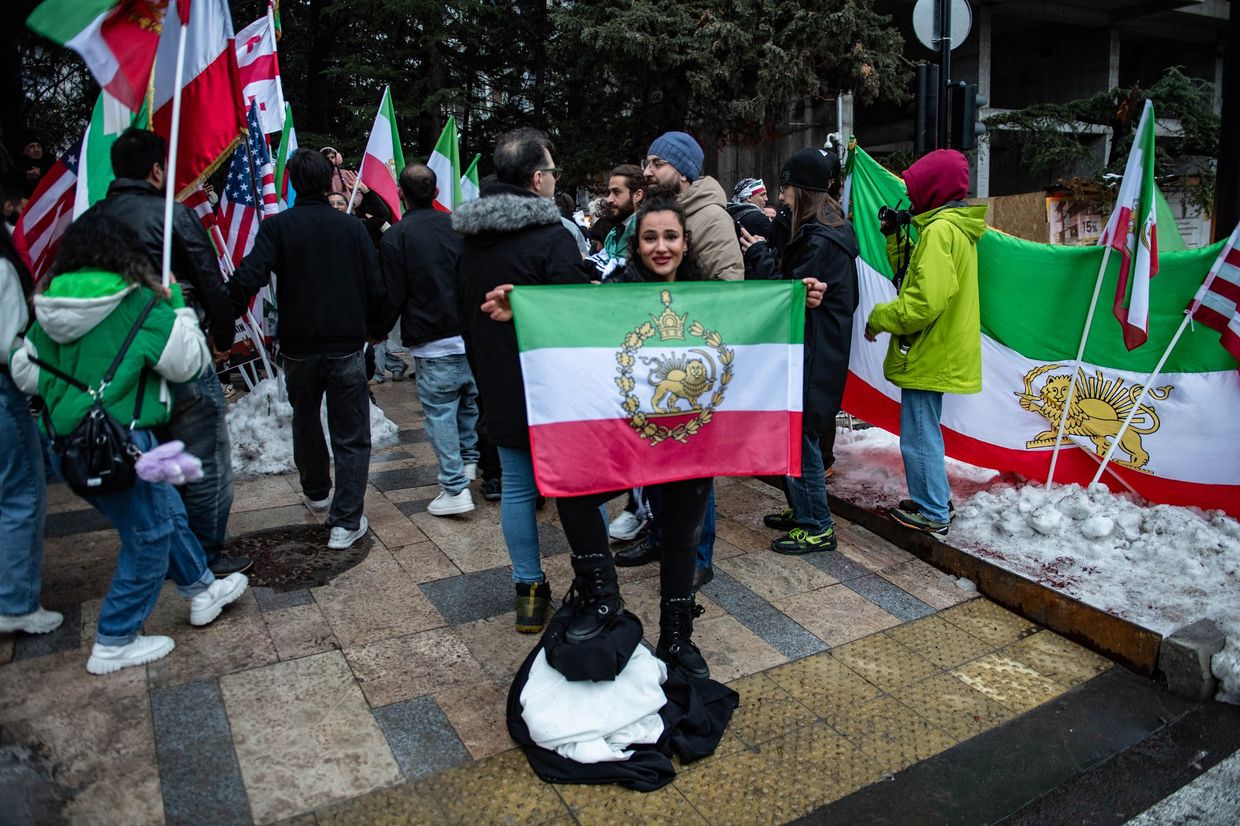
Weeks before the outbreak of the conflict, in a show of solidarity with the protest movement in Iran, Iranians living in Tbilisi began holding daily demonstrations outside the Iranian embassy.
The rallies continue to this day, with demonstrators on Monday celebrating Khamenei’s death.
Azerbaijan: complicated reactions amidst fears of retaliation
Despite a history of tense relations, President Ilham Aliyev expressed condolences to Pezeshkian over Khamenei’s death, stating that he was ‘deeply saddened by the tragic death’. Aliyev also expressed ‘deep condolences’ to the Iranian people over the ‘heavy loss’.
Similarly, on Saturday, Foreign Minister Jeyhun Bayramov held a phone call with his Iranian counterpart Abbas Aragchi, during which he ‘expressed condolences due to the killing Khamenei and innocent people because of the airstrikes’.
At the same time, Bayramov emphasised that ‘it is impossible for any country to use the territory of Azerbaijan against neighboring and friendly Iran’.
In both cases, however, Aliyev and Bayramov refrained from openly criticising either the US — Azerbaijan’s relatively newfound friend — or Israel, a long-time ally.
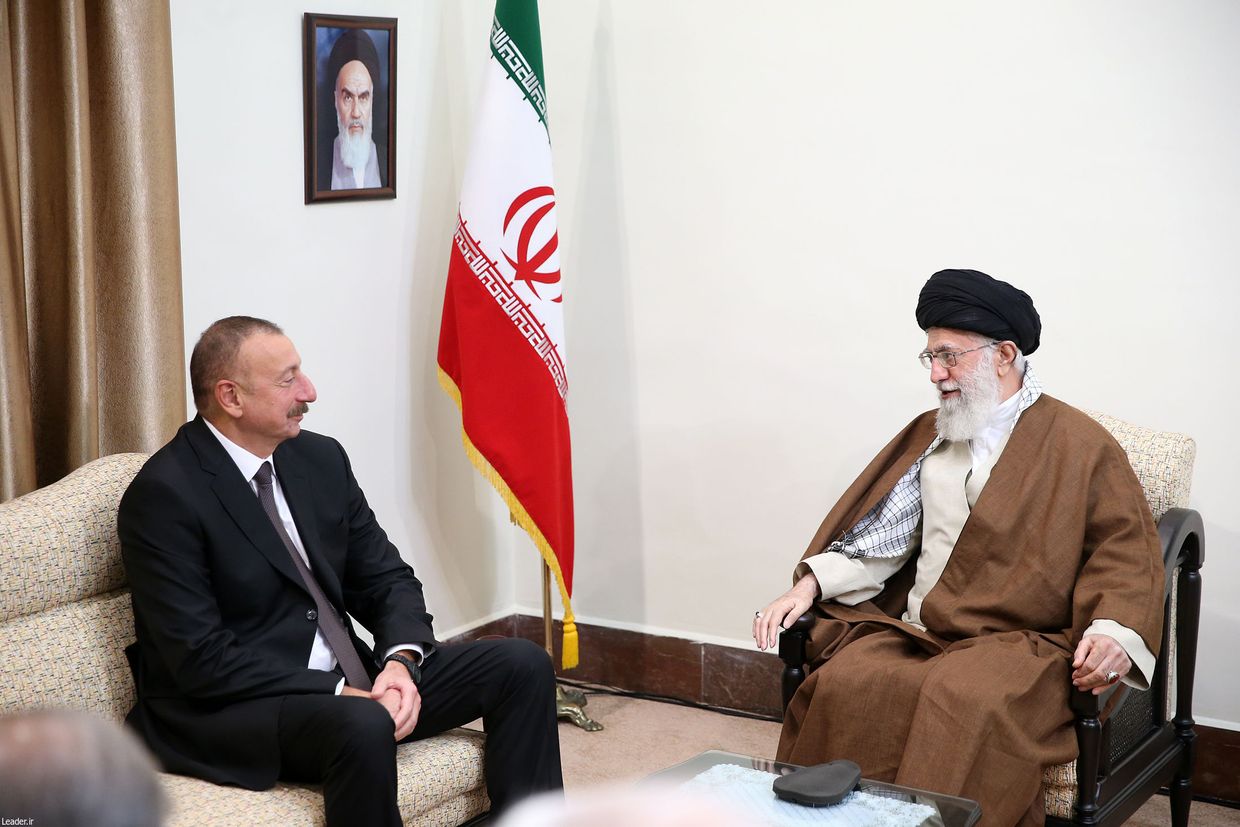
The divisions were also apparent in the varying reactions across Azerbaijani society, with some commentators, including Elkhan Shukurlu, the editor and founder of the local Strateq.az media outlet, expressing anger at Khamenei’s death and the inability (or unwillingness) of Azerbaijanis to take a stronger stance in opposition.
‘What saddens me most is that some who consider themselves Muslims and Azerbaijanis rejoice at the heinous murder of a leader — a head of state descended from the Prophet’s lineage, who speaks our language and is one of us — and side with the enemy’, Shukurlu wrote.
Moreover, there is also an underlying concern that Azerbaijan could be directly drawn into the war. Independent analyst Shahin Jafarli told OC Media that Khamenei’s killing has caused uncertainty in Azerbaijan about how far Iran might be willing to go, referencing the attacks that Iran has carried out on countries allied with the US across the Middle East. He added that Iran had previously accused Azerbaijan of allowing its territory to be used by Israel during the war in 2025 — charges that Baku has denied.
Even so, he expressed that he highly doubted that an attack would occur as long as Pezeshkian remained in power.
‘If this [Iranian leadership] delegation doesn’t fully control the country and the Sepah [Islamic Revolutionary Guard Corps] forces, then it’s possible that there will be some provocative steps and attempts against Azerbaijan by Sepah radicals’.
However, he also emphasised that ‘we cannot definitively say that Azerbaijan faces no threat, that there are no risks’.
‘In this regard, some radical commander, one of the radical officers in this group, could give the order to carry out provocations against Azerbaijan’.
In turn, opposition politician Yadigar Sadigli told OC Media that the conflict in Iran has the potential to both positively and negatively impact Azerbaijan.
‘If the conflict lasts a little longer, oil prices will rise, and this will, of course, lead to increased revenue for Azerbaijan. But frankly, I don’t think that Iran, Israel, or the US are interested in waging a protracted war’.
Sadigli said that one of the risks to Azerbaijan could be an influx of Iranian refugees, which the country is bound by international conventions to accept. Refusing to do so ‘could damage the image of Aliyev and the state’, he added.
Since 28 February, over 300 people — mainly Azerbaijani citizens, but also including Chinese, Russian, Pakistani, and other nationalities — have been evacuated from Iran via the Azerbaijani border.
‘And I think that if a ground military operation begins, [an influx of refugees to Azerbaijan] will definitely happen, although I don’t believe ground operations will begin in a country the size of Iran. Because it’s a much larger and more militant society’, Sadigli concluded.
Despite this, the Japanese Embassy in Azerbaijan announced on Monday that due to the tensions in the region, it was suspending its activity in the country and including visa applications. Also on Monday, a phone conversation was held between Bayramov and the EU’s top diplomat Kaja Kallas, during which they discussed tensions in the region and emphasised the importance of ‘resolving the conflict through diplomatic means’.
Nicholas Castillo