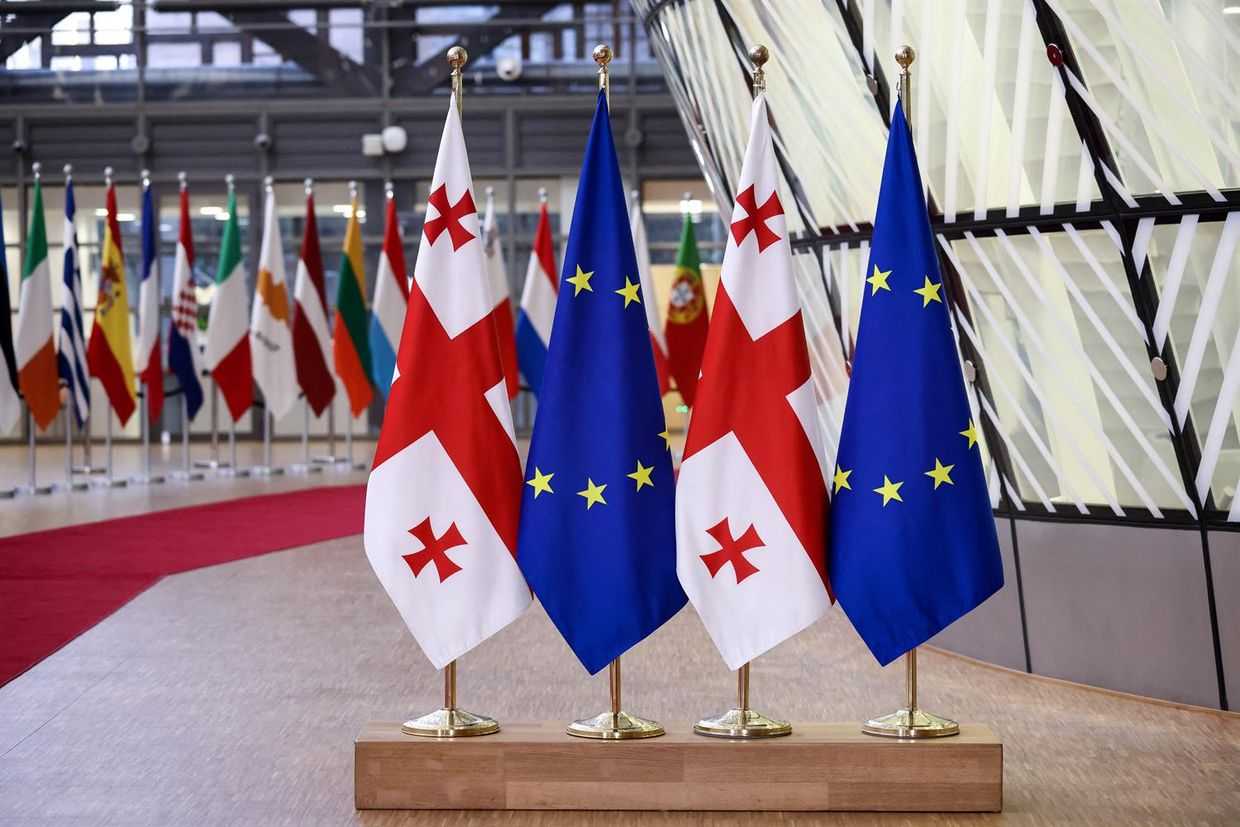
According to the new European Commission report, Georgia risks losing its visa-free regime for the entire population if authorities fail to implement EU recommendations. The report highlighted not only democratic backsliding in the country but also problems with visa-policy alignment, including concerns over simplified entry procedures for certain nationalities.
The visa suspension mechanism report, published on 19 December, referenced the European Commission’s July letter reminding Georgian authorities to comply with visa liberalisation benchmarks. The new report emphasised that Tbilisi’s response did not show ‘any meaningful progress’, adding that ‘in most areas, no corrective measures were reported and in several others the situation has further deteriorated’.
‘Given the systemic and deliberate nature of this backsliding, the Commission will consider appropriate measures under the revised Visa Suspension Mechanism’, the report read.
The updated mechanism mentioned in the report was adopted by the EU in November and is set to come into effect at the end of December. The mechanism expanded the EU’s ability to suspend visa-free travel for third countries and introduced new grounds for suspension, including human rights violations and lack of alignment with EU’s visa policy.
‘According to the new rules, in the first phase, the visa suspension could target holders of diplomatic, service, and official passports issued by the Georgian authorities, who are primarily responsible for not taking action to address the Commission’s recommendations’, the report read.
‘The new rules ensure a uniform application of the suspension in all member states’, the authors added.
However, the second stage is far broader, with the authors noting that ‘the suspension could be extended to the entire population if issues are not addressed by the Georgian authorities’. A timeline for the possible extension to the second stage was not specified.
The report particularly highlighted the Georgian authorities’ adoption of restrictive legislations, including the foreign agents law, and anti-queer law, and amendments concerning foreign grants, stating that they ‘restrict fundamental rights and freedoms and contradict Georgia’s European and other international commitments’.
https://oc-media.org/explainer-the-16-legislative-changes-that-have-shaped-georgias-authoritarian-slide/
Sharply criticising Georgia’s performance, the Commission concluded that the country has ‘regressed significantly’ on ‘key governance and rule-of-law benchmarks that underpinned the granting of visa-free travel’.
‘Similarly, Georgia regressed also in the domains of visa-alignment and [the] fight against corruption’, the authors noted.
In the visa-alignment section, the report stressed that ‘Georgia currently maintains 26 visa-free agreements with countries that are subject to EU visa requirements and has not taken any steps towards further alignment since 2022’.
‘On the contrary, Georgia backtracked in 2024 by granting visa-free entry to citizens of China’, the report read.
In the same section, the authors noted that citizens of 17 countries — 12 located in Africa and five in Asia — who require a visa for both Georgia and the EU can enter Georgia solely on the basis of a visa or residence permit issued by one of the Gulf Cooperation Council (GCC) countries. This is described in the report as a practice that ‘diverges substantially from the EU acquis’ and something Georgia is required to ‘terminate immediately’.
 OC Media
In the migration, border management, and readmission section, the authors note ‘the significant influx into Georgia of nationals from India and, to a lesser extent, from other Asian and Middle Eastern countries’, adding that this ‘raises concerns about the potential illegal migration towards the EU, whether by land or by sea’.
The report also cautioned about the possible risks connected with the significant influx of Russians that have come to Georgia since the beginning of the full-scale war in Ukraine, noting that there is a ‘growing apprehension that the Russian presence in Georgia could be exploited for foreign influence operations’. Nonetheless, there were no specific recommendations for action in this regard.
The report also addressed the issue of simplified naturalisation procedures, citing the Serbian practice and noting that the profiles of some Russian nationals who obtained Serbian citizenship have raised concerns in the EU. The authors stated that ‘a similar concern exists regarding Georgia’, adding that ‘both the Serbian and Georgian cases warrant further scrutiny to determine whether those practices are abusive’.
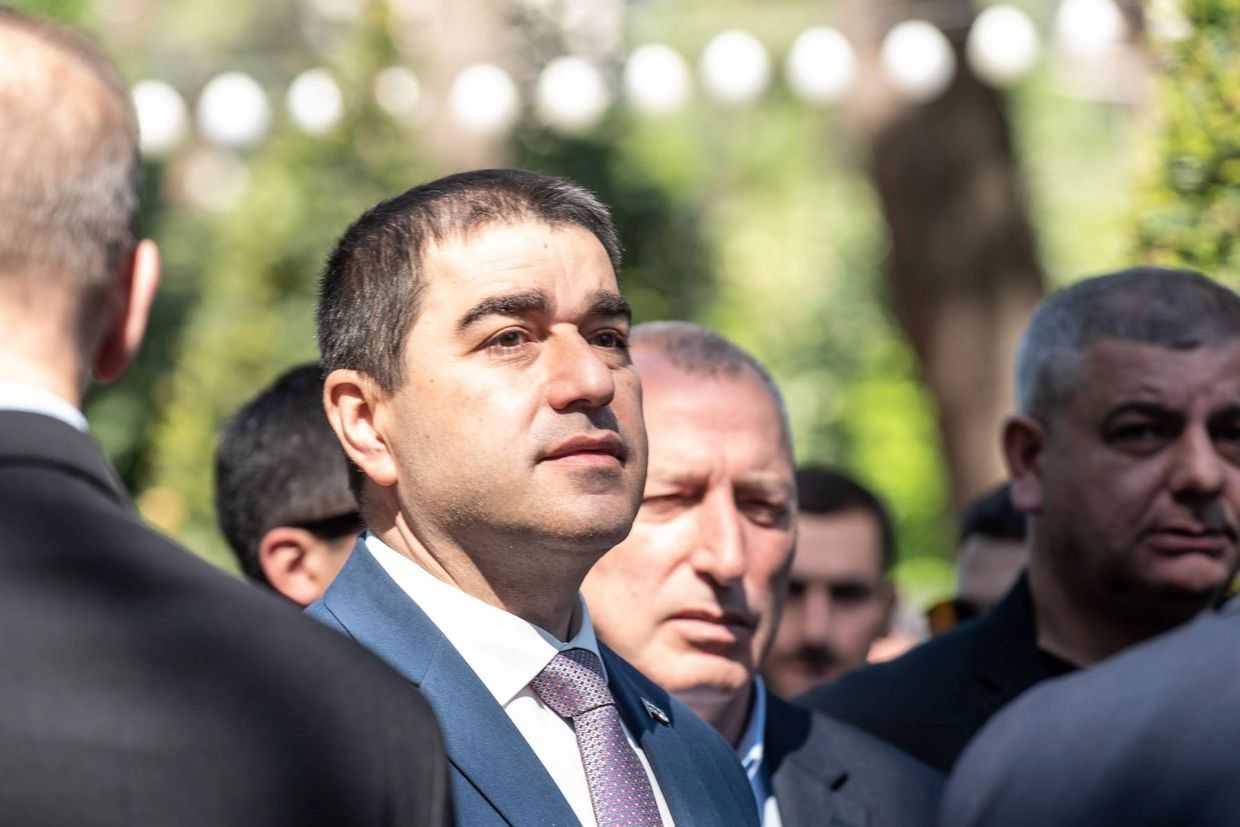
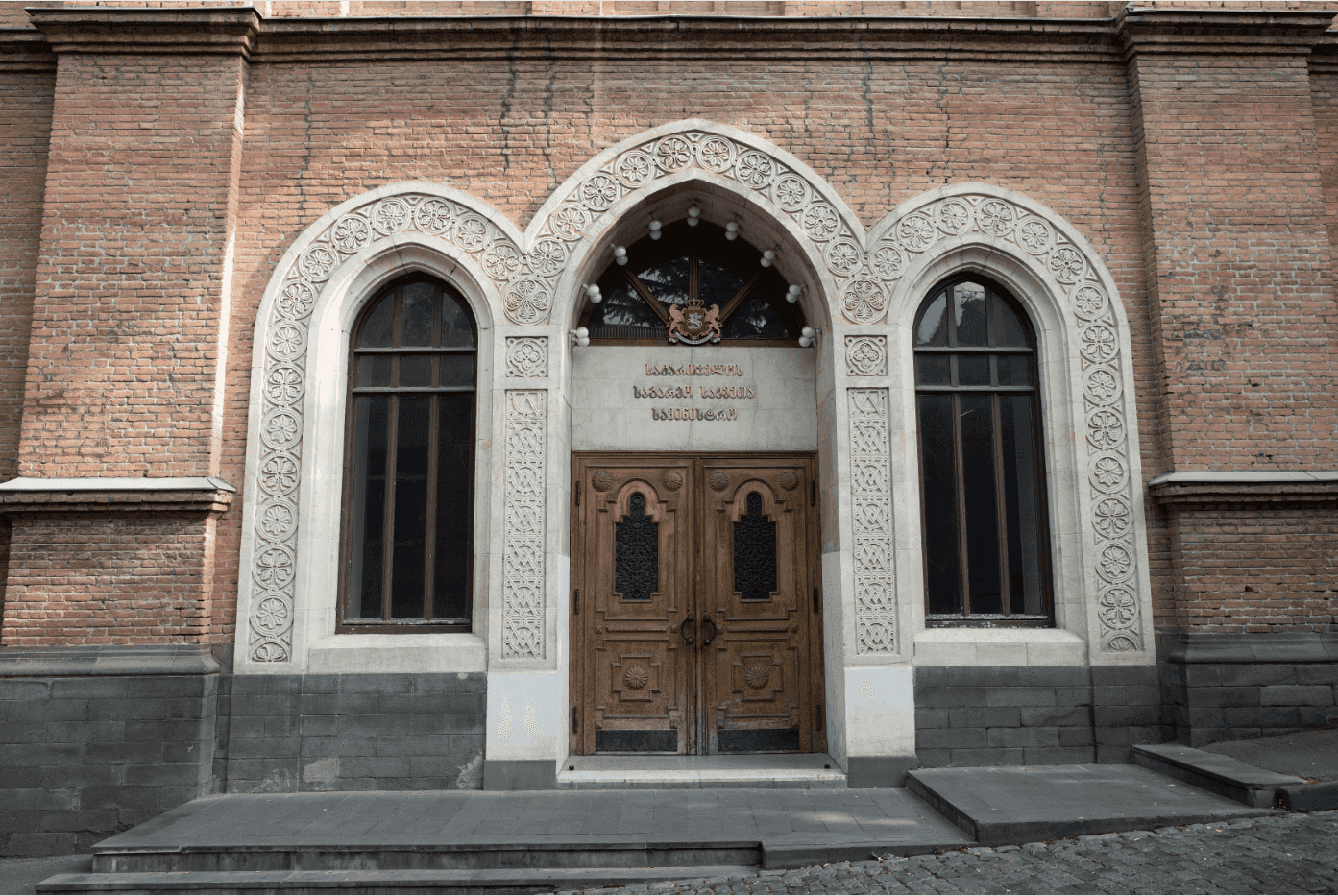
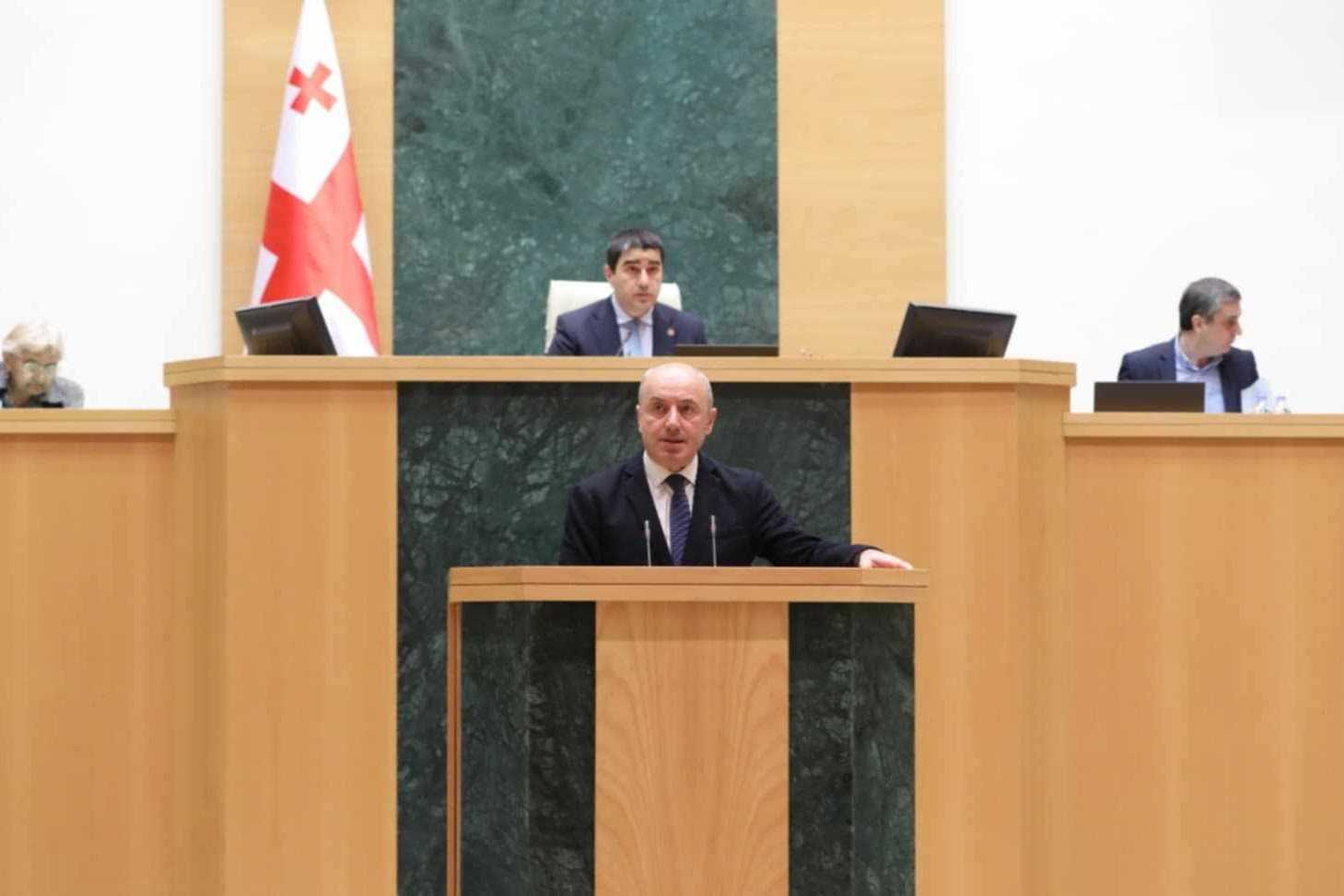
On the very day the report was released, Georgian Parliamentary Speaker Shalva Papuashvili launched a fierce critique of the EU , calling it ‘a minor abandoned by its guardian [the US]’, who ‘decided it must now grow up and become a global policeman’.
‘But, fortunately, it lacks competence and is not able to cause major harm to the Georgian people, who have clearly understood the intentions some hold in Brussels regarding Georgia’, he added.
Papuashvili described the European Commission’s suggestion to suspend visa-free travel for holders of official passports in the first stage as ‘segregation’, adding that ‘Brussels is leading the EU toward a civilisational abyss, to the dark past where Europe once was’.
‘We should not look for logic or fairness in Brussels’ decision’, he added.
Since Georgia secured EU candidate status in 2023, relations between Tbilisi and Brussels have plummeted, spurred on by a variety of actions taken by the ruling Georgian Dream party that are widely seen as eroding the country’s democratic institutions.
The EU, along with the US and the UK, have imposed a number of sanctions and other punitive measures in response, as well as suggesting others.
One of the moves that has been floated is the suspension of Georgia’s visa-free access to the EU, which was originally granted in 2017 and remains one of Georgian Dream’s oft-cited foreign policy victories.
The EU Council ruled in January that the visa-free status for Georgian diplomats should be revoked, a move seen as largely symbolic as Georgian diplomats can still travel with their normal passports. Furthermore, the restriction had to be implemented individually by each EU member state.
Unlike passing sanctions, suspending visa-free status for a country can be agreed on with just a qualified majority, meaning 55% of EU member states representing at least 65% of the total EU population.
Mikheil Gvadzabia
This article was translated into Russian and republished by our partner SOVA.