Explainer | How Pashinyan is working to topple Catholicos Karekin II
As parliamentary elections grow nearer, tensions between Armenian Prime Minister Nikol Pashinyan and the Armenian Apostolic Church continue to build.

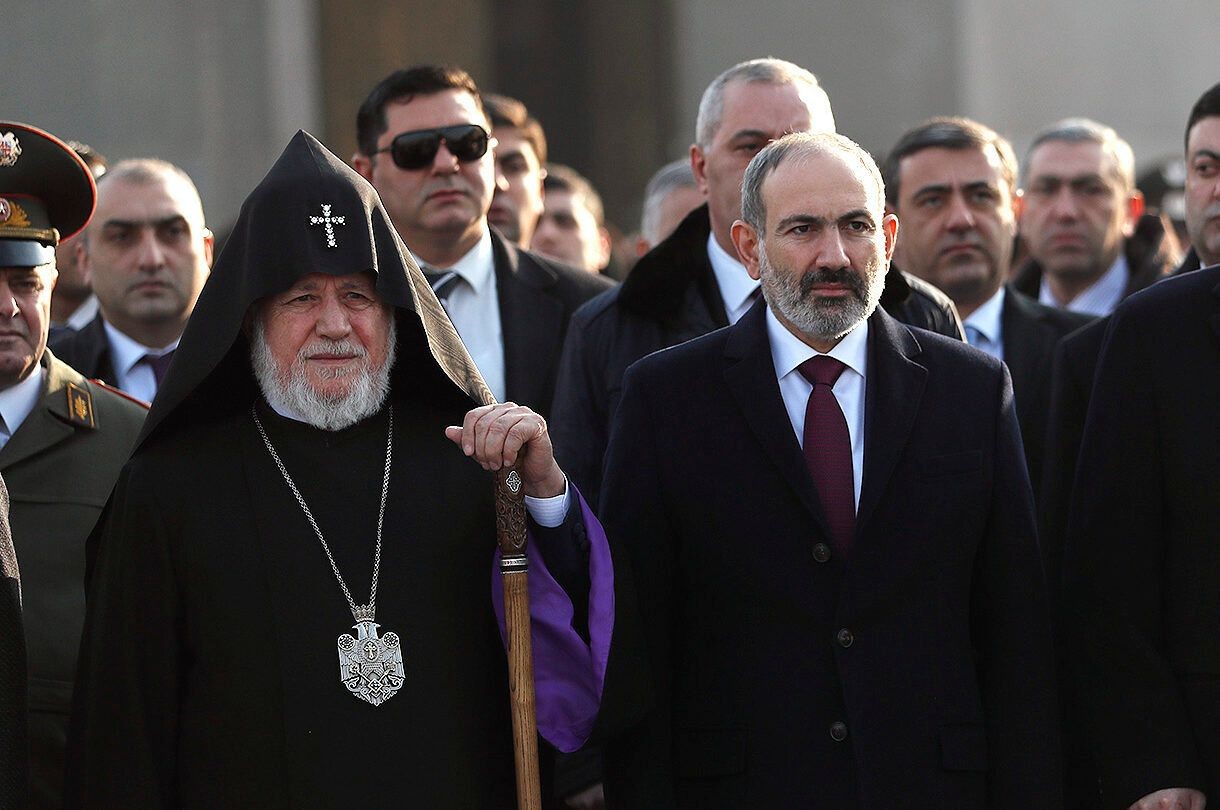
Although Armenia is constitutionally secular, Christianity forms a core part of the national identity, with Armenians taking pride in being widely regarded as the first country to adopt Christianity as a state religion in 301. The current head of the Armenian Apostolic Church, Catholicos Karekin II, maintained close ties with Armenia’s previous leaders, creating favourable conditions for cooperation. Under Prime Minister Nikol Pashinyan, however, relations have shifted, with developments surrounding Church-state relations coming to dominate public and political discourse.
The topic again rose to prominence in May 2025, when a new round of tension between the Church and state escalated after Pashinyan criticised Church leadership for failing to properly maintain churches across the country, comparing them to ‘storage rooms’ filled with construction materials and other non-religious items
As accusations against the Church, and specifically against Karekin II, continued to grow, Pashinyan gradually made clear that he was seeking to oust the Catholicos.
 Ani Ghevondyan
In January, this goal was formally articulated in a Church reform agenda signed by Pashinyan and 10 senior clergy members at Pashinyan’s official residence. The statement announced the creation of a Coordinating Council to be composed of the signatories and tasked with overseeing the organisational aspects of the reform process. Notably, Pashinyan signed the document in his capacity as Armenia’s prime minister — rather than as a follower of the Armenian Apostolic Church, as he had previously framed his involvement in Church issues — raising widespread concern that the move may have violated the constitution.
As Armenia heads toward its 2026 parliamentary elections, Pashinyan’s government has intensified its criticism of the Church, including warning of ‘hybrid threats’ facing the country, widely interpreted as referring to Russia, and hinting at Karekin II’s alleged foreign ties. It remains to be seen if Pashinyan will succeed in ousting Karekin II, however.
Why does Pashinyan want Karekin II out?
Pashinyan has put forward several justifications for seeking to replace Karekin II as Catholicos of the Armenian Apostolic Church, but two stand out.
First, he claims Karekin II violated his vow of celibacy and fathered a daughter, which would make him ineligible for the post.
Second — and more seriously — Pashinyan alleges that Karekin II has ties to ‘foreign intelligence services’, apparently Russian, which pose a threat to Armenia’s security. The accusations have raised questions about why no action was taken earlier, if Pashinyan’s government was aware of the information after coming to power in 2018.
Rejecting claims that he is seeking a more loyal Church leader, Pashinyan has claimed that he wants one free of foreign ties.
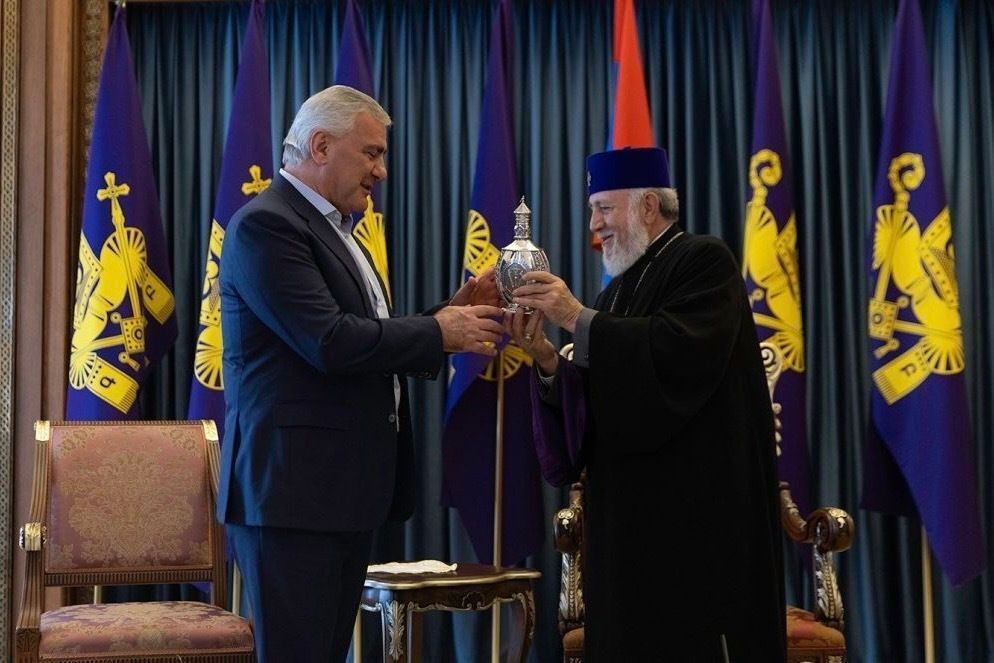
Still, as the standoff deepens, increasingly serious accusations against Karekin II and other senior clergy are always on offer — including allegations of paedophilia, employing ‘sectarian logic’, preaching ‘radical texts’, and ensuring ‘shadow money’ enters Armenia ‘to be used for political purposes’ — alongside the continued arrests of clergy on criminal grounds.
In February, Pashinyan offered further insights into his confrontation in an interview with Public TV, accusing the Church of acting as ‘a foreign state within the state’ and insisting that ‘the church should not engage in politics’.
Citing prior calls by Karekin II for Pashinyan’s resignation, as well as Archbishop Bagrat Galstanyan’s 2024 anti-government protests, Pashinyan claimed such actions could not ‘remain without consequences, because we are talking about the sovereignty and security of our state’.
What pressure is Pashinyan employing against the Church?
Since the renewed confrontation, the government has taken a series of steps critics describe as repressive, targeting both the Church and Karekin II, interfering in the Church’s internal affairs, and using law enforcement as instruments of political pressure.
To start, four high-ranking priests have been placed in pre-trial detention on various charges, with two later remanded to house arrest and one under administrative supervision. The cases have sparked concern, particularly as some charges relate to incidents or statements from years ago, which authorities had previously declined to open investigations into, citing a lack of grounds.
Beyond the four detained clergy — including Karekin II’s nephew, Bishop Mkrtich Proshyan — other clerics, including Karekin II himself, have faced charges, with measures ranging from pre-trial detention to travel bans. Earlier in February, such restrictions prevented Karekin II from attending a bishops’ synod in Austria, in line with Pashinyan’s statement.
Arshaluys Barseghyan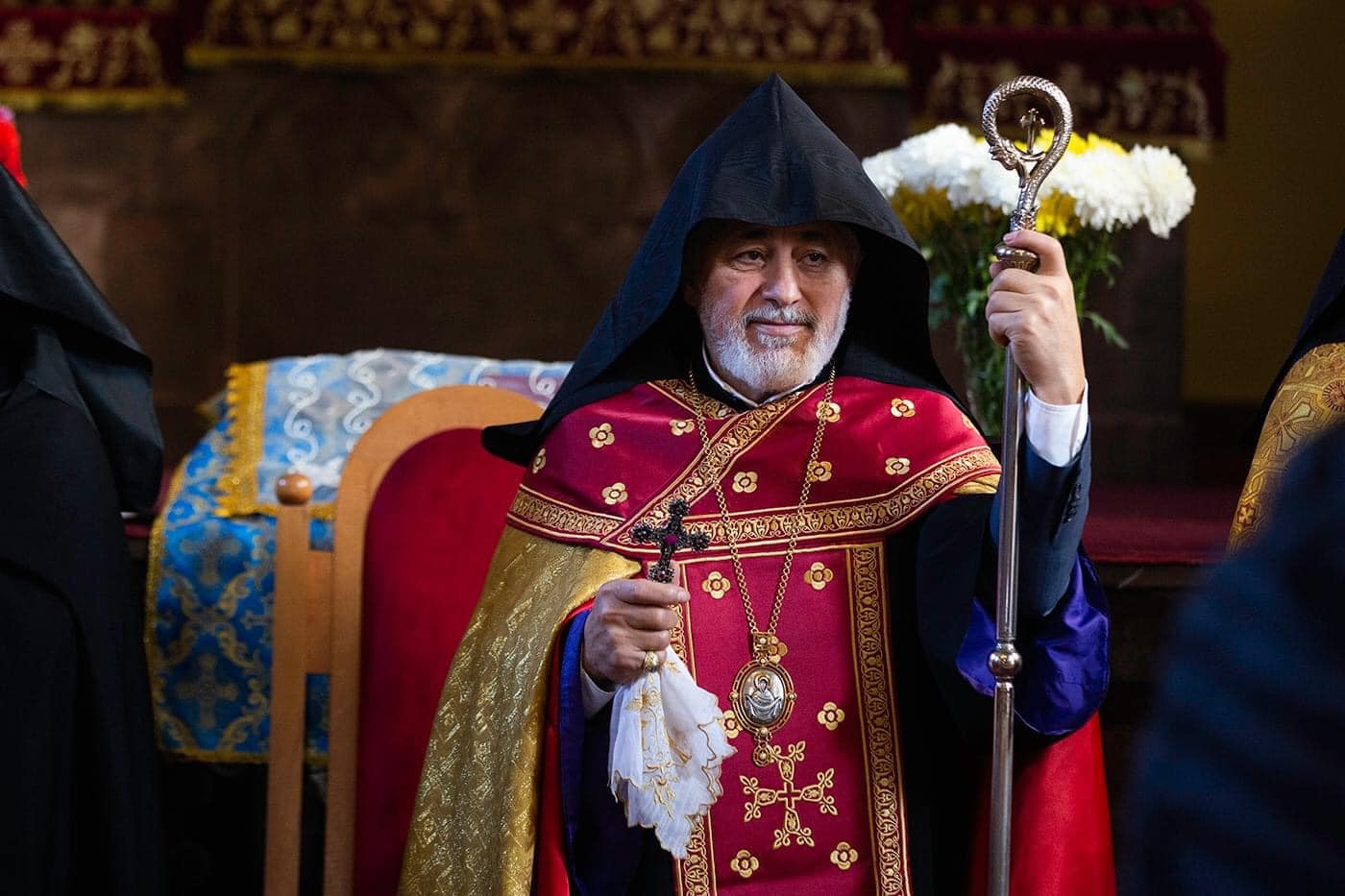
The cases have also affected other members of Karekin II’s family. His brother Gevorg Nersisyan and Nersisyan’s son Hambardzum were arrested during a local election campaign in Vagharshapat in November 2025. Following Pashinyan’s allegations, the Armenian Security Service (NSS) declassified documents claiming another brother, Archbishop Yezras, head of the Diocese of New Nakhchivan and Russia, had been recruited by the Soviet-era KGB.
Attempts to publicly discredit senior clergy have also intensified. Intimate footage allegedly depicting Archbishop Arshak Khachatryan was leaked, and the Pashinyan-affiliated website Civic.am has published a photo of Bishop Kirakos Davtyan in an alleged intoxicated, partially undressed state, suggesting he was an alcoholic.
Separately, authorities dissolved the Spiritual-Cultural Public TV company, which broadcasts the Church-founded Shoghakat TV. Reports also indicate that military commanders have pressured army chaplains to back Pashinyan’s reform agenda, while defrocked clergy were allowed to conduct liturgies under police supervision, with Pashinyan and officials in attendance. NSS officials were involved in omitting Karekin II’s name from services, a move that disrupted the established order of the religious ceremony and was a sign of protest against the Catholicos by his subordinates.
How is Karekin II fighting back?
Since tensions with the authorities increased in May 2025, Karekin II has defrocked or removed several opponents within the Church as a main tactic to fight back.
Among the first to be defrocked, in October 2025, was priest Aram Asatryan, an early vocal supporter of Pashinyan within the clergy. Neither Asatryan nor Pashinyan accepted Karekin II’s decision to strip him of his status; Pashinyan even attended a liturgy led by Asatryan following the decision. The Mother See called this liturgy ‘a soul-destroying initiative’ and accused Pashinyan of attempting to ‘split the Church’.
Asatryan remained at his assigned church, often seen under police protection. In January, the Church filed two lawsuits demanding the return of the church keys and a Yerevan apartment allocated to Asatryan by the Mother See.
The highest-ranking clergyman affected was Bishop Gevorg Saroyan, who was defrocked in January after suing to challenge his dismissal as Primate of the Masyatsotn Diocese.
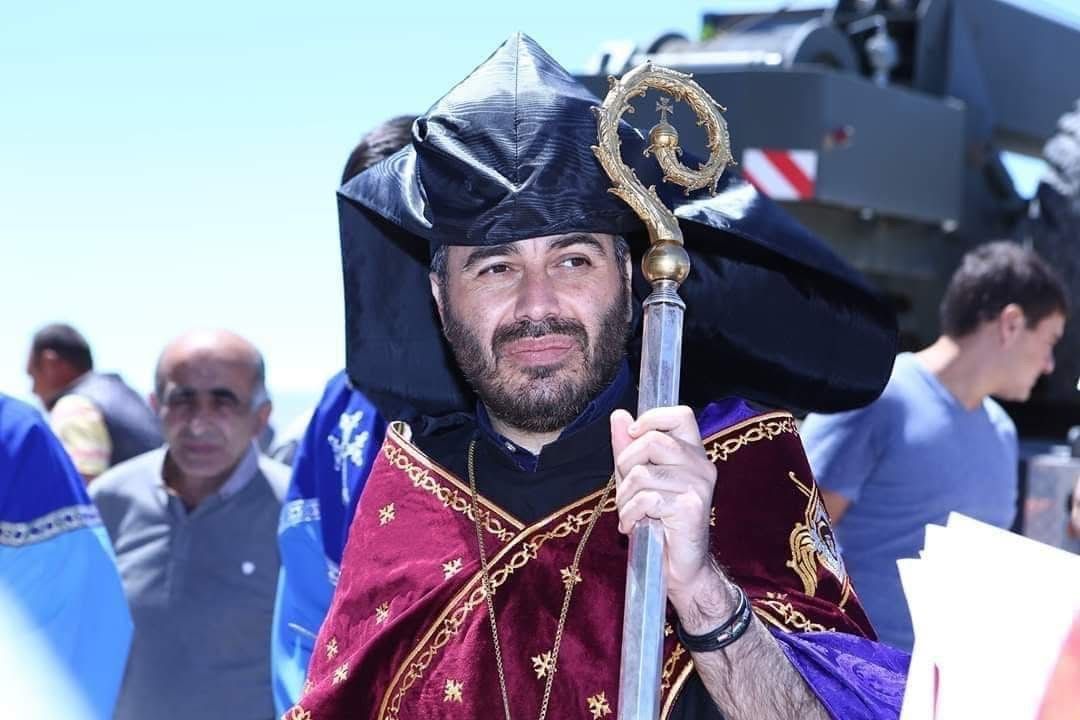
Responding to criticism over the defrocking practices, the Mother See reported that during Karekin II’s 26-year tenure, 101 clergymen had been dismissed, including 21 directly by the Catholicos himself. At the same time, 491 clergymen were ordained.
Neither Armenian authorities, nor the defrocked clergy members have accepted Karekin II’s decisions, pointing towards his alleged illegitimacy as head of the Church.
Separately, Karekin II and the official Mother See have so far responded modestly to the accusations, avoiding offensive language, unlike their opponents, who have publicly used priests’ civilian names as well as obscene speech. That being said, some clergy have offered insults, calling Pashinyan ‘the chief madman of the country’ or ‘Judas’.
In official statements, Karekin II and the Mother See have described the authorities’ actions as ‘oppression’, ‘interference in internal affairs’, and an ‘anti-Church campaign’ that ‘poses a grave threat to our national unity, undermines [Armenia]’s internal stability, and strikes directly at Armenian statehood’.
The Church has also said Pashinyan’s initiative ‘directly violates’ the Armenian constitution and infringes on the rights of the Church, guaranteed both internationally and under Armenian law, and described the prosecutions of clergy as unjust.
Who’s winning the clergy’s loyalty?
Despite some clergy siding with Pashinyan, the majority have remained loyal to Karekin II or stayed silent.
Following the publication of the Church reform statement, the ruling Civil Contract party reported that another 20 or so clergy members had joined the initiative.
However, some of the 10 senior clergy members who signed the statement have been linked to past corruption cases and charges under Pashinyan’s government. In addition, one of them, Archbishop Hovnan Derderian, has since appeared to turn on Pashinyan by signing a statement urging Armenian authorities to ‘stop the persecution of the Church’. In February, he and 24 other high-ranking priests ‘reaffirm[ed] his loyalty to the Mother See and the Catholicos’.
At the same time, the latest survey by the International Republican Institute (IRI) found that the Church was the second institution Armenians were most satisfied with after the Armed Forces, with 39% very satisfied with both. However, satisfaction with the Church leadership was lower, with only 23% saying they were very satisfied.
Yousef Bardouka
Can Pashinyan succeed?
Despite the release of a reform agenda with an explicit goal of ousting Karekin II, the roadmap offers no clear explanation of how such a goal could be achieved. The Armenian Apostolic Church does not grant external actors any role in the election or removal of the Catholicos, leaving significant legal and procedural gaps in the proposal.
The Catholicos, as the Church clarifies, ‘is elected for life in the National-Church Assembly, ordained and consecrated by 12 bishops in the Mother See Cathedral’.
Additionally, Armenia is a secular state, and its constitution draws clear boundaries between the state and religious institutions. In particular, Article 17 states that ‘the freedom of activities of religious organisations shall be guaranteed’ in the country.
The constitution further limits the actions of state officials, stating that they ‘shall be entitled to perform only such actions for which they are authorised under the constitution or laws’.
Citing these articles, Pashinyan’s critics argue that these provisions prohibit direct government intervention in Church affairs, and that any such attempt by the executive to influence the removal of the Catholicos would exceed constitutional authority and violate the constitution.
Even so, Pashinyan vowed in January that he intended to make Karekin II reconsider and resign.
‘[Former Prime Minister] Serzh Sargsyan also had no intention of leaving, but he was forced to leave; the same will happen to Ktrich Nersisyan [Karekin II] — he will be forced to leave as well’.