Opinion | The risks of Pashinyan’s fear-mongering tactics ahead of Armenia’s elections
Pashinyan’s claims that the opposition is preparing a new war with Azerbaijan risks justifying non-democratic and even unconstitutional measures.
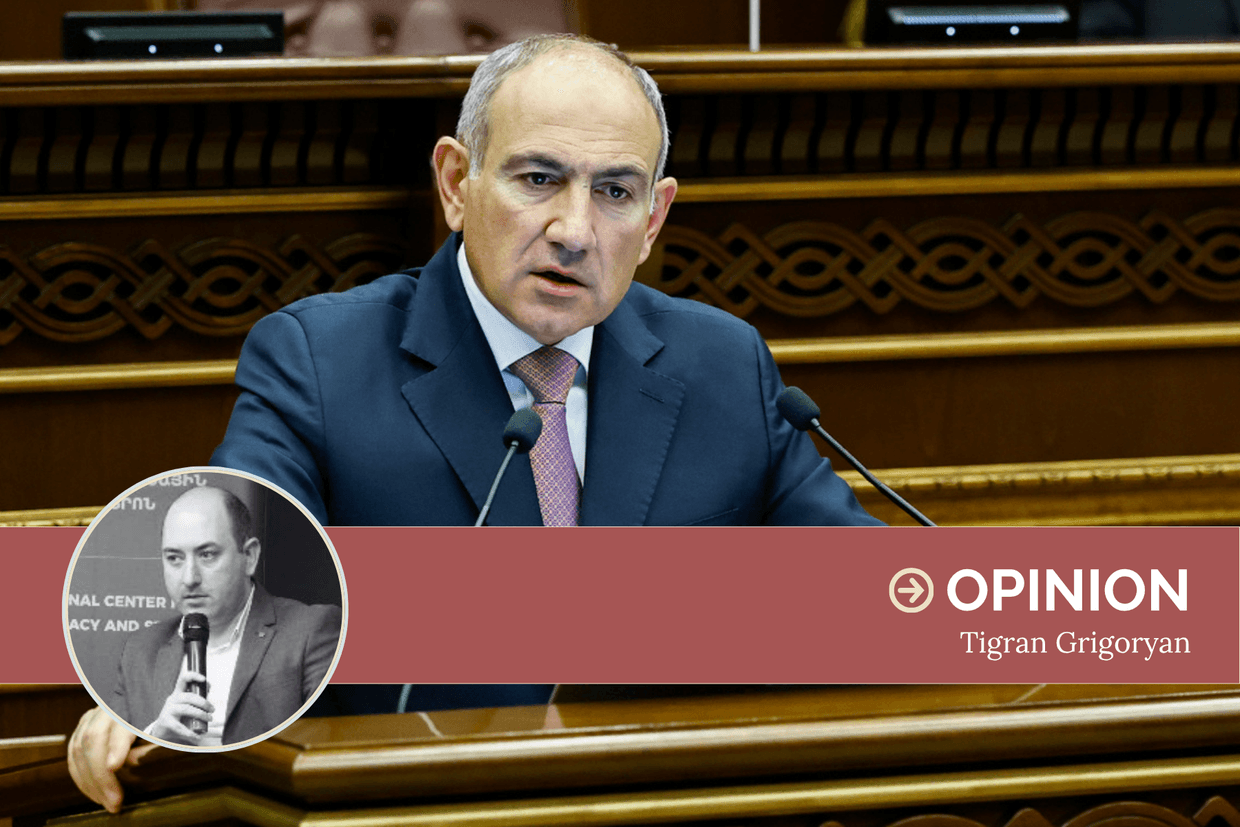
Two months before the elections, Armenia’s main political forces have effectively launched their campaigns. The ruling Civil Contract party is no exception, with many of the statements and narratives promoted by its high-ranking members likely to dominate the pre-election discourse in the coming weeks. One of these key narratives is the assertion that a war between Armenia and Azerbaijan will break out if they are not re-elected — and that Armenia would suffer a devastating defeat.
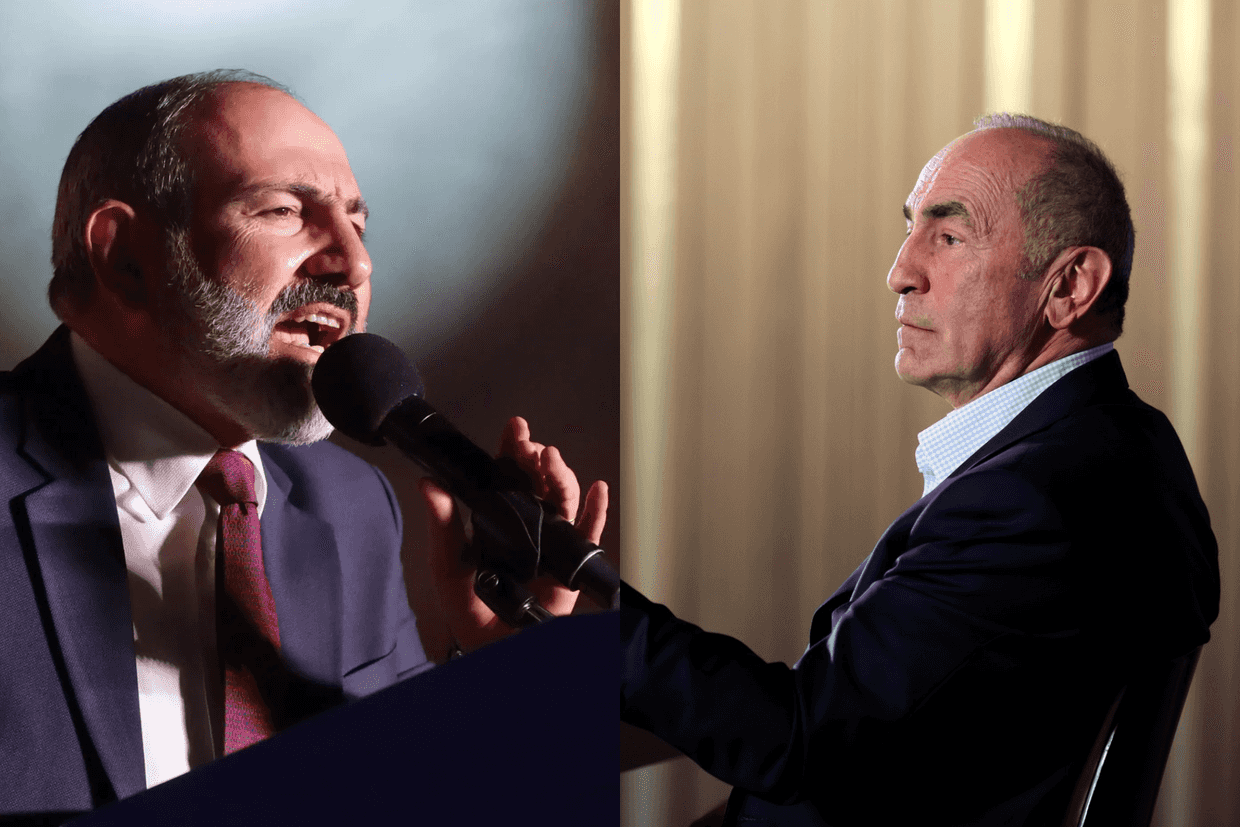
On 19 March, during his weekly briefing, Prime Minister Nikol Pashinyan argued that opposition parties are effectively preparing a new war with Azerbaijan:
‘These parties and these circles first say that they are not against peace, and then say that if they come to power, they will start revising the peace process. I want to say very directly, without embellishment, that this means war — with consequences for Armenia not only in terms of territorial losses, but also the loss of sovereignty’.
A few days later, he doubled down on this claim, stating that there could be a catastrophic war as early as September 2026 if the ruling party fails to secure a constitutional majority in the elections. Shortly thereafter, Pashinyan specified whom he considers the ‘party of war’, naming Russian–Armenian tycoon Samvel Karapetyan’s Strong Armenia Party, ex-President Robert Kocharyan’s Armenia Alliance, and businessperson Gagik Tsarukyan’s Prosperous Armenia Party.
 Arshaluys Barseghyan
Pashinyan’s argument revolves around the idea that reservations expressed by these actors regarding the current peace process, as well as the US-led Trump Route initiative, will inevitably lead to renewed war with Azerbaijan.
This is not the first time Pashinyan has invoked the risk of war to shape public perceptions and behaviour. In March 2024, when the controversial delimitation process began along the northern section of the Armenia–Azerbaijan border, Pashinyan met with residents of the village of Voskepar. During that meeting, he stated that if the four villages demanded by Azerbaijan were not transferred, war would break out by the end of the week. During the same period, many pro-government actors echoed this narrative, arguing that reluctance to make such concessions would lead to escalation and even greater territorial losses.
Now that this type of rhetoric has resurfaced in the pre-election period, it carries significant risks.
The first concerns Armenia’s domestic political environment and democratic development. With the global rise of populism and spin dictatorships, such rhetoric is by no means a unique phenomenon. The manipulation of societal fears for narrow political gain is a widely used tactic among autocrats and would-be autocrats. A close and relevant example for Armenia is neighbouring Georgia, where the ruling Georgian Dream party has used similar fear-mongering narratives, portraying the opposition as part of a so-called ‘global war party’.
Such narratives are dangerous because they deliberately raise the stakes of elections, presenting the ruling party’s victory as an absolute necessity. This escalation of stakes can be used to justify non-democratic and even unconstitutional measures. If what is perceived to be at stake is not merely a change in government but the country’s sovereignty or territorial integrity, democratic norms are easily sidelined.
In 1996, for example, Russia’s political and oligarchic elites ensured the re-election of the highly unpopular President Boris Yeltsin, justifying their actions as necessary to prevent a communist comeback — regardless of the cost to the democratic process. This episode ultimately contributed to Russia’s authoritarian turn and the rise of a strongman leader like Vladimir Putin.
In Armenia, over the past several years, the ruling Civil Contract party has consistently presented itself as the guardian of sovereignty, while portraying many of its political opponents and critics as serving foreign interests and undermining the state. In this process, a wide range of issues has become securitised. Over the past year, as the government has increasingly instrumentalised law enforcement and the judiciary to pursue narrow political objectives — such as during its confrontation with the Armenian Apostolic Church — it has justified these actions by claiming to defend Armenia’s sovereignty from external interference, particularly from Russia.
In this context, Pashinyan’s recent statements about the inevitability of war in the event of the ruling party’s defeat closely mirror this sovereignty narrative. They also expand the space for justifying anti-democratic practices: if regional peace itself is at stake, then ‘democracy can wait’.
Ani Ghevondyan
At the same time, Pashinyan’s claims raise important questions about the nature of the peace process itself. For months, Pashinyan has insisted unequivocally that peace has effectively been achieved and is irreversible. This is likely to be a central message of the ruling party’s campaign, linking the relative stability following the Washington Summit of August 2025 to its earlier promise of ushering in an ‘era of peace’.
However, if we take Pashinyan’s recent statements at face value, peace appears far from secure. Instead, it seems contingent on highly specific electoral outcomes — not merely a victory for the ruling party, but a landslide that would grant it a constitutional majority. Such a majority would enable the government to amend key thresholds related to constitutional referenda in the National Assembly, thereby facilitating the adoption of a new constitution in line with Azerbaijan’s demands and the signing of a peace treaty.
This rhetoric is also problematic because it may inadvertently legitimise potentially destructive actions by Azerbaijan, shifting responsibility onto the Armenian side. For instance, it is unlikely that the ruling party will secure a constitutional majority. As a result, it may also struggle to gain public support for adopting a new constitution. In such a scenario, Baku could use Pashinyan’s own statements to justify stalling the peace process, prolonging the ‘neither peace nor war’ status quo. Under more pessimistic conditions, it could even escalate tensions militarily while deflecting responsibility onto Armenia.
Ultimately, Pashinyan’s instrumentalisation of societal fears for narrow political gain is not unique, but it is deeply problematic. It perpetuates the polarised political environment that has dominated Armenia for years and diverts attention from substantive debates about the country’s future trajectory. It turns electoral competition into a form of political blackmail and undermines the integrity of the democratic process. Moreover, by tying the prospects for peace to the fortunes of a single political party — and, in effect, to a single individual — it makes the entire peace agenda fragile and unsustainable.