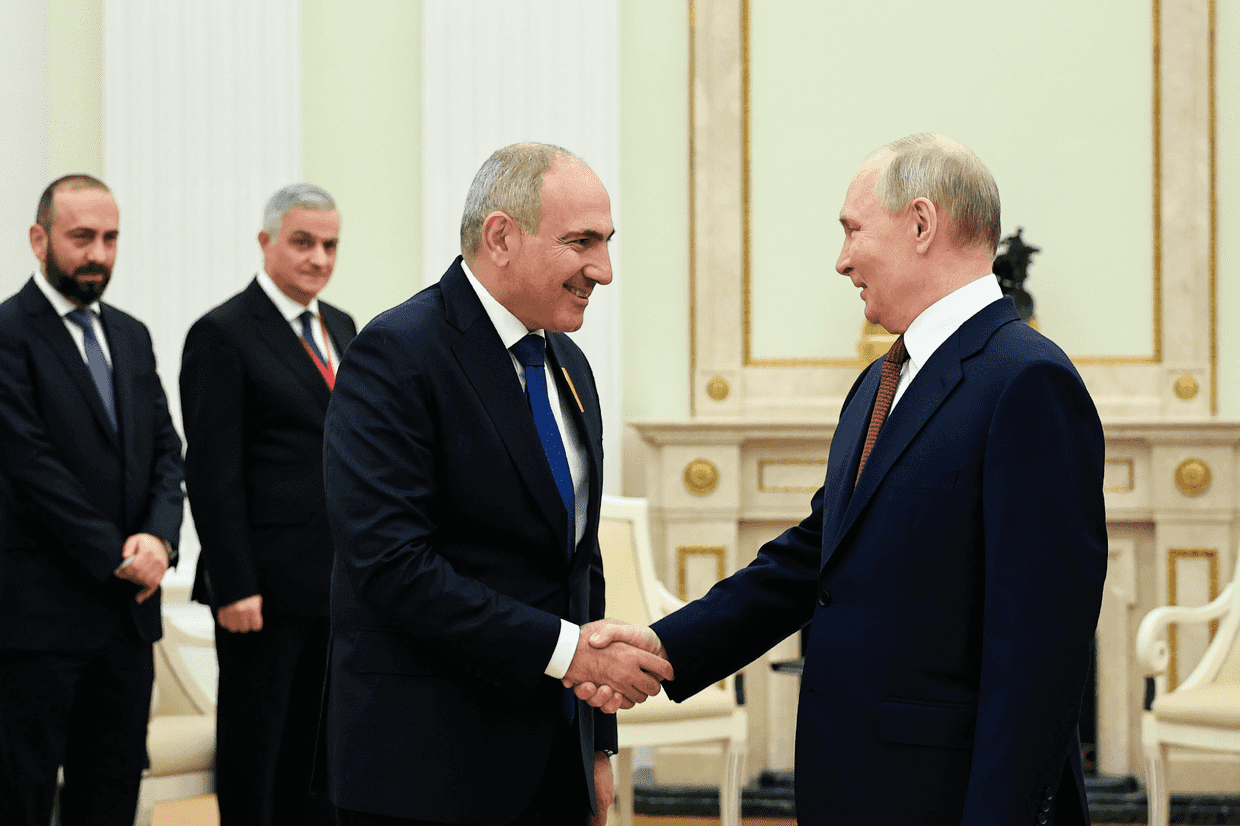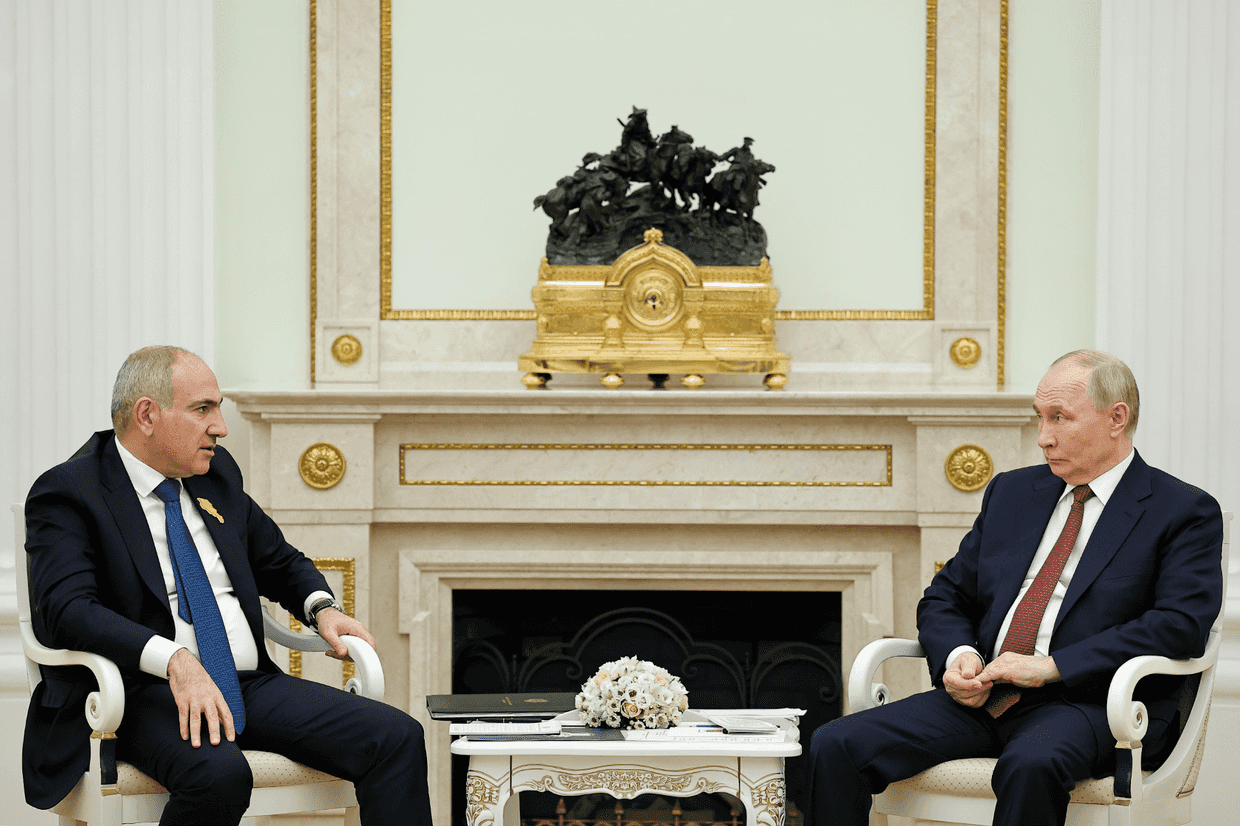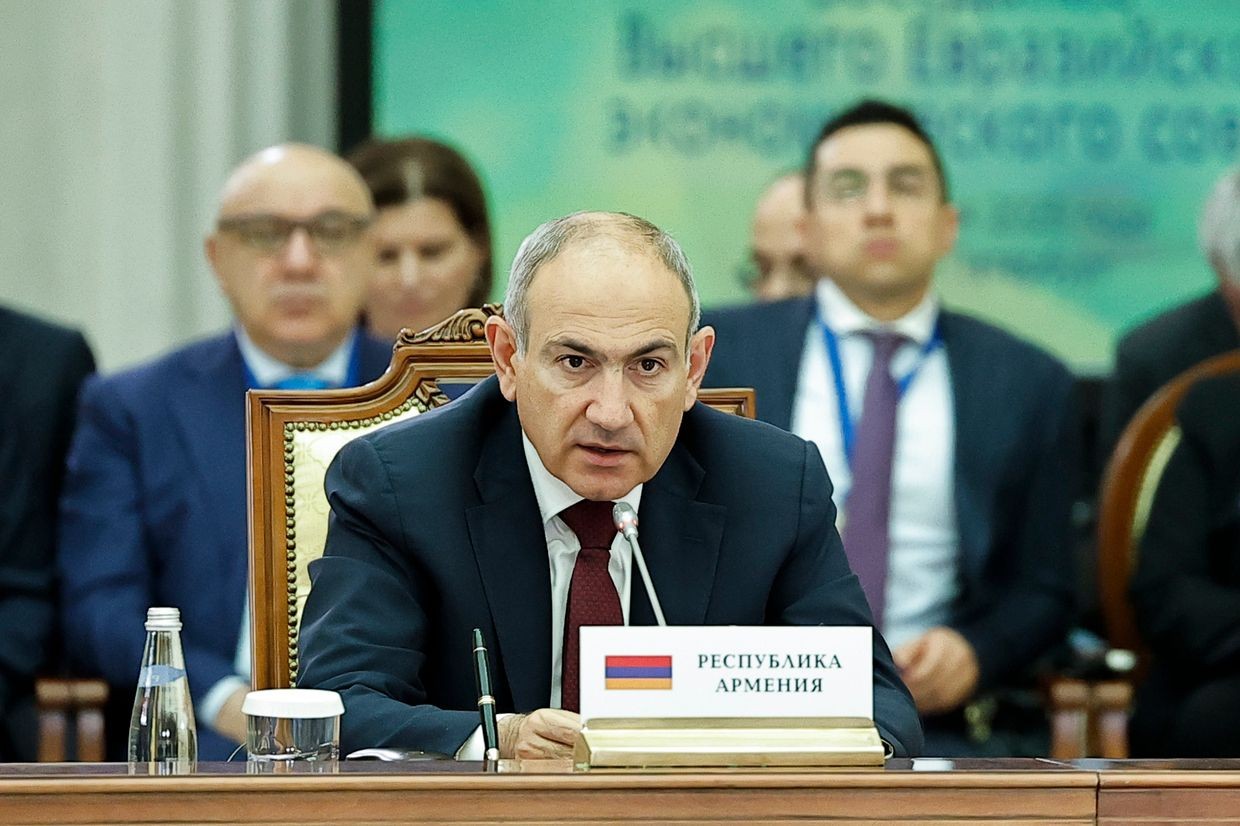
Armenian Prime Minister Nikol Pashinyan expressed his gratitude to Azerbaijani President Ilham Aliyev for ending the country’s restrictions on the flow of cargo to Armenia on Sunday during his speech in the session of the Supreme Eurasian Economic Council (EAEU) in St. Petersburg, Russia.
Talking about how 2025 was ‘significant’ in terms of the international cooperation of the EAEU, Pashinyan touched upon the prospects for developing cooperation in the field of transport and logistics.
‘In this context, I would like to note that the positive and constructive changes taking place are creating new opportunities for all countries in the wider region, contributing to strengthening economic stability and expanding regional [transport links]’, Pashinyan said.
Immediately after this remark, Pashinyan expressed his ‘appreciation’ to Aliyev ‘for his decision to lift the blockade on the transit of goods through the territory of Azerbaijan to Armenia, as well as for creating conditions for the start of bilateral trade’.
Pashinyan called that decision ‘one of the first significant achievements in establishing peace and stability in the region’.
Aliyev announced during his 21 October visit to Kazakhstan that Baku had lifted all restrictions on the movement of goods to Armenia, following which Armenia has received two batches of wheat, from Russian and Kazakh, via Azerbaijan and Georgia, the third shipment is reportedly on the way.
 Arshaluys Barseghyan
On 19 December, Armenia received the first batch of Azerbaijani fuel shipments since 1988, marking a historic turning point in post-independence relations between the two countries.
The shipment came months after Armenia and Azerbaijan initialled the peace treaty in August during talks in Washington mediated by US President Donald Trump.
The Washington deal also saw an agreement signed to establish the Trump Route for International Peace and Prosperity (TRIPP), more commonly referred to as the Trump Route, connecting Azerbaijan to its exclave of Nakhchivan through Armenia.
Links between the ruling Civil Contract party and the fuel imports
Armenia received the Azerbaijani fuel a day after Azerbaijan announced that it had sent a shipment of SOCAR-produced AI-95 petrol to Armenia through Georgia on 18 December.
The Azerbaijani pro-government media outlet APA said the shipment would be made ‘in line with the peace agenda between Azerbaijan and Armenia’, based on an agreement reached between Azerbaijani Deputy Prime Minister Shahin Mustafayev and his Armenian counterpart, Mher Grigoryan, on 28 November in Gabala, Azerbaijan.
Yousef Bardouka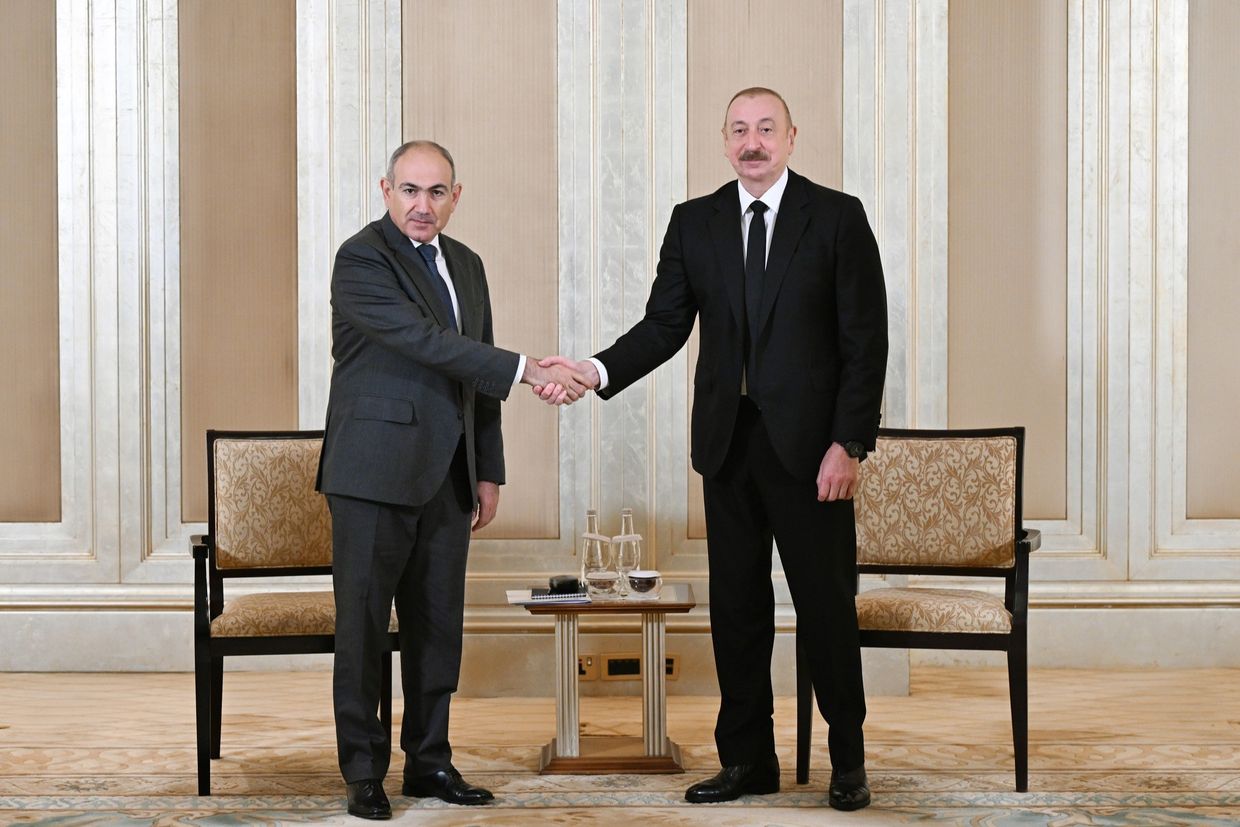
Pashinyan welcomed the news, with Economy Minister Gevorg Papoyan adding that ‘instead of war, we are trading’.
The first batch consisted of 1,218 tonnes of A-95 petrol and, according to RFE/RL, was imported by two Armenian companies.
Mega Trade, which RFE/RL said had imported 600 tonnes of Azerbaijani fuel, belongs to the family of Khachatur Sukiasyan, an MP from the ruling Civil Contract Party.
Arshaluys Barseghyan
Sukiasyan’s family will sell the fuel in its Ran Oil chain.
The name of the other company has not been disclosed yet.
‘Imported petroleum products [...] will significantly contribute to reducing fuel prices and creating more transparent pricing in the sector’, the company told Armenpress on 19 December.
On Monday, RFE/RL reported that Ran Oil will sell Azerbaijani premium fuel at ֏440 ($1.15) per litre, which, as the company noted, is ‘significantly cheaper’ than the current market price of ֏520 ($1.36) per litre.
Speaking to RFE/RL, Mega Trade director Karen Hayriyan said on 19 December that after the sale of the first batch, it would become clear whether they will continue to buy Azerbaijani fuel, but also expressed the company’s intention to do so.
This article was translated into Russian and republished by our partner SOVA.
This article was translated into Azerbaijani and republished by our partner Meydan TV.