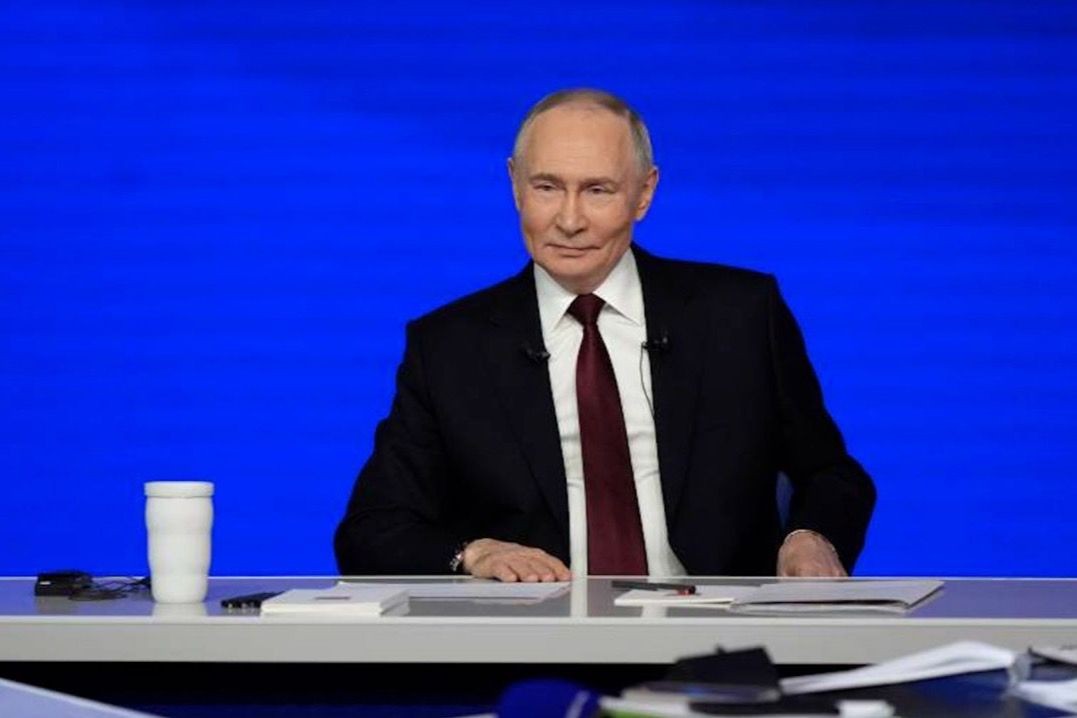
During a live interview on 19 December, Russian President Vladimir Putin praised child marriages, citing both the practice in general in the North Caucasus and the marriages within Chechen Head Ramzan Kadyrov’s family, saying it was a ‘very good tradition’.
Putin’s comment came in response to a question by a 23-year-old audience member about his long-term relationship with his girlfriend.
Putin went on to praise the people of the Caucasus as having a ‘very good tradition’, saying that it consisted of parents marrying off their children at a fairly early age. He said that, in his opinion, this is something others should emulate.
‘Among the peoples of the Caucasus there is a very good tradition: they marry off their children at a fairly early age. This is really right, we should take an example from them. How do I know? Ramzan Kadyrov has a large family, many children, and they marry and get married at a fairly early age. He told me that this is their tradition, generally across the Caucasus. And that is very good’, Putin said.
Putin also stated that this is ‘really right’ and beneficial for the formation of family life. He linked the discussion to the problem of declining birth rates and to the difficulties that, in his view, young people, especially women, face when trying to combine education and careers with family life.
In his Telegram channel, Kadyrov called Putin’s praise of his family a great honour and stated that, in his opinion, without a strong family, a meaningful marriage and the birth of children, neither the development of the state nor the preservation of spiritual and moral foundations is possible.
Kadyrov stressed that marriage and the birth of children are a sacred duty for the residents of the Chechen Republic, emphasising the importance of traditions of mutual support, respect for elders, and care for the younger generation. He thanked the president for the high assessment of his family and said he intended to continue adhering to ‘traditional values’.
‘For me and for all the Kadyrovs, it is a great honour and a source of special pride that the President of Russia cited our family as an example. We perceive this as a high evaluation not only of our life path, but also of those traditional values that have for centuries formed the basis of the culture and worldview of the Chechen people and the peoples of the Caucasus’, Kadyrov wrote.
Ramzan Kadyrov’s sons entered into marriage at around the age of 17. His middle son, Zelimkhan (Eli) married a girl no older than 14 years old. Putin has personally ‘blessed’ all of Kadyrov’s children before they married.
After the president’s remarks, a number of human rights organisations, including the NC SOS Crisis Group, criticised Putin’s comments. Human rights defenders noted that the discussed tradition of early family formation is linked to problems affecting the rights of women and girls.
Human rights defenders believe that ‘women are often married off against their will and at an early age’. They cited the case of murdered Aishat Baimuradova, a Chechen runaway killed in Yerevan. Baimuradova was married off to a 29-year-old man whom she had seen only three times before the wedding.
NC SOS also referenced other examples that led to the breakdown of marriages, though without such tragic consequences.
The women’s rights group Marem pointed out that early marriages break up far more often and that violence frequently occurs in such families.
‘At 16–17, girls are in most cases neither physically nor psychologically ready to live a sexual life’, Marem stated.
Marem also noted that Kadyrov himself had previously spoken out against early marriages — in 2014 he banned imams from marrying schoolchildren. The reason was the conclusions of a commission of the Spiritual Administration of Muslims, which observed that more than half of divorces involved couples who had married young. Medical statistics were also disappointing — high child mortality and complications among girls giving birth as teenagers were acknowledged at the time, even in Grozny.
The crisis group recalled Kadyrov’s words that ‘marriages at school age have an adverse effect on children’ and that ‘it is unacceptable for girls who are themselves children to become young mothers who do not know how to cook or care for their child’.
In Russia, legislation generally sets the minimum marriage age at 18, however municipal authorities may in some cases approve marriage at 16 under certain conditions. This provision allows marriages to be officially registered from the age of 16, but most marriages involving people under 18 remain outside official statistics or are conducted through religious rites without state registration.
 OC FORGE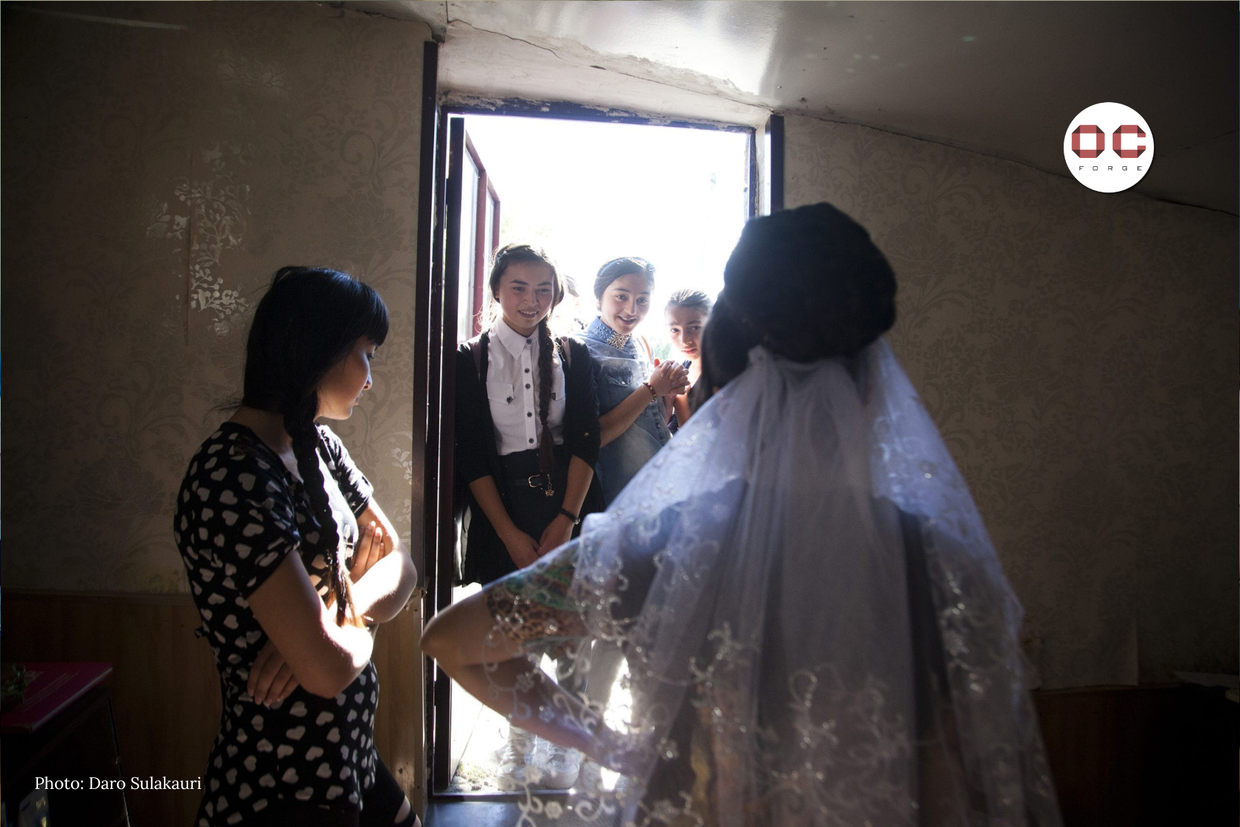
This article was translated into Russian and republished by our partner SOVA.
This article was translated into Azerbaijani and republished by our partner Meydan TV.