I can vividly remember a song from my childhood called ‘Ayrilig’ (‘Separation’) about the Kudaferin bridges across the river Araz, symbolising the separation of Azerbaijan into two. Towards the end of the 1980s and into the early 1990s, the song became almost a motto — after the First Nagorno-Karabakh War, however, the song became just a memory for many.
Yet since the US–Israeli attack on Iran, the complex relationship between the republic of Azerbaijan and Iranian Azerbaijan has returned to the forefront of politics and within the minds of both populations.
On the one hand, the Iran war has given hope to Iranian and diaspora Azerbaijanis, yet on the other, it has caused concern for the Azerbaijani government, who fears an influx of Shia Muslims.
Following the alleged Iranian drone strike on Azerbaijan’s exclave of Nakhchivan earlier in March, offensive language towards Shia Muslims grew in Azerbaijan.
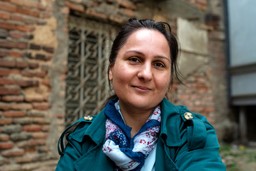
In one instance, a Shia woman who placed a flower in front of the Iranian Embassy in memory of Iran’s Supreme Leader Ayatollah Khamenei was later harassed by police while returning home. Her electricity, water, and gas were also later shut off. The woman discussed the situation with her daughter and posted it on social media.
Separately, the social media page Lawyers wrote about how female teachers wearing hijabs have been told to remove their head coverings by the school administration. Videos then spread of a school director banning entry to schoolgirls wearing hijabs.
Yet abroad, activists view the Israel–US attack as a solution, claiming that ‘freedom will cure the entirety of Azerbaijan’, hinting at the unity of the two regions.
Indeed, opposition leader Ali Karimli — who was detained in late 2025 as part of the criminal case against disgraced former head of the presidential administration Ramiz Mehdiyev — has argued that Azerbaijan’s government should support the national liberation of Iran.
‘I believe that, under the current circumstances, the Azerbaijani state must support the national liberation movement of the South Azerbaijani Turks living in Iran, who number in the tens of millions’, Karimli’s social media page wrote, citing him.
Human rights are the primary concern in both regions — yet under both governments, such rights are ignored. It makes sense that those being oppressed might seek hope in a conflict, thinking it could topple some authoritarian powers. Unfortunately, in modern history, no foreign intervention has brought democracy to a country, nor will it ultimately do so. We have seen this in Iraq, Syria, Egypt, Libya — why would Iran be anything different?