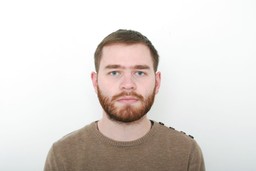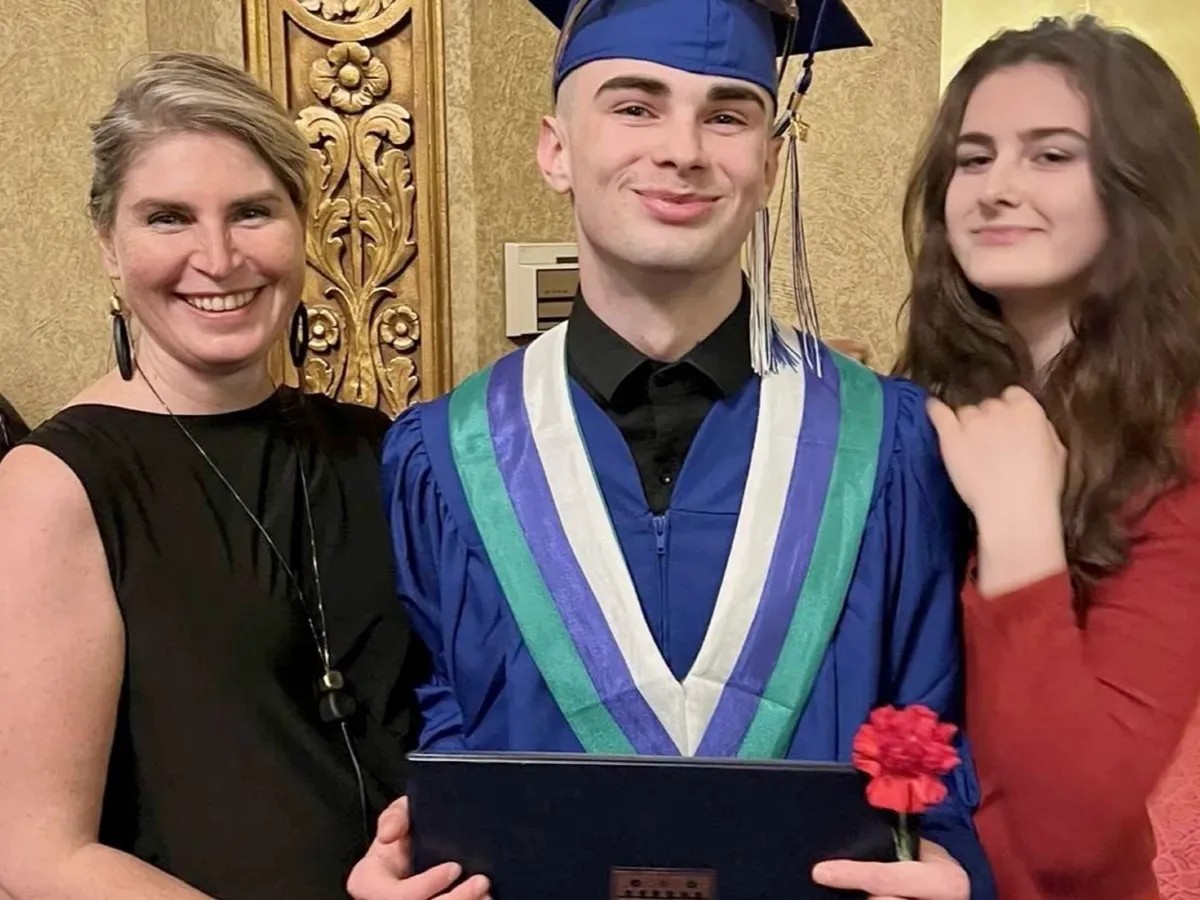
Canadian citizen Simon Rovensky, 22, has been detained in Georgia for possessing ADHD medication without a prescription, his family told media. Rovensky has reportedly been charged with smuggling and narcotics-related offences, and is being held in Tbilisi’s Gldani prison.
According to the family, Rovensky arrived in Georgia around a month ago with a friend for tourism purposes. He was carrying Adderall, a medication used to treat attention deficit hyperactivity disorder (ADHD). He had a pharmacy receipt and the medication was in a bottle labelled with his doctor’s name, but he did not have the prescription document with him.
‘The receipt for the medication, which he did have, was not accepted. Because Simon was unaware that the medication was prohibited in Georgia, he did not declare it at the airport and was subsequently detained’, Rovensky’s sister, Nika Rovensky, said.
Rovensky’s sister told the Canadian Broadcasting Corporation (CBC), that Rovensky ‘was subjected to seven hours of interrogation with his friend before they were separated’.
In a text published on GoFundMe to raise money for expenses related to her brother’s case, Rovensky’s sister also said that the young men were subjected to a ‘humiliating personal search’, with their phones confiscated.
Rovensky’s friend was later released, while Rovensky himself was transferred to Tbilisi’s Gldani prison. According to the family, they lost contact with Rovensky at this point for 48 hours, before reaching out to his lawyer.
Rovensky is currently believed to be in pretrial detention and, according to his family, faces a prison sentence of between eight and 20 years. Such a penalty is prescribed for the illegal purchase and/or possession of narcotic drugs, their analogues, precursors, or new psychoactive substances in particularly large quantities.
‘For the family, the situation has been catastrophic. His mother is raising three children on her own. Simon is the eldest child in the family’, the text read.
The fundraiser launched by his sister is intended to cover legal expenses, but more importantly, a ‘fine’ which, according to the text, could become a condition for Rovensky’s release and deportation to Canada.
‘According to the lawyer, there is an established practice in cases involving foreign nationals who find themselves in similar situations. If the court-imposed fine is paid to the state, the individual may be released from custody and deported from the country’, the a text explaining the fundraiser reads.
The text does not specify whether the potential payment would constitute bail through which he could be released from pre-trial detention or just a fee paid for a plea deal. The lawyer has estimated that the payment was between $30,000 and $45,000.
However, according to the family, the next court hearing is scheduled for 25 June, ‘nearly two months after’ Rovensky’s detention. Under Georgian law, courts are required to review the necessity of maintaining pre-trial detention at least once every two months and decide whether to extend it or replace it, for example, with bail.
In the case of release on bail followed by deportation, a foreign national becomes subject to legal proceedings in their home country. In the case of a plea agreement, however, the defendant must first plead guilty before a Georgian court before being released.
In November 2025, the Tbilisi City Court released 19-year-old British citizen Bella Culley — who had been accused of importing 11 kilogrammes of cannabis and two kilogrammes of hashish from Thailand — through a plea agreement. The agreement included her parents paying a ₾500,000 ($185,000) fine.
OC Media has sought to determine the identity of Rovensky’s lawyer and has also contacted Georgia’s Interior Ministry for further details, though no response was received by the time of publication. It has also reached out to the Consulate of Canada to Georgia.
In a comment sent to OC Media after the publication of the article, the ministry confirmed Rovensky’s detention, stating that ‘the foreign citizen failed to present the required documentation, which led to the initiation of a criminal investigation and the person being detained as an accused’.
‘The import of narcotic drugs and psychotropic medications into the territory of Georgia is regulated under current legislation, and in such cases it is mandatory for any person, including foreign nationals, to present a stamped English-language prescription, accompanied by a certificate from the prescribing physician, and for the medication to be declared’, it added.
The Consulate of Canada also responded after the article’s publication, stating that ‘the Honorary Consul office is aware of a Canadian having been detained in Georgia’ and that ‘consular services are being provided’.
‘No further information can be disclosed due to the Privacy Act’, it added.
A spokesperson for Global Affairs Canada — a department of the Canadian government — also told CBC it was aware of a Canadian citizen being arrested in Georgia.
‘Consular officials are providing consular assistance and are in contact with local authorities’, the agency said, adding that it could not disclose further information ‘due to privacy considerations’. For her part, Rovensky’s sister told CBC that consular officials took more than two weeks to conduct a welfare check on her brother, by which time the family had already hired a lawyer.