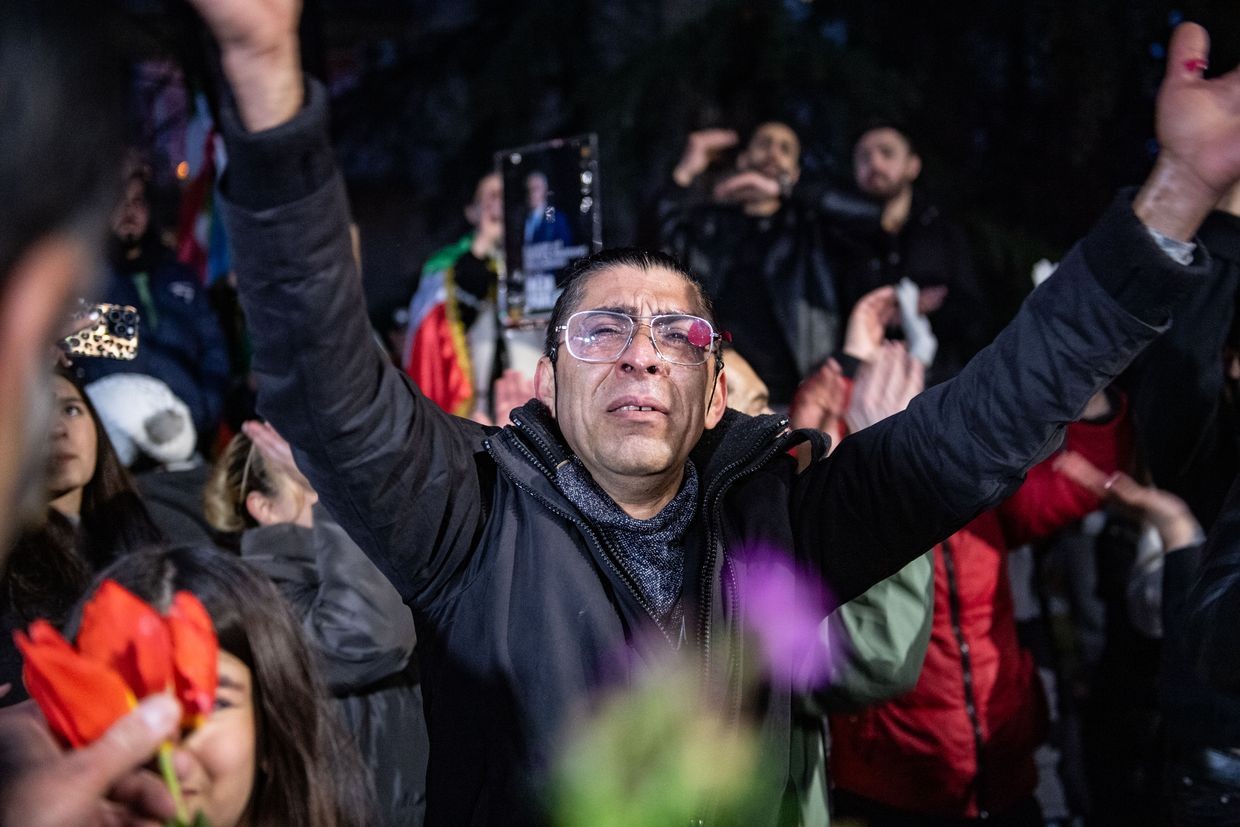
A group of Iranian citizens living in Tbilisi have held a protest in support of Iranian national Hadi Rostami, who was reportedly detained by Georgia’s immigration service. They believe that Rostami could face the death penalty if deported to Iran.
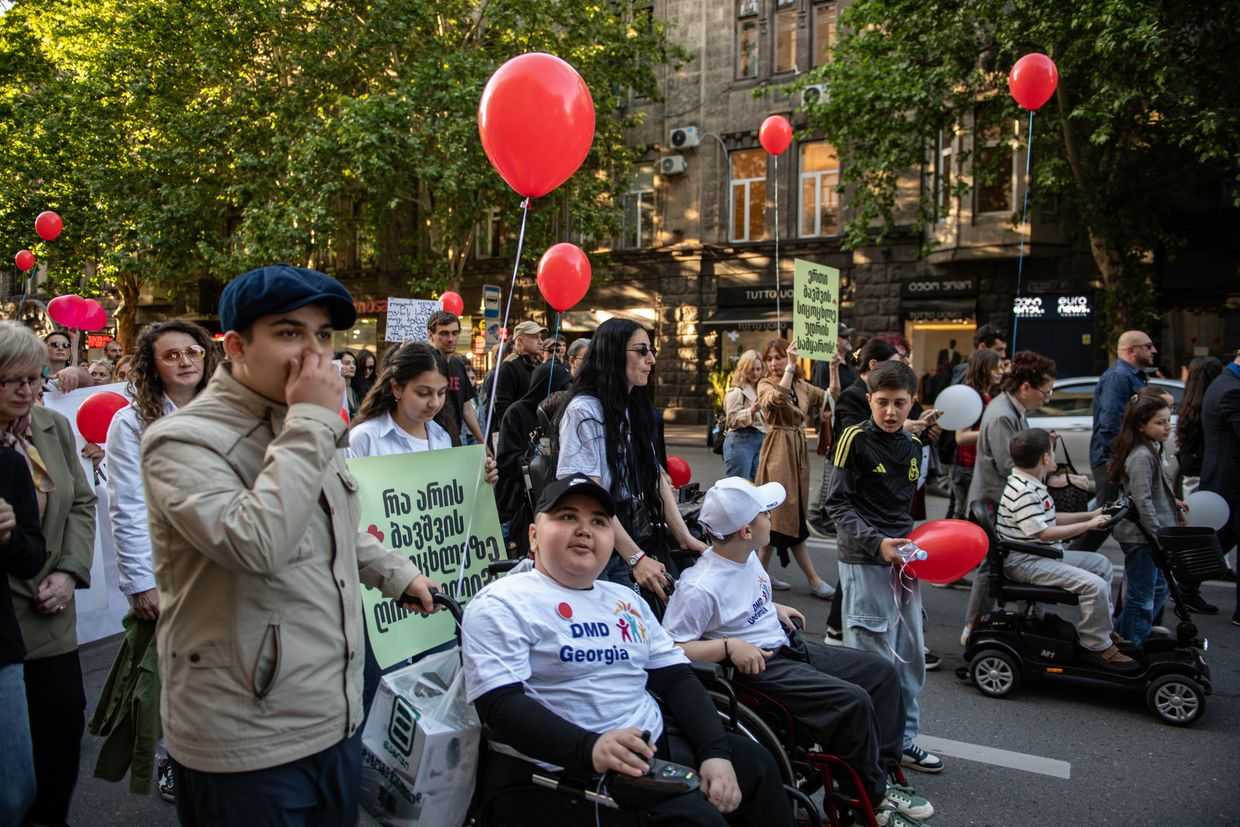
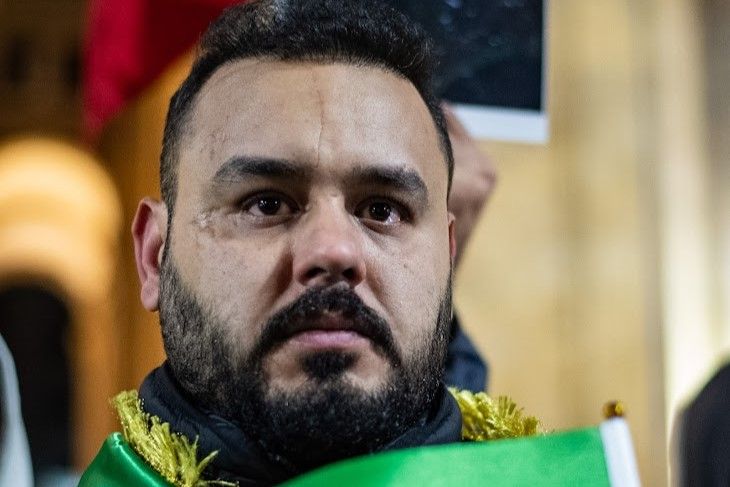
A solidarity rally took place outside the Georgian Parliament on Thursday evening in support of Rostami. During the demonstration, a small group of protesters held posters in Georgian and English, including ones reading ‘Stop deporting Iranian political activists’ and ‘Stop the refoulement [forcible return of asylum seekers] due to imminent risk of executions’.
Mohammad Reza Kamraninezhad, a Tbilisi-based Iranian activist, told OC Media in a written comment on Friday that 45 year-old Rostami had been detained in Tbilisi ‘approximately 10 days ago’. According to him, the detention was preceded by immigration authorities refusing to renew his residency permit and subsequently rejecting his asylum application.
Kamraninezhad described Rostami as a ‘veteran activist’ well known within Tbilisi’s Iranian diaspora who ‘has been lawfully residing and living in Georgia for nearly 10 years’.
According to him, as well as a female demonstrator OC Media talked to during the Thursday rally, Rostami was active in protests organised by Tbilisi-based Iranians against Iran’s ruling regime, including during the 2022 ‘Woman, Life, Freedom’ movement and the most recent anti-government demonstrations in 2025–2026.
 Mikheil Gvadzabia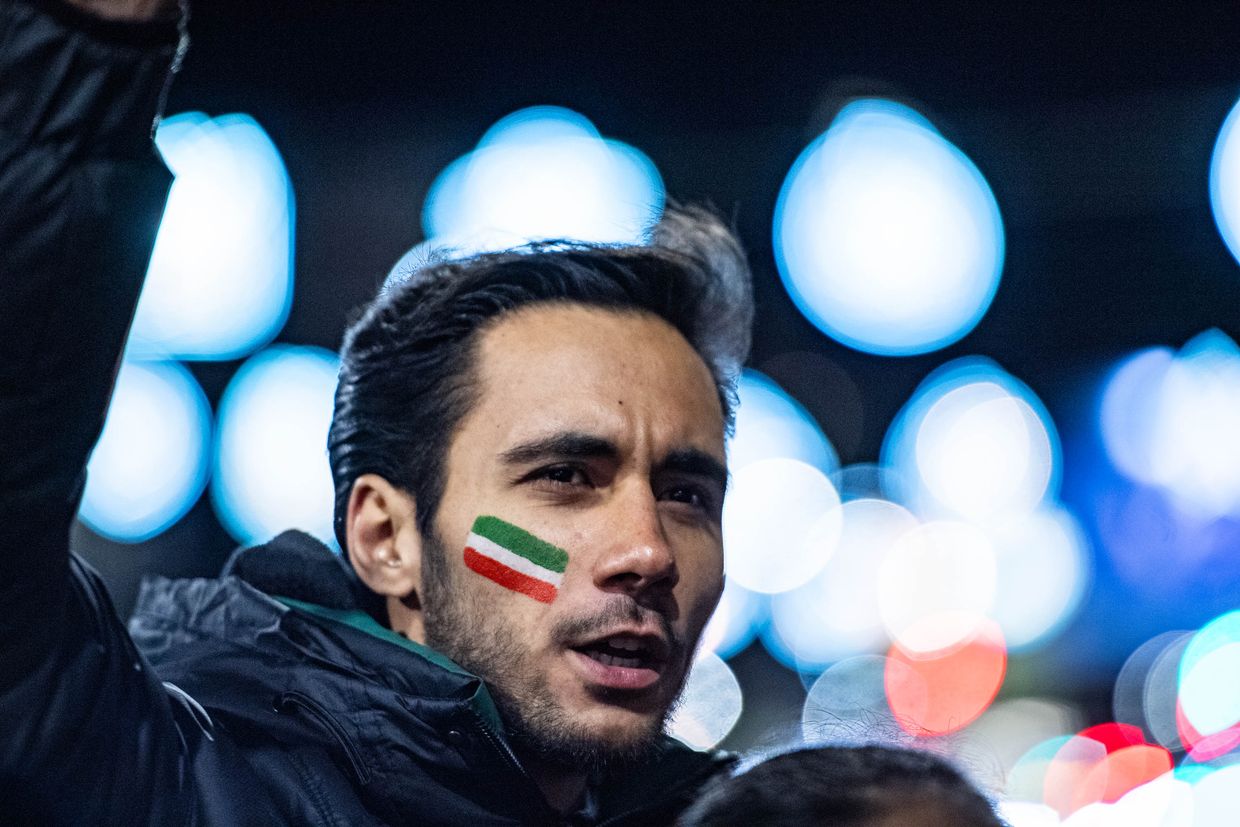
The female protester further noted that Rostami was among ‘400 people’ who were ‘blacklisted’ in Iran, with their properties ‘confiscated’, adding that if he is returned there and arrested, ‘no doubt he gets executed’. Those gathered outside parliament feared the Georgian state would ‘force him back to Iran’:
The ‘blacklist’ mentioned by the demonstrator likely refers to a list of 400 individuals published by pro-government Iranian media in April. Those included Iranian diaspora members whose assets were reportedly seized by Iran’s judiciary after they were accused of collaborating with ‘hostile’ powers.
Kamraninezhad — who was imprisoned before leaving Iran and later described episodes of torture and inhumane treatment with media — also found his name in the list. He told OC Media that confiscation included both his bank accounts in Iran, as well as his house, motorbike, and car there.
‘That’s why we are here. We are trying our best not to let that happen because if he goes back, he will be executed immediately’, the female protester said.
Foreign nationals ordered to be deported from Georgia for illegally residing in the country are normally allowed to choose their destination country, provided they have the necessary international travel documents and the right to enter those countries.
Lawyer Mariam Jikia told OC Media that asylum seekers often face issues with passports, including cases where documents have expired and their renewal is difficult. However, she said that regardless of a person’s documentation status, the state does not have the right to deport someone to a specific country if it is established that ‘their life and health would be at risk’ in their country of return.
As of Thursday, Rostami was believed to have no legal representation.
OC Media is seeking to verify Rostami’s current status and whereabouts. The Migration Department is yet to respond to OC Media’s inquiry as of publication.
Iranian dissidents in Georgia
Traditionally, Iranians in Tbilisi have been able to protest against their country’s ruling regime. During the most recent demonstrations — held earlier in 2026 in parallel with protests brutally suppressed in Iran — the main gathering point was the area surrounding the Iranian embassy in Tbilisi.
However, activists have recently begun to complain about rejections of asylum applications. Among them is Kamraninezhad, who was denied both refugee and humanitarian status by the Migration Department.
In a letter sent to him in December 2024 and seen by OC Media, the agency stated that, based on available information, ‘in the Islamic Republic of Iran there is no recorded international or internal armed conflict, and accordingly, no cases of indiscriminate violence or large-scale human rights violations are reported in this context’.
On 4 February 2026, the day a court hearing in his case was scheduled, Kamraninezhad was detained near the Iranian Embassy on charges of disobeying police, which led to the hearing being postponed. He was fined ₾4,000 ($1,500) and released two days later, but the administrative case against him has not been closed. According to him, his Georgian bank accounts have also been frozen due to non-payment of the fine.
As for his asylum case, the most recent hearing took place on Monday, but no decision has yet been announced.