How Ossetian Uatsdin became ‘the most successful’ pagan faith in the world
Uatsdin has spread amidst a growing interest in pre-Christian religious traditions as an important part of ethnic identity in the North Caucasus.

Any holiday in North Ossetia is celebrated according to a series of rules.
The table must always have three pies, stacked one on top of the other, symbolising the sky, the earth, and the underworld. Before the meal begins, the pies are slightly moved aside to show the higher powers that there are indeed the correct number. When cutting the pies, they must not be twisted — otherwise the cosmos could be destabilised.
After the first toast, which is given by the oldest man present and is dedicated to Styr Iunag Khutsau — the Great and Only God — a small piece of pie is broken off and given to the youngest boy at the table. The second toast is dedicated to the local saint Uastyrdzhi, and only the third toast is for the occasion itself. The celebration concludes with a toast for the ‘barkad’ — for abundance.
These traditions, which were observed throughout the Soviet era and since its collapse, have in recent years acquired even greater sacred significance. Over the last 30 years, there has been a growing interest across the North Caucasus, as well as Russia as a whole, in pre-Christian religious traditions as an important part of ethnic identity. These movements often describe themselves as a ‘return to the roots’ or the ‘true faith of the ancestors’, although historically, many of these beliefs had been lost or syncretised with Islam or Christianity centuries earlier.
This is especially the case in North Ossetia, where these ‘old-new religions’ have gained thousands of followers. Holiday traditions are no longer just a part of the region’s culture or a charming local custom — it has now become the foundation of a national religion: Uatsdin.
The ‘most successful’ form of neo-paganism in the world
Uatsdin — also called Atsag Din or Assianism — is usually described as a polytheism based on the text of the Nart epic, a collection of tales about the Nart heroes, considered the ancestors of all Ossetians.
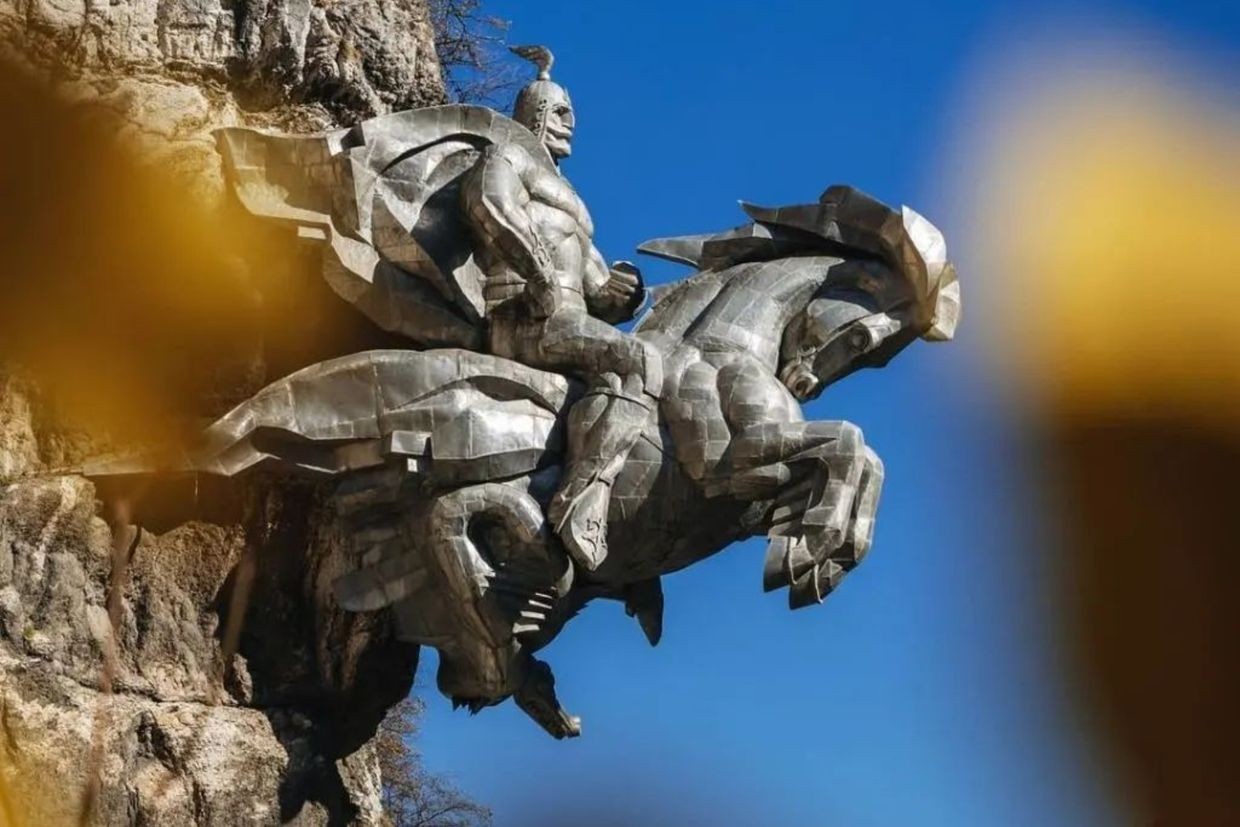
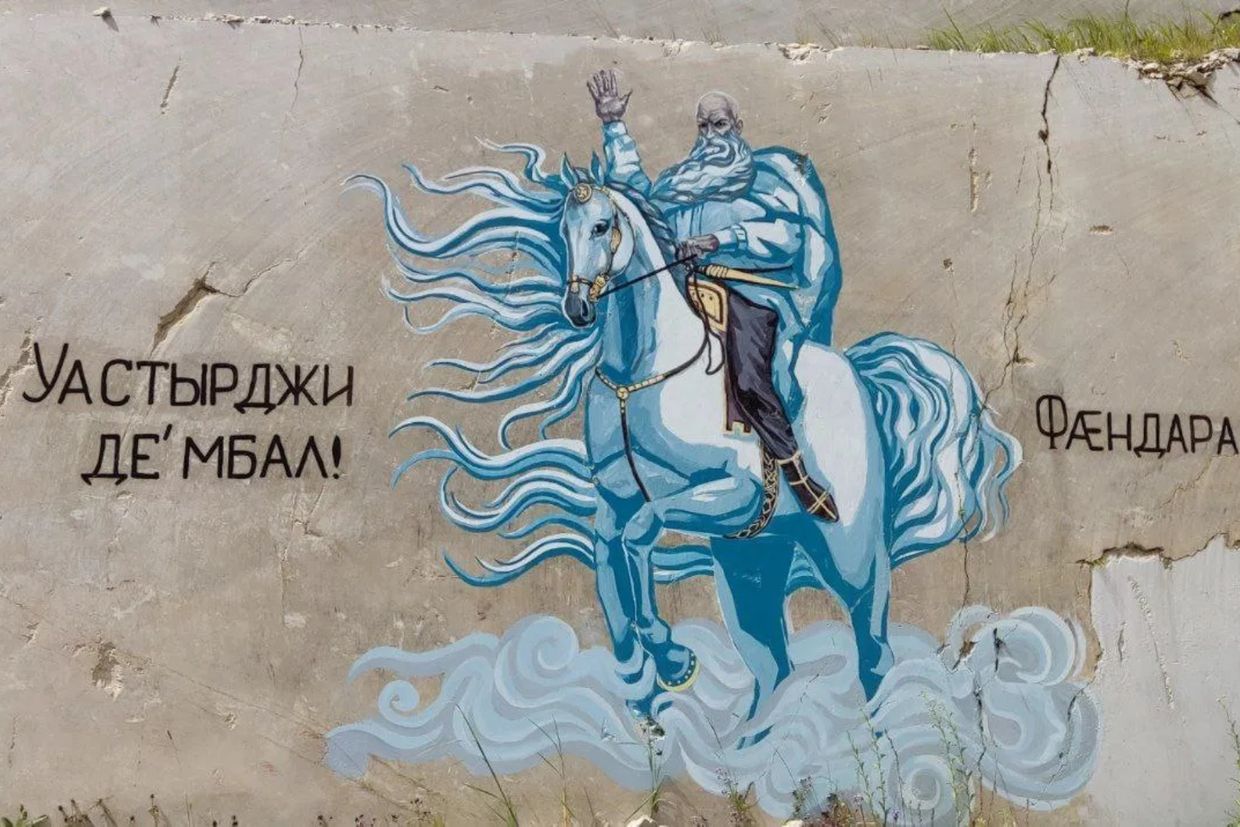
The central figure of Uatsdin is Uastyrdzhi, the patron of men, warriors, and travellers. Uatsdin draws from medieval (13th–14th century) Ossetian beliefs but gained an organised structure only in the 2000s.
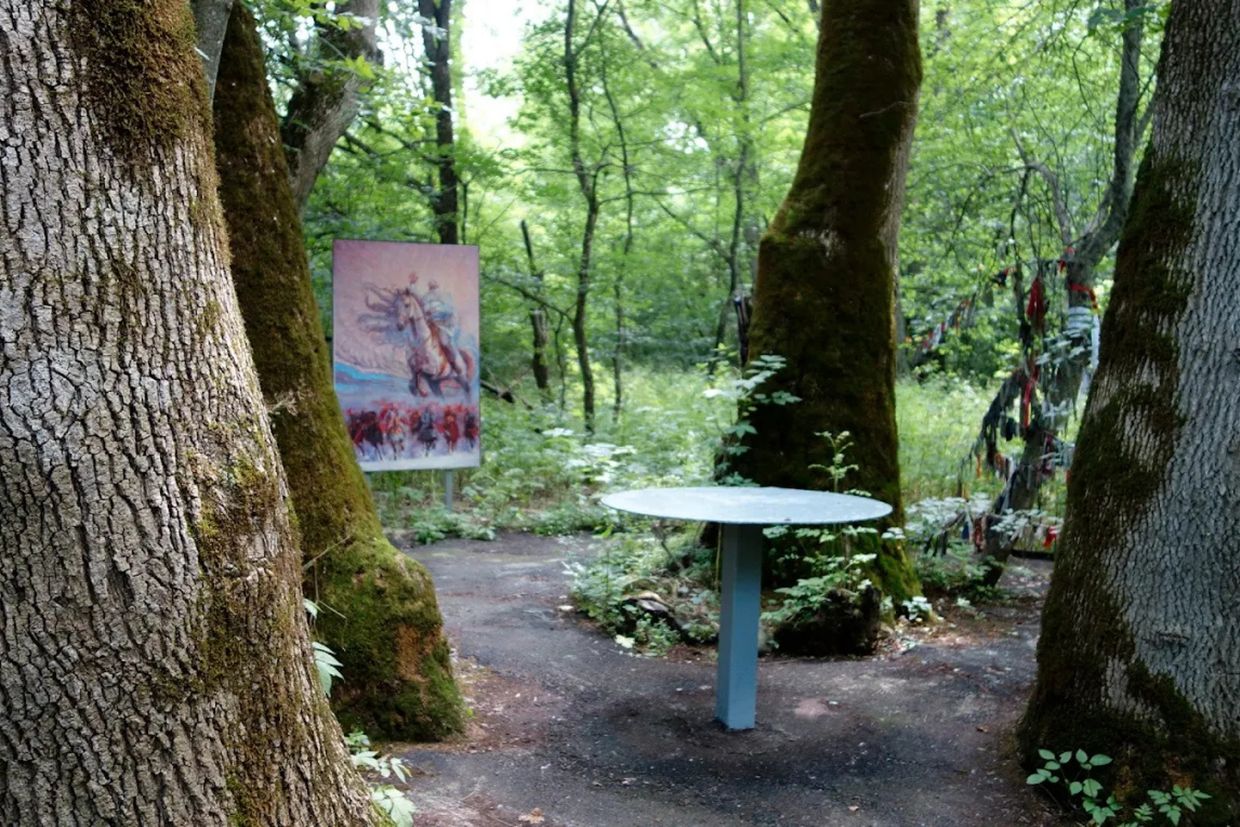
The term ‘Uatsdin’ (meaning ‘true faith’) appeared relatively recently through the writer Daurbek Makeev, who founded a religious organisation under this name in 2009. Today, Uatsdin is a relatively organised religion, with almost a third of North Ossetian residents identifying with the faith, including a former head of the republic, Vyacheslav Bitarov. Its followers celebrate festivals regularly, including gathering every July for a festival in a grove in North Ossetia’s Alagir district dedicated to the legendary, saint-like figure Khetag.
Modern Uatsdin essentially developed as an urban movement of nationalist intelligentsia in the late 1980s and early 1990s. Canadian researcher Richard Foltz emphasises that Ossetian scholars often regard Uatsdin as a ‘new creation’ that arose in the context of struggle for cultural space: its proponents contrast the ‘Ossetian faith’ with both Christianity and Islamic influence in the region.
Indeed, a large number of Ossetians still continue to identify as Orthodox Christian, leading to disputes over sacred sites. The Russian Orthodox Church has also reacted sharply to the spread of Uatsdin — its representatives have publicly condemned the new religion, and some clerics called Uatsdin a ‘novelty’ and a ‘return to paganism’.
Yet, as Foltz notes, public participation in Ossetian ‘folk cult rituals’ is increasing, making Ossetian neo-paganism possibly ‘the most successful in the world’.
Despite its success, however, Foltz highlights that no matter the context, it is important to note that it is almost impossible to know what the ancient Ossetian religion was like, given there is very little in the way of clear or unbiased documentation about Ossetian traditions prior to their Russification during the 19th century.
‘There is some anthropological work from that period, among which we may mention Kosta Khetagurov’s book Ossoba’, Foltz reflects. ‘Ancient sources such as Herodotus describe some Scythian rituals that may find echoes in modern-day Ossetian practices, such as feasting and drinking. We can also compare with other Iranian peoples, such as the Pamiris for example, whose traditions may preserve some elements from the proto-Iranic period.’
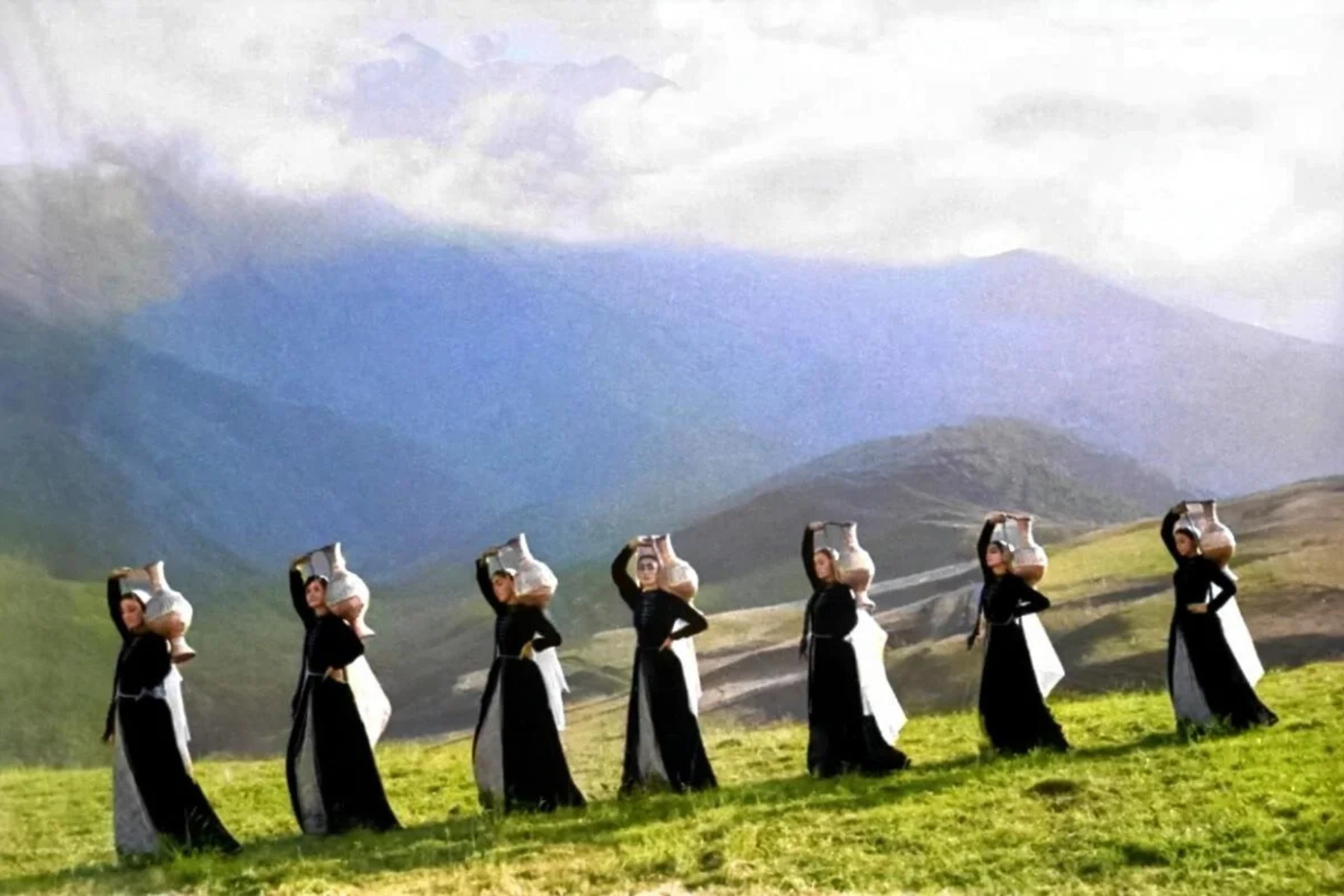
He notes that the Soviets attempted to transform Ossetian traditions (and those of other nations) by turning them into folklore, that is, something fossilised and therefore harmless.
‘We see this in how traditional dance was turned into a performance for paying spectators or how oral tales were turned into a written literary canon’, Foltz says.
Native faith or tradition?
Sergei Shtyrkov, a social anthropologist working at the Yerevan Centre for International Education, defines the project to revive the ancient ethnic faith of the Ossetians as ‘nativism’, however, in Ossetia, its supporters are usually referred to simply as traditionalists.
‘Previously, many researchers often viewed Ossetian traditional culture with a certain admiration’, explains Shtyrkov in an interview with OC Media. ‘Some of them saw in what is sometimes called the “spiritual culture” of this people proof of the existence of a distinct Ossetian folk religion. A section of the Ossetian intelligentsia embraced this idea and began to regard it as an important part of the national revival project.’
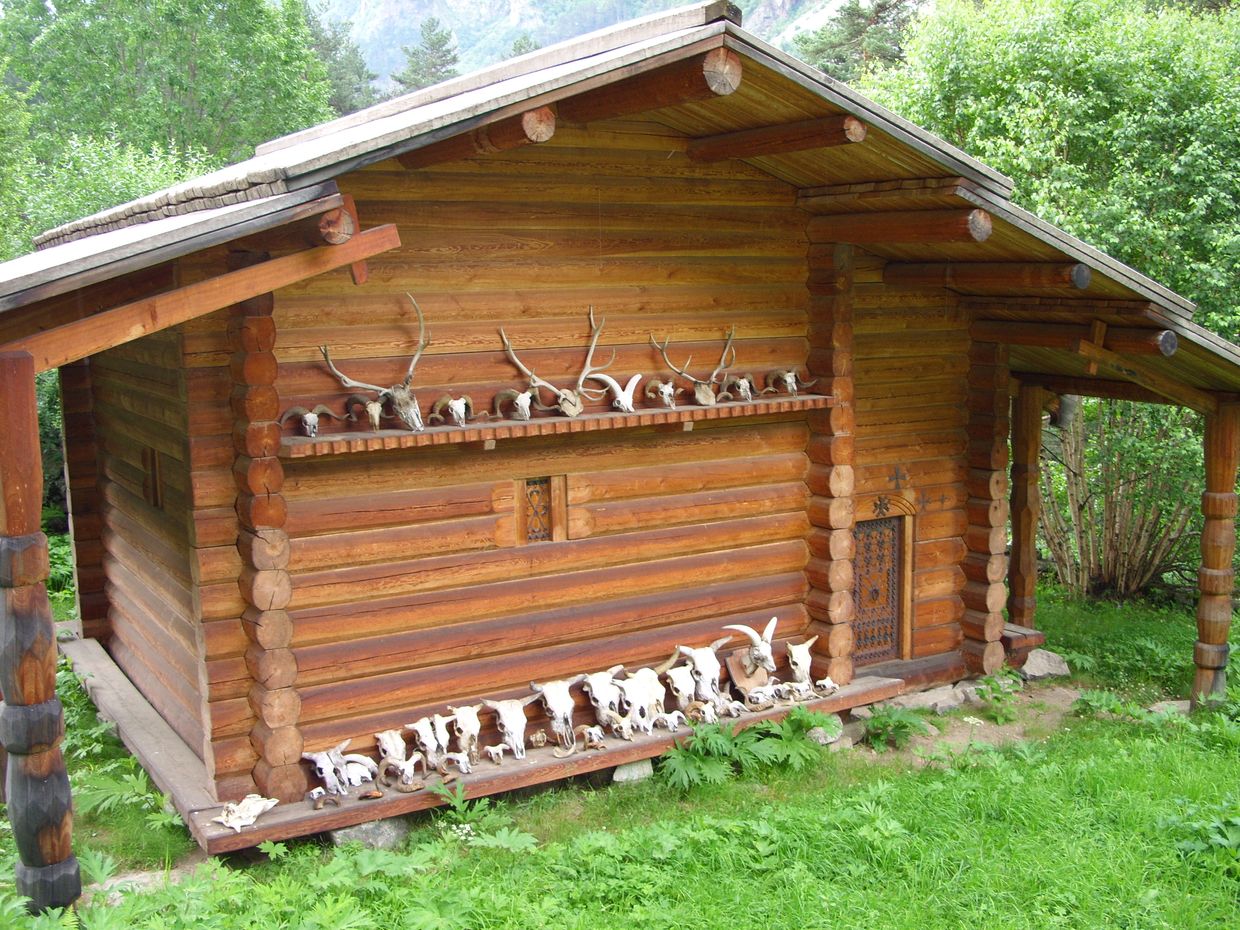
‘Some traditionalists take living ritual culture — for example, the Ossetian ritual feasts (kuyvdtytæ) and pilgrimages to sacred sites (dzuærtæ) — and define this as the Ossetian religion. However, for others, this is not religion but simply tradition, which is referred to by the short term “ag’dau”,’ he says.
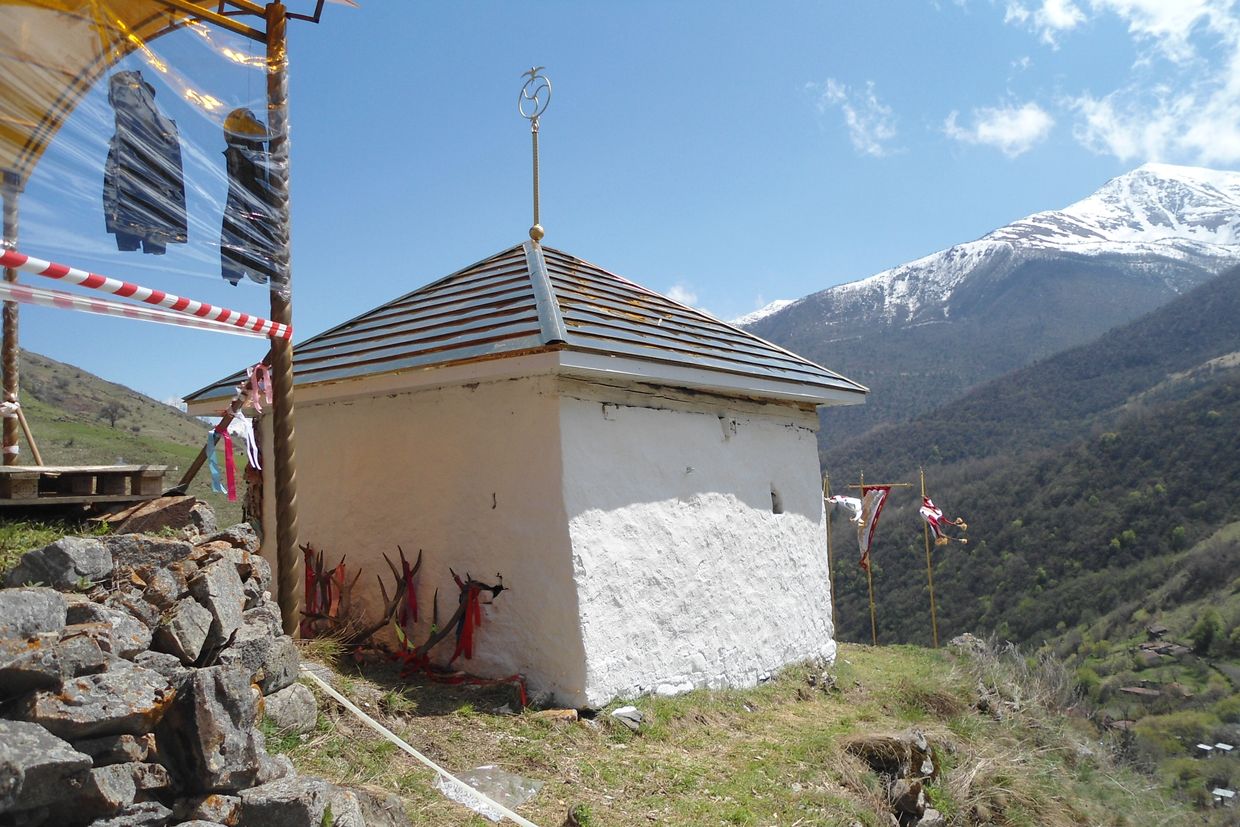
According to Shtyrkov, traditionalists in Ossetia interpreted practices, adding new meaning to existing traditions, arguing that it would be good for Ossetians to have their own religion to survive in the era of globalisation and Russification.
‘In Uatsdin, there is indeed creativity, but it is intellectual creativity. It is interpretative, when they interpret Iron Aghdau [the unwritten codex of behaviour] in this way. It all rests on the assumption that the strongest foundation for ethnic consciousness and specificity is one’s own religion or a variant of a world religion’, Shtyrkov says.
He notes that many rituals have been modernised. For example, when a sacrificial animal is killed, children are now kept away, whereas in the past no one paid attention.
‘Modern people know children should not be traumatised. A hundred years ago, nobody cared. On the one hand, society is traditional; on the other, it is still modern’, he says.
Shtyrkov adds that Uatsdin followers strongly oppose being called pagans, let alone neo-pagans.
‘The term “pagan” is academically problematic because it comes from polemical Christian and Jewish literature, where anything diverse was labelled pagan’, Shtyrkov notes.
He argues that from this perspective, all pagan phenomena — from ancient Greek mythographers to contemporary political figures in India promoting Hindutva — are unified.
‘But when discussing religious nationalism in South Asia, we do not use the word “pagan”, though from a Christian polemicist’s point of view, it is pagan’, Shtyrkov says.
He adds that at the same time, ‘almost no one likes being called a neo-pagan anywhere, not in the US, not in Sweden, because it implies something modern, just invented’.
Shtyrkov recalls that in the 1990s, some materials by enthusiasts of the Ossetian religion used the term polytheism to describe Ossetian realities, but this has now disappeared.
‘Now, the prevailing interpretation in Ossetia views the essence of nature in the Ossetian ethnic religion as ancient monotheism, older than any known monotheism’.
He adds that the terms ‘pagans’ or ‘paganism’ do not help understand any processes in North Ossetia, but are simply labels, ones that can be used to promote a specific worldview.
‘Those who want to eradicate [paganism] often use the term willingly, because it serves their perspective; for example, in Orthodox missionary work, the polemic is that all pagans are agents of Western intelligence. In contrast, American Protestant observers portray local pagans as servants of the devil, misled. Here, they are alleged to receive money to destroy inter-ethnic unity in Russia’, Shtyrkov says.
In any case, with the start of the full-scale invasion of Ukraine, the once fierce debates about the ‘true religion of the Ossetians’ have faded against the mass death toll in the republic. In 2022, North Ossetia marked the 1,100th anniversary of the ‘Christianisation’ of the republic, with no major religious disputes overshadowing the celebrations.
Whether such conflicts will re-emerge following the war’s conclusion — remains to be seen.