Bob Amsterdam: the lawyer behind the opposition party trying to take down Pashinyan
The Canadian–American lawyer has emerged as a key mouthpiece of opposition Russian–Armenian oligarch Samvel Karapetyan.

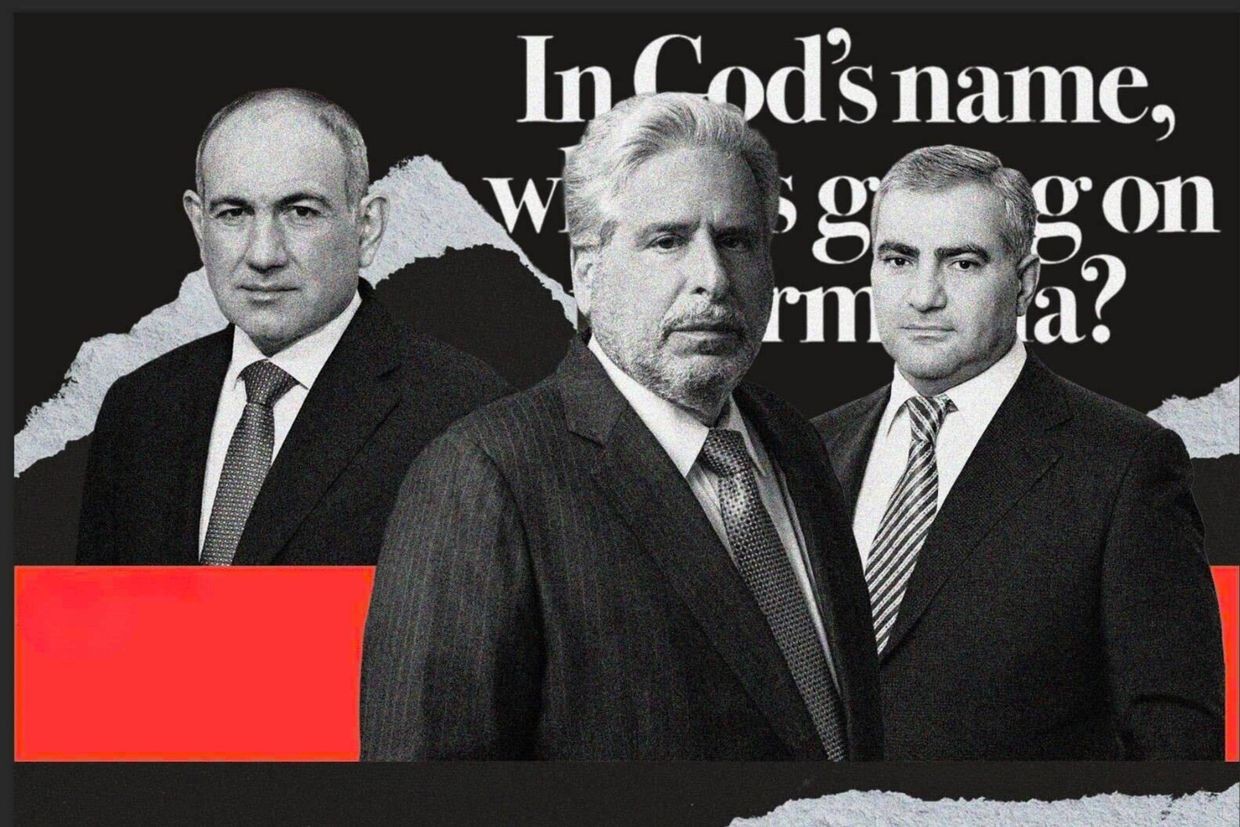
As Armenia gears up for its pivotal parliamentary elections in June, a rather unexpected figure has increasingly taken the spotlight online — a Canadian–American lawyer named Robert (Bob) Amsterdam.
The elections scheduled for 7 June will pit Prime Minister Nikol Pashinyan and his ruling Civil Contract party against a collection of opposition figures. Although there are several high-profile politicians in the group, including former President Robert Kocharyan, it is the Russian-Armenian tycoon Samvel Karapetyan — legally represented by Amsterdam — who ranks the highest in the polls.
Karapetyan is currently under house arrest over charges of calling for a coup, a criminal case that sparked Amsterdam’s involvement in Armenian politics.
However, since he was originally hired to be Karapetyan’s lawyer, Amsterdam appears to have taken on the role of a campaign consultant and spokesperson of the party aimed at taking down Pashinyan.
A checkered history
Amsterdam’s foray into Armenian politics is far from the first time he has become involved in sensitive legal cases closely linked with geopolitics.
Indeed, the about us page his law firm’s website describes it as being ‘acclaimed for its proficiency in addressing politically sensitive, high-stakes and crisis-driven legal disputes’.
‘Renowned for solutions that integrate legal expertise, political intelligence and strategic advocacy, we navigate through complex disputes and crises across Africa, Asia, Europe, the Middle East, and Latin America’, the site says.
By its own admission, the firm’s services go beyond legal help, extending ‘where appropriate’ to political advocacy and media strategy, ‘ensuring comprehensive protection of client interests’.
Robert Crowe, an associate of Amsterdam and a partner at Nelson Mullins, described Amsterdam’s law firm in a leaked email to the late sex offender Jeffrey Epstein in 2016 as ‘speciali[sing] in assembling global teams and messaging in cases of political prisoners’.
The extent of Amsterdam’s work with Epstein is unknown, but the Epstein Files indicate a number of email exchanges and at least a few scheduled meetings in 2016 — eight years after Epstein pleaded guilty and served time for procuring a minor for prostitution.
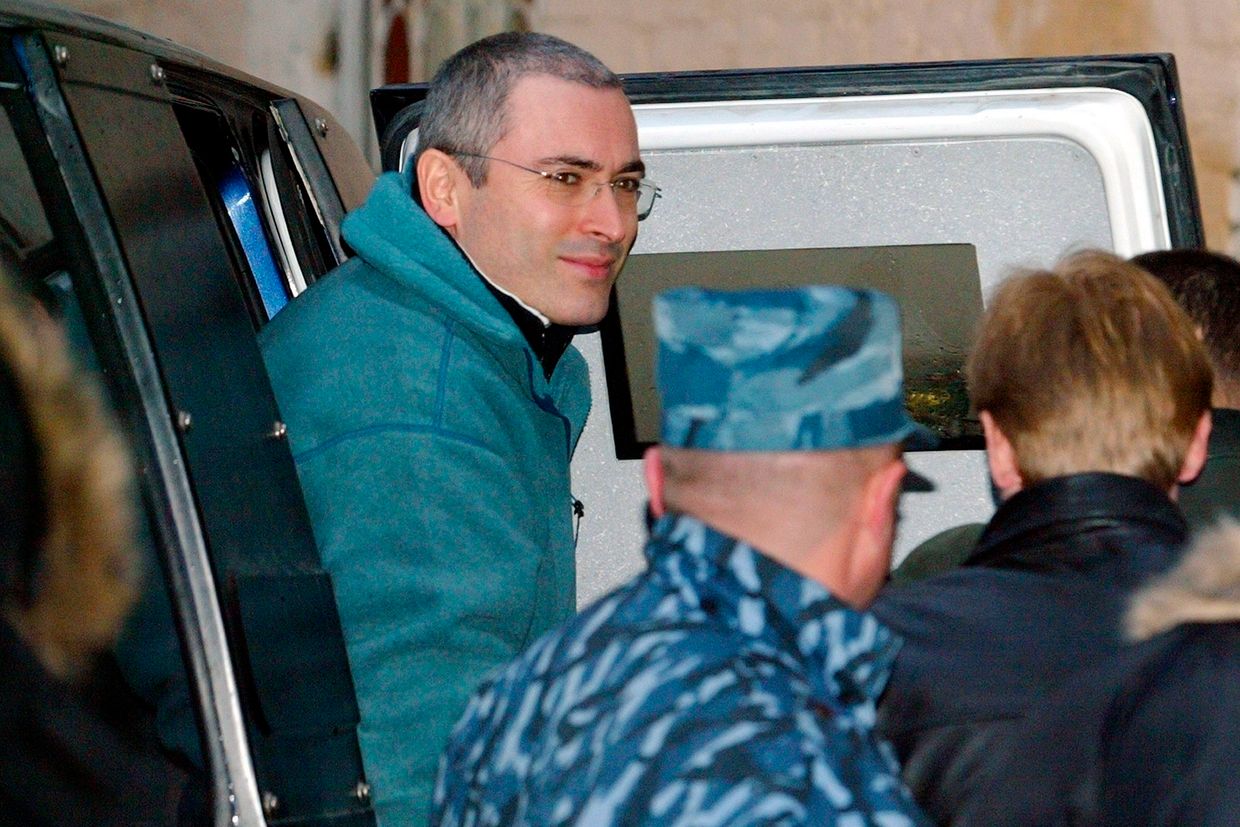
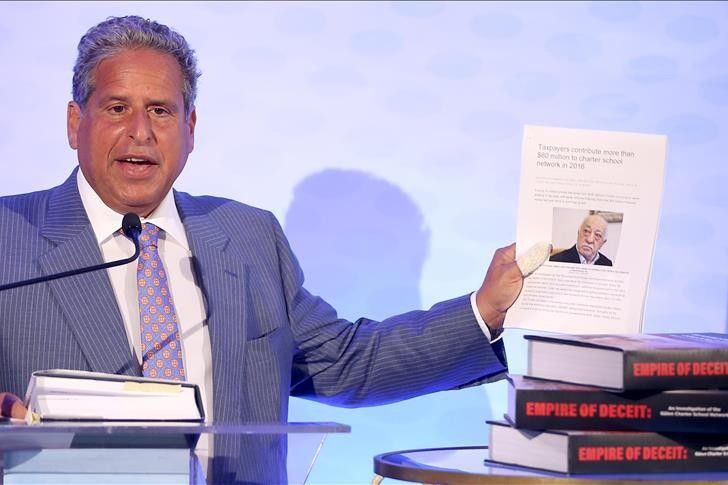
Amsterdam and his London-based law firm have in the past represented Russian oligarch-turned-dissident Mikhail Khodorkovsky; former Thai Prime Minister Thaksin Shinawatra; German-Finnish internet entrepreneur Kim Dotcom, who has since turned to trafficking pro-Russian propaganda and antisemitic conspiracy theories; the Turkish government in its fight against exiled cleric Fethullah Gülen and his Gülen movement; and more recently, the Ukrainian Orthodox Church of the Moscow Patriarchate (UOC-MP).
In 2016, Amsterdam’s work for the Turkish government attracted attention in Armenia, with Armenian-American writer Harut Sassounian dismissing a statement Amsterdam made in support of Turkish democracy as ‘preposterous’ and an ‘insincere lament’. In an article in the diaspora magazine Armenian Weekly, Sassounian described Amsterdam as ‘Erdoğan’s long arm’. Curiously, in an October 2025 article in the same outlet about Amsterdam’s work for Karapetyan, Sassounian was more favourable, referring to him as ‘a well-known US-based international lawyer, who is in Armenia to defend Samvel Karapetyan’.
In Georgia, Amsterdam represented Giorgi Bachiashvili, a former confidant of Bidzina Ivanishvili, the billionaire founder of the ruling Georgian Dream party, after the former was accused of defrauding Ivanishvili out of millions of dollars in cryptocurrency. Amsterdam’s involvement in the Bachiashvili case led to his firm taking a strong stance against Georgian Dream, accusing the party of leading the country into an ‘authoritarian nightmare’ and urging the West to help ‘prevent the unlawful creation of a new dictatorship that takes its cues from Putin’s Russia’.

It is Amsterdam’s work with the UOC-MP, however, that has brought him into the wider public eye, highlighting a strategy of leveraging Western media figures as a platform to promote the interests of his clients.
The Ukrainian government had long accused the UOC-MP of maintaining close ties with the Russian Orthodox Church, an organisation itself closely linked to the Russian state. The charges took on newfound importance after the beginning of Russia’s full-scale war against Ukraine, when the UOC-MP was accused of actively helping the Russian army, including by conducting espionage.
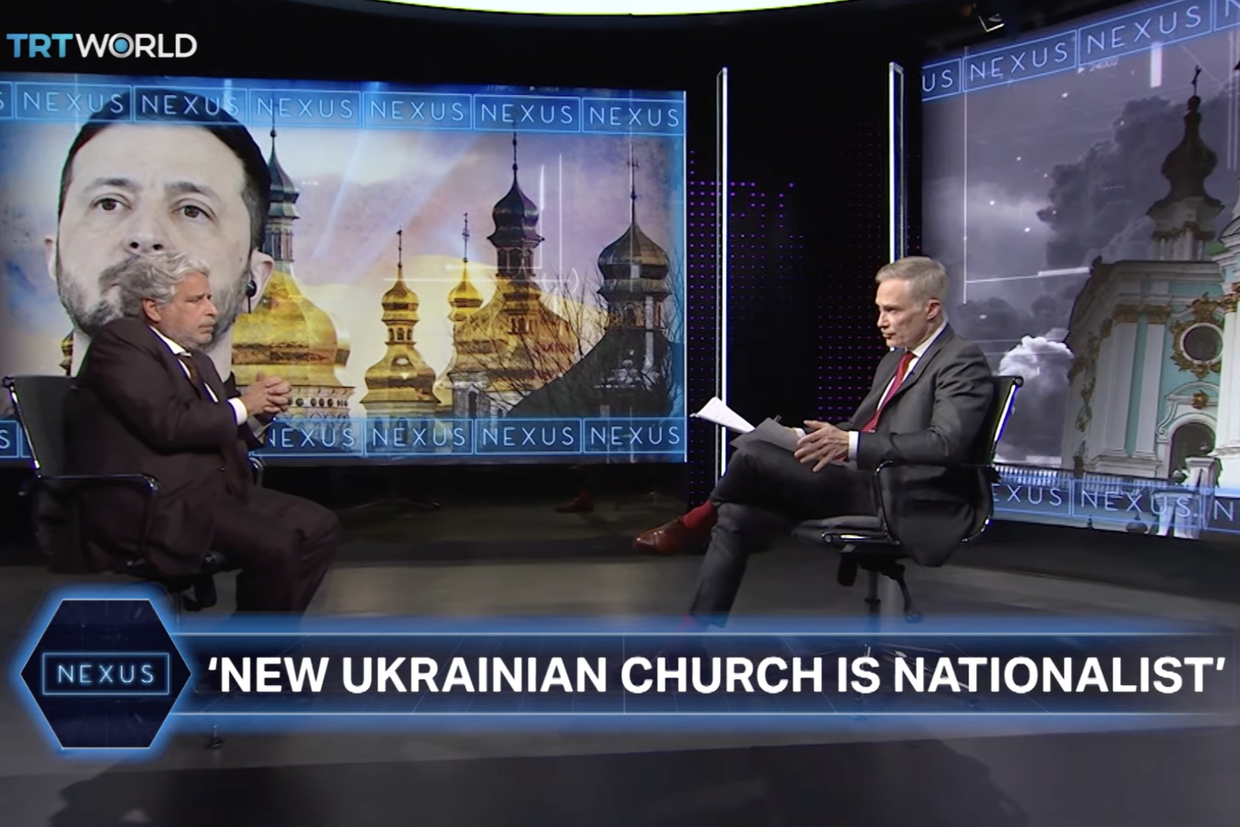
As the Ukrainian government sought to rein in the UOC-MP, Amsterdam was hired by the Church, a move that saw him engage in a wide-ranging public relations campaign to defend its reputation and to accuse Ukrainian President Volodymyr Zelenskyi’s government of persecuting Christians.
One of the key elements of Amsterdam’s advocacy for the UOC-MP was an interview with far-right American pundit and conspiracy theorist Tucker Carlson. A YouTube short of the interview entitled ‘Ukrainian churches are being burned and priests beaten’ contained clips of Ukrainian churches burning, with the implication that it was the work of Zelenskyi’s government or its supporters. In fact, the clip showed two churches on fire after being struck in Russian attacks, and a third Ukrainian Greek Catholic church in Canada that caught fire in 2014.
Steven Moore, a former congressional aide who now heads the Ukraine Freedom Project, told OC Media that he believes Amsterdam’s PR campaign — along with Carlson’s help — is at least partially responsible for the false narrative of Ukraine persecuting Christians taking root within the US Republican Party.
Misinformation and mistakes aside — some of which Amsterdam conceded in an interview with the Kyiv Independent in 2024 — the tactic helped spread the narrative to American audiences, and was apparently successful enough that Amsterdam would again take his case to Carlson in 2025 — this time in defence of the Armenian Apostolic Church.
A rising presence in Armenia
The exact starting point of Amsterdam’s representation of Karapetyan is unclear, but seems to have begun around August 2025.
When asked by OC Media how he came to work with Karapetyan, he said, ‘well, as in many of my cases, we have a series of mutual friends’. He added that he considers himself a ‘student of the whole region’ and said he had spent time in the Soviet Union in the 1970s. In a subsequent interview, Amsterdam told OC Media that he was sure that he had met Karapetyan on a number of occasions before representing him.
‘To be frank and not trying to blow my own horn, I think my reputation in countries like Armenia, and Ukraine, and Russia has been pretty well established’, Amsterdam said.
He arrived in Yerevan in dramatic style, with his website proclaiming, ‘Human Rights Lawyer Robert Amsterdam to Arrive in Yerevan Tomorrow Despite Threats of Expulsion’. This claim appears to have originated from the media outlet Past.am, which did not reference any actual warnings made by Armenian officials. OC Media was not able to locate any evidence the Armenian government threatened to arrest him.
Amsterdam nonetheless traveled to Armenia and gave a widely publicised press conference, in addition to giving an interview at the airport itself.
Prior to his arrival, the Armenian government under Pashinyan had escalated its very public feud with the Armenian Apostolic Church. That summer, two high profile and influential archbishops, Bagrat Galstanyan and Mikayel Ajapahyan, had been placed in pre-trial detention on charges of plotting ‘terrorist attacks and a coup d’état’. Karapetyan, who had come out in defence of the Church, was also arrested and charged with calling for a coup. Further charges, including money laundering, were added later, and as of the time of publication, he remains under house arrest.
 Arshaluys Barseghyan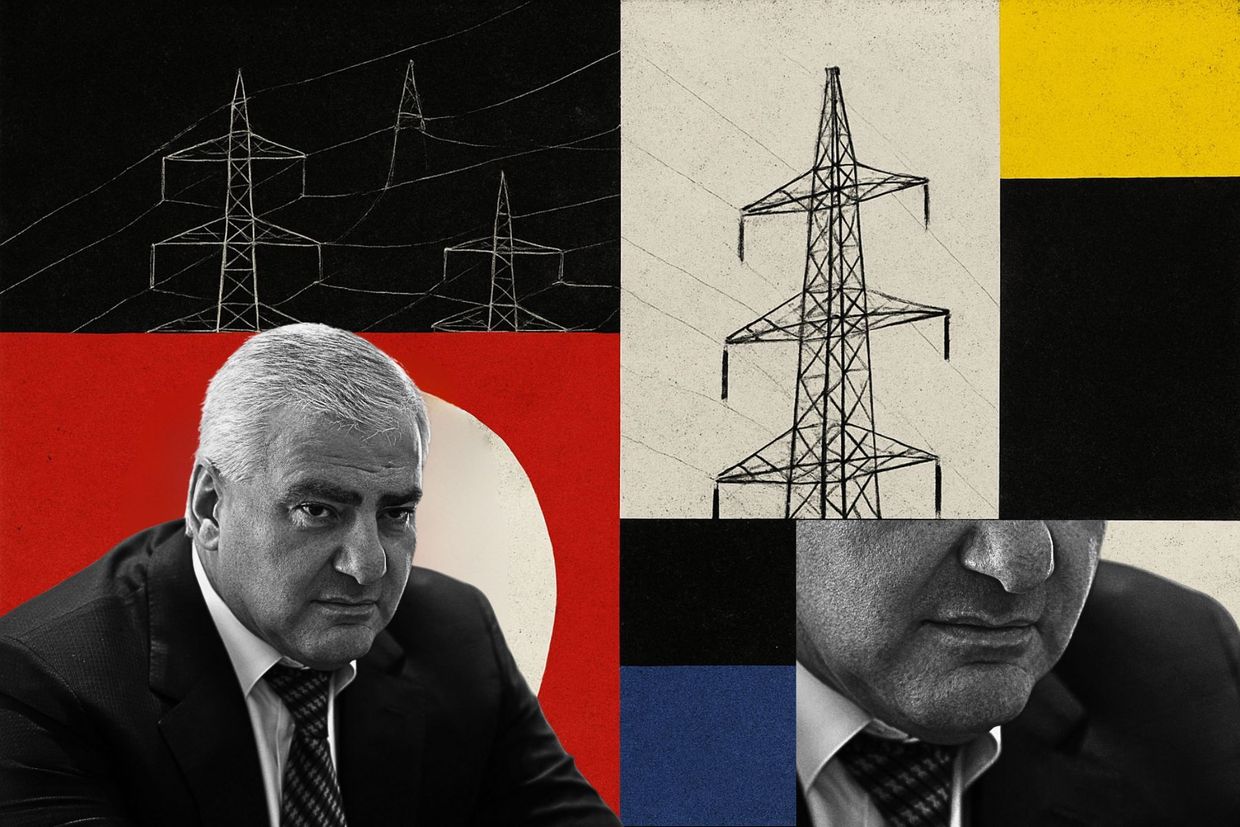
Amsterdam and his law firm went to bat for Karapetyan — at least from the PR perspective — dedicating considerable efforts to portraying him as a political prisoner. The extent of what legal work he or his firm has done to defend Karapetyan is unclear, but Amsterdam told OC Media he had appeared in court in Armenia, as well as doing ‘hundreds and hundreds of hours of dealing with the charges, working with an absolutely first-rate Armenian legal team, also, coming up with international legal responses to some of the illegal behaviour of the Armenian government’. He declined to provide more specifics.
When asked by OC Media about specific legal issues faced by Karapetyan — such as the fact Armenia’s constitution bars him from being prime minister as he holds citizenship of another country and has not been a continuous resident of Armenia for the past four years — Amsterdam said it was a ‘matter for the local domestic lawyers to answer’.
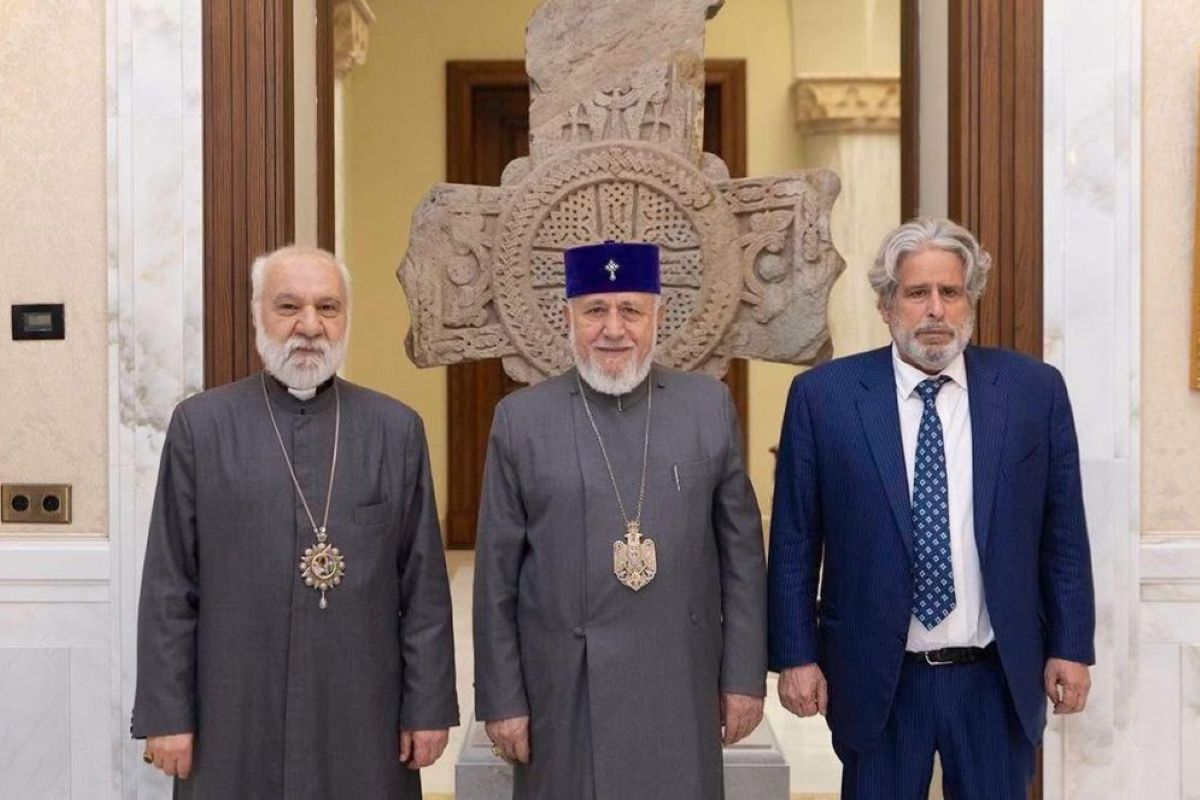
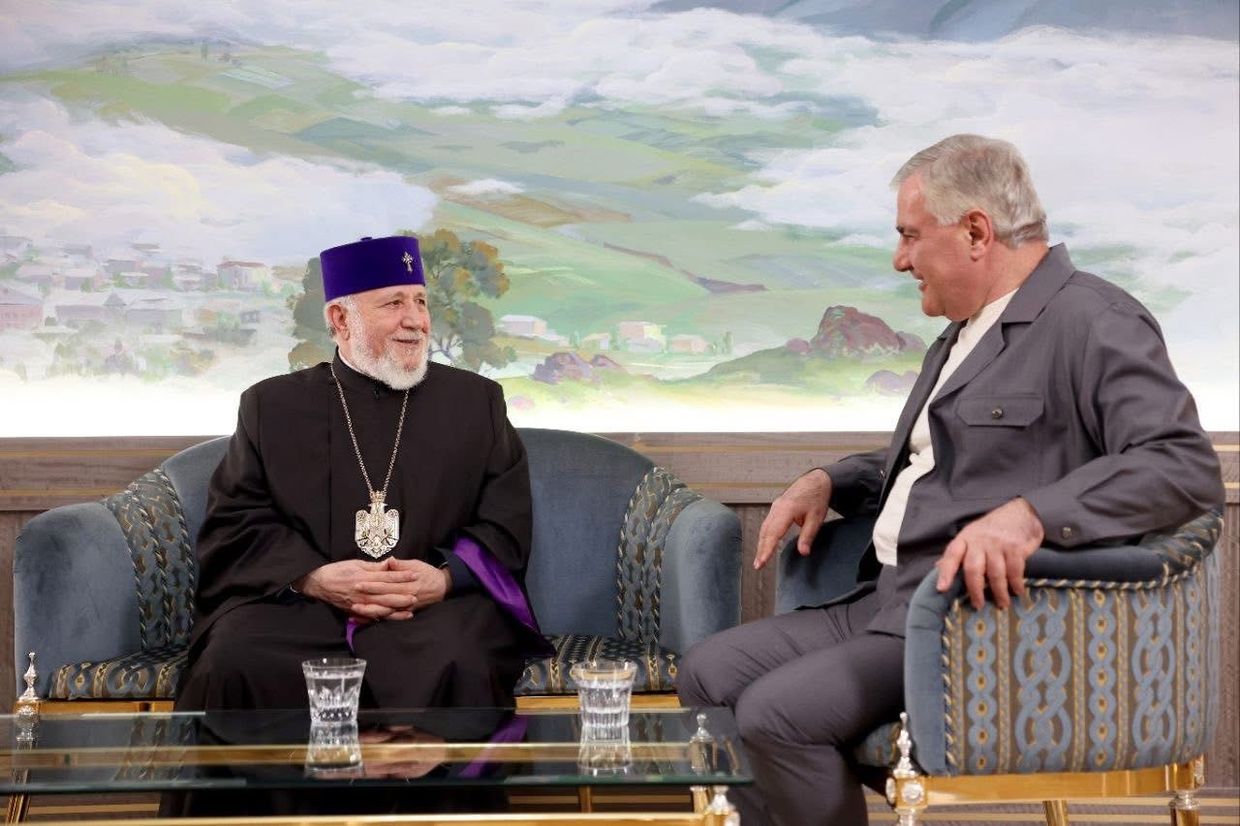
Although Amsterdam claimed he is ‘not formally representing’ the Armenian Apostolic Church, he personally met with the head of the Church, Catholicos Karekin II, who has been a focus of Pashinyan’s ire. The February 2026 meeting was directly publicised by the Church itself, which said in a statement ‘they discussed the ongoing legal proceedings involving bishops in detention and the national benefactor Samvel Karapetyan’.
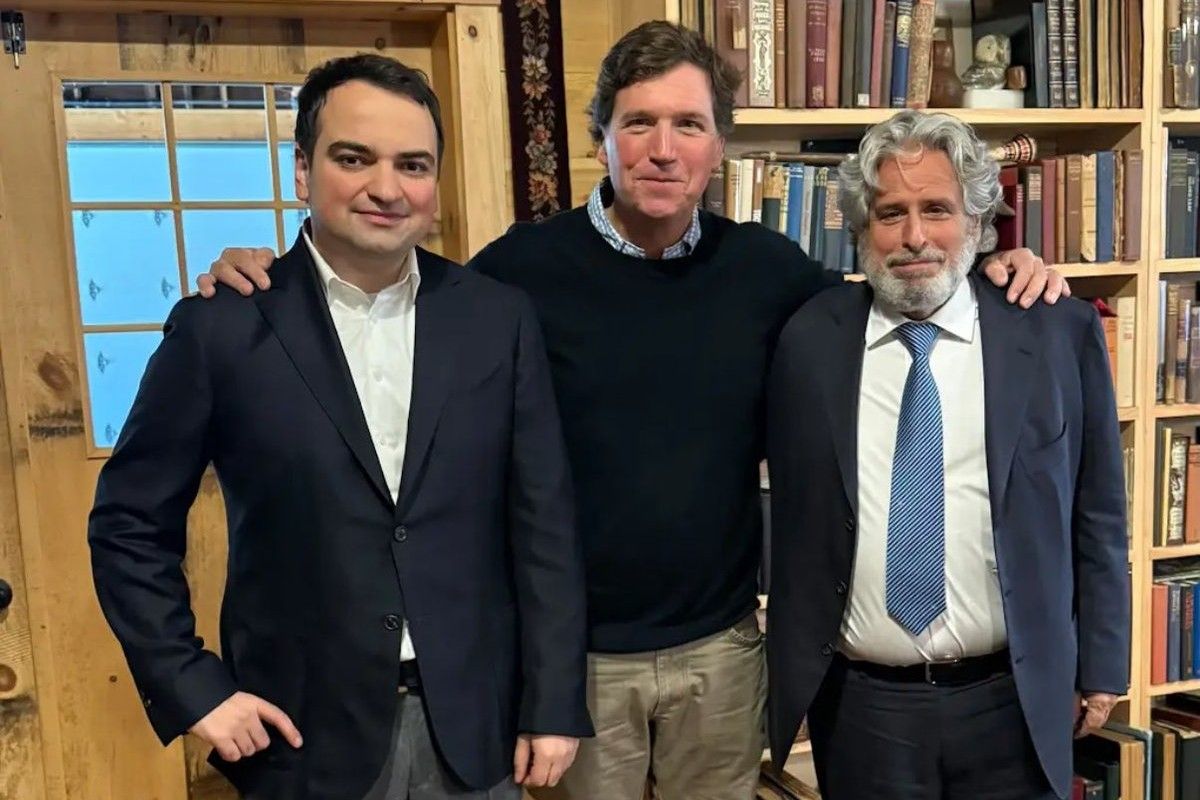
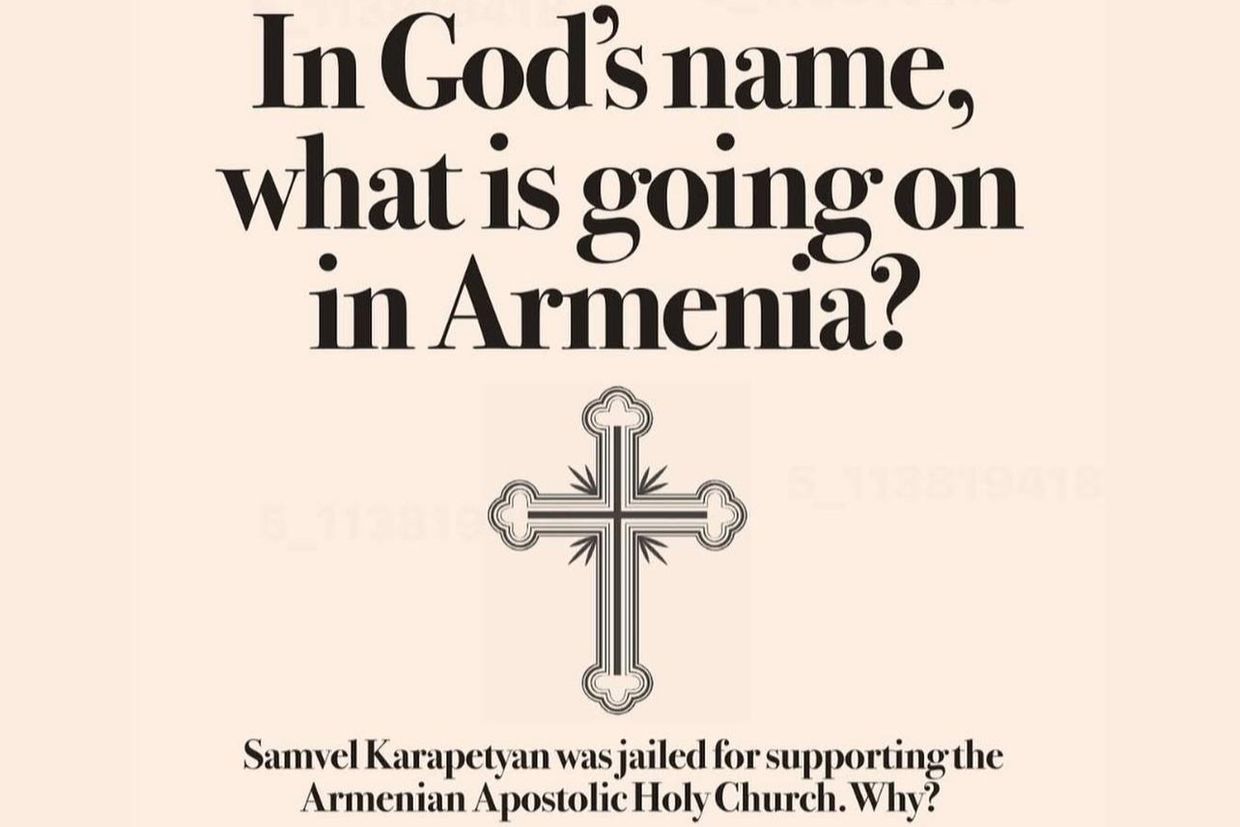
Using a bombastic PR campaign those who followed his defence of the UOC-MP were likely familiar with, Amsterdam and his team have used a variety of methods in Armenia, including the creation of FreeKarapetyan.com, along with two associated white papers, a full page cover ad in the weekend edition of the Financial Times, and numerous media appearances, most notably on Tucker Carlson’s YouTube show.
The 1.5-hour interview with Carlson — which also included Samvel Karapetyan’s nephew Narek Karapetyan (who has become the face of the campaign with Samvel Karapetyan under house arrest) — attempted to frame the charges against Karapetyan as being part of a so-called ‘war on Christianity’.
Throughout the show, Amsterdam drew comparisons between his defence of Karapetyan and the Church to his work representing the UOC-MP, and all three claimed the conflict over Nagorno-Karabakh was about Christianity vs Islam. The advocacy for Karapetyan on Carlson’s show and elsewhere in the PR campaign have tried to portray him as a successful businessperson and ‘one of Armenia’s most distinguished philanthropists’. The website Freekarapetyan.com describes him as a ‘man whose unwavering commitment to his homeland has transformed countless lives and strengthened the nation’s economic and spiritual foundations’.
More controversial aspects of Karapetyan’s biography are downplayed, such as his immense net worth, estimated at more than $4 billion, or more crucially, how he acquired his fortune and what his connections to the Russian government are.
In 2018, Karapetyan was mentioned on a US Treasury Department list among 96 other Russian oligarchs as being noted for their ‘closeness to the Russian regime’. The department noted, however, that inclusion on the list did not in of itself indicate ‘the US government has information about the individual’s involvement in malign activities’.
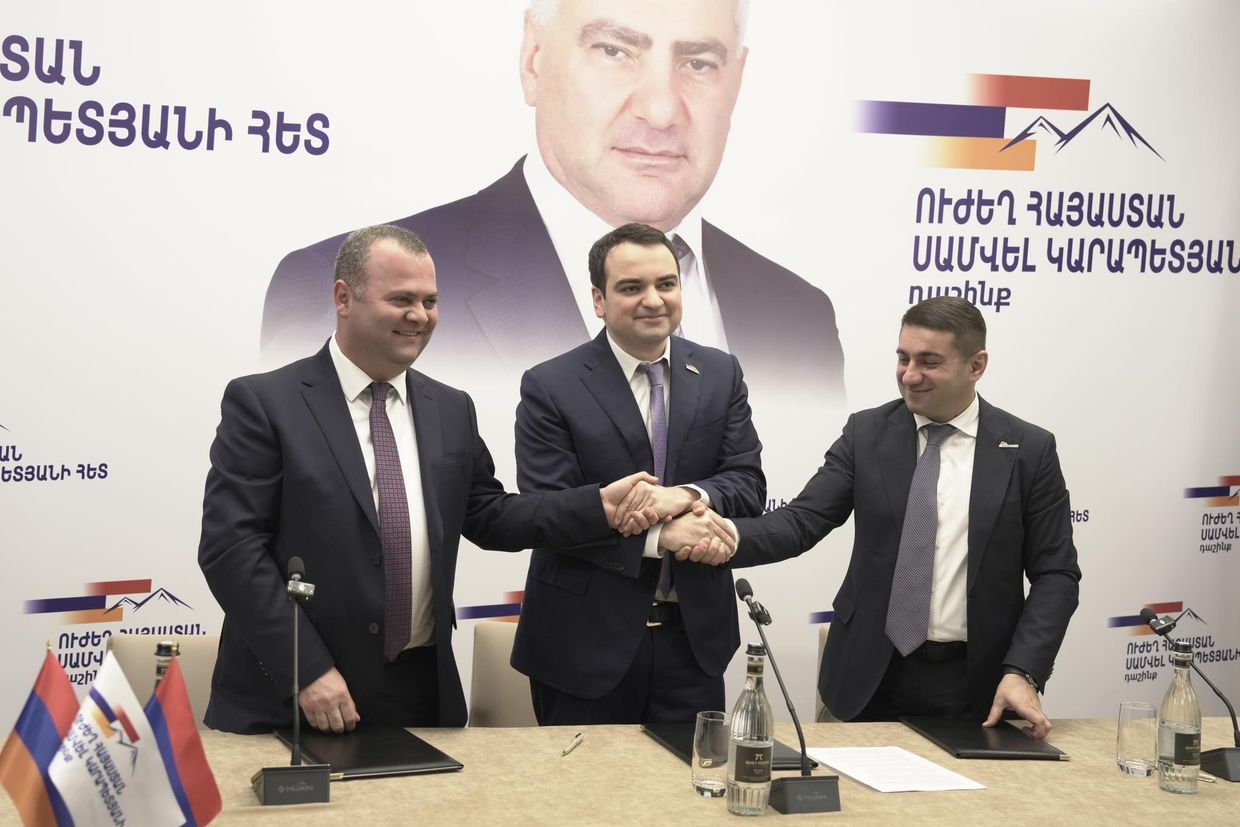
A source from Karapetyan’s inner circle told the independent Russian media outlet The Insider that he had been pressured into creating his opposition party ‘as a counterweight to Pashinyan’.
The Insider also cited information from leaked online databases that purported to show Karapetyan had listed his ‘place of work’ as ‘IC FSB’ — the acronym for Russia’s Federal Security Service.
‘The Interior Ministry operative told The Insider that these markings are usually reserved for foreigners working under FSB supervision or for confidential informants’.
The allegations were boosted by Parliamentary Speaker Alen Simonyan and other allies of Pashinyan, but unsurprisingly dismissed by Amsterdam, who described them as a ‘complete fabrication’.
‘Fortunately all of Armenia knows Samuel [sic] had no political ambition at all until he was arrested for defending the Church’, he added.
Pashinyan had previously raised Karapetyan’s links to Russia, appearing to suggest in April 2026 that he was a ‘foreign agent’.
Disregarding these connections, Amsterdam has attempted to make Karapetyan and the Church rhetorically inseparable, and claimed Pashinyan’s attacks are a ‘desperate attempt to silence legitimate criticism of the most catastrophic failure in modern Armenian history: the loss of Nagorno-Karabakh and the ethnic cleansing of over 100,000 Armenian Christians’.
The not-so-subtle rhetorical shift into political messaging reflects how Amsterdam and his law firm have taken on a new role, not just as lawyers for Karapetyan — but as an effective part of the electoral campaign to unseat Pashinyan.
Amsterdam the lawyer — or the campaigner?
When asked by OC Media on what grounds Karapetyan had sought his expertise, Amsterdam said ‘we were hired as counsel’ in connection with his criminal case.
He rejected the characterisation that he was lobbying on behalf of Karapetyan or making overtly political statements, saying ‘when they accuse me of being a lobbyist, it’s because they don’t like what I say’.
Yet, his promotion of Karapyetan, particularly for international audiences, could read otherwise.
‘The Armenian people deserve a leader who accepts accountability, not one who persecutes those who demand it’, Amsterdam’s website reads.
Indeed, the FreeKarapetyan.com website goes much further rhetorically than other opposition figures have on the issue of Nagorno-Karabakh, one of the most sensitive subjects in Armenian politics.
‘A 2024 poll revealed that 87.5% of Armenians agree that “the loss of Artsakh is temporary, we must strengthen our army and bring back what was lost”. The Church gives voice to this majority view — which is precisely why Pashinyan must silence it’, the website reads.
The poll Amsterdam’s website cites was actually released in 2025, and has been criticised for using a ‘highly suggestive’ question that ‘appeals to jingoistic feelings’. Other polls have indicated almost zero appetite (only 1.5%) amongst Armenians for armed conflict as a means of ‘obtaining peace’ with Azerbaijan.
Arshaluys Barseghyan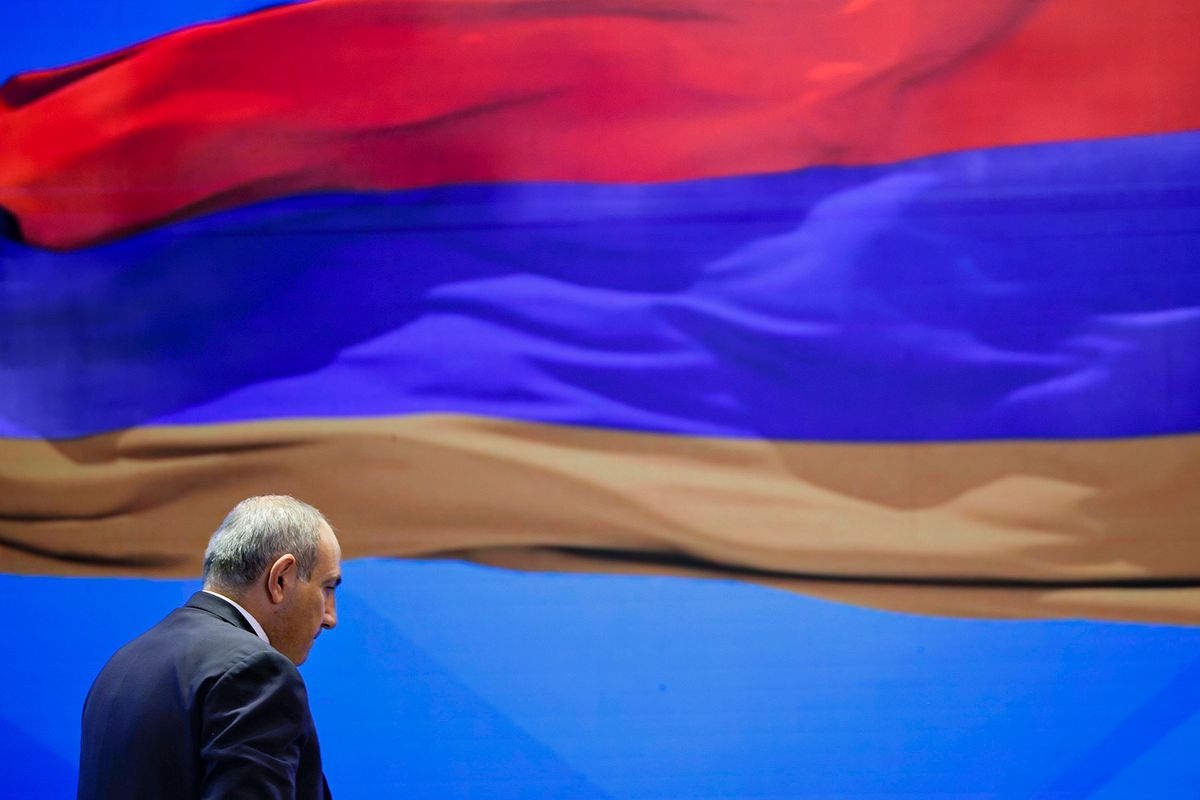
Elsewhere, Amsterdam has attacked Pashinyan, calling him the ‘Pol Pot of Armenia’, referencing the genocidal Cambodian dictator who presided over the murder of around two million of his own people. In an interview with OC Media, Amsterdam repeated the comparison, drawing a parallel between how the Cambodian dictator and Pashinyan ‘attempted to lead his people against their history, against their culture, and against their religion’.
Pol Pot is not the only mass-murdering historical leader Amsterdam has claimed Pashinyan resembles — in August 2025, he suggested Karapetyan’s prosecution was ‘a return to Stalin […] a return to show trials’.
Amsterdam has also taken to directly alleging Pashinyan is backed by Azerbaijan.
As the election draws closer, Amsterdam’s forays into outright politicking have grown even more explicit.
In a press conference on 6 May following Yerevan’s hosting of the European Political Community summit, Amsterdam dismissed the unprecedented nature of the gathering, saying nothing of value was gained. In the same set of comments, Amsterdam attacked the EU, claiming the bloc ‘has abandoned its commitment to supporting the rule of law’ and that its conduct was ‘disgraceful’. He also accused the EU of trying to interfere in Armenia’s elections.
Turning his broadsides toward Pashinyan, Amsterdam castigated the prime minister for not mentioning Azerbaijan’s destruction of Armenian heritage sites in Nagorno-Karabakh, claiming it ‘suggests that Pashinyan’s interests may not align with those of the Armenian people’.
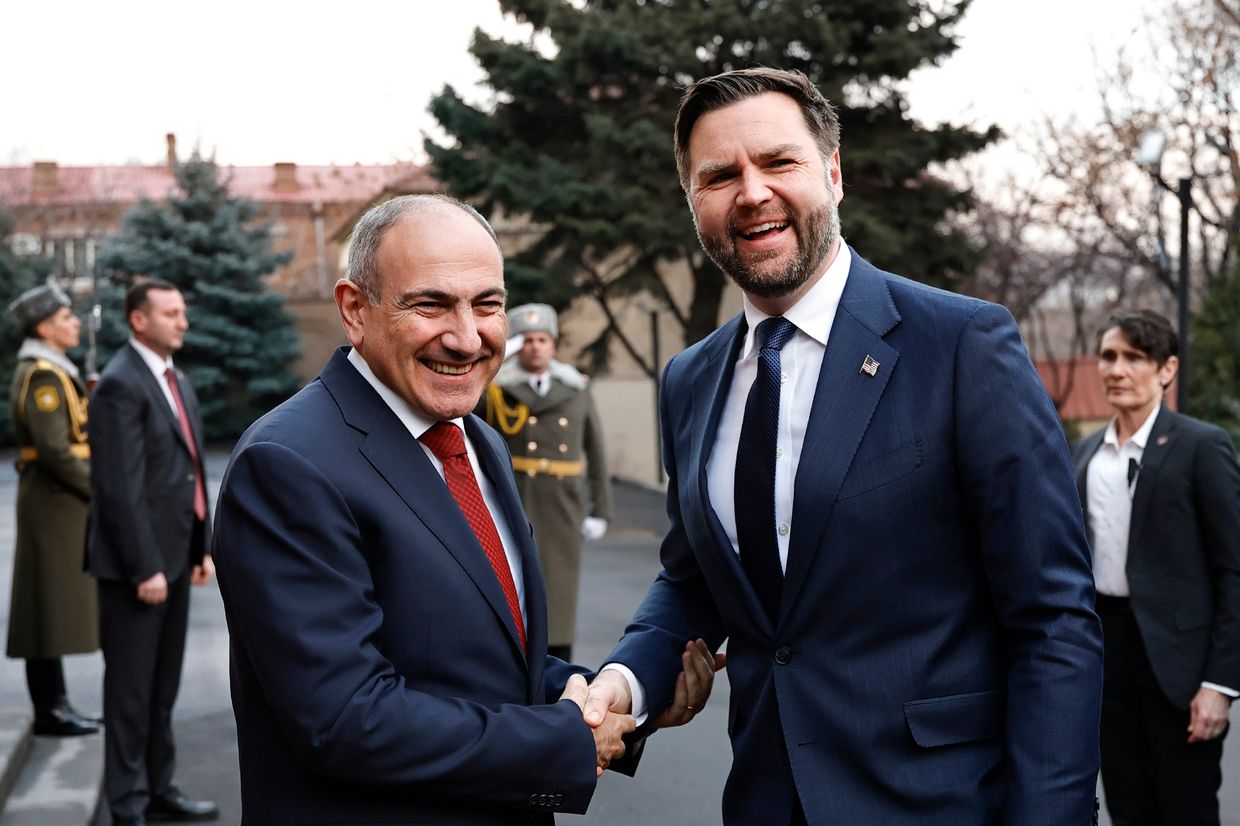
‘Armenia’s leader is failing to protect his people, his history, his church, and his culture. This is precisely why Samvel Karapetyan’s candidacy is so vital for Armenia’, Amsterdam said.
Brushing aside concerns of Karapetyan’s close ties with Russia, Amsterdam told OC Media that ‘If anyone is capable of working closely with Russia, it would be Pashinyan, because Pashinyan is spineless, [he is] without resources and without a conscience’.
He further dismissed Pashinyan’s efforts to move towards the EU and away from Russia, claiming instead he has been ‘speaking out of both sides of his mouth’.
Amsterdam’s team has conducted outreach to media outlets across the region, including OC Media, which has received 11 separate emails from the firm with story suggestions and opportunities for interviews.
There is further indication that Amsterdam’s advocacy efforts may have extended to lobbying of both US and EU bodies.
In September 2025, Amsterdam said he was in Washington meeting with diaspora members and ‘elected officials’ to ‘brief’ them on actions taken by Pashinyan’s government against Karapetyan and the Church.
In April 2026, Amsterdam’s law firm wrote a letter to the European Commission, directly addressed to President Ursula von der Leyen, decrying the news that the EU would be deploying a ‘Hybrid Response Team’ to combat Russian-backed disinformation efforts in the election.
The ‘initiative constitutes direct interference in the country’s internal political processes and undermines, rather than upholds, free and fair elections’, Amsterdam claimed, adding that the government was ‘prevent[ing] opposition alliances, including that of Strong Armenia, from participating on equal terms’. He later told OC Media that he believes there is interference in Armenian politics from all sides, including Russia.
Nonetheless, when asked by OC Media about particular campaign-related issues, such as whether Karapetyan’s Strong Armenia planned to enter into a coalition with other opposition forces, Amsterdam said, ‘I’m a lawyer and an advocate, but I’m not going to get involved in internal, domestic political negotiations’.
Sincere motivations?
Amsterdam has described himself as someone who ‘fights for [the] rule of law and has for the last 45 years’.
Yet, contradictions abound.
Speaking to OC Media, Amsterdam suggested that Pashinyan was either engaging in ‘genocide denial’ or ‘enabling those who would deny’ the Armenian Genocide.
Yet despite his apparent outrage at what he called ‘unimaginable’ and a ‘betrayal’, he appeared to have had no issue working for the Turkish government, which not only explicitly denies the Armenian Genocide but actively lobbies against its international recognition.
In a follow-up interview, Amsterdam said there was ‘no contradiction’ because he only represented the Turkish government in its fight against the Fethullah Gülen movement, which ‘had nothing to do with Armenia or the genocide’.
Steven Moore, from the Ukraine Freedom Project, told OC Media he was sceptical about the sincerity of Amsterdam’s concerns, and instead suggested money was a motivating factor.
‘I don’t think Bob Amsterdam woke up one day and […] just became very concerned about the plight of Armenians, or the UOC [-MP], or anyone else’, he said.
Under Armenian campaign law, only direct campaign donations must be registered with the government, not in-kind services or campaign expenses — such as hiring a PR firm.
As a result, the extent of money changing hands between Karapetyan and Amsterdam’s law firm remains largely opaque.
There are nonetheless a few clues.
Back in 2016, when he began to represent the Turkish government in its battle against Gülen, Amsterdam’s firm was receiving $50,000 a month in the form of a retainer. A FARA filing from October 2023 indicates that Amsterdam’s law firm received $300,000 from the Turkish government over a six-month period the previous year, while another from the same month recorded another $250,000 received from the Turkish government from 2021–2022, as well as another $350,000 in 2021.
There are no publicly available FARA filings that show payments from Karapetyan to Amsterdam’s law firm and he told OC Media that he does not publicly discuss the payments of any clients.
Other information about expenditures only came from rumours or publicly available facts, such as the roughly $50,000 price tag of buying a full-page weekend ad in the Financial Times (the ad itself noted that it was the first of 20), or the rumoured $400,000 that was spent to secure the Carlson interview. The diaspora-focused outlet The Armenian Report claimed, citing a ‘source close to the production, that Tucker Carlson’s team did not receive any payment from Karapetyan or his representatives’.
‘While The Armenian Report could not independently verify whether a lobbying organisation was hired, such assistance is common in high-profile legal and political cases involving international media outreach’, the outlet added.
There are also unconfirmed reports that for the sum of $500,000, Karapetyan’s team had acquired the assistance of a team of Israeli political consultants headed by Moshe Klughaft, a veteran of a number of campaigns, including that of Israeli Prime Minister Benjamin Netanyahu.
Daniel Ioannisyan from the Union of Informed Citizens, an Armenian human rights group, told OC Media that during election campaigns, parties and alliances are allowed to spend up to ֏800 million ($2 million). Separately, the annual spending of a party should not exceed ֏1 billion ($2.5 million).
In terms of direct campaign spending, the totals remain rather small, with the top three parties spending a total ֏812 million ($1.6 million) in the 2021 parliamentary elections. Under Armenian campaign law, no one bloc can spend more than ֏500 million ($1.3 million) during the election period — which began on 8 May.
‘Party expenses are not subject to declaration, donations to the party are — that is, who donated how much money to the party is subject to declaration’, Ioannisyan said.
However, there are ways of skirting around these laws, in particular by doing effective campaign work ahead of the official campaign period.
Based only on publicly available information, Karapetyan’s team does not appear to be opposed to spending significant sums on the campaign.
As a result, expenses such as payments for campaign consultants (or lawyers) do not necessarily have to be specifically noted and registered, although they still must fall within the maximum spending limits.
Ultimately, it is unclear if the money — or Amsterdam’s efforts — have produced real results for Karapetyan’s campaign, which polls have indicated is lagging behind Pashinyan by double digits. Amsterdam dismissed those polls as ‘completely bogus’, and instead pointed to polls he ‘saw on the internet’ that had Karapetyan at 41%. He was likely referring to polls that appear to have been commissioned by Karapetyan’s own campaign.
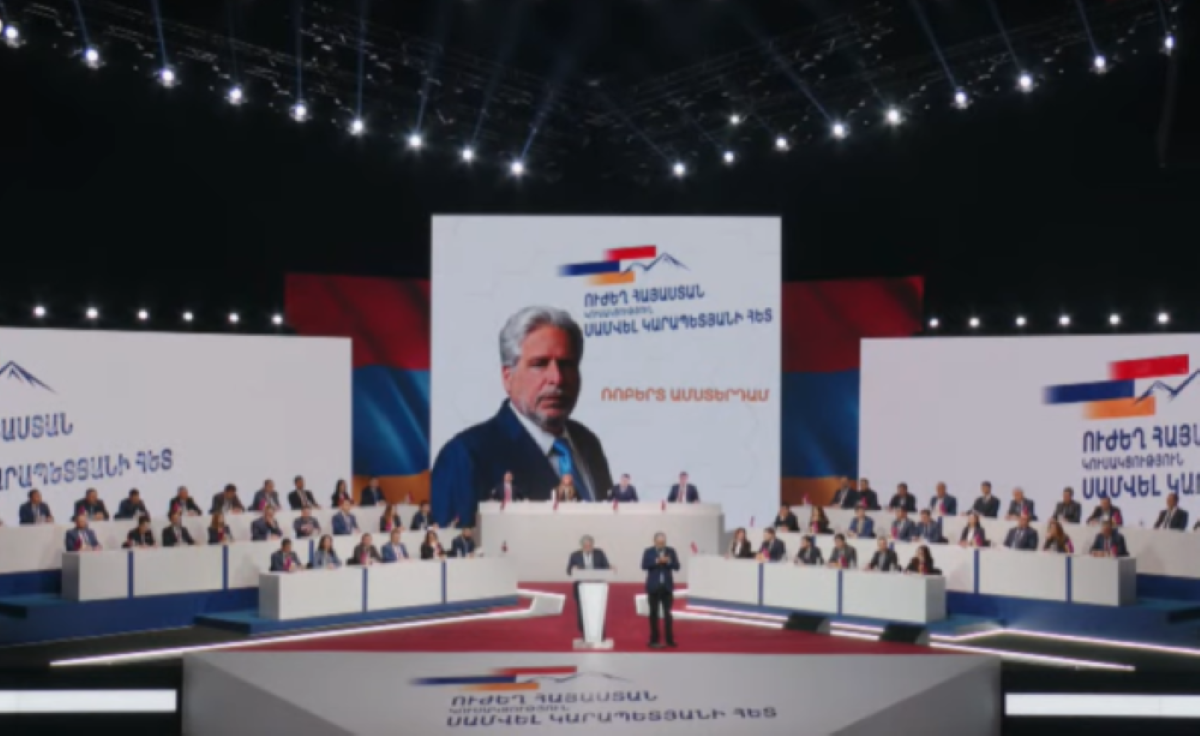
Karapetyan’s future should Pashinyan be re-elected remains murky, but it is likely his criminal prosecution will go forward.
As for Amsterdam, it is unclear what his role in Armenia will be after the campaign is over, and if he will continue his work for Karapetyan. He did suggest ‘there is scope for a tremendous amount of further litigation as the situation develops in Armenia’, but did not specify what he meant.
And Amsterdam and his team certainly have other battles to fight elsewhere, such as with the Spanish government over alleged theft of American taxpayers.
For Armenia, Amsterdam was clear about what he sees as the impending disaster if Pashinyan is re-elected.
‘Given his promise to destroy the Church, rewrite the constitution, and reconstitute the country, I have no idea what to say’, Amsterdam said.
He nonetheless appeared to leave the door open for the possibility of future work in Armenia.
‘We would always be interested in working with a future Armenian government, but, you know, that would depend on the government that’s formed’.
Additional reporting on this article was done by Arshaluys Barseghyan and Yousef Bardouka.
Kushane Chobanyan