Leaked documents show Russian plans to unseat Pashinyan, ties between Karapetyan and Putin


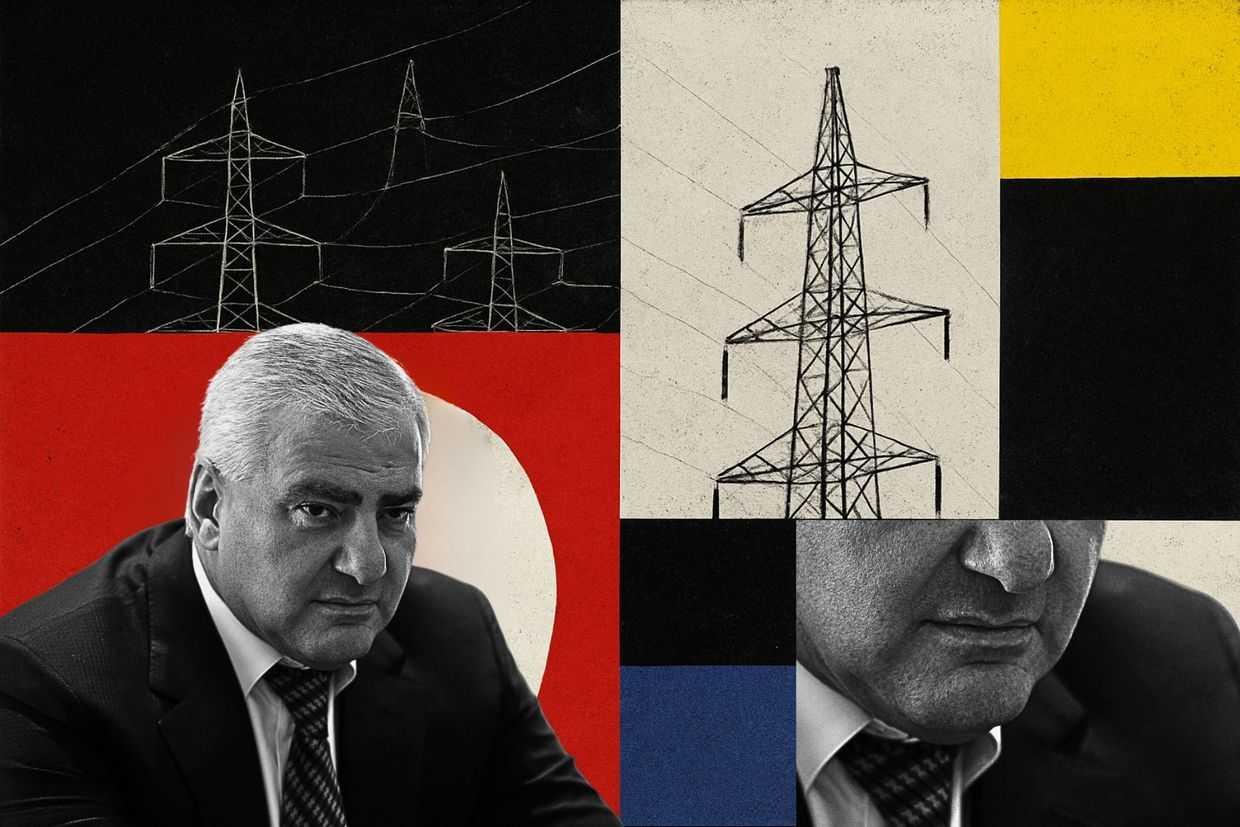
Leaked documents obtained by Russian opposition figure Mikhail Khodorkovsky’s Dossier Centre allegedly show a detailed Russian plan to oust Armenian Prime Minister Nikol Pashinyan through an operation built around their primary candidate, Russian–Armenian tycoon Samvel Karapetyan. A separate investigation by The Insider has found that Karapetyan had received unsecured loans from the Russian state-run energy giant Gazprom in 2016 to take over a debt-ridden French villa reportedly used by Russian politician Alina Kabaeva, long suspected of being the partner of President Vladimir Putin.
Ahead of the Armenian parliamentary elections scheduled for 7 June, Armenia–Russia relations appear to be at a low point. Russia has suspended the sale of alcoholic beverages from several Armenian producers, claiming they do ‘not meet mandatory requirements’, fully banned the import and sale of Armenian Jermuk mineral water, and launched additional inspections of Armenian fruit and vegetable exports after suspending the sale of Armenian flowers.
Alongside the latest restrictions, Russian officials have continued warning Armenia against deepening ties with the EU, including raising the prospect of higher gas prices should Armenia leave the Russian-led Eurasian Economic Union (EAEU).
Now, just two weeks before election day, the Dossier Centre has obtained and analysed internal documents from Russian political scientists ‘assigned’ to several Armenian opposition candidates showing Moscow’s aim to weaken Pashinyan and his foreign policy strategy, as well as to build a coalition following the elections.
From the start, it appears the Kremlin’s primary candidate was the newly-political Karapetyan, who was ‘supposed to be the “saviour” of the Armenian people’.
As Khodorkovsky writes on his Substack, ‘Karapetyan met a list of specific requirements: he was not connected to the discredited “old opposition,” the “Karabakh clan,” or Pashinyan’s group’.
At the same time, however, Karapetyan had strong ties with Russia, including being listed in Russian databases from 2006 as working for the ‘IC FSB’, or Information Centre of the FSB, a designation typically used for informants or foreigners operating under FSB control.
 Arshaluys Barseghyan
While the operation planned around Karapetyan was detailed — including a TV channel and a legal defence committee to deal with his anticipated arrest — Kremlin consultant Gleb Kuznetsov, the head of the expert council at the Expert Institute for Social Studies (EISI), an institute closely tied to the Russian Presidential Administration, soon realised that Karapetyan’s clear Russian ties were in fact a liability, including preventing him by law from holding the post of prime minister.
Therefore, according to the leaked documents, a second track was formed, centring on former Armenian Human Rights Defender Arman Tatoyan, who has arguably been the most popular person to hold the position. Tatoyan registered his political initiative Wings of Unity as a political party by mid-April 2026.
The internal documents received by the Dossier Centre show that his campaign was designed by the same Russian institute, with Kuznetsov’s wife, Karine Sarkisyan, preparing the launch document.
A target was set to push Tatoyan to 10% in the polls by March 2026. To achieve this aim, financial spreadsheets were authored by the former head of Armenia’s State Revenue Committee, Davit Ananyan, projecting a five-month campaign budget of ֏926.7 million ($2.5 million), which would cover regional headquarters, salaries, and advertising. Another document allocated funding to a dedicated Moscow staff and a permanent research programme.
At the same time, Tatoyan was ‘instructed to say he was “pro-Armenian,” that Russia is simply “a reality” (citing gas dependence and large Armenian diaspora), and to question why Pashinyan only worked with one side’, He was also ‘explicitly told not to call for a return to the CSTO [...] and not to attack Russia’.
By February 2026, however, it was clear Tatoyan’s operation was falling behind — in March, his polling stood at 7.8%, failing to reach the intended 10% target.
Therefore, as the Dossier Centre found, a third Russian document was created outlining a post-election coalition between Karapetyan and Tatoyan.
‘Tatoyan would carry the institutional, moderate message, while Karapetyan would handle the “geopolitical, resource, and conservative” side. Together, they would form an anti-Pashinyan majority cleansed of any toxic association with former President Robert Kocharyan’, Khodorkovsky wrote on his Substack.
Following the Dossier Centre’s report, the Independent Observer alliance filed a report on Monday accusing Tatoyan of illegal campaign financing.
That same day, Tatoyan responded to the allegations, calling the financial figures cited by the Dossier Centre as being ‘fabricated, completely exaggerated’.
‘These are facts, objective facts. The information about the sources of funding is completely false. All our actions comply with the law: they are reflected in tax and bank statements and all other relevant bases. The Wings of Unity party has no funding from any external source, especially not from Russia’, Tatoyan wrote on Facebook.
He concluded by stating that they would ‘sue the dubious source’ and would go after anyone else who toyed with his ‘authority and good reputation’.
Karapetyan has not responded to the allegations as of the time of publication.
Nate Ostiller
Karapetyan’s links to Putin’s long-time partner Kabaeva
Also released on Monday was an investigation by the independent Russian outlet The Insider, which found that Karapetyan was listed as the owner of Villa Maria Irina on the French Riviera, the same residence that had been linked to Putin’s alleged partner Alina Kabaeva.
Using financial records from the companies that formally owned the property, The Insider found that ‘Gazprom-linked entities provided the money to buy the villa and cover debts tied to its upkeep effectively free of charge and with no expectation of repayment’, thereby making Karapetyan the villa’s nominal owner.
Tracing the money, the investigation revealed that the money had been transferred to Karapetyan’s offshore companies as a gift.
‘The loan was not merely unsecured — it had negative collateral given that the shares of Subville and Maritime Villa Holding purportedly backing it obligated the holder to pay off previous debts exceeding the value of the villa itself. Even after the villa’s debts were covered, the transfer of money — also originating from Gazprom-linked sources — continued under the guise of loans’.
The revelations were the latest indication of ties between Karapetyan and the upper echelons of the Russian government.
In 2018, Karapetyan’s name appeared on a list of key Russian oligarchs created by the US Treasury Department. The inclusion of Karapetyan and the others on the list was based on a determination of ‘their closeness to the Russian regime and their net worth.