Is Armenia’s ‘strategic brand’ of democracy at risk?
With critics alleging democracy in Armenia is under attack, is its status as the country’s strategic brand coming to an end?

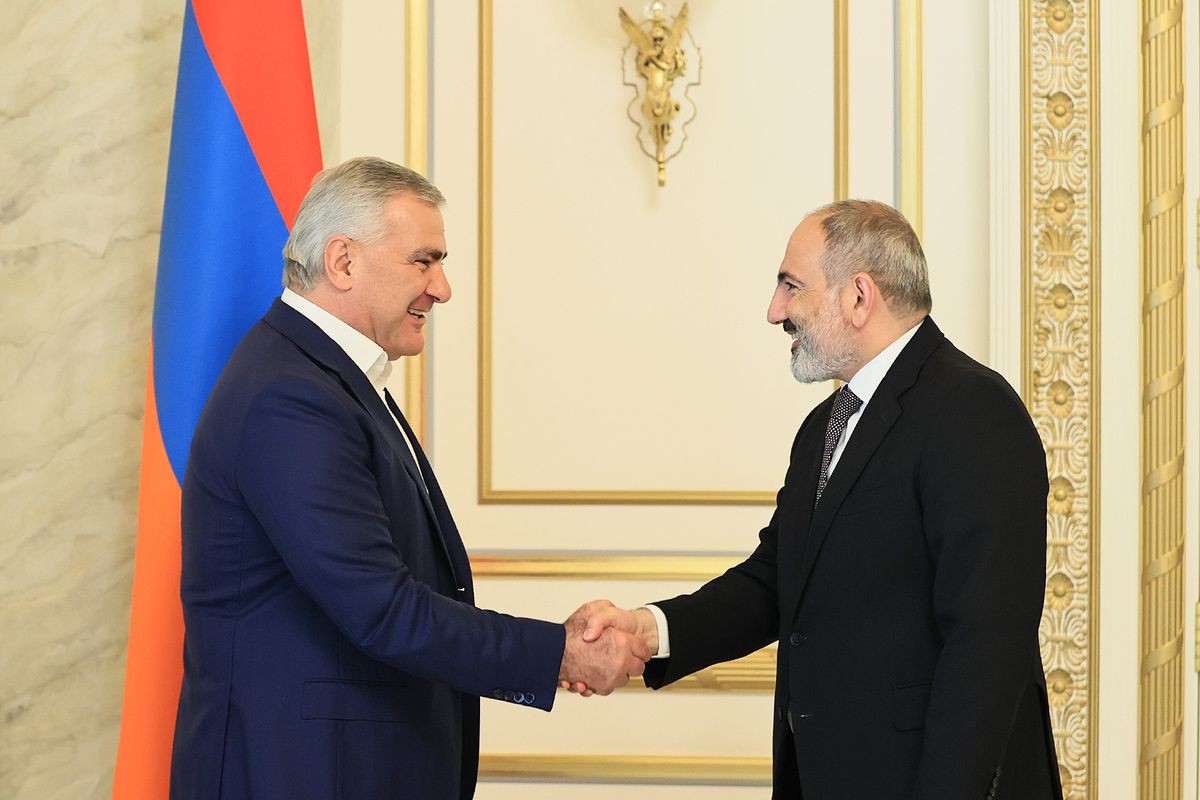
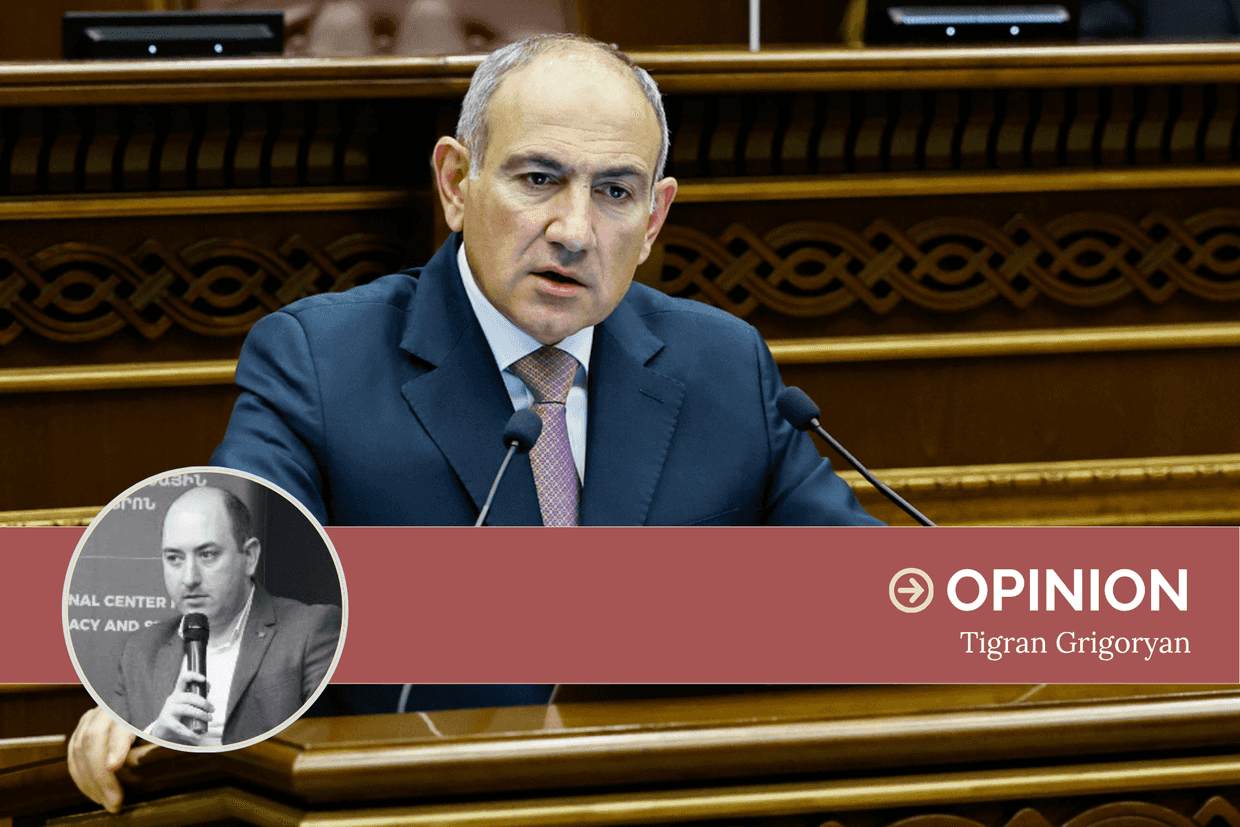
In a controversial press briefing in August 2025, Prime Minister Nikol Pashinyan re-iterated that his government would not continue the Karabakh movement.
‘If citizens disagree, I call on them to initiate a revolution․ I assume I am the first prime minister in history to call on citizens to launch a revolution against an official strategy they oppose’, he said.
Since the 2018 Velvet Revolution, through which he came to power, Pashinyan has consistently framed ‘democracy’ as Armenia’s brand and strategic choice.
Pashinyan has repeatedly described democracy as his government’s key achievement, arguing that the December 2018 parliamentary elections were the first in Armenia’s history whose results were not contested. Prior to 2018, however, elections were widely criticised for fraud, corruption, and political repression — claims Pashinyan himself articulated in parliament, describing systematic falsification through administrative pressure, intimidation, and vote-buying. Pashinyan was imprisoned in 2009–2011 over the 2008 post-election protests, a case later recognised by the European Court of Human Rights as politically motivated. International assessments from Human Rights Watch and Freedom House during this period similarly documented excessive force against protesters, restrictions on media, and Armenia’s classification as only partly free.
Speaking at the Armenian Forum for Democracy in 2023, Pashinyan reiterated that democracy was Armenia’s ‘brand and conscious political strategy, not a coincidence’. He also declared: ‘There is no internal threat to democracy in Armenia. All threats are external, linked to our security challenges’.
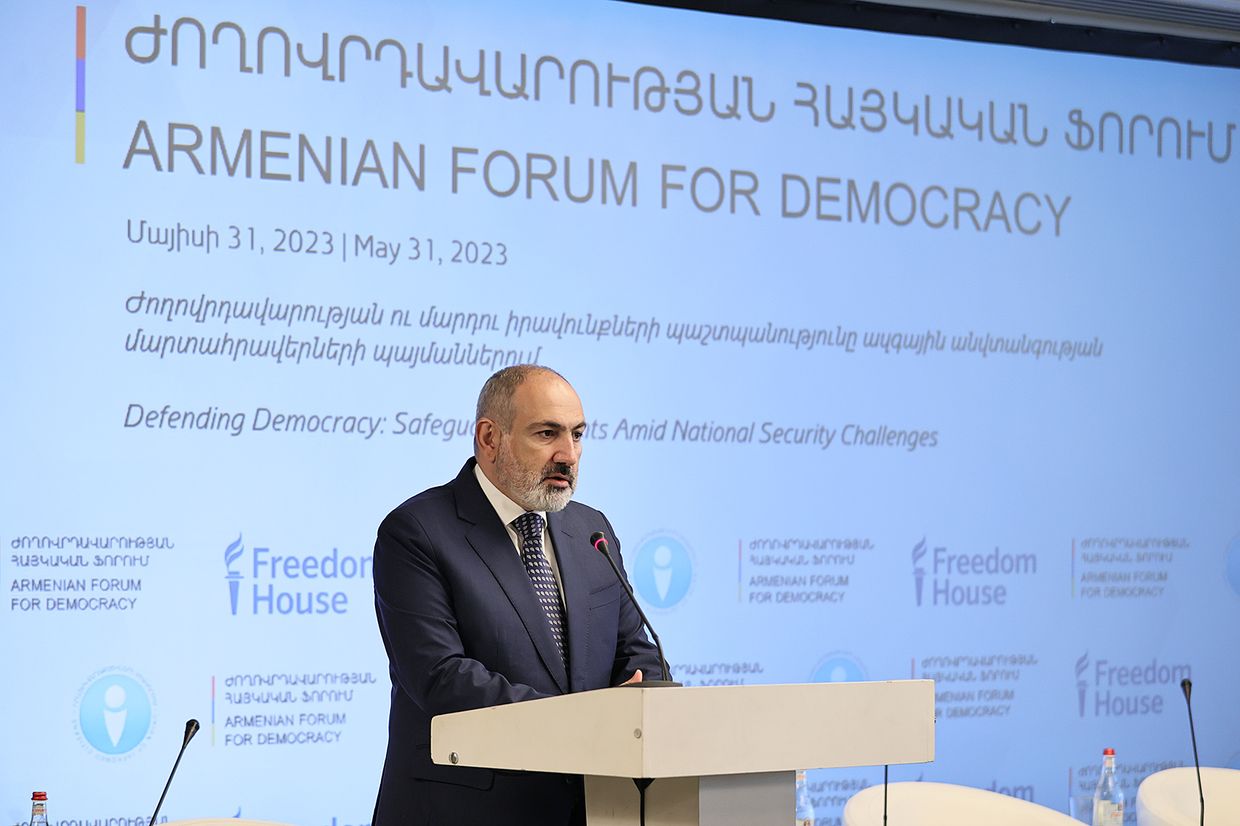
Pashinyan has also consistently emphasised that democracy should not depend solely on the will of individual leaders, but instead must be embedded in state institutions. He has linked this institutional approach to broader reforms, stating that democracy is closely connected to the quality and accessibility of education. Pashinyan has also tied it to economic growth, claiming that high growth rates were possible ‘because of democracy, free competition, and liberalisation’.
Pashinyan has taken pains to highlight Armenia’s progress under the EU’s Eastern Partnership programme — indeed, independent sources have recognised the country as a leader in areas such as establishing an independent judiciary, implementing anti-corruption measures, and safeguarding electoral rights and freedom of assembly — even under challenging conditions.
Yet, while Pashinyan continues to present democracy as Armenia’s strategic choice and ‘brand’, recent developments have fueled debates about whether democratic standards are genuinely safeguarded in practice. Controversies around what critics allege are political prosecutions, restrictions on media, and limitations on free speech have also raised questions about the country’s institutional resilience.
Rule of Law and the judiciary
Whether democracy truly remains Armenia’s ‘brand’ depends on how its core institutions function in practice, starting with the judiciary.
‘It is very important that democratic elections and democracy in turn lead to the establishment of democratic institutions. Without this, it is impossible to make democracy institutional’, Pashinyan stated at the 2023 Armenian Forum for Democracy. At the same time, he admitted that Armenia faces ‘very serious challenges with regard to the independence of the judiciary’, stressing that the rule of law remains a ‘fundamental condition’ for democracy to take root.
In its 2025 report, Freedom House noted that Armenia’s ongoing anti-corruption and judicial reforms made little progress. Successful prosecutions of high-ranking officials remained extremely rare, and law enforcement agencies largely failed to respond to media reports regarding officials’ declared assets. In November, the head of the Supreme Judicial Council (SJC) and five other senior officials resigned at the prime minister’s request, raising concerns about judicial independence.
 Arshaluys Barseghyan
The report further highlighted systemic political influence over the courts and pervasive corruption within judicial institutions. Judges reportedly face pressure to cooperate with prosecutors to secure convictions, and acquittal rates remain extremely low.
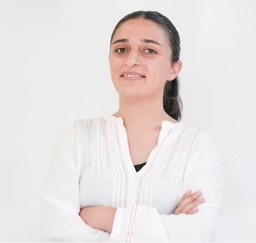
Artur Sakunts, head of the Vanadzor office of the Helsinki Citizens’ Assembly, told OC Media that the problem is systemic.
‘The judiciary in Armenia is not independent. The difference is that before 2018 it depended solely on 26 Baghramyan [the president’s residence], whereas now it is dependent on various centres — executive authorities, the opposition, and businesspersons’.
Elections and political freedom
Elections remain at the heart of Armenia’s political life, often revealing both the progress and the limits of its democratic institutions. Pashinyan has consistently underlined that Armenia’s democratic legitimacy rests on free and fair elections. In his words, the electoral system must be the foundation for ensuring ‘citizens’ sense of ownership of political power’.
Although these provisions should provide a solid foundation for democratic governance, Sakunts argues that in practice they do not function effectively.
‘This constitution is a single-party governance constitution’, Sakunts says. ‘Under the previous 2015 Constitution, 17 of the 19 direct powers granted to the president were transferred to the prime minister. But a parliamentary system assumes that the executive operates in coordination with and under the oversight of parliament. In Armenia, that oversight is effectively absent’.
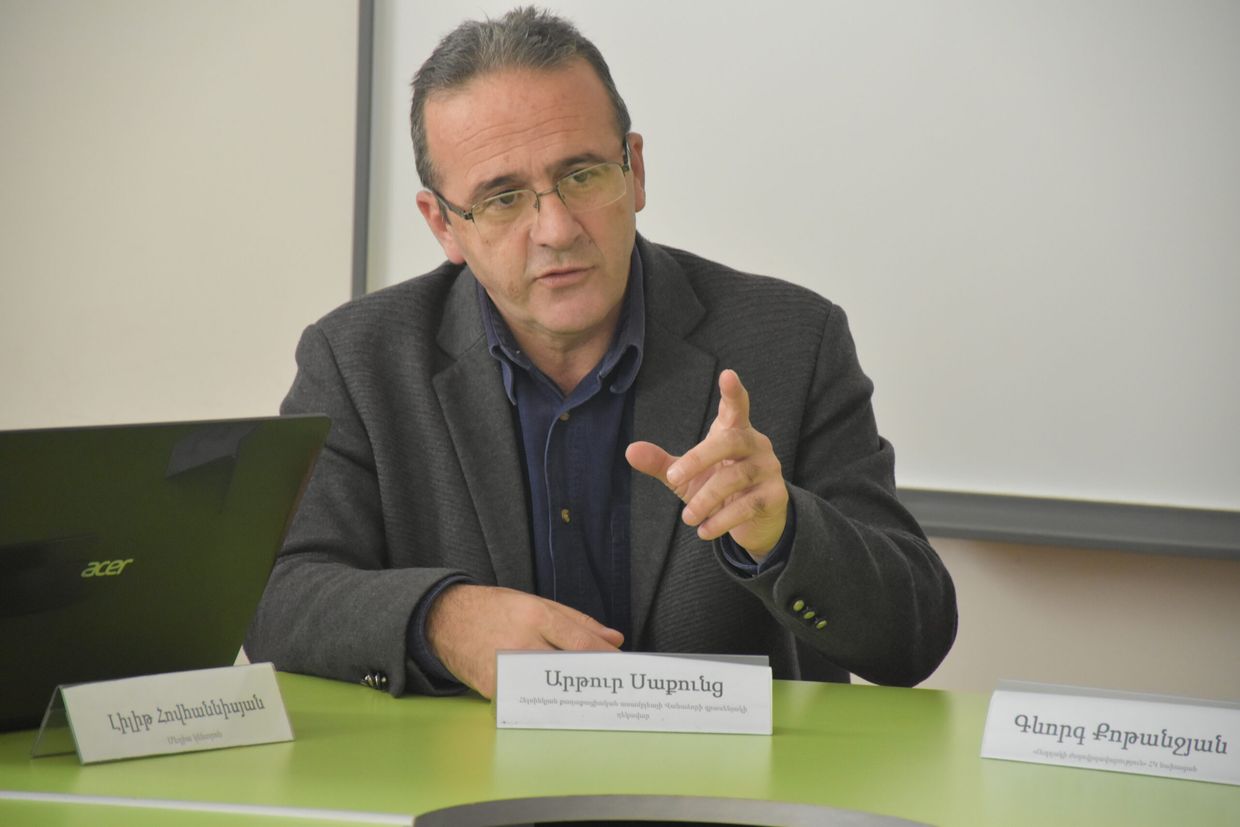
Sakunts notes that, in practice, the political majority can operate without meaningful checks:
‘If the opposition boycotts sessions, it does not in any way prevent the majority from functioning. The minority has neither substantive nor decisive influence. Therefore, the principle of separation of powers and checks and balances does not function’.
Yet, as Armenia prepares for the 2026 parliamentary elections, questions arise not only about the integrity of the vote itself, but also about the broader political climate. Allegations of selective justice and politically motivated arrests have revived public debate around the notion of what constitutes ‘political prisoners’.
Nonetheless, the only case that has been officially recognised outside Armenia as explicitly being an example of politically motivated prosecution is that of Armen Ashotyan, deputy chair of the Republican Party of Armenia — in 2023, during the European People’s Party (EPP) Congress, Ashotyan was formally recognised as a political prisoner.
According to the Investigative Committee, investigations revealed that Ashotyan, while serving as Chair of the Board of Trustees of the Yerevan State Medical University (YSMU) Foundation and as Minister of Education and Science, prompted Rector Mikayel Narimanyan to abuse his official powers. As a result, the YSMU Foundation allegedly suffered damage amounting to ֏39 million ($102,000).
Another case widely referred to as political persecution is that of Russian-Armenian tycoon Samvel Karapetyan, who faces charges of public calls for the violent overthrow of the constitutional order and the usurpation of power. Republican Party figures, including Ashotyan himself, have described Karapetyan as ‘not only a political prisoner, but also a prisoner of conscience’, arguing that he has been deprived of liberty for his religious views and without advocating violence.
Similarly, Levon Kocharyan, a politician and former MP from the opposition Hayastan faction, described Karapetyan’s case as ‘extremely unjust’.
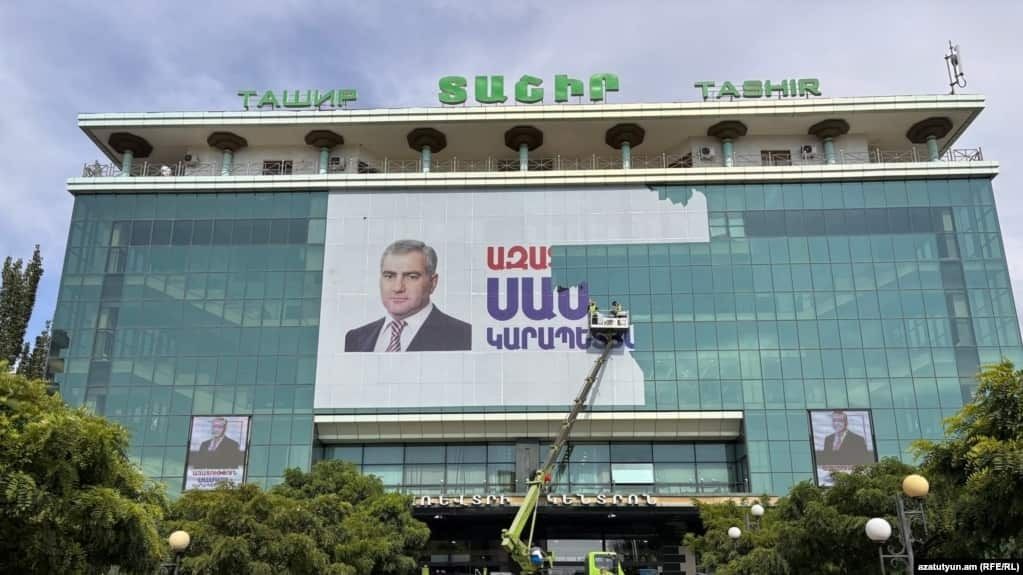
In an interview with Factor TV on 20 June, MP Arsen Torosyan, a leading figure within Civil Contract, stated that Karapetyan, although Armenian, keeps most of his capital in Russia and is ‘under the control of Russian authorities’. Torosyan expressed confidence that Karapetyan’s arrest, if not directed, was at least coordinated with Russian authorities, describing it as a ‘hybrid attack from Russia’ aimed at undermining democracy in Armenia ahead of upcoming elections.
In October, new charges were levelled against Karapetyan for allegedly failing to pay taxes or other mandatory fees, as well as money laundering.
Karapetyan announced the formation of the ‘Mer Dzevov’ (‘Our Way’) movement in August, while in custody. Alik Aleksanyan, a member of the movement’s coordinating council, told journalists that the initiative had grown significantly in recent months, gaining public influence and shaping a new agenda and eventually leading to the creation of a political party — ‘Strong Armenia’, with Karapetyan as the party’s candidate for prime minister. He also suggested that the amendment of Karapetyan’s charges was linked to the movement’s activity and success.
Arshaluys Barseghyan
Unlike previous authorities, Sakunts stresses that this government was formed through free and fair elections, yet democracy cannot rely solely on will or enthusiasm․
Media freedom and free speech
Concerns over Armenia’s democratic trajectory also extend beyond political trials. On 22 March 2024, well-known media figures Narek Samsonyan and Vazgen Saghatelyan were detained and charged with hooliganism committed as a group using communication technologies following remarks they made about Pashinyan on their talk show Imnemnimi. The decision to treat critical commentary in a satirical programme as criminal hooliganism drew condemnation from media and opposition circles, who argued that the arrests amounted to a clear infringement of free speech.
The case of the independent daily Aravot has also drawn attention. Since its founding in 1994, the paper has been based in Yerevan’s Press House, but in 2024, the State Property Management Committee ordered it to vacate its office space, citing the termination of a long-standing lease agreement. Aravot, which frequently criticises the government, had sought to renew the contract but was denied.
Freedom House argued that while small, independent, and investigative outlets continue to operate and provide in-depth reporting online, most print and broadcast outlets remain tied to political or commercial interests. Restrictions introduced in 2021, such as limiting journalists’ movement in parliament and border areas, were flagged as steps backward in the reform process. Cases such as the asset freeze against fip.am in 2023, following its reporting on alleged misuse of administrative resources by the ruling party, were seen as troubling indicators of political pressure on independent journalism.
The Reporters Without Borders (RSF) Press Freedom Index 2025 ranked Armenia 34th out of 180 countries. While the ranking places Armenia ahead of many post-Soviet states, RSF stressed that ‘despite a pluralistic environment, the media remain polarised’. The report further warned of ‘an unprecedented level of disinformation and hate speech’, fueled by domestic political tensions, security threats at Armenia’s borders, and the country’s precarious geopolitical position between Russia and the EU.
Robin Fabbro
Shushan Doydoyan, founder and director of Armenia’s Freedom of Information Centre, emphasises that media freedom in Armenia today faces serious challenges across financial, political, and legal domains.
‘Independent media outlets, which are not affiliated with any political party or oligarch, are forced to find ways to continue their operations without sufficient financial resources, Doydoyan tells OC Media.
She stresses that political pressure remains constant:
‘No government likes independent media and constantly tries to exert influence, shaping negative public opinion about their work. Even after the [Velvet] Revolution, this government is no exception; the methods may differ, but the goal is the same — to create an unfavorable environment for independent media’.
Legal regulations on defamation and insults also pose serious challenges.
‘Defamation and insult laws create significant problems for independent media, because the high compensation amounts set by legislation, combined with the not-so-positive judicial practice that continues to develop, put media outlets in very difficult financial situations. A single allegedly defamatory or insulting statement can result in compensation ranging from ֏2 million–֏6 million ($5,000–$15,000) which is extremely burdensome’, she explains.
Under article 1087.1 of the civil code of Armenia, in cases of defamation or insults, a person may seek a public retraction, compensation (up to 2,000 times the minimum wage (֏1,000, or $2.60) for defamation and up to 1,000 times for insults), or a public apology, depending on the specifics of the case.
Doydoyan notes that high-ranking officials often use lawsuits to pressure or silence media outlets, filing multiple cases to suppress critical speech and encourage self-censorship. ‘As members of the political elite, they should not be using judicial retaliation to resolve their issues with the press’, she says.
The frequency of lawsuits filed by high-ranking officials against media outlets is also evident in the Datalex judicial information system. According to data from the Datalex system, since 2020, parliamentary speaker Alen Simonyan has filed a total of 32 civil lawsuits. Seven of these were directed against media organisations, including MediHab LLC, the editorial team of Zhoghovurd daily, and Iravunk Media LLC. In 2025 alone, Simonyan filed seven lawsuits, three of which specifically targeted media outlets. In these cases, the courts awarded compensation of ֏1 million ($2,600) for allegedly defamatory factual claims.

Recently, these lawsuits have targeted not only media outlets but also environmental activists and environmental journalists who attempt to highlight issues in the mining sector. ‘We even see major mining companies regularly filing lawsuits, demanding fines against the same individuals, which shows a growing pattern of legal pressure used to intimidate and control voices raising public interest concerns’, Doydoyan concludes.
Overall, Armenia presents a mixed picture of democracy. While electoral processes exist and some institutional reforms have been implemented, persistent challenges remain. Judicial independence is fragile, and political influence continues to shape legal outcomes. Allegations of political persecution and restrictions on media and civil society indicate that the space for dissent is limited. As Sakunts emphasises: ‘only electoral democracy exists’.
‘Democracy cannot be maintained by will or enthusiasm alone; mechanisms and institutional oversight are necessary.’