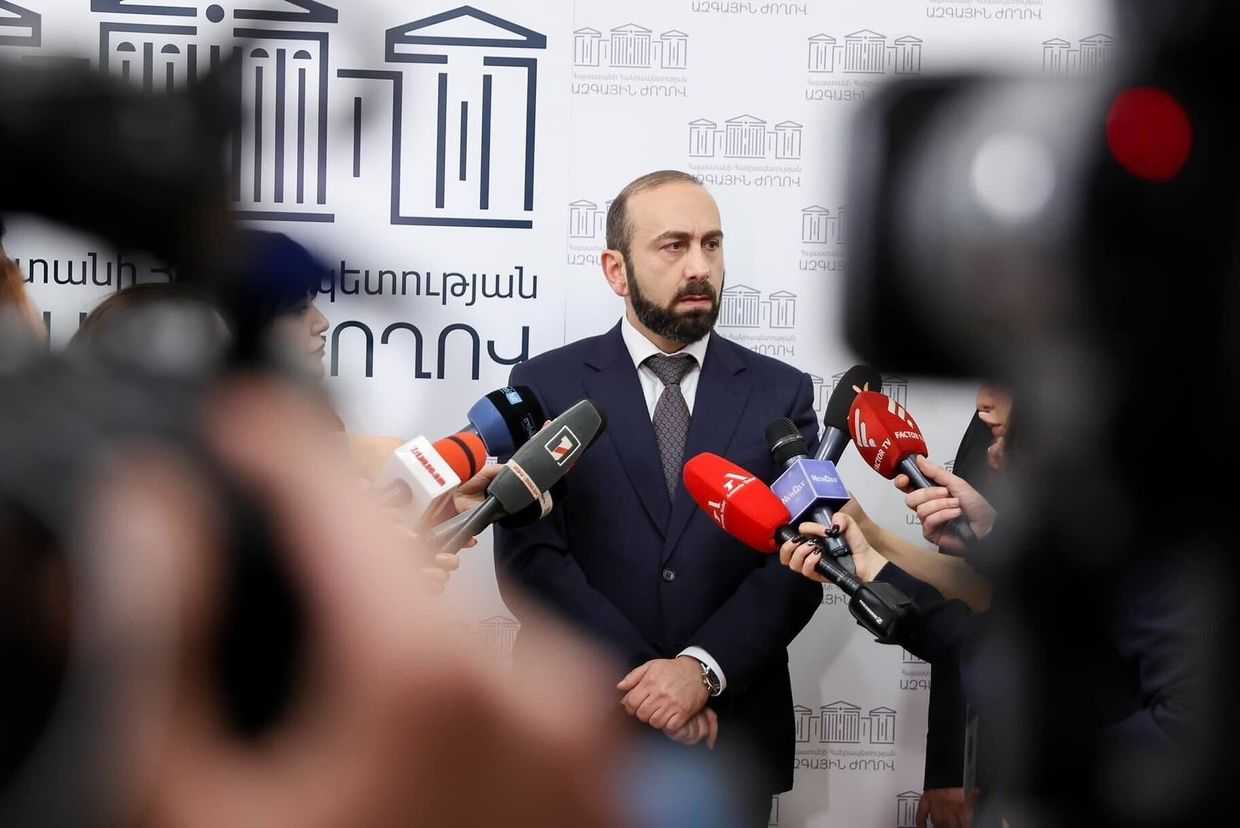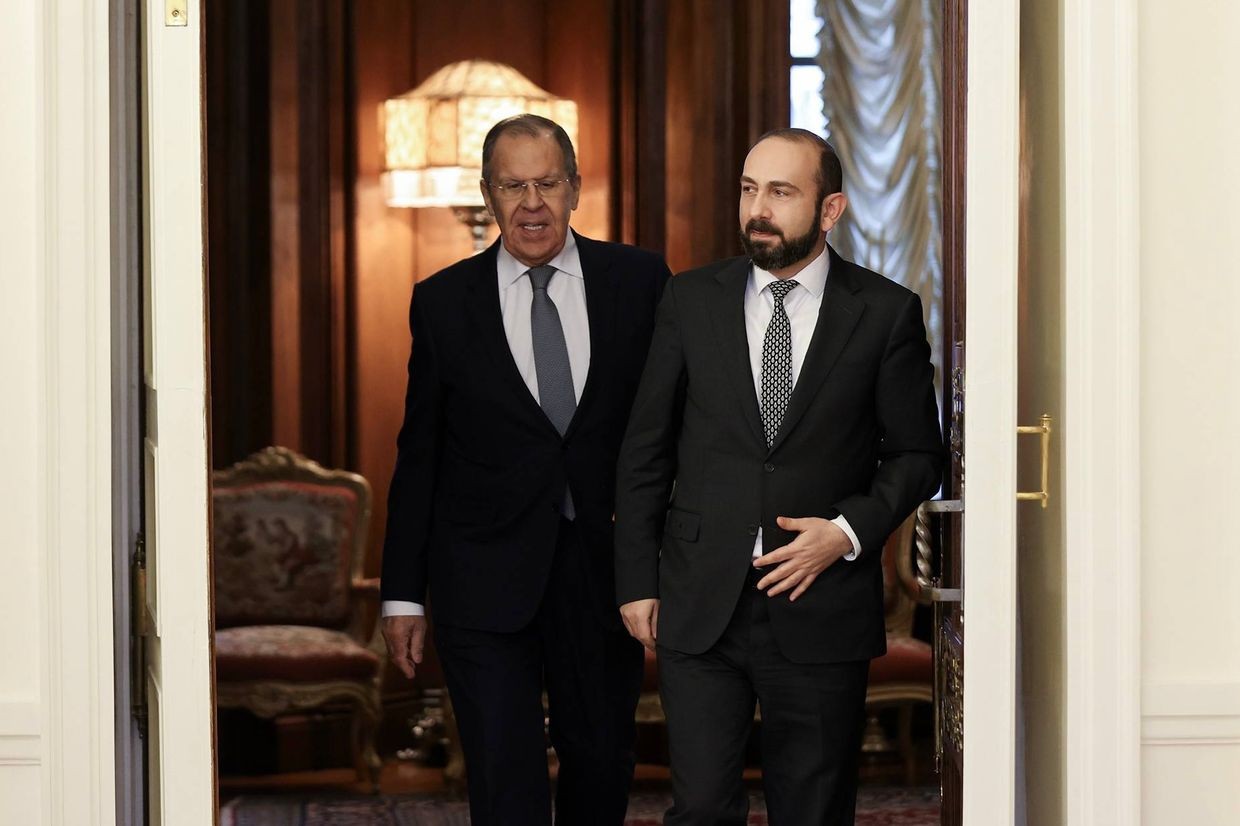
Armenian Foreign Minister Ararat Mirzoyan has suggested that some of the disinformation targeting Armenia ahead of the 2026 Armenian parliamentary elections could be traced back to Russia.
Armenia is set to hold its elections on 7 June, ahead of which both authorities and fact-checkers have noted a surge in disinformation, with much of it targeting Prime Minister Nikol Pashinyan and his government.
Discussing the definition of hybrid threats, which he described as a relatively new phenomenon in Armenia, Mirzoyan suggested that the country has been primarily targeted by disinformation, though such threats can also take other forms, including cyberattacks.
He further accused the Armenian media of disseminating such disinformation — in some cases deliberately, and in others unintentionally.
When asked about Russia’s role in the hybrid attacks, Mirzoyan suggested that some of the disinformation could be traced back there.
‘Don’t imagine [there is] a centralised office or a supreme authority from which everything is organised and managed’, Mirzoyan said. He further elaborated — ‘Can you see MPs of Russia [...] saying things against Armenia’s sovereignty and its legitimately elected authorities, things they have no right to say, because that is interference in internal politics? Yes, you can. Can you see officials of various ranks involved in such actions? Yes, you can. Can you see such things coming from expert circles? You certainly can see them with just a moment of googling’.
Mirzoyan was also asked about the EU’s ‘hybrid rapid response team’ which will be sent to Armenia ‘to help counter the threats ahead of the country’s elections’.
RFE/RL reported earlier in March that the team would consist of ‘a 9–14-member mission of experts’ and will visit Armenia in early April.
The group will stay in Armenia for 10-15 days, helping the offices of the Prime Minister and the Security Council to ‘develop a plan and regulations for managing these crises in situations of cyberattacks and foreign information manipulation’, RFE/RL reported.
 Arshaluys Barseghyan
Mirzoyan noted that hybrid attacks were ‘a fairly unfamiliar phenomenon’ for Armenia, while in other parts of the world there was ‘accumulated experience’, adding ‘so why not ask for [help]?’
Addressing critics who suggested that EU aid could be perceived as Western interference in Armenia’s elections, Mirzoyan said that ‘some circles, as soon as they hear the word EU, flinch in fear and think that they have come to swallow us up, cut us off from centuries-old friendly connection’, implying Armenia’s long-standing ties with Russia.
‘If that group came from Madagascar, I’m sure it wouldn’t provoke such a reaction’, Mirzoyan said.
He added that ‘under all governments’, Armenia has sought assistance, including from the EU, on various aspects related to electoral processes.
‘If Russia has its own experience in combating hybrid attacks and is ready to share it, we are not against it. Let them share it, and we will see what kind of experience it is’, Mirzoyan said, responding to a question about the possibility of requesting similar support from Russia to tackle hybrid attacks.
Arshaluys Barseghyan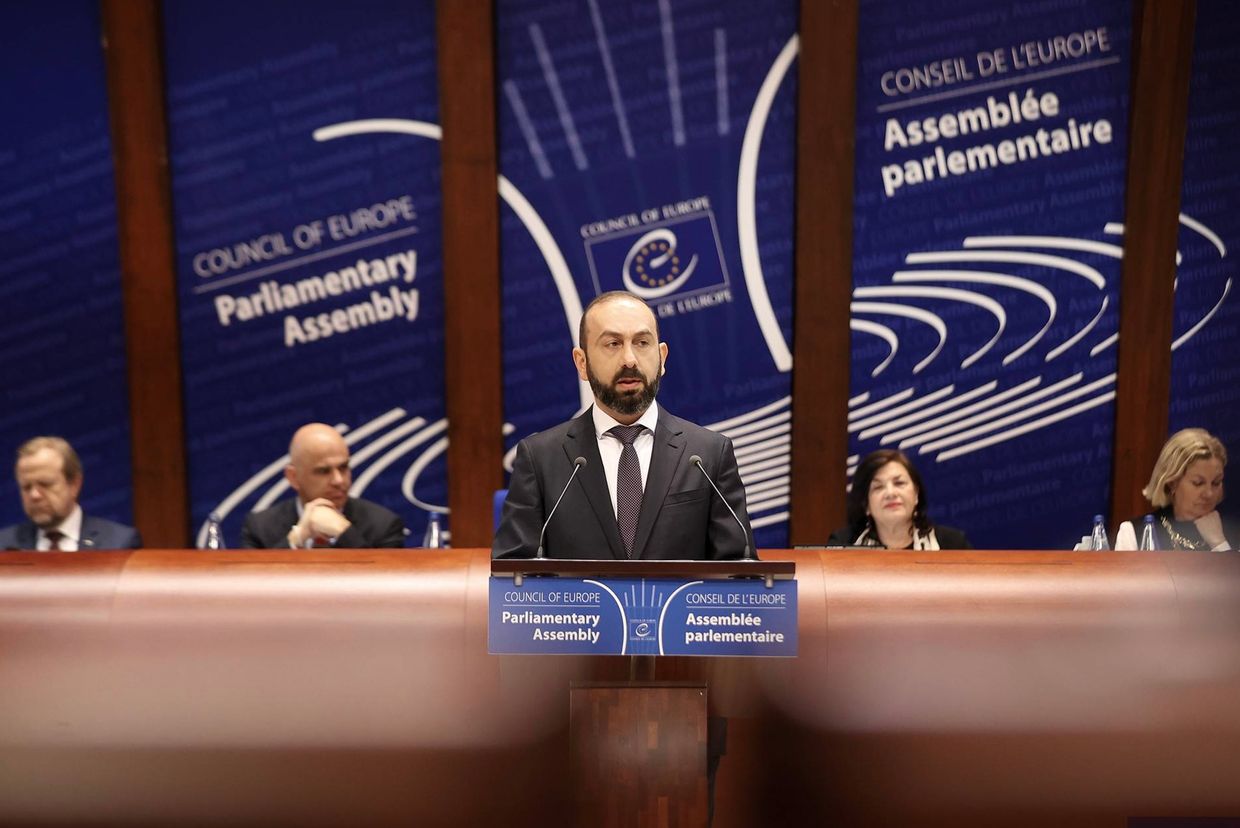
Also on Monday, Pashinyan had a telephone conversation with Russian President Vladimir Putin. According to the Armenian readout, they discussed ‘issues related to the scope of the bilateral agenda’, and also ‘agreed to continue the discussion’ in a meeting in the near future.
The Kremlin readout elaborated that the call took place at the initiative of the Armenian side, and that Pashinyan and Putin discussed ‘cooperation in trade, economic, energy and transport sectors’.
There was no reference in either readout to the two leaders discussing hybrid attacks on Armenia or Russian-backed disinformation.