Russia claims the Constantinople Patriarch seeks to ‘subjugate’ Georgian Church

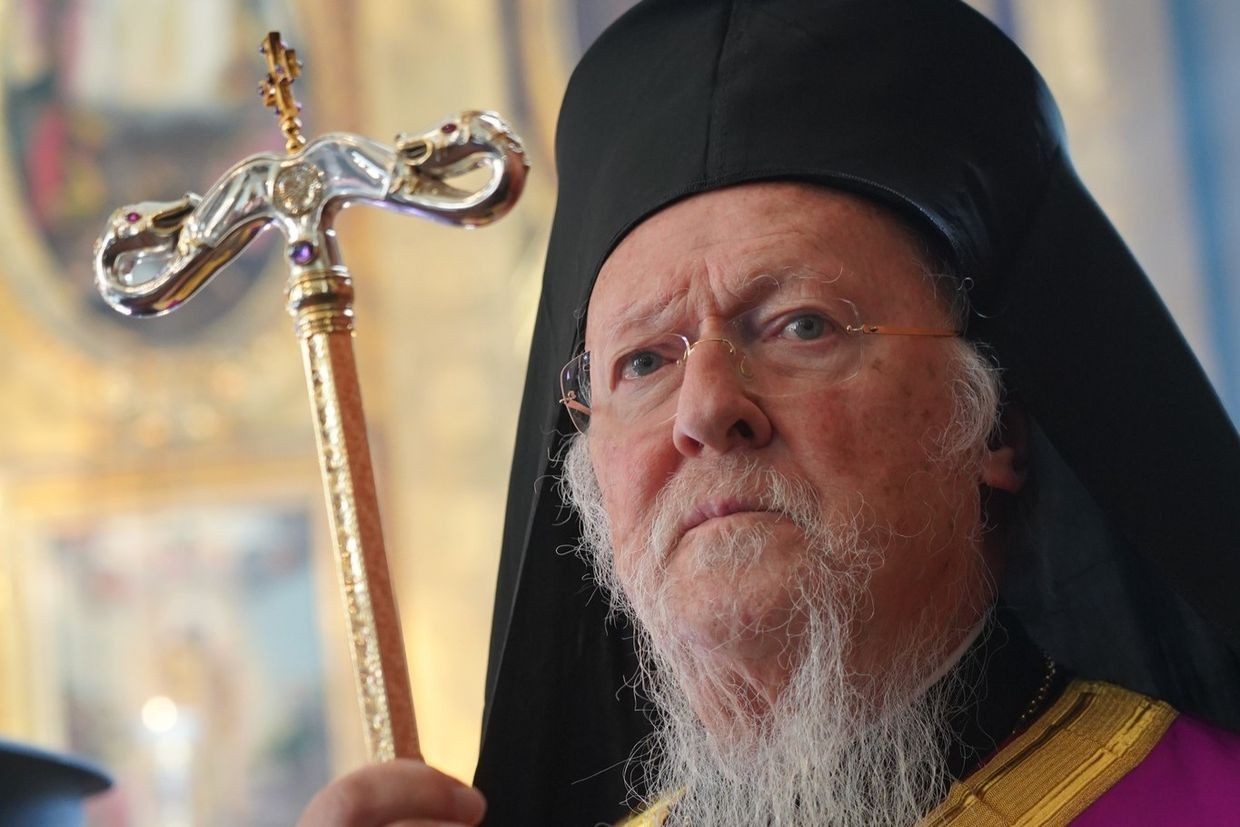
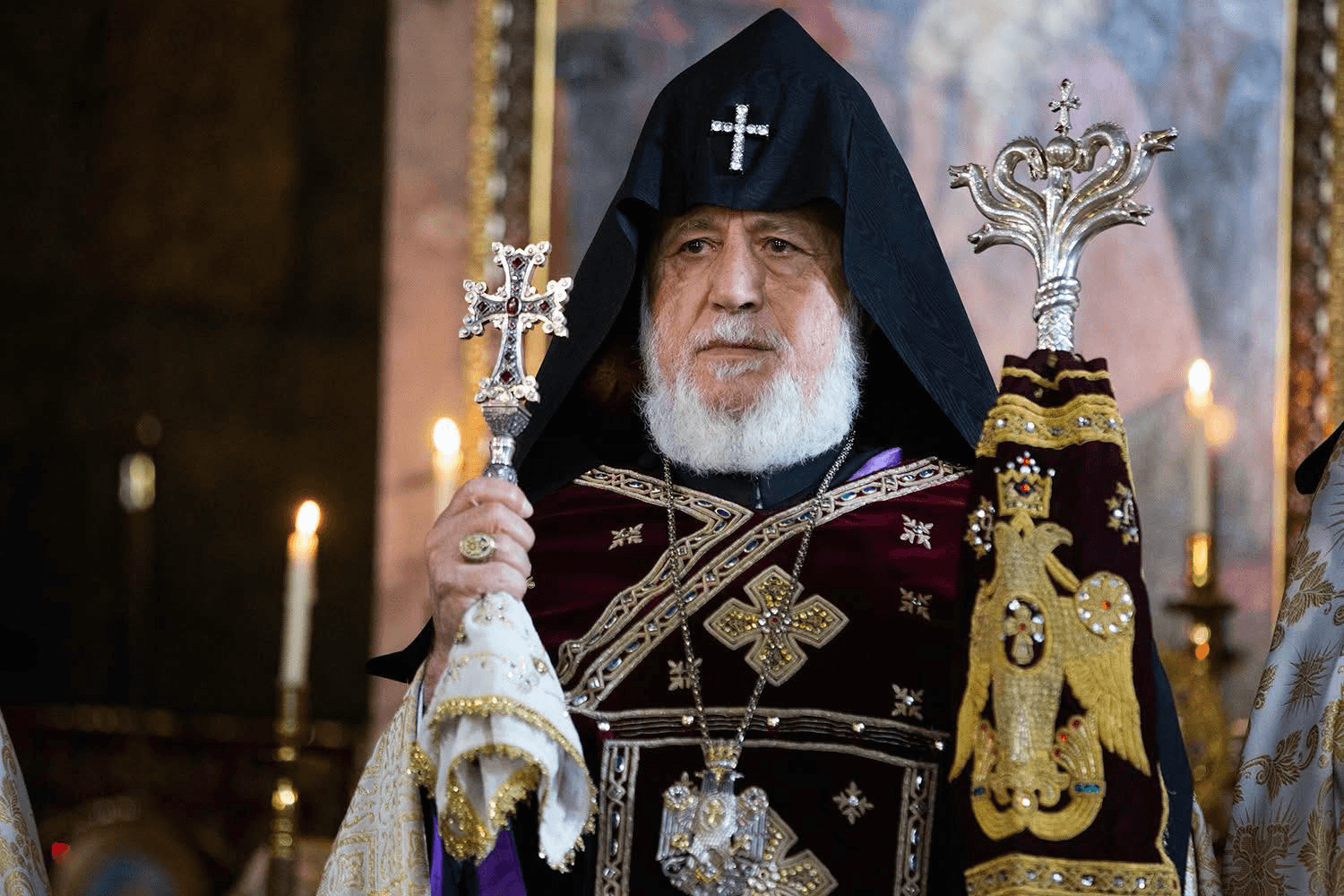
Russia’s Foreign Intelligence Service (SVR) has claimed that the Ecumenical Patriarch of Constantinople Bartholomew I is seeking to ‘subjugate’ the Georgian Orthodox Church by supporting specific candidates to succeed Patriarch Ilia II. In response, the Georgian Church stated that it considers such interference impossible.
In a statement on Tuesday, SVR said that Bartholomew I is ‘interfering in the internal affairs’ of the Georgian Church, ‘taking advantage’ of the death of Ilia II, Georgia’s longest-serving patriarch, who died at 93 on 17 March.
Accusing the Patriarch of Constantinople of ‘persistently pursuing the treacherous line of splitting world Orthodoxy’, the SVR claimed that he sought to promote a candidate ‘on whom he could rely’. The SVR named metropolitans Abraham Garmelia and Grigol Berbichashvili as candidates favourable for Constantinople.
‘In his inner circle, [Bartholomew I] presents them as the most suitable executors of his will’, the statement read.
Garmelia and Berbichashvili are both members of the Holy Synod — the Church’s highest governing body, currently composed of around 40 hierarchs.
All members of the Holy Synod have both the right to vote for the next patriarch and to nominate their own candidacy. However, a candidate must meet certain criteria, including being no younger than 40 and no older than 70, having been previously tonsured as a monk, and possessing theological education as well as ‘sufficient experience in church governance’.
 Mikheil Gvadzabia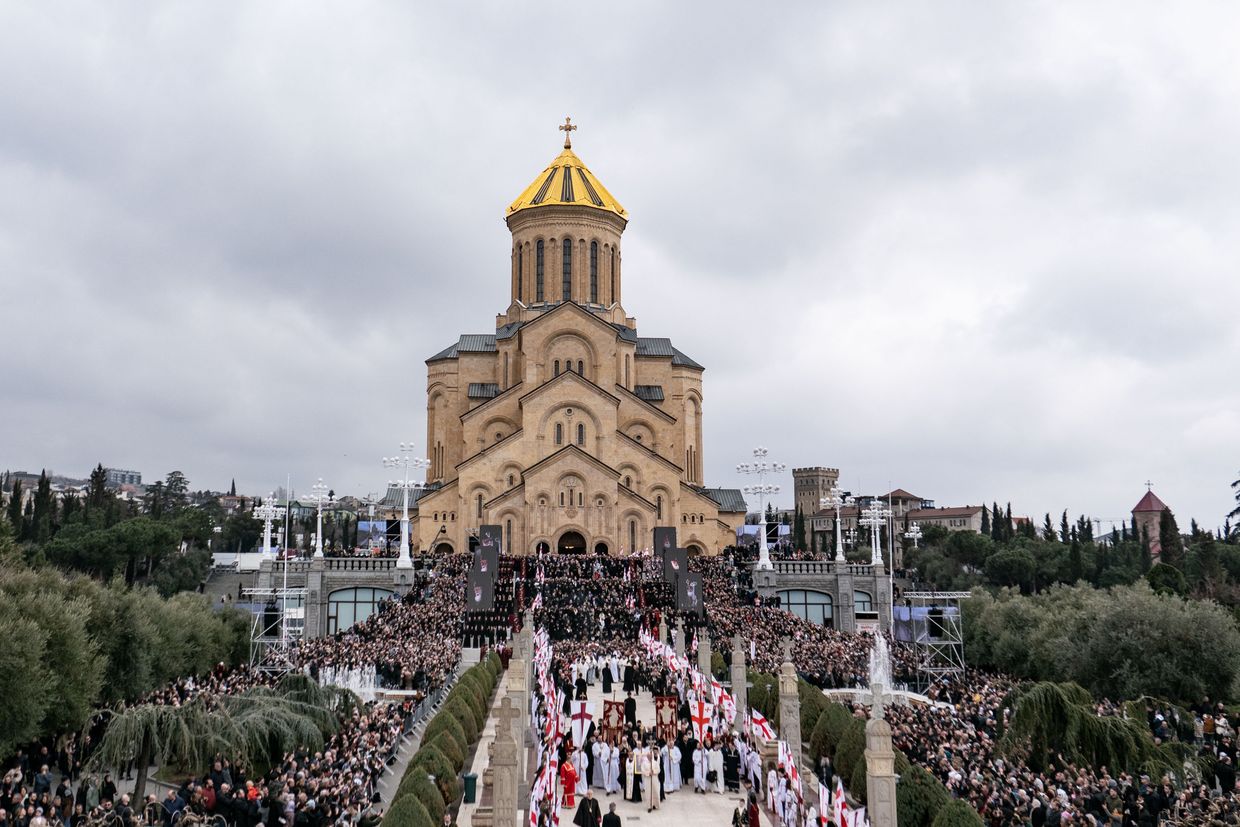
The basis of the SVR’s claims are unclear — Garmelia is 77 years old, which significantly exceeds the upper age limit set by the church’s governance statute, while Berbichashvili is 69.
Commenting on the issue with local media, the Patriarchate’s spokesperson, Archipriest Andria Jaghmaidze, stated that ‘the basis for such information is unknown’.
‘Such interference from another local church is unimaginable to us; we consider it completely impossible’, he told Netgazeti.
The two metropolitans mentioned in the SVR’s statement, as well as the Ecumenical Patriarchate of Constantinople, have not publicly responded to it.
Some interpreted the Russian claims itself as an attempt by the Kremlin to interfere in the affairs of the Georgian Orthodox Church.
‘Such statements mean “this is our sphere of influence” ’, wrote a defence and security policy researcher at the Tbilisi-based analytical organisation Geocase.
‘This is Russia’s direct interference in the affairs of our Church and in the country’s sovereignty’, he added.
Relations between the Russian Orthodox Church and the Ecumenical Patriarchate of Constantinople has been particularly tense after 2018, when the latter agreed to recognise independence of the Ukrainian Orthodox Church (OCU, separate from the Ukrainian Orthodox Church – Moscow Patriarchate, or the UOC–MP) from Moscow. In response, Moscow severed ties with Constantinople, breaking the eucharistal relations with it.
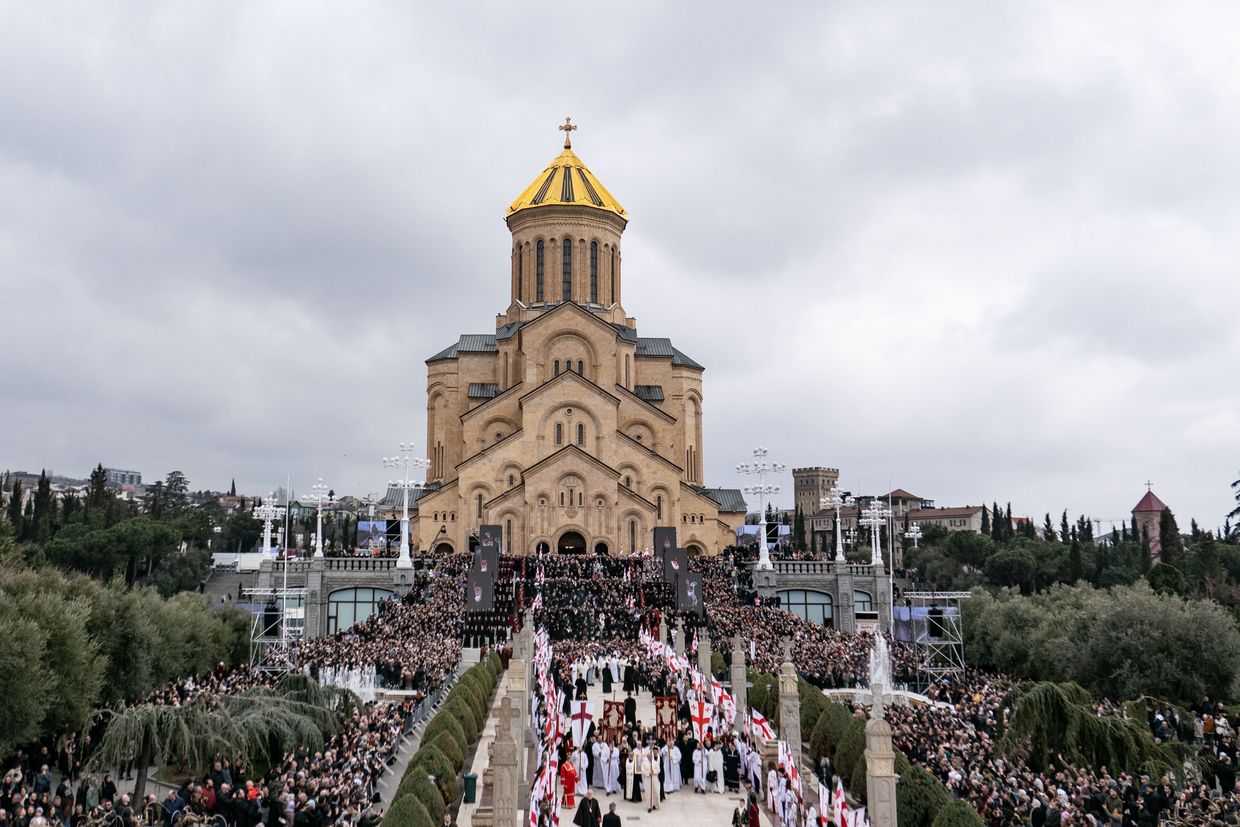
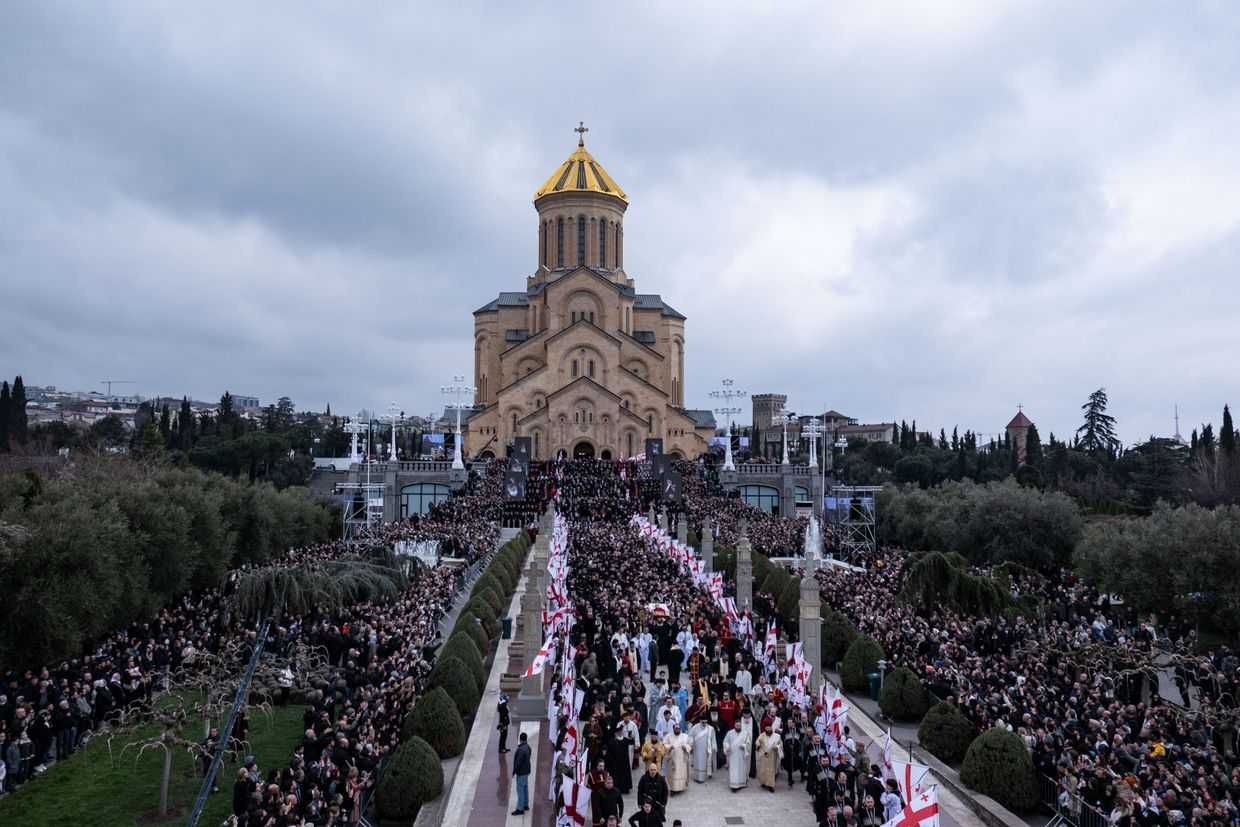
Among the foreign delegations that arrived in Tbilisi on 22 March for Ilia II’s funeral was the delegation from Constantinople, personally led by Bartholomew I. He conducted the funeral service for the late Patriarch at Tbilisi’s Holy Trinity Cathedral.
OC Media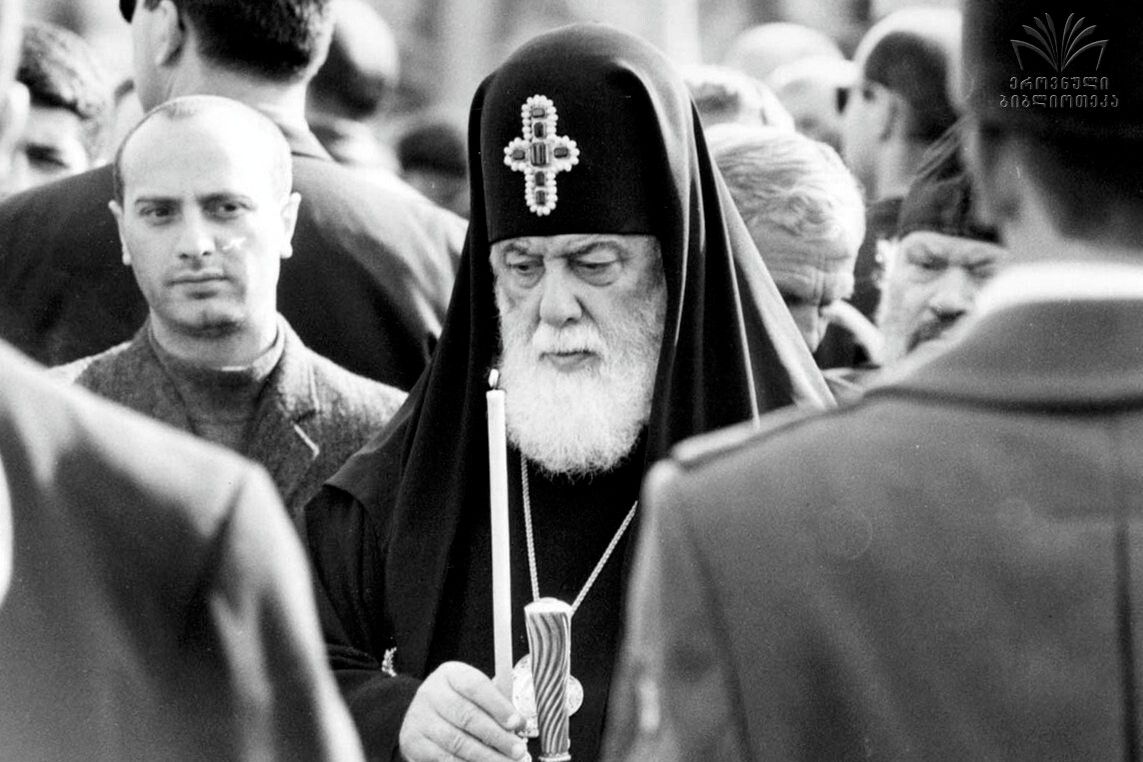
A Holy Synod meeting scheduled
After the Patriarch’s death, ecclesiastical governance passed to Metropolitan Shio Mujiri — incumbent of the patriarchal throne, or locum tenens, designated to this role by Ilia II in 2017.
The incumbent is required to convene an expanded church council, at which the new Patriarch is to be elected. Although laypeople will also be involved, only members of the Holy Synod will have the right to vote.
The Patriarchate’s public relations office stated on Tuesday that a session of the Holy Synod has been scheduled for 3 April. According to the office, the purpose of the meeting is to discuss aspects of Church governance that have not yet been formalised in the statute, including matters related to an expanded council.
‘The venue for the council, the procedure for inviting delegates, and other necessary matters [will be discussed]’, the statement read.
The local news outlet Tabula’s sources suggested that the meeting may address the interpretation of certain articles in the statute which could potentially ‘disqualify two strong candidates from the patriarchal election’.
If the Holy Synod decides that a candidate should definitely hold a theological degree, Metropolitan Isaiah — whose patriarchal candidacy has been actively discussed on social media in recent days and supported by some — would be excluded.
Moreover, if it is decided that someone over 70 even by a single day cannot be nominated, Metropolitan Datuashvili — who will turn 71 on 29 May — would be also excluded.
According to the statute, the new Patriarch must be elected within a period of 40 days to two months following the predecessor’s death.