Opinion | Who gets to decide civil society is ‘legitimate’ in Armenia?
Armenian civil society has become increasingly fragmented ahead of the elections, worsened by delegitimisation narratives and public mistrust.

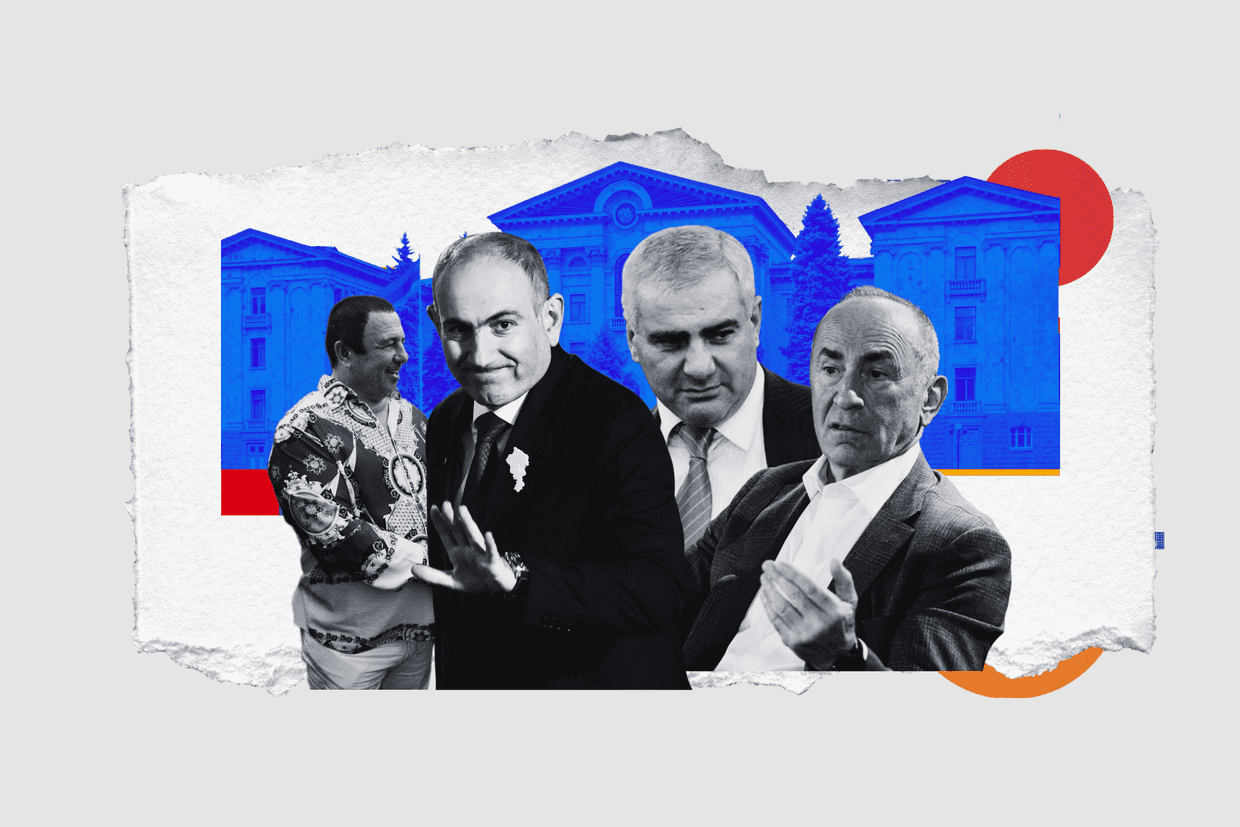
As Armenia’s 7 June elections approach — elections characterised by a hyper-politicised environment and the ever further personalisation of power — democratic pluralism has become increasingly constrained. The consolidation of authority around Prime Minister Nikol Pashinyan, as well as the absence of credible democratic alternatives or the articulation of any democratic agenda beyond anti-government positioning, has reduced the space for genuine public and political debate, undermining a fundamental element of democracy.
Moreover, civil society has become increasingly fragmented, a trend that intensified following the Second Nagorno-Karabakh War, as deep societal trauma and questions of legitimacy have weakened shared agendas. Widespread public mistrust, driven by narratives delegitimising civil society and its limited embeddedness within the public, has hindered meaningful engagement and reduced the diversity of voices in Armenian political and social debates.
These factors have sustained several recurring narratives about civil society, narratives that are repeatedly reactivated and reshaped, especially during elections. Rather than developing organically, these narratives are strategically reproduced at key political moments when legitimacy and representation are in question. As a result, they define who is considered entitled to speak and whose participation is viewed as suspect or illegitimate.
The shifting ‘real vs fake’ narrative
Ahead of the elections, a number of political actors, media platforms, and former civil society representatives are attempting to redefine the institutional and value boundaries of what constitutes ‘real’ civil society. One key distinction that has emerged is the shifting authorship of the ‘real vs fake’ civil society narrative.
Under the previous government, this discourse was primarily articulated from within civil society itself. It was civil society actors who actively produced the distinction, often pointing to GONGOs, as well as anti-democratic actors, as illegitimate forms of civic engagement that distorted the field from within trying to co-opt the human rights agenda and develop ‘parallel civil society’. In that sense, the boundary between ‘real’ and ‘fake’ was drawn by those who positioned themselves as defenders of democratic progressive human rights agendas and who criticised ‘anti-movements’, conservative, and right-wing campaigns.
In the current context, however, this narrative has undergone a significant transformation. The question of ‘fake civil society’ is no longer produced exclusively, or even primarily, by civil society actors themselves — instead, it is increasingly being reproduced by former civil society figures, publicly respected intellectuals, political actors, and the media who question the very existence of civil society and its agency.
As a result, the framing has become detached from its earlier normative grounding and has turned into a more diffuse and politically charged discourse. Rather than serving as an internal mechanism of self-regulation within civil society, it now circulates across multiple, often antagonistic, political and social camps. In this highly polarised environment, the narrative is no longer externally imposed on civil society alone; it is also reproduced from within, contributing to fragmentation and reinforcing broader cycles of mistrust and delegitimisation.
According to this discourse, civil society is only ‘legitimate’ if they occupy a space of permanent, hard resistance to the state. Conversely, any engagement that supports state-led democratic reforms or peace agenda is dismissed as ‘co-optation’. A key mechanism in this process is the discourse of resentment, which is used to delegitimise civil society groups and to question their local agency and authenticity.
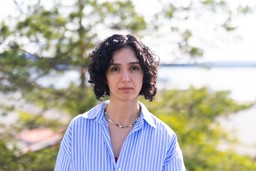
The candidacy of long-time human rights defender Nina Karapetyants in the upcoming elections crystallises this narrative. By framing her transition to politics as a rescue mission from a ‘co-opted’ civic field, she reinforces the narrative that independence is no longer possible within the civil society landscape. In multiple media interviews, she has dismantled the credibility of her former colleagues, and has even agreed with hosts who cynically declared the death of Armenian civil society. By mourning this death, they invite the audience to stop expecting anything from the civic sector, effectively clearing the stage for purely partisan politics.
 Arshaluys Barseghyan
Karapetyants’s critique often touches on selective silence. She claims that CSOs, which were vocal about human rights abuses under the former government have become ‘conveniently quiet’ regarding current issues like police brutality, judicial independence, or the lack of transparency in constitutional reforms, claiming that they are ‘the authorities’ handpicked civil society’. Her narratives are particularly damaging to civic space because they can be seen as coming from an insider or a trusted source.
Media as both target and gatekeeper
In the pre-election context, key representatives of the ruling Civil Contract party regularly assume the role of arbiters in ‘evaluating’ the activities of Armenian media, subjectively drawing boundaries between ‘real’ and ‘non-real’ media. Some MPs, through their social media pages and party-affiliated podcasts, actively engage in discussions that classify media outlets and journalists as ‘good’ or ‘bad’, label certain sources as ‘trash’, and even declare ‘the death of journalism’. Moreover, Parliamentary Speaker Alen Simonyan has used the term ‘foreign agent’ in reference to media outlets, implying that without the current government’s restraint, such actors could legitimately be treated and labelled as foreign agents. Even in such a context, this is particularly concerning given the term’s frequent instrumentalisation in electoral contexts and within broader hybrid warfare narratives, where such labels are routinely deployed as political tools, and, in some cases, move beyond the discursive level to become institutionalised repressive legal frameworks such as in Russia and Georgia.
When political actors label individuals, groups, or institutions as ‘agents’ without clear evidence, the term shifts from analysis to denigration, fostering public distrust and fear. In this context, criticism, independent journalism, or civic activism may be recast as ‘external influence’, which restricts public debate and limits legitimate political action. Such verbal targeting poses systemic risks by introducing state influence into a field that relies on professional self-regulation and independence. When political authorities assert the right to determine the ‘authenticity’ of media actors, they set a precedent that may extend to other areas of public life, including civil society.
Early signs of this trend are already apparent in pre-electoral contexts. Although state officials often justify interventions in the non-state sector by citing financial transparency issues, such actions risk undermining independent democratic oversight and accountability. Indeed, a recent RSF report shows that Armenia has dropped in the global press freedom ranking, falling from 34th to 50th. According to the report, the country’s media landscape remains highly polarised, while journalists continue to face hate speech and political pressure. The number of strategic lawsuits against public participation (SLAPPs) in Armenia is also growing.
Tigran Grigoryan
Paradoxically, despite its own vulnerability to delegitimisation, the media often becomes an active participant in the very discourse that defines and polices legitimacy, including, in this case, the legitimacy of civil society itself. The media does not merely reflect existing narratives but actively participates in their construction and reproduction. Importantly, such harmful narratives are not confined to overtly partisan or anti-democratic outlets but can also emerge from media actors who themselves are being targeted, stigmatised, or labelled by political actors.
In this context, CivilNet’s recent documentary on civil society, while framed in a seemingly neutral and non-positioned voice, ultimately reproduces the familiar instrumental discourse of the ‘co-opted’ civil society.
Largely constructed through a narrow interpretive lens, the documentary links the transformation of activism directly to activists’ proximity to post-revolutionary authorities and to the war’s aftermath. In doing so, the film overlooks a range of broader structural and generational factors that have transformed activism both globally and in Armenia including that many of the once highly visible activists have simply grown older and moved into different roles and directions, while younger generations appear less inclined toward traditional forms of street activism, often favoring other modes of engagement instead.
At the same time, the documentary advances a reductive portrayal of NGOs as being driven primarily by donor agendas, addressing externally defined priorities and thereby stripping civil society organisations of their agency. In this way, despite its reflective tone, the film reinforces a limited and somewhat deterministic understanding of civil society, reducing a complex and evolving field to a narrative of decline.
According to American sociologist Mark Granovetter, all actions are rooted in social relationships. When civil society operates mainly within policy and advocacy networks rather than engaging with the everyday realities of socioeconomically vulnerable communities, it can appear distant and elitist, and thus more vulnerable to delegitimisation. This disconnect is often exploited by anti-democratic actors, right-wing groups, and ‘newcomers’ who use the language of social justice and national dignity to appeal to those marginalised by liberal reforms.
The crisis facing civil society stems not only from external attacks but also from weakened connections to the broader society. To regain legitimacy, civil society must strengthen its local accountability, diversify its resources, and renew its focus on social and economic justice that matters in daily life. At the same time, it should actively challenge increasing pressures that seek to limit or define its role, whether through criticism, attempts to dictate its function, or efforts to restrict its legitimate activities. Defending the public sphere requires both a strong presence and a willingness to contest narratives that threaten civil society’s autonomy and democratic role.