The incumbent of the patriarchal throne of the Georgian Orthodox Church, Metropolitan Shio Mujiri, has received Foreign Minister and Deputy Prime Minister Maka Botchorishvili at the Patriarchate residence. Mujiri is among three candidates for the patriarch, with the final vote expected to be held soon.
According to official information, Friday’s discussion between the two focused on engagement with Georgian diaspora communities abroad in connection with the upcoming 1,700th anniversary of Georgia’s declaration of Christianity as its state religion.
Botchorishvili’s deputies, Giorgi Zurabishvili and Khatuna Totladze, also attended the meeting. From the Patriarchate’s side, Metropolitan Daniel Datuashvili of Sachkhere and Chiatura, and the head of the Patriarchate’s public relations service, Archpriest Andria Jagmaidze, can be seen in photo alongside Mujiri.
The meeting took place at a significant moment in the life of the Georgian Orthodox Church, as its Holy Synod — composed of 39 high-ranking bishops — is set to elect a successor to the longest-serving Patriarch, the late Ilia II.
 Mikheil Gvadzabia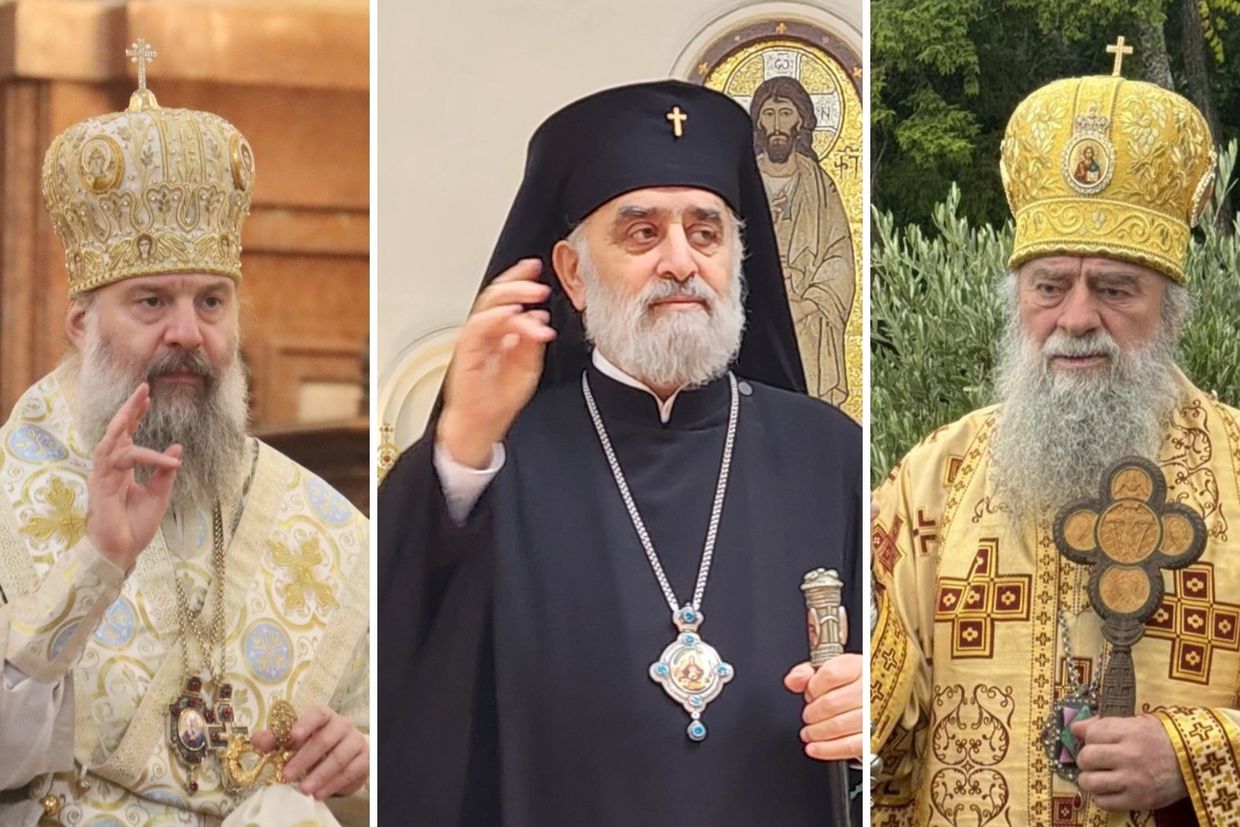
Mujiri received the highest number of votes — 20 — in the first stage of the election on 28 April. Alongside the patriarchal candidacy, he is the locum tenens — the designated incumbent who assumes Church governance in the event of the Patriarch’s resignation, incapacity, or death. The late Ilia II appointed him to this role in 2017, nine years before his death.
By his result, Mujiri significantly outperformed two other candidates — metropolitans Grigol Berbichashvili and Iob Akiashvili — who emerged as the second and third candidates, each receiving seven votes.
If Mujiri manages to retain all the votes he received in the final ballot, he would have a simple majority — 20 out of 39 — which, under the Church’s statute, is sufficient for victory.
After the first stage, which is now over, an expanded Church council, at which the new Patriarch is to be elected between Mujiri, Akiashvili, and Berbichashvili.
The expanded council comprises both the hierarchs of the Holy Synod and representatives from across the Church, including defined numbers of clergy and lay delegates from each diocese, in addition to delegates from monasteries, theological academies, and seminaries.
Despite this expansion, however, the right to vote is reserved exclusively for the Holy Synod hierarchs, leaving all other participants with a merely consultative role.
The date of the final election has not yet been set. According to Church regulations, the new Patriarch must be elected by the Holy Synod within a period of 40 days to two months following the death of the previous one.