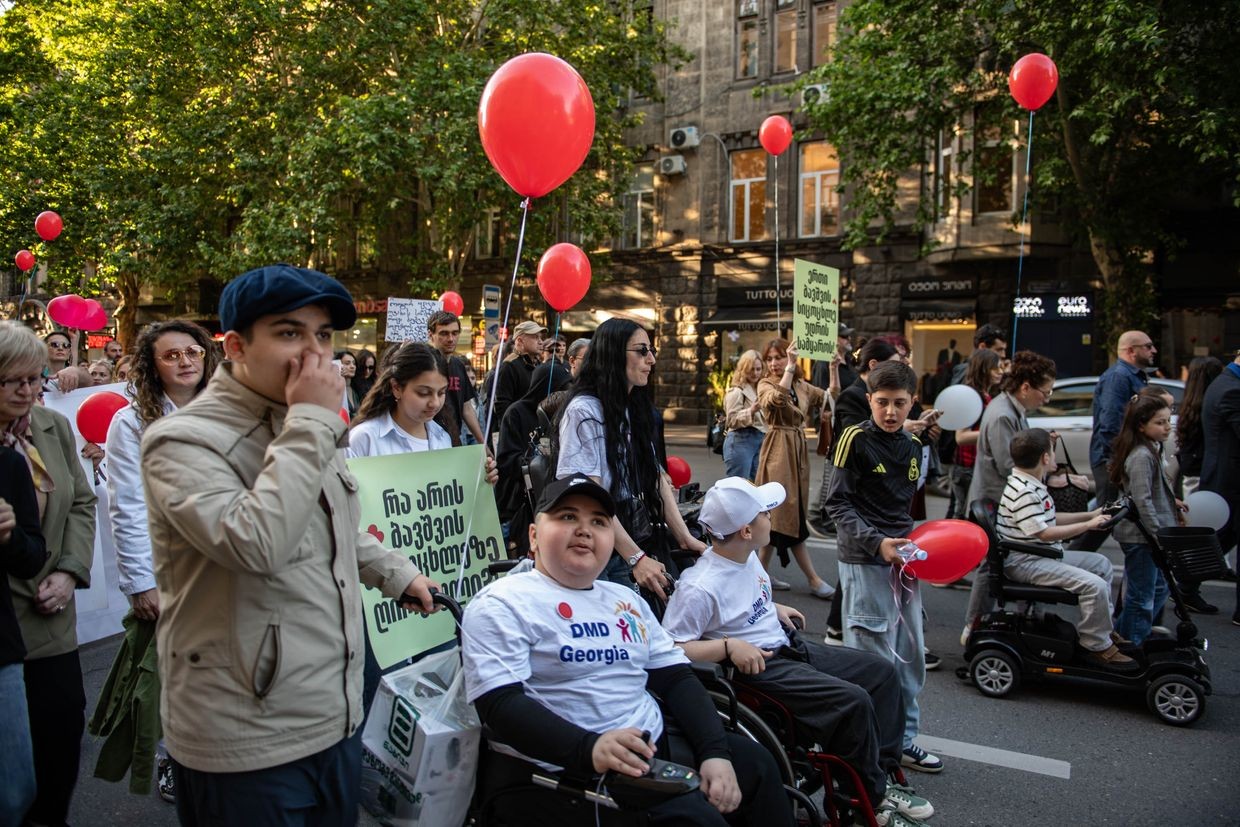
Students at Tbilisi-based Ilia State University (ISU) raised ₾250,000 ($94,000) in less than 48 hours for children with Duchenne Muscular Dystrophy (DMD). The action came amidst round-the-clock protests by parents and relatives of children with DMD, who have been urging the state to provide access to new medication.
The online fundraising marathon was launched on Wednesday evening by members of Defend Iliauni, a student movement based at ISU. The first livestream started during a protest outside the university’s main campus against the government’s controversial higher education reform.
Representatives of the movement said their main motivation was ‘caring for the country’s bright future’, which they added could be achieved without protecting ‘the health of young people’. They also condemned what they described as the government’s failure to take responsibility for ensuring access to medication for children with Duchenne’s.
The organisers stressed that neither the affected families nor the wider public could realistically raise the sums needed for treatment. Still, they expressed desire to support the families with other essential needs — including adapted vehicles, ventilators, and wheelchairs — through the marathon, with all proceeds to be transferred to a dedicated foundation.
 Tamuna Chkareuli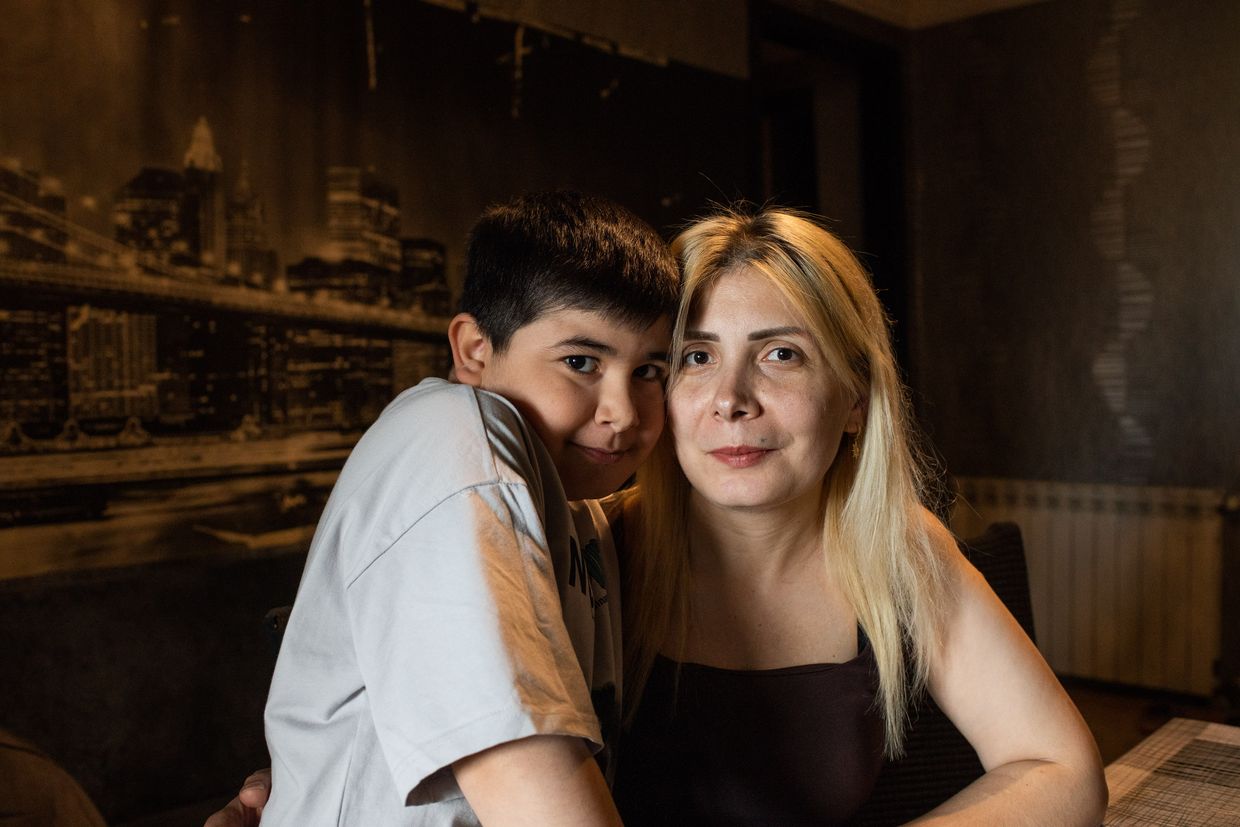
The livestreams, broadcasted on Facebook, continued uninterrupted up until the publication of the article. Students used a variety of formats to keep the marathon going, including discussions on recent social and political developments in Georgia, street interviews, challenges, and games.
Most of the livestreams were centred in downtown Tbilisi, particularly around ISU’s main campus and surrounding area, as well as near the Government Administration building — the site of the non-stop protests by family members of children with Duchenne’s.
Although the marathon’s initial goal was to raise ₾100,000 ($38,000), by Friday afternoon, more than ₾250,000 ($94,000) had already been collected. As the total grew, so did public attention in both the press and social media.
In a video published by Netgazeti, members of families were seen thanking students outside the Government Administration building, with an elderly woman embracing the youth, wishing them a bright future.
DMD is a genetic disease that causes rapid muscle loss, predominantly in boys. Most cases start with parents noticing that their child can’t climb stairs and frequently falls, as the disorder affects the pelvis and legs first.
Patients usually become wheelchair-bound by the age of 11–12, with the hope to live to their late 20s with ventilation support as the illness slowly takes over the muscles; there are a few documented cases of people living into their 30s.
Families keep protesting
The parents’ organisation Let’s Fight Together Against DMD has counted around 100 children with the disorder in Georgia.
As of now, children with Duchenne’s receive social benefits of ₾425 ($160) a month, a daily dose of hormones, and 12-15 days of physiotherapy monthly. The parents say this is not enough — on top of the medication, children need close medical attention, which costs much more.
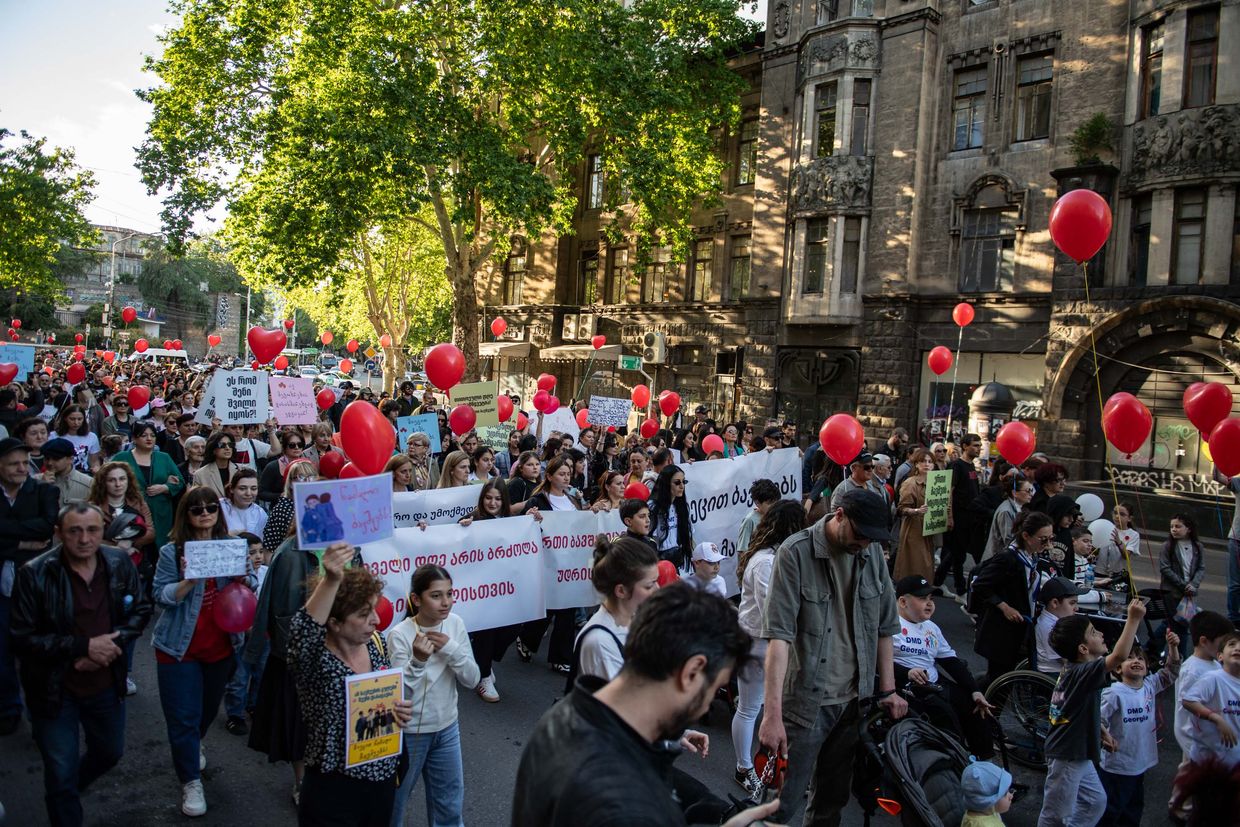
Families of patients with Duchenne’s began protesting outside the Government Administration building in April, after nearly two years of unsuccessful negotiations with the Health Ministry.
Their demands focus on access to newer medications which, while not a cure, can slow the progression of DMD. The exact delay has not yet been determined and varies by case, but it buys meaningful time for the children and their parents. In addition to medication, the families have also called for upgraded care services.
Amidst the protests, in the second half of April, Health Minister Mikheil Sarjveladze said that the creation of a multidisciplinary team was ‘practically decided’, with doctors of various specialties to conduct different types of examinations for DMD patients.
Around the same period, DMD patients were added to the list of ‘Treatment of patients with rare diseases’ list.
Regarding the medications, the government has repeatedly described them as having still-uncertain potential and associated risks, while also focusing on their high costs and questioning the rationality of allocating such expenses.
In his latest statement on Wednesday, Prime Minister Irakli Kobakhidze said that tens of millions of GEL would need to be spent annually on these medications, and raised the question of whether such funds would be used rationally and produce adequate results, or whether they would simply ‘enrich the pharmaceutical mafia’.
‘It would be easiest for us to take this 50 million and spend it [...] but on the other side stands the responsibility towards the Georgian people that the government must spend budget funds, collected from taxpayers, rationally. This is the people’s money’, he added.
In response, parents of children with Duchenne’s stated that the government ‘continues to portray modern medications or their suppliers in a negative light’. In their words, given the progression of the disease, ‘there is no time for long waiting periods’.
‘In reality, the efficacy and safety of these medications [...] have been confirmed by US and European regulatory agencies, and they are rapidly spreading in the modern world’, the parents added.
They also argued that market prices could change significantly if the state becomes involved in negotiations, and suggested that reimbursement models could be introduced in which the cost of treatment is covered based on achieved clinical outcomes.
In recent weeks, the issue of children with Duchenne’s has drawn increasing public attention, with ‘Give the children medicine!’ becoming the campaign’s slogan. A petition addressed to the government with this demand has already garnered more than 50,000 signatures.
‘We, the citizens of Georgia, declare that we fully recognise the importance of responsible management of the state budget; however, we believe that the protection of human life, health, and dignity is the state’s foremost obligation’, the text states.
It has also become a prominent theme in ongoing anti-government protests, which have been taking place since November 2024 in response to the ruling Georgian Dream party’s EU U-turn.