Saakashvili and Georgian opposition lament EPC summit being held in Yerevan instead of Tbilisi

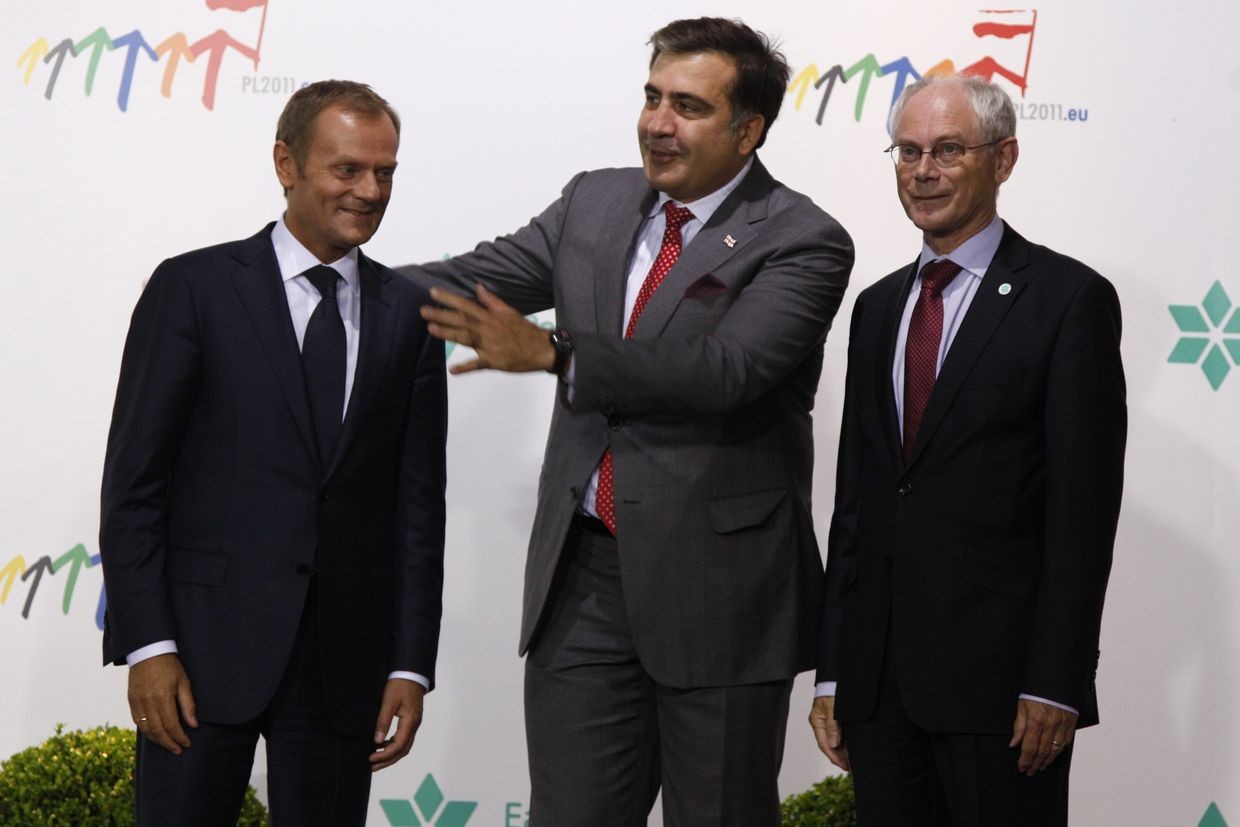
Mikheil Saakashvili, the imprisoned former President of Georgia, commented on the 8th summit of the European Political Community (EPC) being held in Yerevan, describing it as a ‘historical misunderstanding and injustice’. He, along with other opposition figures, blamed the ruling Georgian Dream party for the summit not being hosted in Tbilisi and once again accused it of distancing Georgia from Western partners.
Saakashvili, whose rule in 2003-2012 was marked with deepening relations with the West, called Tbilisi ‘historic centre of the Caucasus’ in his Monday social media post.
Saakashvili further noted that ‘the EU integration was started by Georgia’ and he, alongside with the Polish Foreign Minister Radosław Sikorski and the then-Swedish Foreign Minister Carl Bildt, was the ‘initiator’ of Eastern Partnership — a joint policy initiative between the EU and its states with six Eastern European neighbours, including Georgia and Armenia.
‘And for the first time in history, all of Europe is coming to the Caucasus, flying past Tbilisi and continuing an extra 40 minutes to reach Yerevan’, he wrote, adding:
‘Tell [me], if my course had continued, where would 50 leaders have come: here, or to Yerevan?’
Armenia is the first Caucasian country to host the EPC summit since its inception in 2022. The summit was attended by nearly 50 world leaders and a number of international organisations. Georgian Prime Minister Irakli Kobakhidze and Foreign Minister Maka Botchorishvili are among the attendees.
In Saakashvili’s words, ‘this is the price’ Georgia is paying for the 2012 elections — a parliamentary vote which ended his United National Movement’s (UNM) nine year-long rule and brought the Georgian Dream party to power. Critics widely accuse the latter of straining relations with Georgia’s traditional Western partners, which Georgian Dream has denied and instead blamed the West and the domestic opposition for souring ties.
 Arshaluys Barseghyan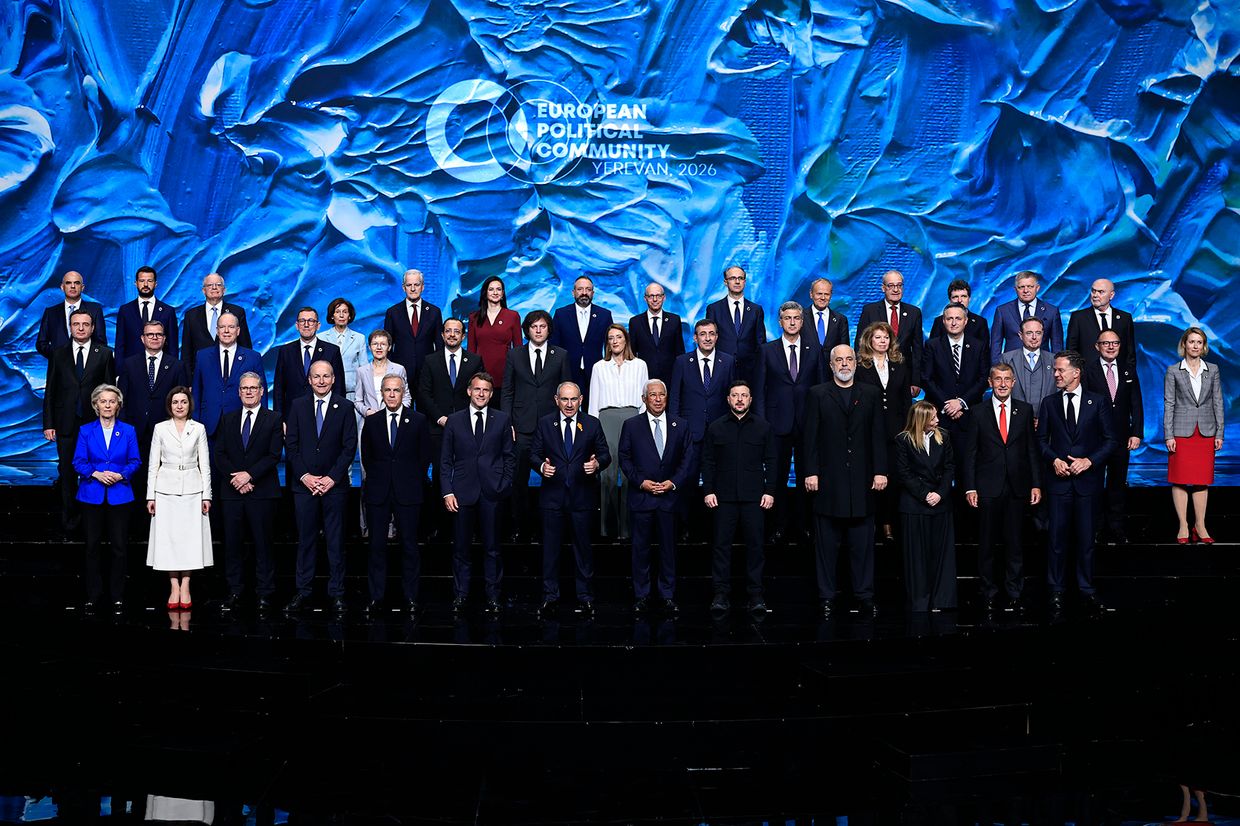
Saakashvili recalled a 2013 remark by the founder of Georgian Dream, billionaire Bidzina Ivanishvili, in which he praised Armenia’s foreign relations, claiming that Yerevan at the time had excellent ties with both Russia and the US, as well as with NATO.
‘Ivanishvili said in 2013 that the foreign policy of Armenia at the time was exemplary for him. And now Georgia finds itself in the position Armenia was in in 2013, while Armenia has advanced to where Georgia stood before 2012’, Saakashvili noted.
Saakashvili also claimed that during his presidency, a ‘principled’ agreement had been reached with the French company Areva — a French group specialising in nuclear power — on building a nuclear power plant in Georgia. According to him, ‘today, Armenia has taken over this project as well, along with other European benefits’.
‘Ivanishvili fundamentally does not want European money, because it would enrich the entire population. For him, Russian money is a guarantee of further enriching himself and his inner circle’, he added.
Areva, which Saakashvili referred to, ceased to exist in 2018, rebranding to Orano. Although the Armenian government has plans to develop a new nuclear power plant and has discussed potential cooperation with France among other partners, there are no final agreements.
Arshaluys Barseghyan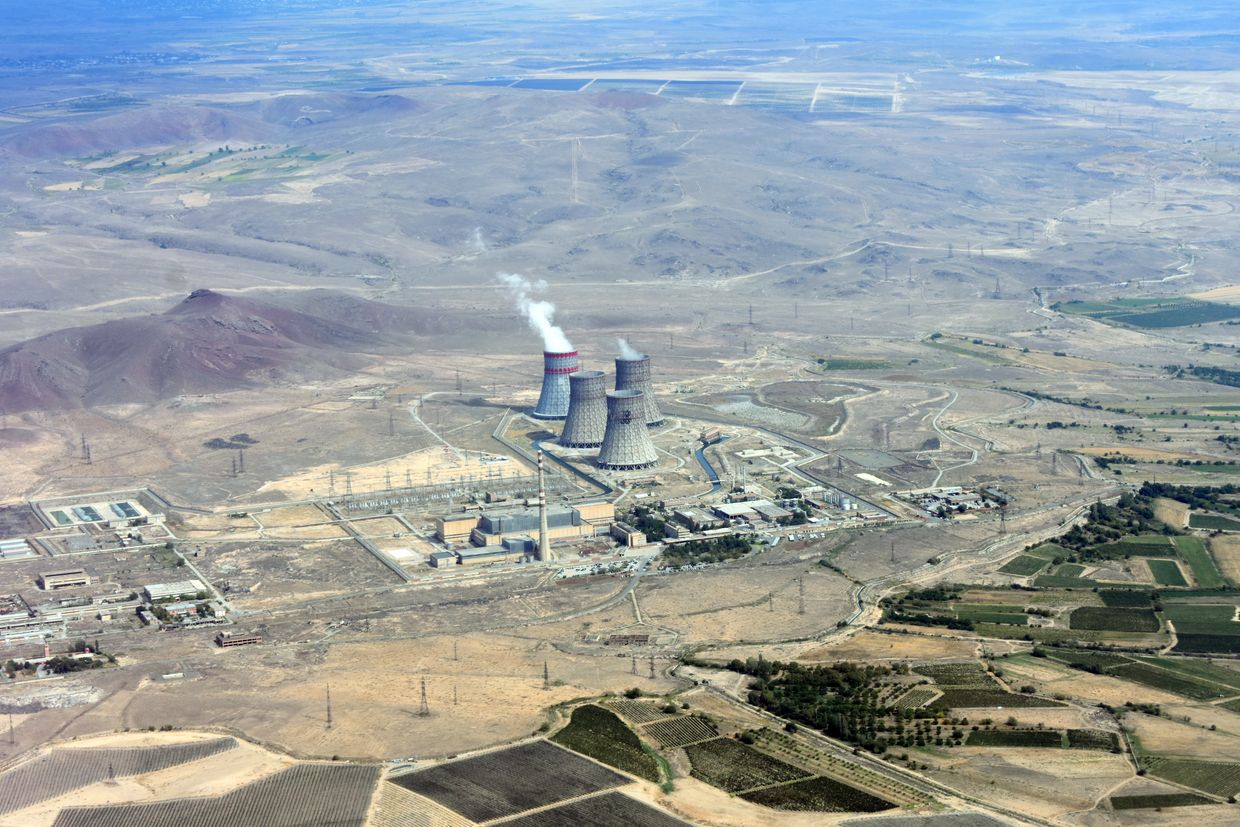
Beyond Saakashvili, some other opposition figures also interpreted the holding of the EPC summit in Yerevan through the lens of the policies of the ruling Georgian Dream.
The leader of the Ahali opposition party, Nika Gvaramia, noted that ‘for the first time in history, Armenians are much closer to the European Union and much further from Russia’.
‘Much more so than us Georgians, who were not only champions of the Caucasus but of the entire post-Soviet space in this regard’, he added in his Facebook post on Monday.
‘It is now also becoming apparent that Georgia could potentially lose visa-free travel with the EU, at a time when Armenia may soon obtain this right’, Gvaramia said, calling the visa-free perspective with the EU ‘something that, not long ago, our neighbours could not even dream about’.
Mikheil Gvadzabia
Another opposition politician, the Lelo party representative Grigol Gegelia, called the attendance of the summit by Kobakhidze ‘a prop’, adding that ‘no one is waiting’ for Kobakhidze there.
‘We are seeing a symbolic, prop-like participation in a meeting that should primarily be taking place in Tbilisi today, not somewhere else’, Gegelia said on Monday. Instead of ‘Tbilisi being the centre of regional dynamics’, the centre has ‘moved elsewhere’, and the government did everything to turn the country into an ‘isolated swamp’, Gegelia said.
In his turn, Kobakhidze told journalists in Yerevan that the Georgian government should pursue a ‘pragmatic policy’ in all directions, noting ‘we are a small country’.
‘Regardless of how harsh interests may be against Georgia’s interests, even there we should try to defend our positions as much as possible. You should always try to cooperate everywhere. This is the essence of our policy’, he said.
Kobakhidze spoke to the media on Tuesday as well, emphasising that, during the summit, he spoke on ‘various topics’ with about half of the attending leaders, including Ukrainian President Volodymyr Zelenskyi and Secretary General of the Council of Europe Alain Berset. According to the prime minister, both of them requested the meetings themselves.
Mikheil Gvadzabia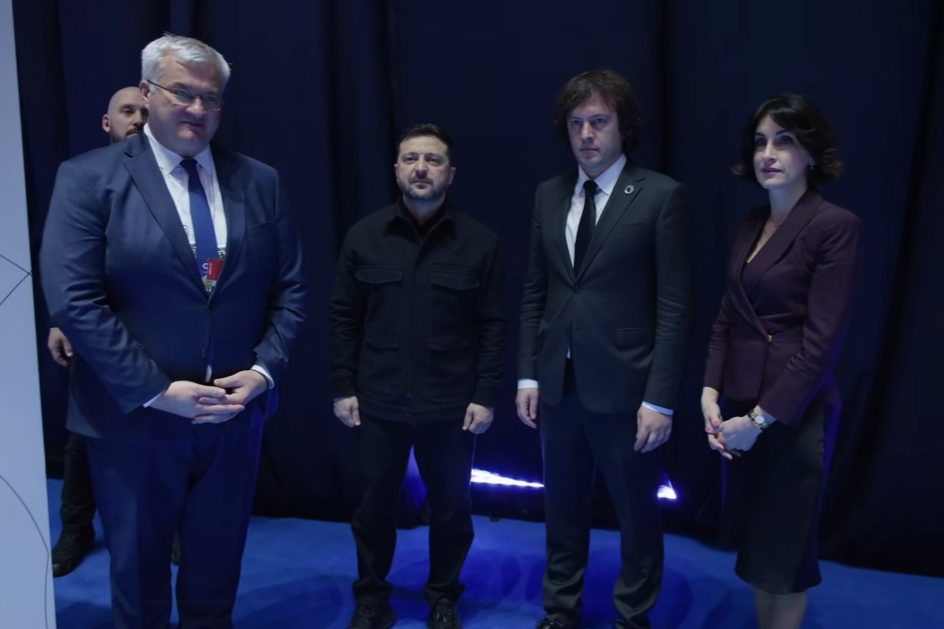
Speaking to the media, Botchorishvili said ‘one of the panel discussions was focused on connectivity, in which the prime minister participated’.
‘Here, once again, it became evident how important the role of the region and our country is in the context of ensuring connectivity and economic security’, she added.
Over the past few years, following the passage of a slew of restrictive laws by Georgian Dream, violence against anti-government protesters, and the disputed 2024 parliamentary elections, relations between Georgia and its traditional international partners — including the EU — have sharply deteriorated.
The process was accompanied by claims promoted by the ruling party and its associates that the ‘global war party’ or ‘deep state’ have taken control over the West, including Europe, and that it has been attempting to undermine Georgia’s sovereignty.
Against this backdrop, in November 2024, the Georgian Dream government announced the ‘postponement’ of negotiations on the country’s EU membership until 2028, which sparked large-scale protests in Tbilisi and other cities.
Mikheil Gvadzabia
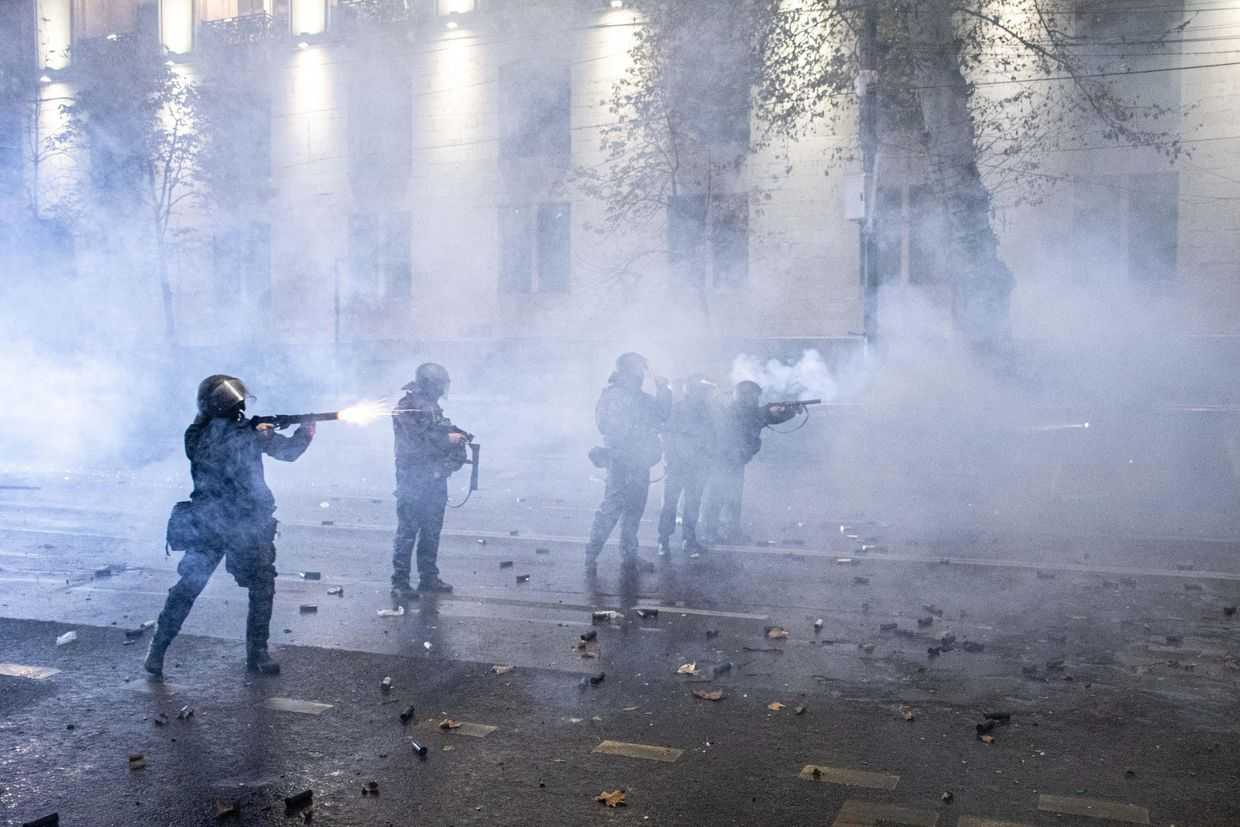
The authorities responded to the protests with both police violence and a new series of restrictive laws targeting street protests, the media, civil society, and the political opposition. At the same time, dozens of protesters, as well as opposition politicians and a media founder, were jailed on various charges.
These developments further strained relations with the EU, which, in its damning 2025 report, described Georgia as a ‘candidate country in name only’, highlighting the tarnishing of the candidate status it had been granted in 2023.
The events have also put Georgia’s visa-free travel with the EU, in effect since 2017, at risk, raising the prospect of its suspension.
In response to the EU’s criticism, the ruling party has repeatedly accused Brussels of blackmail, lying, funding ‘radicalism and disinformation’, and deviating from European values.