EU Ambassador warns of Georgia’s return to ‘dark past’, prompting ruling party outrage

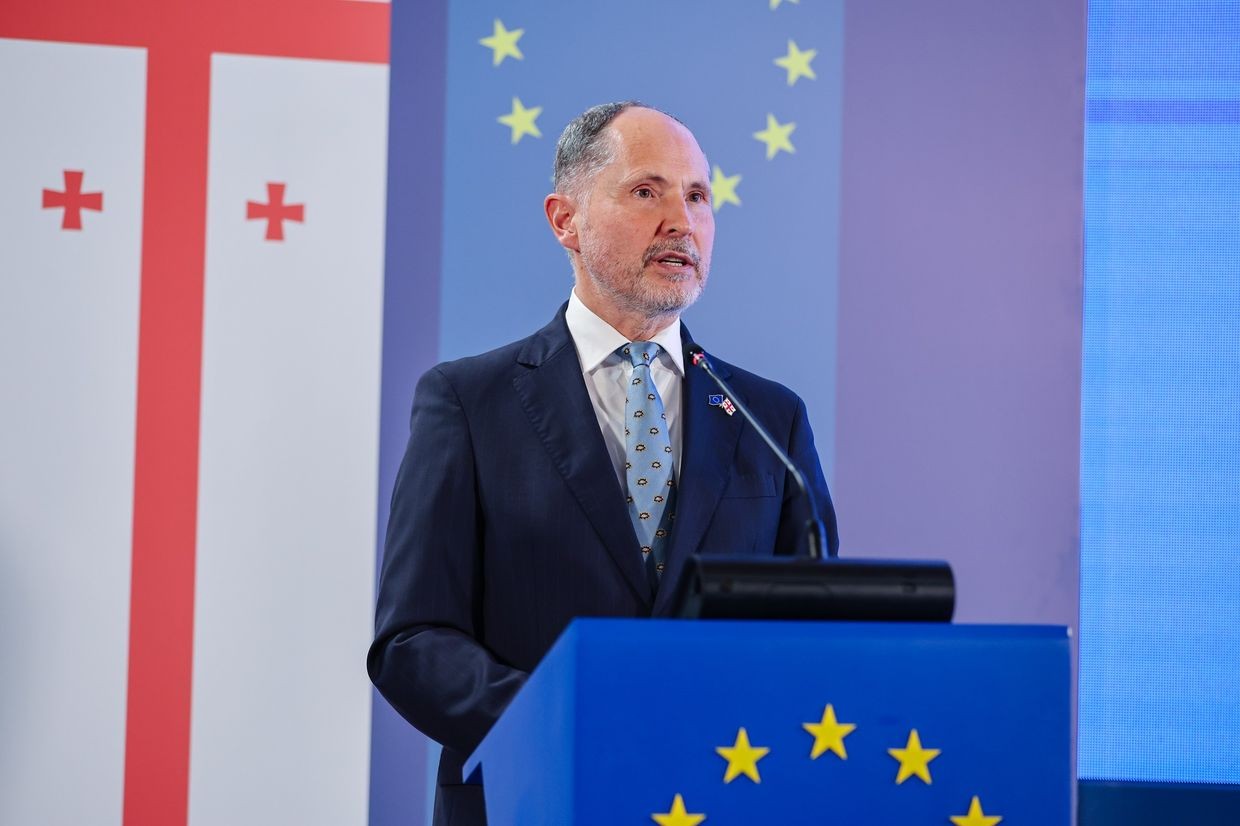
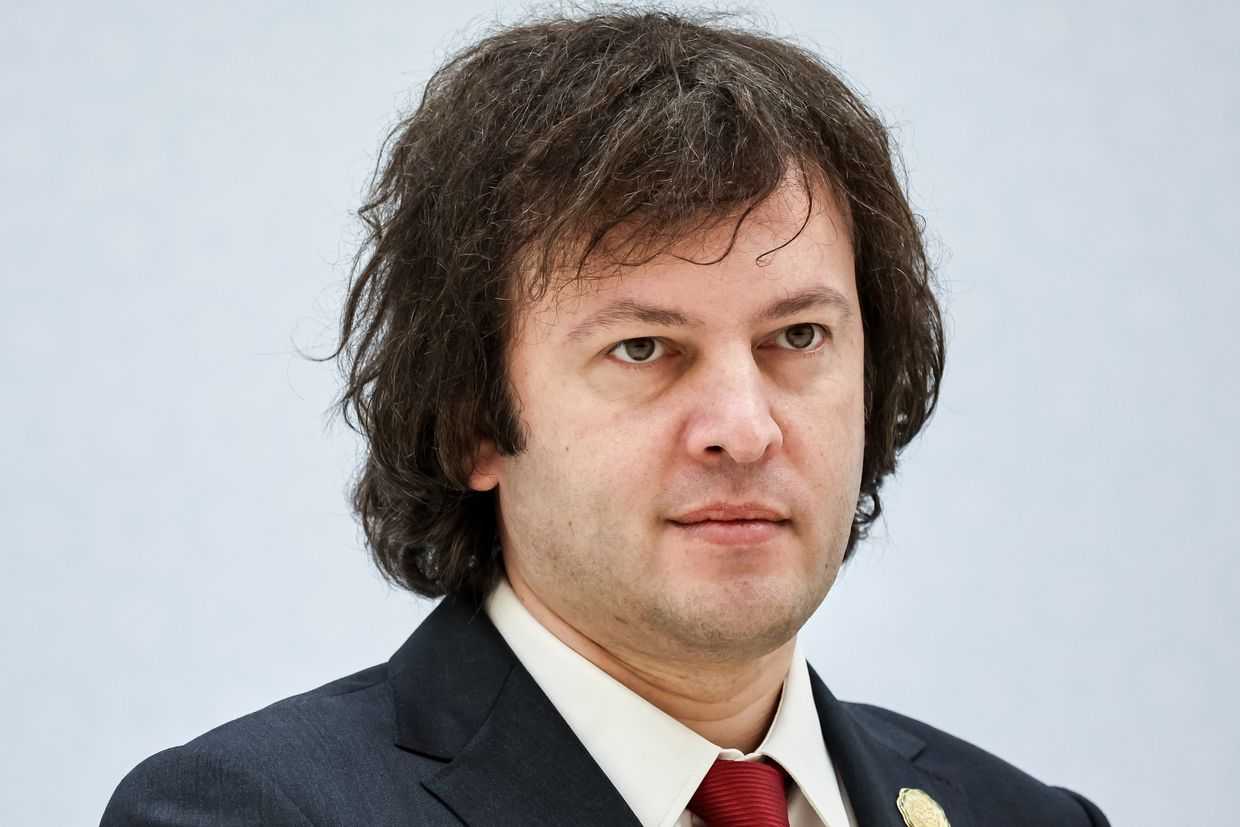
The EU Ambassador to Georgia, Paweł Herczyński, has warned that the country could return to a ‘dark past’ if the government does not return to democratic governance. Prime Minister Irakli Kobakhidze condemned the remarks as a ‘threat of civil war’ and threatened to summon Herczyński.
The ambassador made the remarks, first reported by the Georgian independent news outlet Netgazeti, on Wednesday in Brussels, at the European External Action Service (EEAS). He gave a speech at the opening of the documentary photo exhibition Georgia in Focus, featuring photographs taken over the past decade in Georgia, including pro-EU protests.
Referring to his ambassadorship as the ‘highlight’ of his professional career, Herczyński described Georgia as an ‘amazing’ country, but stressed that ‘clearly, Georgia is at a crossroads’.
‘The future in Georgia is not written yet, but whatever will be decided in the next weeks and months will determine if Georgia belongs to the family of European countries based on democracy, rule of law, and human rights, or Georgia unfortunately would move back to its dark past’, he said.
According to Herczyński, the EU made its choice in December 2023 when it granted Georgia a candidate status. In his words, this was a ‘moment of great pride and great joy’, but then ‘Georgia is not on the right trajectory’, pointing to democratic backsliding in the country.
‘The authorities have chosen an alternative model — [a] model of authoritarianism — and are actually bringing Georgia away from the EU’, he added.
Discussing the pictures presented at the exhibition, Herczyński said Georgian people are ‘truly European’ and their ‘rightful place is in Europe’.
‘I’m not losing hope that Georgia will go back on the path of EU integration, that Georgia will remain a democracy [...] We can not let Georgia and the wonderful, warm, hospitable Georgian people go back to dark times of violence, civil war, poverty, deprivation, corruption’, he added, referring to the political and social turmoil that the country faced in the 1990s and early 2000s.
The ambassador added that ‘once the authorities are willing to work with us, we will do our utmost to help Georgia to become a member of the EU’.
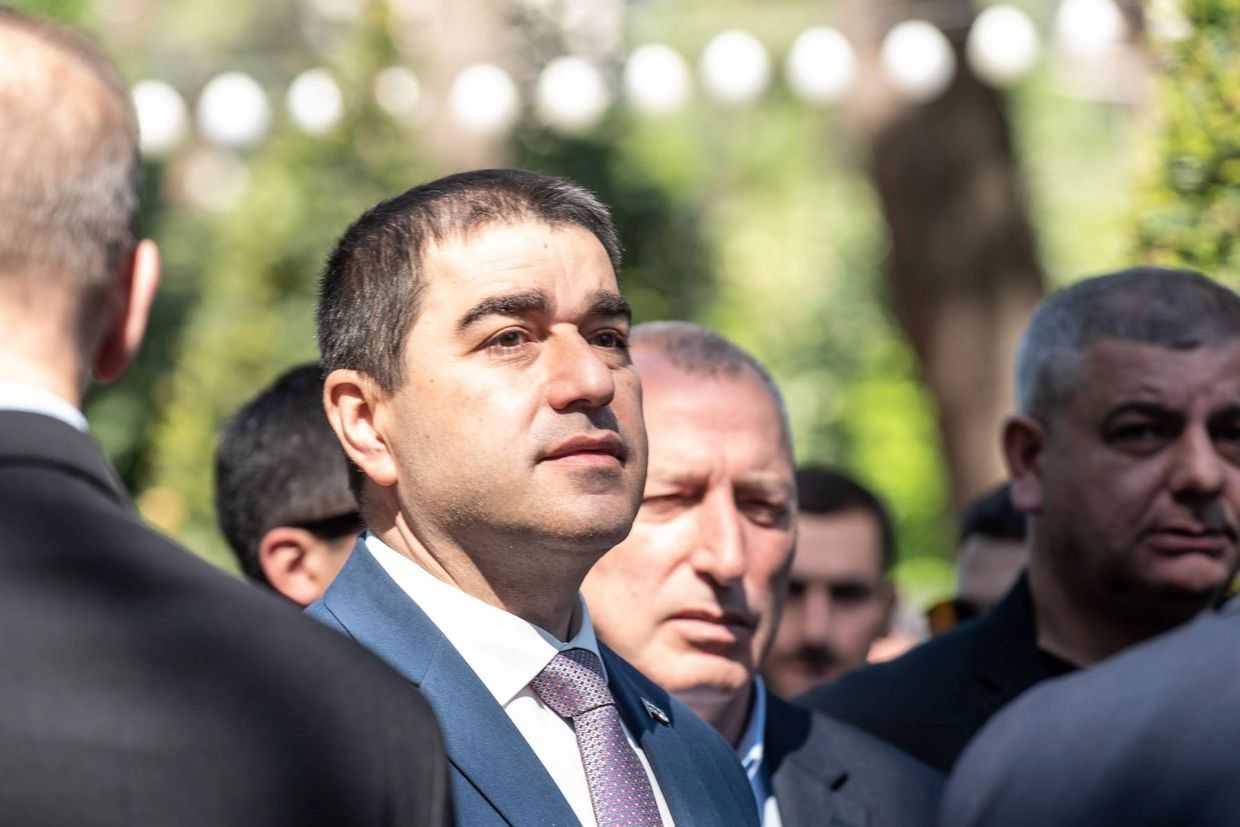
Herczyński’s remarks were soon followed by responses from Kobakhidze, Tbilisi Mayor and Georgian Dream Secretary General Kakha Kaladze, and other officials. They strongly condemned the remarks, with Kobakhidze calling them ‘shameful’ and interpreting them as a ‘direct threat’.
‘He said that in the near future, it will be decided how events in the country will develop — in one direction or another. This other direction, in his view, is civil war and the impoverishment of the population’, Kobakhidze said, stating that ‘the EU ambassador is threatening the Georgian people with this’.
‘It is appropriate to summon the ambassador to the Foreign Ministry over this’, Kobakhidze said.
Kaladze described the ambassador’s statement as ‘very concerning’, noting that ‘[Herczyński] must be summoned and specific questions must be asked, for which we need answers’.
‘If until now we were being indirectly urged to get involved in a war, now he has come out directly and spoken about civil confrontation, threatening Georgians and the state’, Kaladze said, echoing the ruling party’s claims that after Russia’s full-scale invasion of Ukraine in 2022, external powers were trying to drag Georgia into the war and open a second front against Russia through the country.
Over the past few years, following the passage of a slew of restrictive laws by Georgian Dream, violence against anti-government protesters, and the disputed 2024 parliamentary elections, relations between Georgia and its traditional international partners — including the EU — have sharply deteriorated.
The process was accompanied by claims promoted by the ruling party and its associates that the ‘global war party’ or ‘deep state’ have taken control over the West, including Europe, and that it has been attempting to undermine Georgia’s sovereignty.
Against this backdrop, in November 2024, the Georgian Dream government announced the ‘postponement’ of negotiations on the country’s EU membership until 2028, which sparked large-scale protests in Tbilisi and other cities.
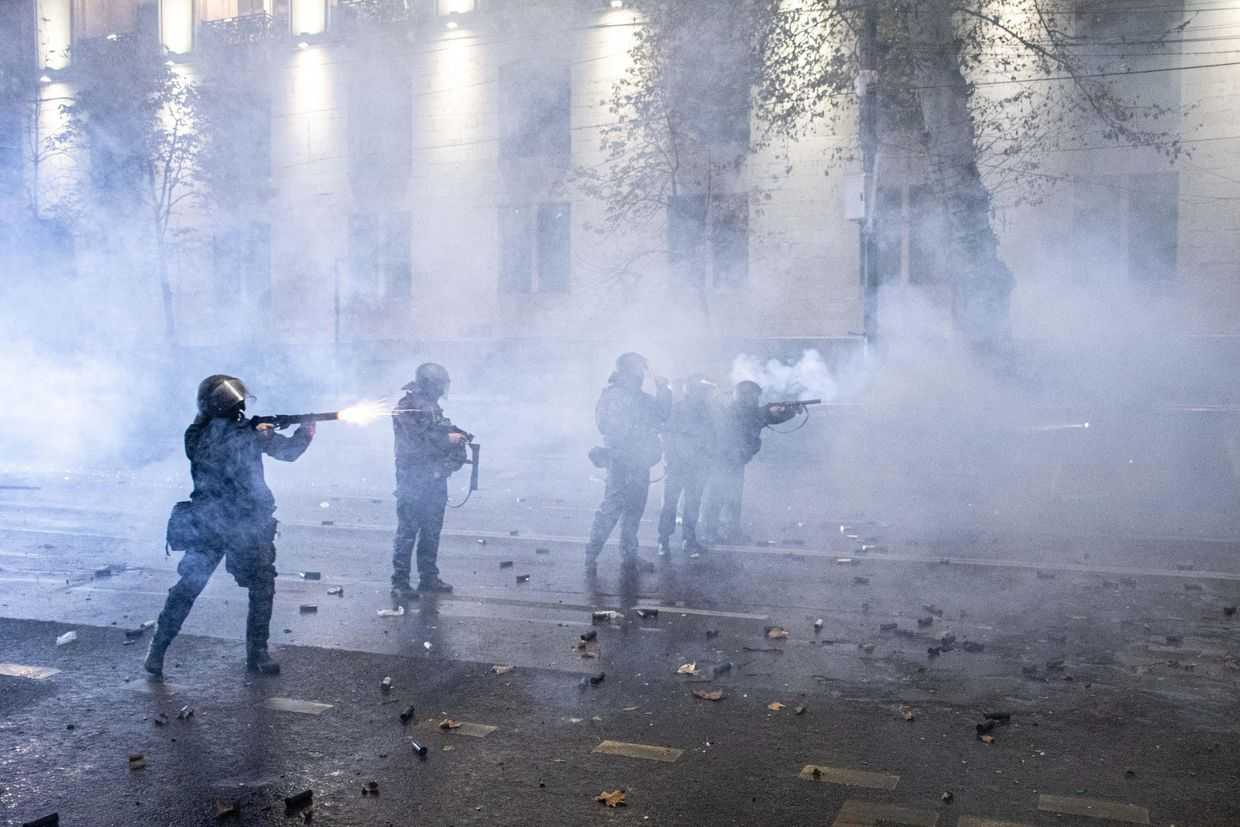
The authorities responded to the protests with both police violence and a new series of restrictive laws targeting street protests, the media, civil society, and the political opposition. At the same time, dozens of protesters, as well as opposition politicians and a media founder, were jailed on various charges.
These developments further strained relations with the EU, which, in its damning 2025 report, described Georgia as a ‘candidate country in name only’, highlighting the tarnishing of the candidate status it had been granted in 2023.
The events have also put Georgia’s visa-free travel with the EU, in effect since 2017, at risk, raising the prospect of its suspension.
In response to the EU’s criticism, the ruling party has repeatedly accused Brussels of blackmail, lying, funding ‘radicalism and disinformation’, and deviating from European values.