Tbilisi’s ‘fairytale’ Trump Tower — doomed to fail?
As Georgia–US relations remain sour and with the shadow of a failed project in Batumi, Trump Tower Tbilisi has a lot to live up to.

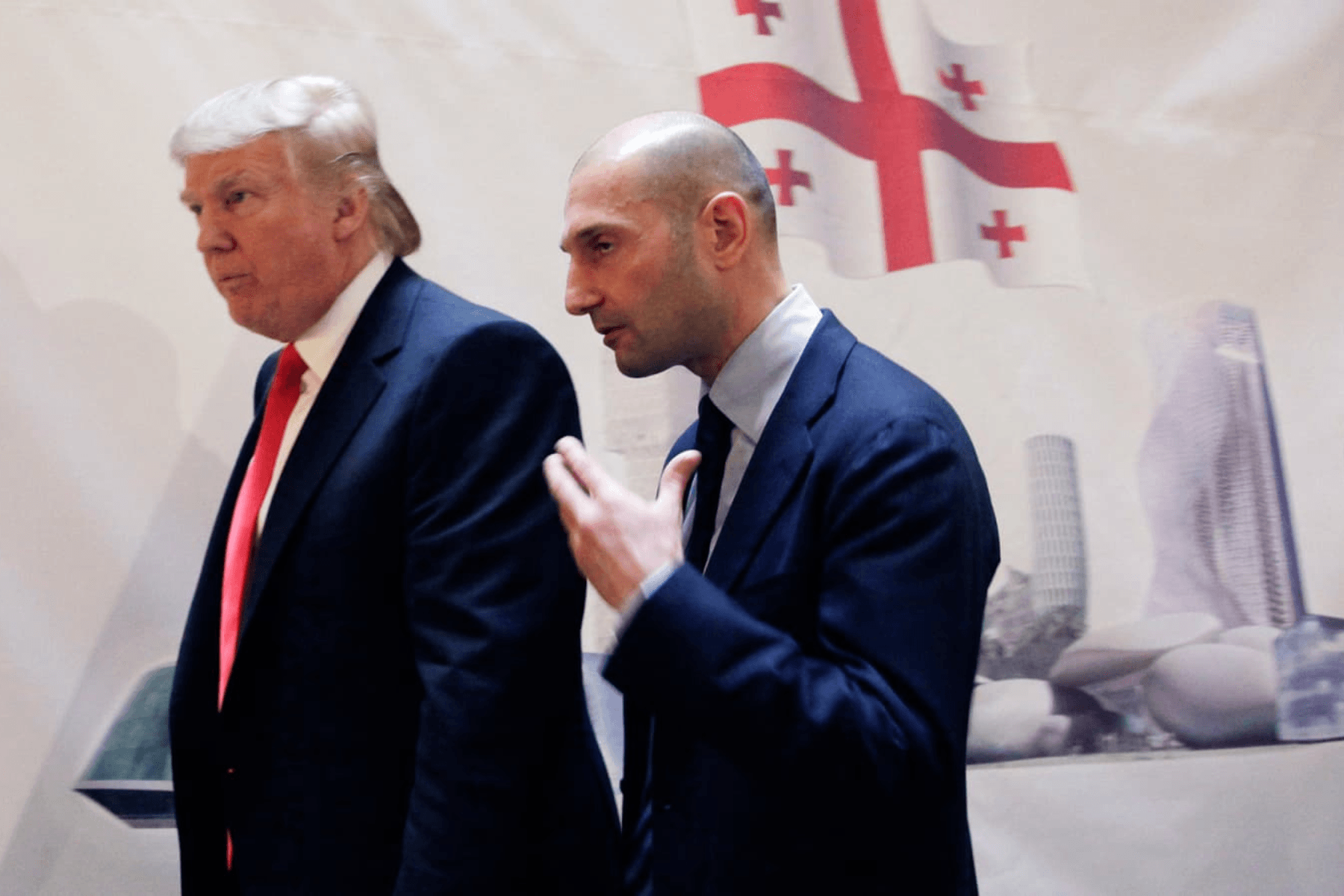
The Trump Organisation, together with Georgian partners, recently announced plans to build a 70-storey multifunctional skyscraper, the Trump Tower, in Tbilisi. The project is expected to become the tallest structure in the capital and will include luxury residential apartments and hotel-style infrastructure, according to a joint statement by Archi Group, Biograpi Living, The Sapir Organisation, BLOX Group, and Finvest Georgia.
To understand the full picture, however, it is necessary to revisit the history of Trump’s long-troubled ambitions to build a tower in Georgia.
 Nate Ostiller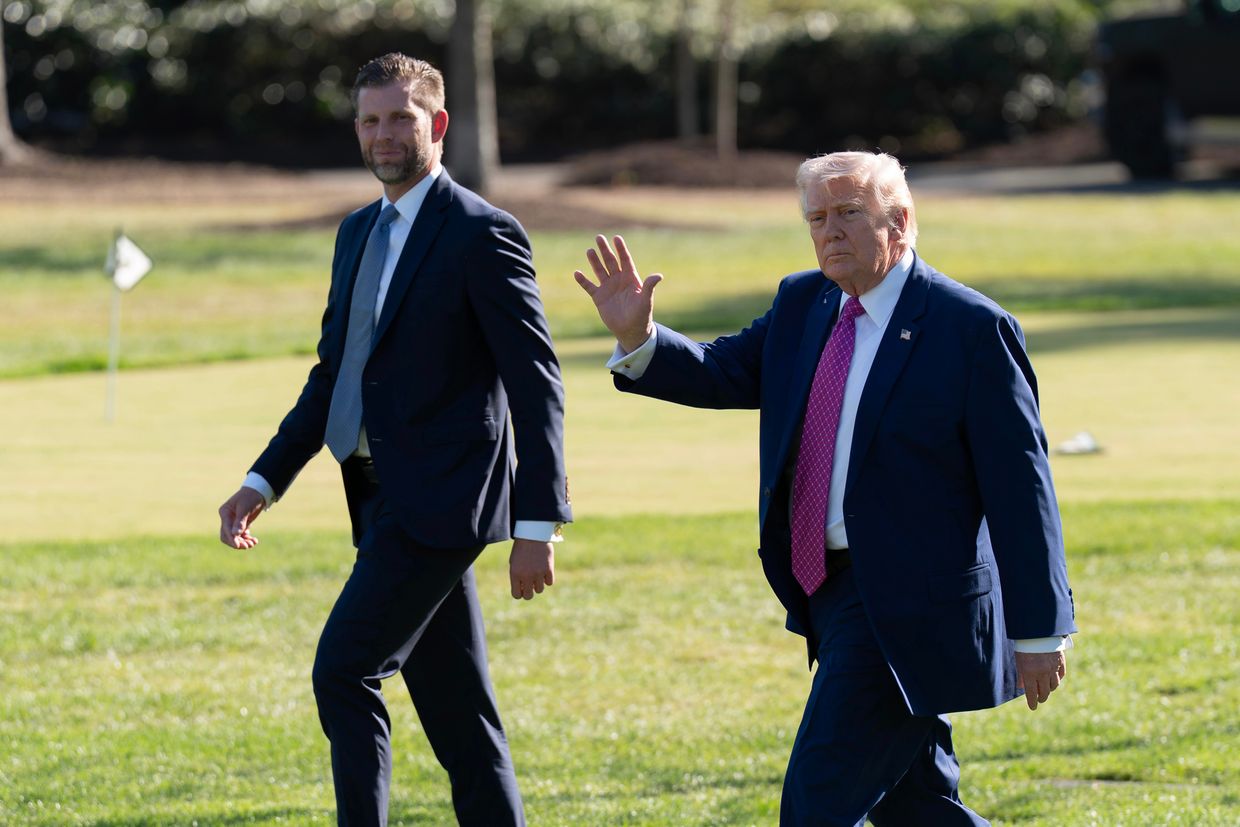
In December 2009, the news broke that Ivana Trump, Trump’s ex-wife, had travelled to Georgia to meet then-President Mikheil Saakashvili and explore investments in Black Sea tourist resorts. At the time, Georgia was trying to revive foreign investment, which had sharply declined after the August 2008 War and the economic downturn that followed.
In 2010, Donald Trump’s attorney and then-partner Michael Cohen visited Georgia, stating: ‘I’m here to walk the land and smell the dirt’. He added that Trump had been impressed by Saakashvili during a meeting in New York: ‘We’re looking for profit from Georgia’.
Momentum quickly grew. In 2012, Donald Trump traveled to the Black Sea resort city of Batumi and, alongside Saakashvili, announced a deal to license his name for a $250 million, 47-storey Trump Tower to be developed by Silk Road Group.
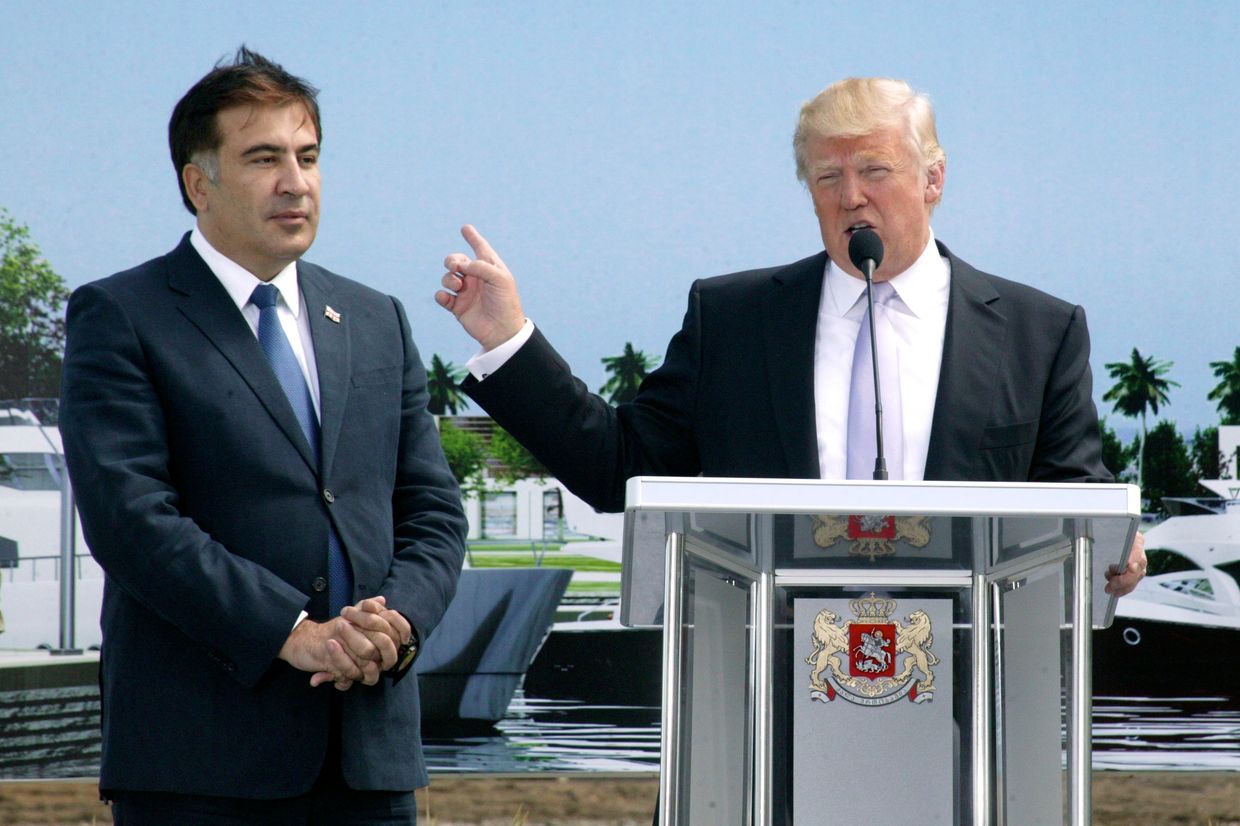
Six months later, Saakashvili’s party lost in the parliamentary elections, and Saakashvili soon left Georgia, fearing prosecution by political opponents. The Batumi Trump Tower project appeared doomed.
In 2017, the Trump Organisation formally withdrew from the Batumi project, only a year after Georgia announced a planned revival, amidst concerns about potential conflicts of interest as Trump prepared to enter the White House. Despite earlier ambitions — including interest in hotels and golf courses — the project collapsed.
Yet now, it seems the Trump Organisation is back, despite Trump’s current presidency, intending to revive a Georgian project — this time, in Tbilisi.
Who are the investors behind the new Tbilisi project?
There are several key investors in the Tbilisi project. Archi Group is one of the region’s biggest investment holdings, anchored by its development arm, Archi Properties, the largest real estate developer in Georgia with more than 18% market share. Founded in 2006 by Ilia Tsulaia and his partners, the company has played a key role in shaping the country’s modern residential landscape, having completed more than 55 projects, delivering housing to over 52,000 residents and investors from 34 countries — more than any other developer in the country.
In turn, Biograpi Living is one of the fastest-growing real estate developers in Georgia, backed by INVIA (formerly Wissol Group), one of the country’s largest and most diversified business groups, and Riverside Invest, an international investment vehicle. With up to $700 million in annual turnover and operations spanning energy, retail, and real estate, INVIA plays a significant role in Georgia’s economy and holds franchise rights for global brands including Wendy’s, Dunkin’, and Subway. The group generates revenues equivalent to approximately 2% of the country’s GDP, highlighting its broader economic impact.
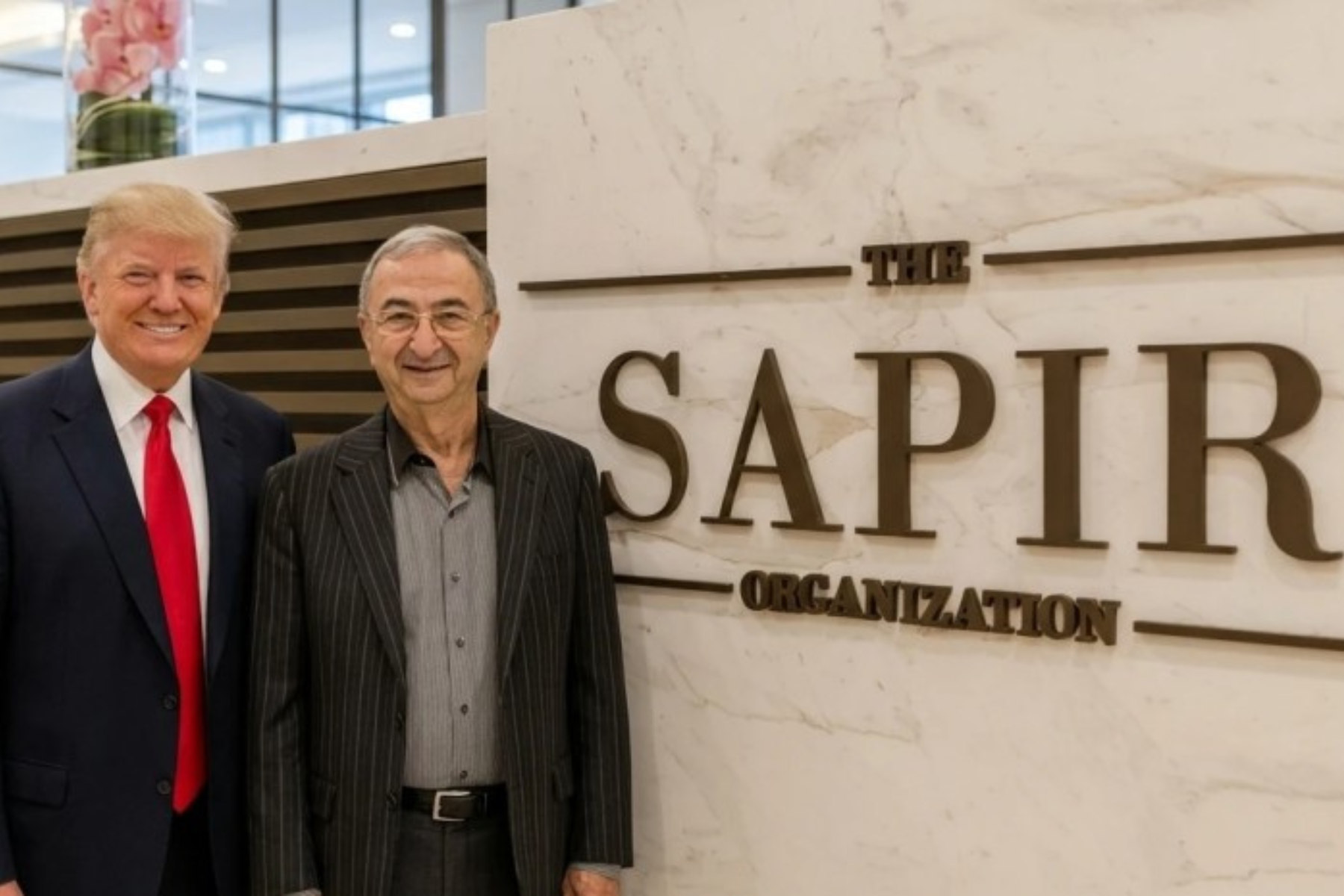
Then there is the Sapir Organisation, whose presence in this project marks their first international commercial development, representing a significant milestone as the firm expands beyond the US following a strong track record of high-profile projects in New York City and Miami. Led by President and CEO Alex Sapir, the company has overseen over $7 billion in portfolio assets across residential, hospitality, and commercial sectors and has developed, built, and managed approximately 8 million square feet of premier real estate. The firm also maintains a longstanding personal and professional relationship with the Trump family, built over years of collaboration.
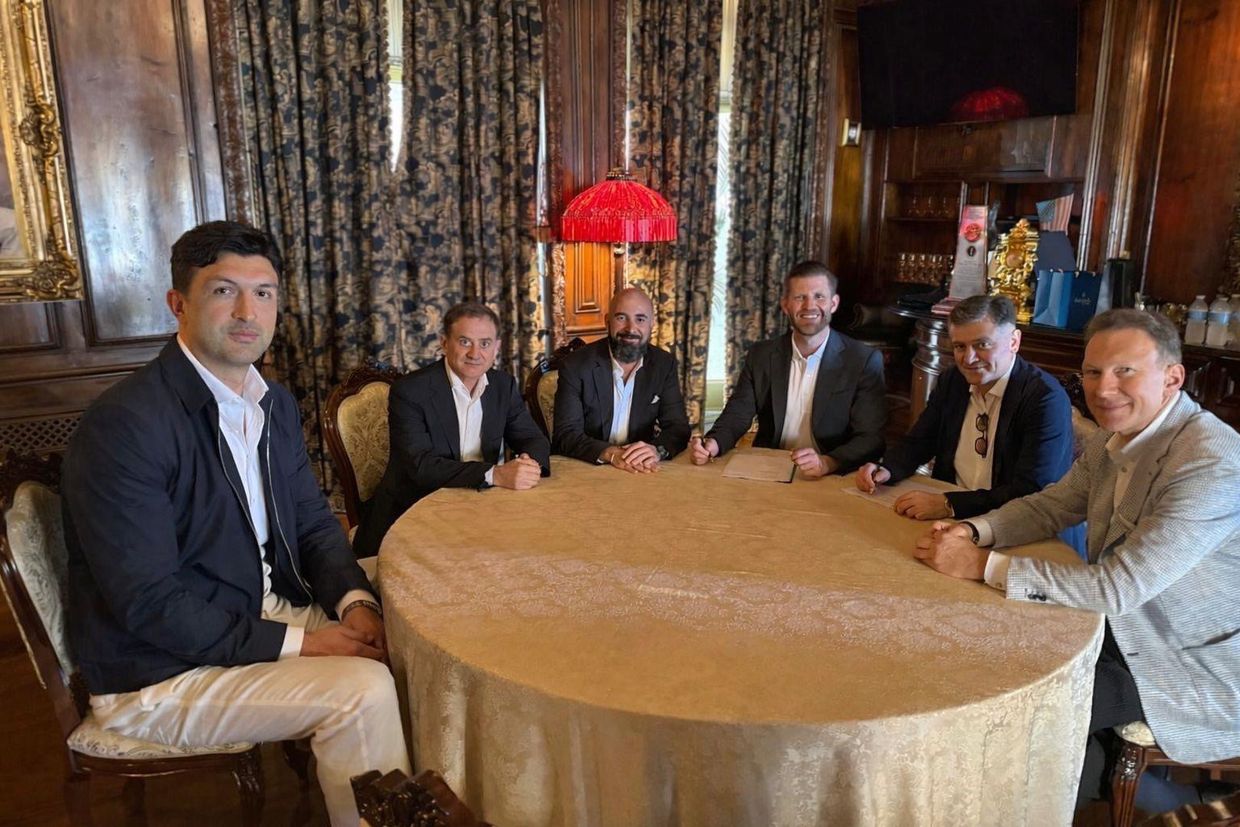
‘Returning to Georgia for the first time since I was five years old was an emotional experience for me’, Sapir said about the project. ‘It reminded me of how deep my connection to the country runs and inspired me to think about how I could contribute in a meaningful way. I am extremely proud and honoured to be building our second Trump building in the country where my parents were born and raised’.
Blox Group, co-founded by Lasha Kvachadze, is a diversified holding company with a strong presence across the Caucasus region. Leveraging an extensive network of international partnerships, Kvachadze has curated a high-impact, multi-sector portfolio spanning hospitality and real estate development. The group’s development sector includes 16 residential projects totaling more than one million square metres across completed and ongoing developments.
Finally, Lasha Meladze is the co-founder of Finvest Georgia, a diversified investment company operating across Georgia and international markets. The group’s portfolio focuses on high-impact real assets, including premium hospitality assets such as Wyndham Grand Borjomi alongside investments in real estate, retail, infrastructure, and technology.
A pattern of unrealised plans
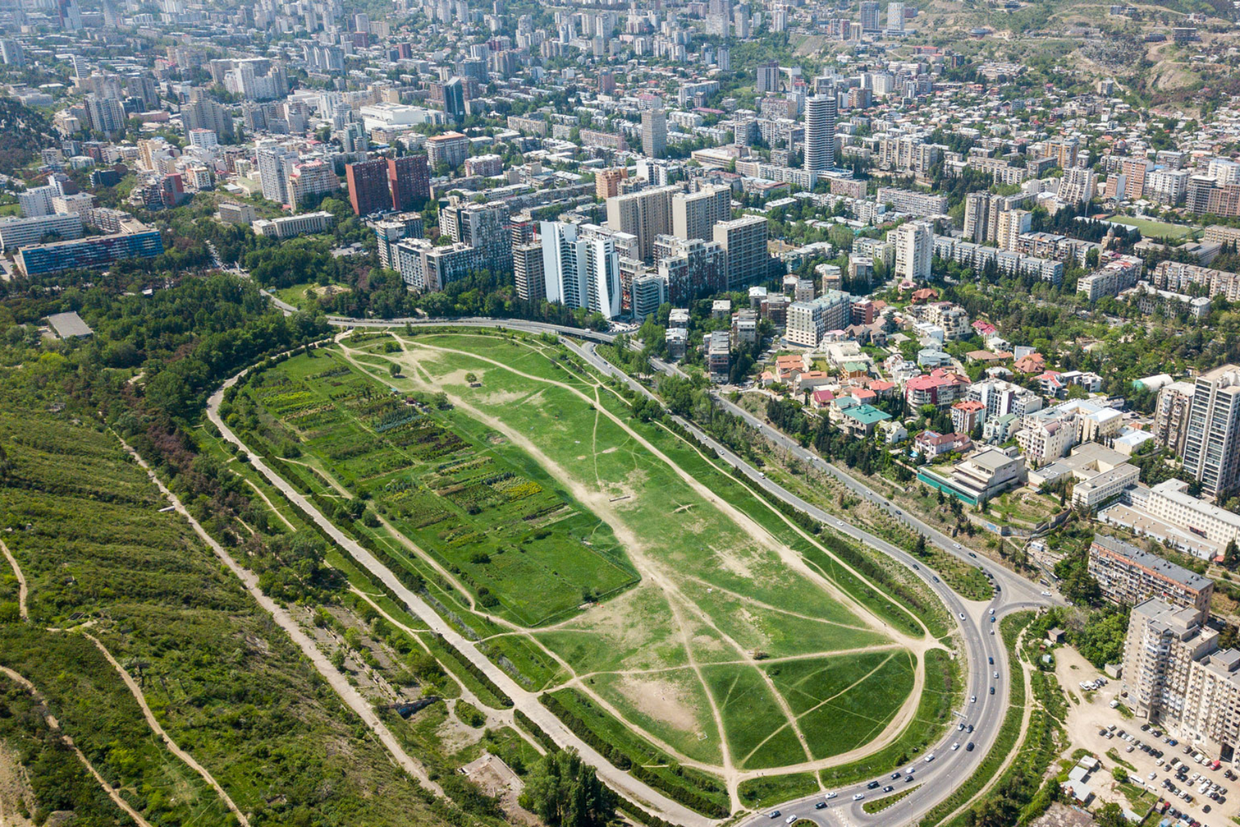
While details about the new development, including architecture, design, and sales information, will be announced in the coming months, what is known is that the Trump Tower is intended to be built around the former hippodrome in Tbilisi.
Located across over 270,000 square metres in central Tbilisi, the land is ultimately owned by Ivanishvili, who bought it in 2009. According to data from the Public Registry, a subsidiary of Ivanishvili’s Panamanian offshore company Limestone Finance International — LLC Invest Capital — sold the area in June 2020 to another company affiliated with Ivanishvili — the International Charity Organisation Cartu.
In 2012, after Saakashvili was ousted by Georgian Dream, Ivanishvili, who remains a powerful figure in Georgia to this day, expressed contempt for Donald Trump and the scrapped tower in Batumi.
‘Trump did not invest in Georgia’, he told reporters at the time. ‘It was more like a trick. They gave him money, and they both played along — Saakashvili and Trump. And, as you know, Saakashvili was a master of lies. I don’t know what project this is; I’ve never been seriously interested. We won’t do anything based on such fairy tales.’
It seems the fairy tale has a sequel with the Trump Tower in Tbilisi.
Georgia is particularly attractive to international investors and second-home buyers, while its capital, Tbilisi, continues to experience steady demand for high-quality residential development. Prime residential values in key districts have increased by 7%–10% annually, reflecting the city’s rising profile among global buyers.
As a result, over time, the country has developed a reputation for announcing large, ambitious projects — particularly in Tbilisi. These often begin with bold concepts, striking designs, and strong momentum, but frequently slow, stall, or change hands. Some remain unfinished for years, serving as visible reminders of unrealised plans even as promotion continues. The pattern reflects a broader trend in developing economies, where ambition can outpace execution.
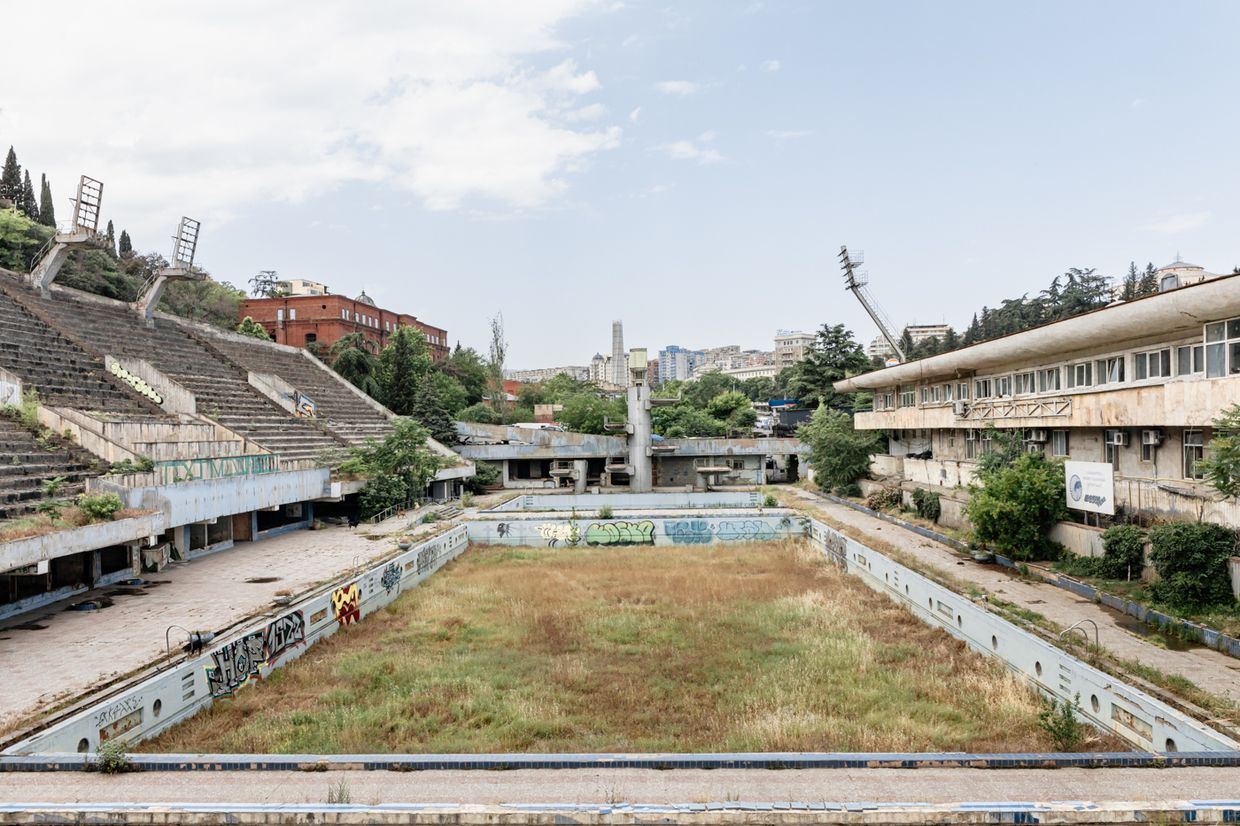
Examples include a planned tower with over 50 storeys by businessperson Noshrevan Namoradze on the site of the former Soviet-era Physical Education Institute, which stalled after reports he left the country, and the former Laguna Vere swimming pool site, which has repeatedly changed ownership. The Laguna Vere territory around Hero’s Square was already sold once and planned for development, but was also scrapped and a new company will take over.
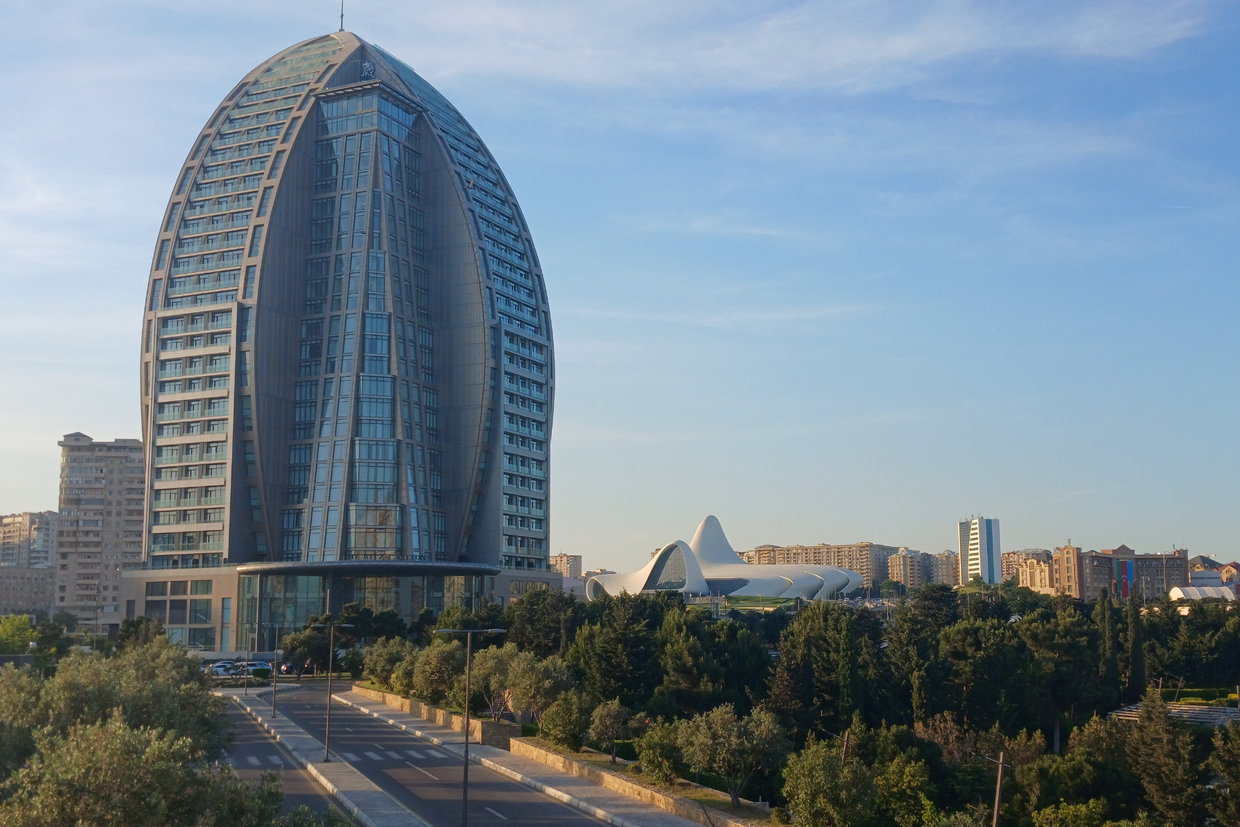
Beyond Georgia, a similar pattern can be seen in the formerly intended Trump Tower in Azerbaijan’s capital.
Originally planned as a marketing deal by which Trump would rent his name to a building already constructed by the family of then-Azerbaijani Transport Minister Ziya Mammadov, after which the Trump Organisation would continue to manage the hotel operations, it instead became what The New Yorker later termed ‘Donald Trump’s Worst Deal’. Notably, the Mammadovs appeared to have connections with Iran’s Islamic Revolutionary Guard Corps (IGRC) at the same time Trump was working with them, though Trump later denied any knowledge of these connections.
Following Trump’s election in 2016, the licensing deal with the building was cancelled. A fire later partially gutted the building, burning through around 20 storeys of the 33-storey high-rise. Despite these setbacks, the complex eventually opened as a Ritz-Carlton hotel — with no Trump name in sight.
A possible Russian connection?
Following the collapse of the Batumi project, allegations of possible Russian involvement surfaced, with an anonymous source claiming Saakashvili had been warned about the Russian presence. All parties denied any knowledge of this, however.
The announcement of the Tbilisi project is now raising new questions about questionable Russian connections, largely due to the involvement of the Sapir Organisation, whose head, Alex Sapir, is the son of Tamir Sapir, whose fortune originated from trade with the late Soviet Union — reportedly supplying goods to Soviet officials and possibly KGB-linked networks.
OC Media spoke to a source familiar with the Sapir family. While little is known about the son, what is available is more suspicious information rather than positive, the source said, adding that his father was more widely known.
On 22 April, the now-imprisoned Saakashvili, who was linked to the previous Trump Tower project, wrote about his personal experiences with the late Temur Sapir:
‘I knew the late Temur Sapir (Sepiashvili)’, Saakashvili wrote on social media. ‘He was a businessman with rather questionable Russian connections, from the village of Kulashi in the Samtredia district, but he had money. As for his son — the one with whom Ivanishvili is now trying to buy the Trump Tower franchise — he squandered all that money and is now completely broke. He can only manage relationships with fraudsters — what else can he do?’
‘An alliance made in hell’
According to Giga Bedineishvili, dean of the School of Business at Tbilisi’s Free University, having a Trump Tower is not an indicator of a country’s investment quality or economic attractiveness. It simply means that Trump is selling his name for cash and income.
‘Comparable developments exist in markets such as Azerbaijan, underscoring that such projects are largely commercial branding arrangements rather than indicators of underlying macroeconomic strength or institutional credibility’, he tells OC Media.
The development should also not be interpreted as evidence of any negotiated preconditions or deeper alignment between Georgia and the US, though there do appear to be political strategies at work on the Georgian side.
‘In financial terms, the project is unlikely to generate outsized economic benefits at the national level. Instead, it may be better understood as a reputational or signaling exercise aimed at cultivating goodwill with a high-profile global figure, particularly in a context where direct channels of influence with US policymakers may be constrained’, Bedineishvili says.
Helena Bedwell
Former National Bank Governor Roman Gotsiridze also argues that the revival has political motives, arguing the project reflects an attempt by Georgian Dream founder Bidzina Ivanishvili to gain favour with Donald Trump. He does not believe this attempt will succeed, however.
‘Pro-government businesspeople are forming a consortium on Ivanishvili’s orders to build a Trump-branded skyscraper in Tbilisi. It’s too late. Trump needed this project when he was pushed out of Batumi — now even a single gifted airplane from the Emir of Qatar would be worth five such towers. Nothing will help Ivanishvili or his loyal business elites escape sanctions’, Gotsiridze says.
‘It’s simply nothing but an alliance made in hell!’ Timothy Ash, a Chatham House fellow and senior strategist at RBC Bluebay Asset Management, sums up to OC Media.
George Ramishvili, who once stood at the centre of the original Trump Tower project with his Silk Road group, was unavailable for comment when contacted by OC Media regarding the revival of his former project.