Seven individuals detained in connection with the 4 October 2025 protests and clashes in Tbilisi have agreed to sign plea agreements, giving them three-year-long suspended sentences.
Local media reported that all seven agreed to admit guilt — a necessary requirement for concluding a plea agreement. They are all members of a 12-person group within a broader case involving more than 60 defendants in total, divided into five separate groups.
RFE/RL quoted the prosecutor in the case, Lasha Tskvitaria, as saying that five defendants previously approached the prosecution seeking plea agreements, while two others expressed their desire to do so shortly before the start of Tuesday’s hearing.
Those entering plea agreements are Aleksandre Khabeishvili, Beka Kelekhashvili, Giorgi Muladze, Mamuka Labuchidze, Guriel Kardava, Temur Kurtsikidze, and Avtandil Surmanidze. All of them had been charged with attempting to seize and block facilities of strategic and special importance as part of a group.
According to Tskvitaria, the possibility of reaching such agreements arose after the defendants admitted that they had ‘participated in violent acts carried out in the area surrounding the Presidential Palace’.
 Mikheil Gvadzabia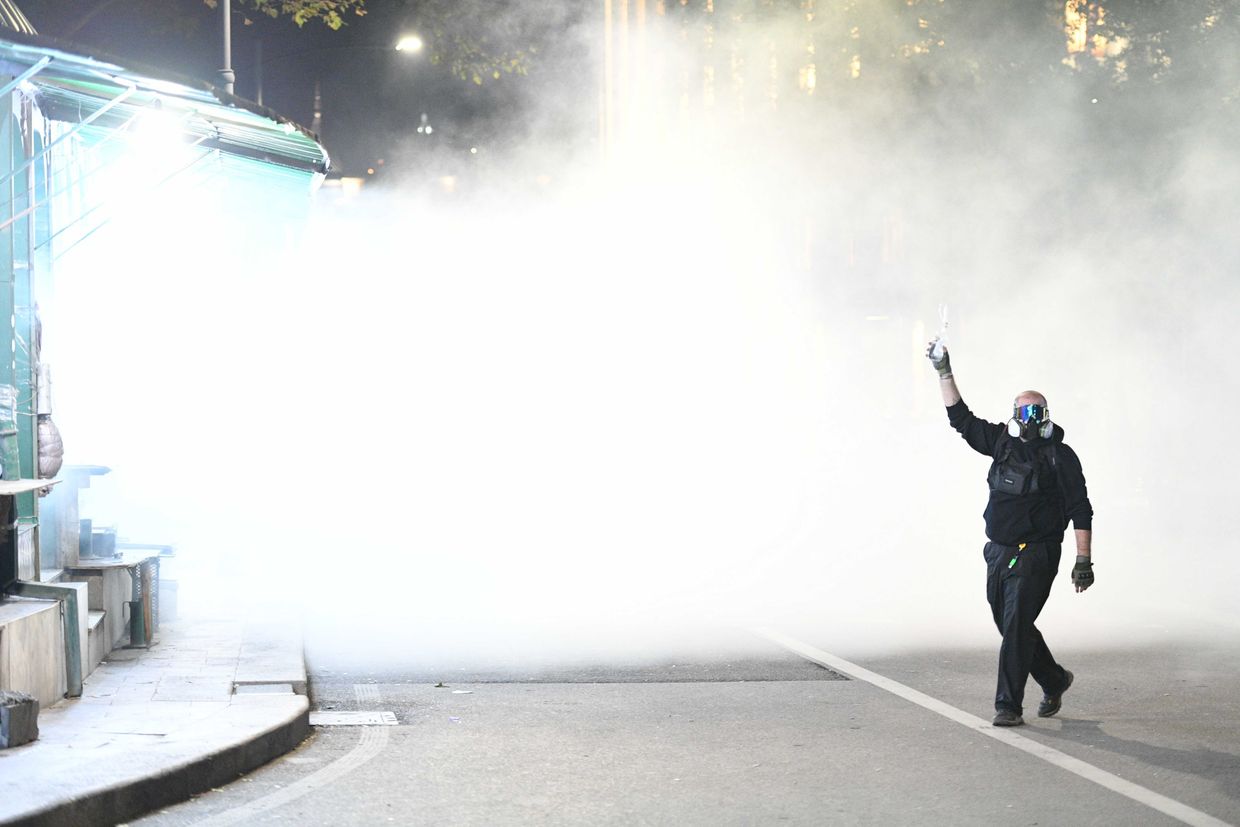
The remaining five detainees have not submitted requests for plea agreements. A lawyer representing some of the remaining detainees told media that they would discuss the terms of a possible agreement with their clients.
Mariam Mekantsishvili, an anti-government activist and one of the defendants of the case, decisively stated that she would not agree to such a deal. Mekantsishvili has been charged with organising group actions that disrupted public order. She has been released on bail as the mother of a minor child.
‘I have the feeling that [in the case of a plea agreement] I would have to admit to something I did not do and to something that is not actually a crime, if we look at it from a legal perspective’, Mekantsishvili said, as quoted by RFE/RL.
Information about the agreements was published by several pro-government outlets, including TV Rustavi 2 and the news agency Info9, using identical text and headlines, referring to the seven individuals as ‘the 4 October assailants’.
‘A peaceful revolution’
The 4 October protest was timed to take place with the widely boycotted municipal elections. Months prior to the elections, some opposition figures promised to end Georgian Dream’s 13-year rule in a single day, but did not announce any concrete plans.
The protest was billed as a ‘peaceful revolution’ meant to achieve what months of leaderless protests could not.
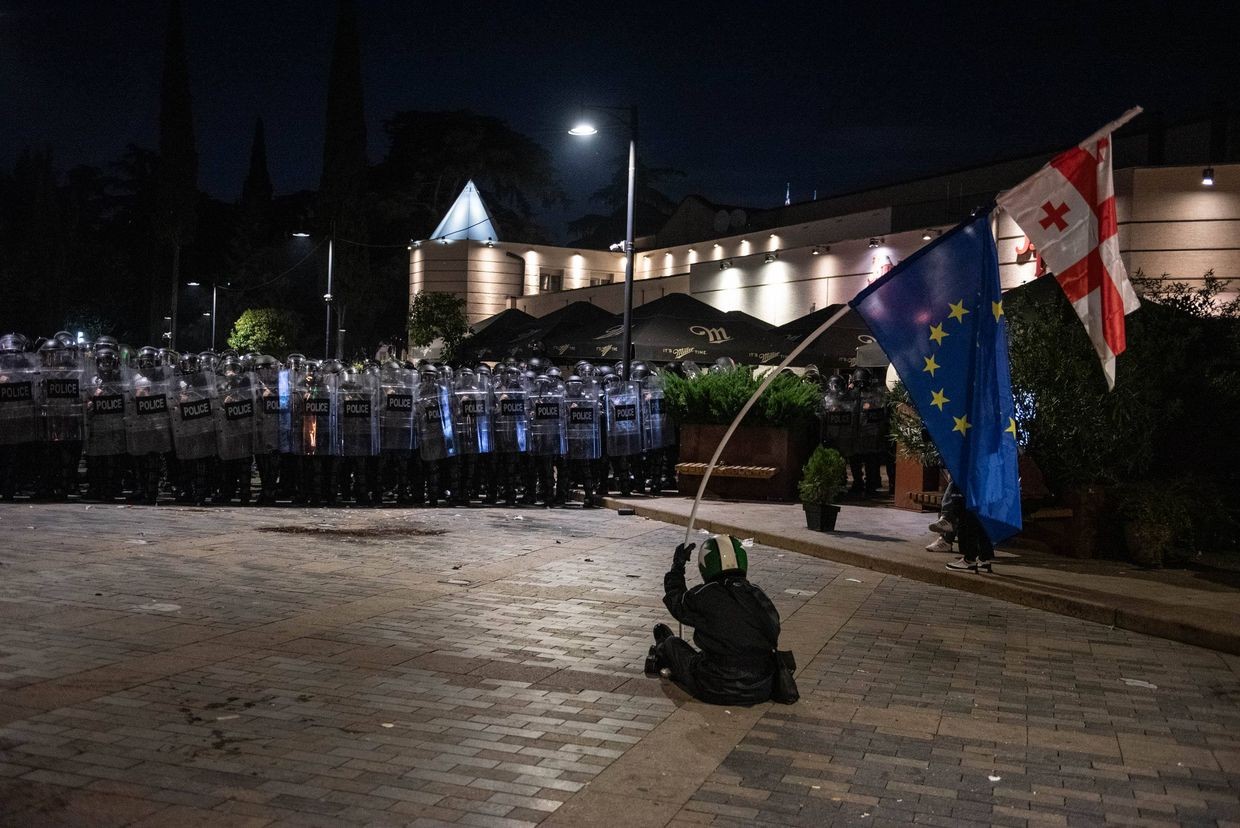
Initially, the campaigners’ efforts seemed to pay off. On the day, tens of thousands gathered in central Tbilisi, briefly reviving the dwindling daily protests.
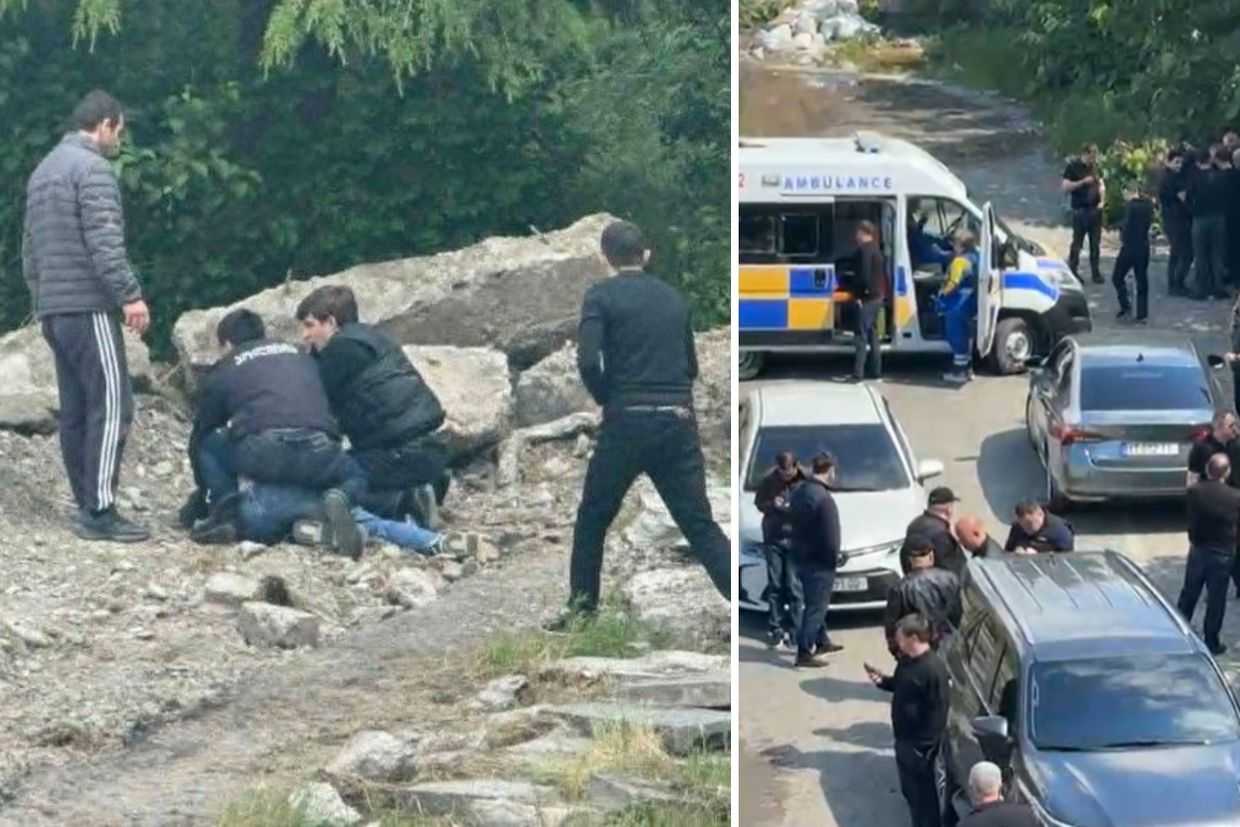
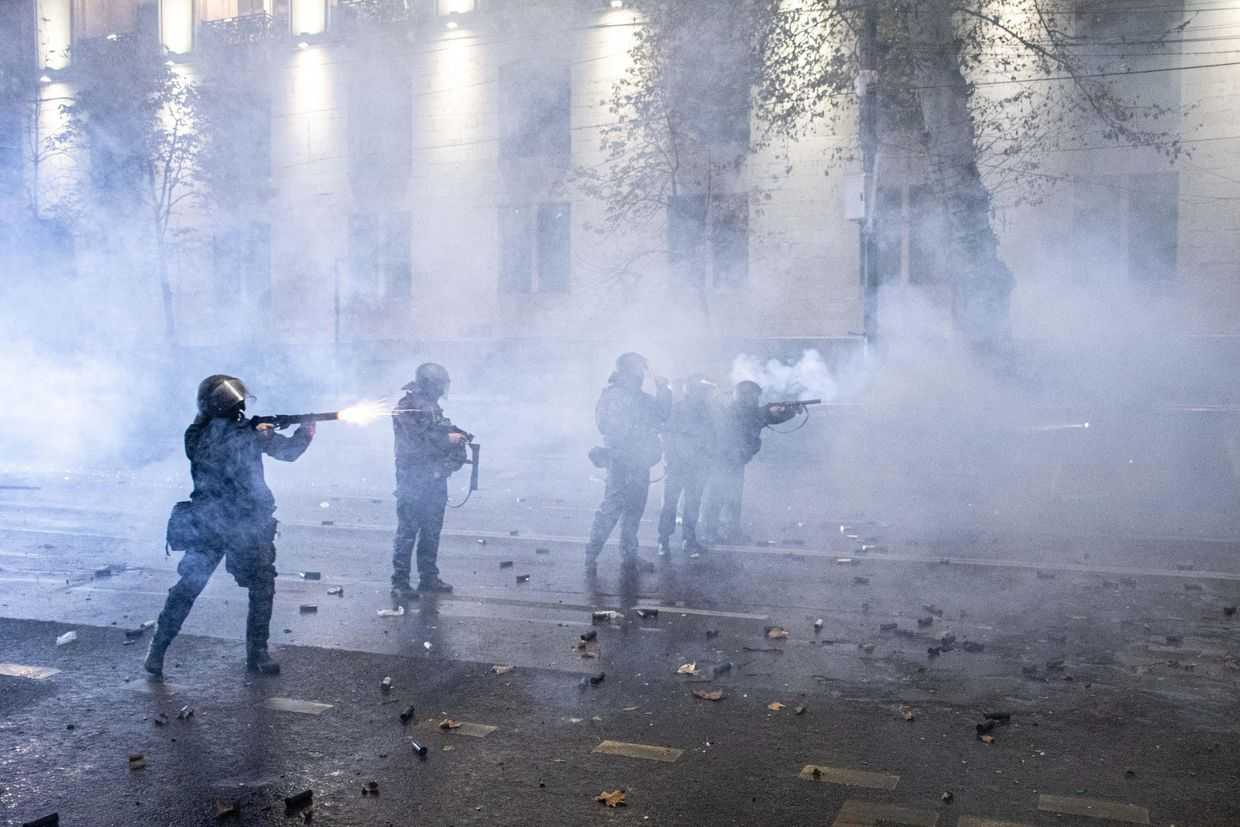
Chaos soon followed: opera singer and opposition figure Paata Burchuladze declared that power belonged to the people, and opposition politician Murtaz Zodelava called for a march on the nearby Presidential Palace. A small group then breached a section of the palace fence, but was quickly pushed back by riot police, sparking sporadic clashes.
The crowd split, frustration spread, and the rally fizzled out.
Mikheil Gvadzabia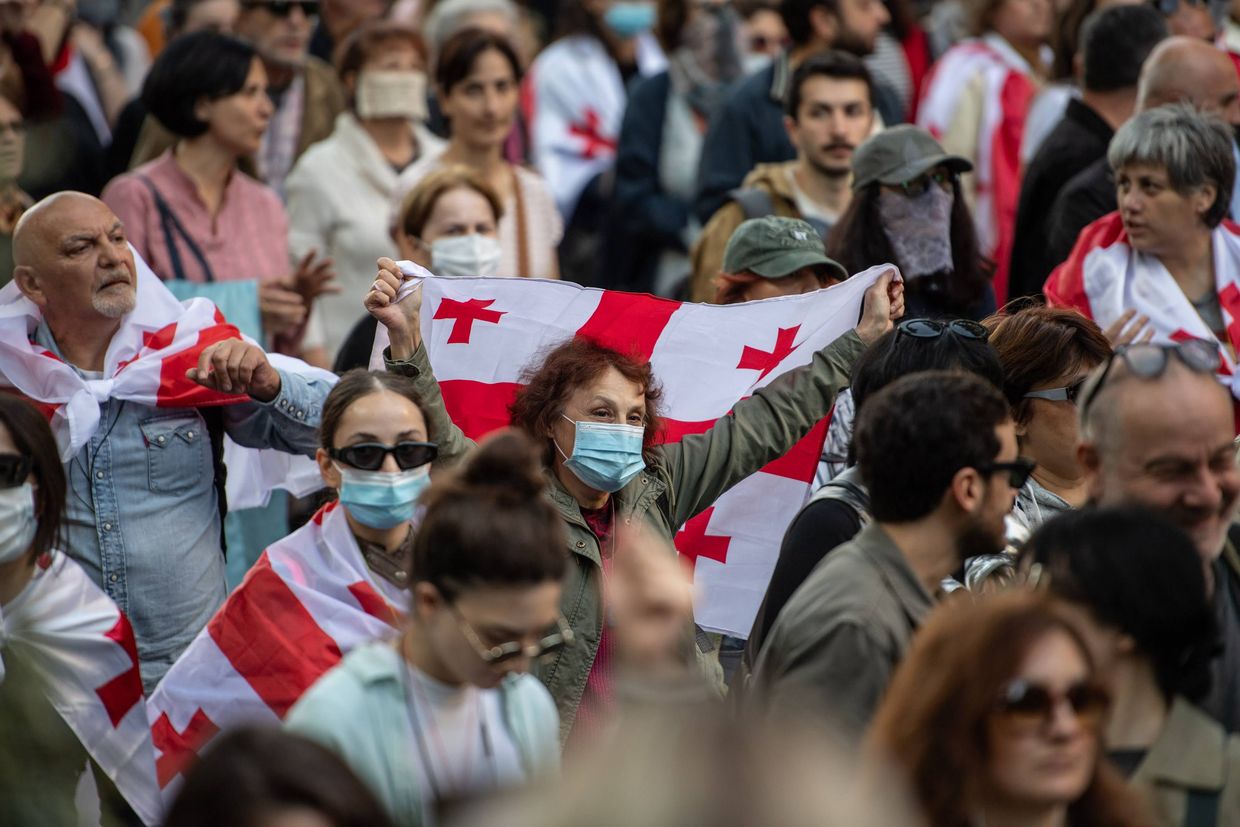
The ruling party quickly seized on the Presidential Palace episode to once again attack the anti-government movement, branding it, as many times before, a violent, foreign-orchestrated coup attempt.
In the days that followed 4 October, suspicions grew that the palace fence may have been deliberately weakened to make it easier to breach, giving police a pretext for mass arrests. Footage showing the fence easily being tipped over, without any significant effort, lent weight to this theory.
The arrests targeted people from across Georgia, including those facing severe social and health issues. Kardava, one of those seeking a plea agreement, previously told the judge that there were instances when he was unable to pay his bank loan, resulting in the debt being deducted from his 70-year-old mother’s pension.
So far, the court has convicted 10 individuals out of more than 60 defendants.