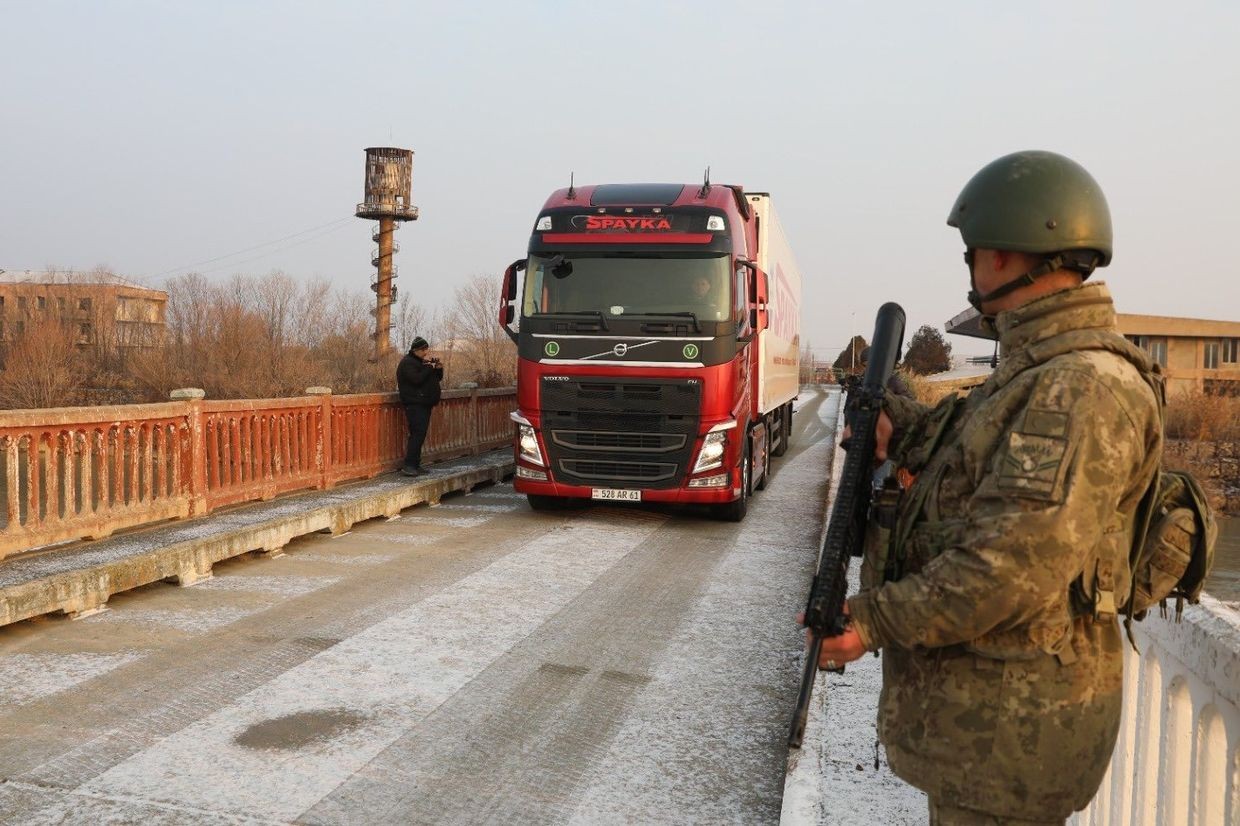
Turkey has lifted restrictions on the trade of goods with Armenia, allowing for bilateral trade to go forward without goods needing to be re-registered by a third country before crossing the border. Although there are additional steps remaining before the long-shuttered Armenia–Turkey land border officially opens for direct trade and other purposes, Armenian and Turkish officials have commended the move as a significant step towards the normalisation of relations.
In 2022, Turkey and Armenia agreed to allow third-country nationals and diplomats to cross the land border, but Turkey has since stated that progress in the Armenia–Azerbaijan peace process is a precondition for further achievements in the normalisation process with Armenia. Turkey originally closed the border in 1993 during the First Nagorno-Karabakh War.
Turkey’s announcement on Wednesday followed a hot-mic moment from Armenian Foreign Minister Ararat Mirzoyan, who was heard saying to Prime Minister Nikol Pashinyan, ‘the Turks are opening today, let’s prepare a welcoming text for the Foreign Ministry spokesperson’ at a campaign rally the previous day.
‘In light of the historic opportunity to strengthen lasting peace and prosperity in the South Caucasus, Turkey will continue to contribute to the development of economic relations and to further advancing cooperation for the benefit of all countries and peoples of the region’, the Turkish Foreign Ministry said in an accompanying statement.
From the Armenian side, Parliamentary Vice-Speaker and normalisation envoy Ruben Rubinyan described the move as ‘good news for businesspeople’.
Armenian Foreign Ministry spokesperson Ani Badalyan also said, ‘We welcome Turkey’s decision to lift restrictions on bilateral trade with the Republic of Armenia, which is another outcome of the Armenia–Turkey normalisation process’.
‘We emphasise that this is an important step toward the development of full and normal relations between the two countries, which can be logically followed by the opening of the Armenia–Turkey border and the establishment of diplomatic relations’.
 Arshaluys Barseghyan