‘A guilty society’ — Ketevan Vashagashvili on breaking taboos through film under Georgian Dream
Her debut documentary, 9-Month Contract, cuts through society’s willful ignorance of Georgia’s problematic surrogacy industry.

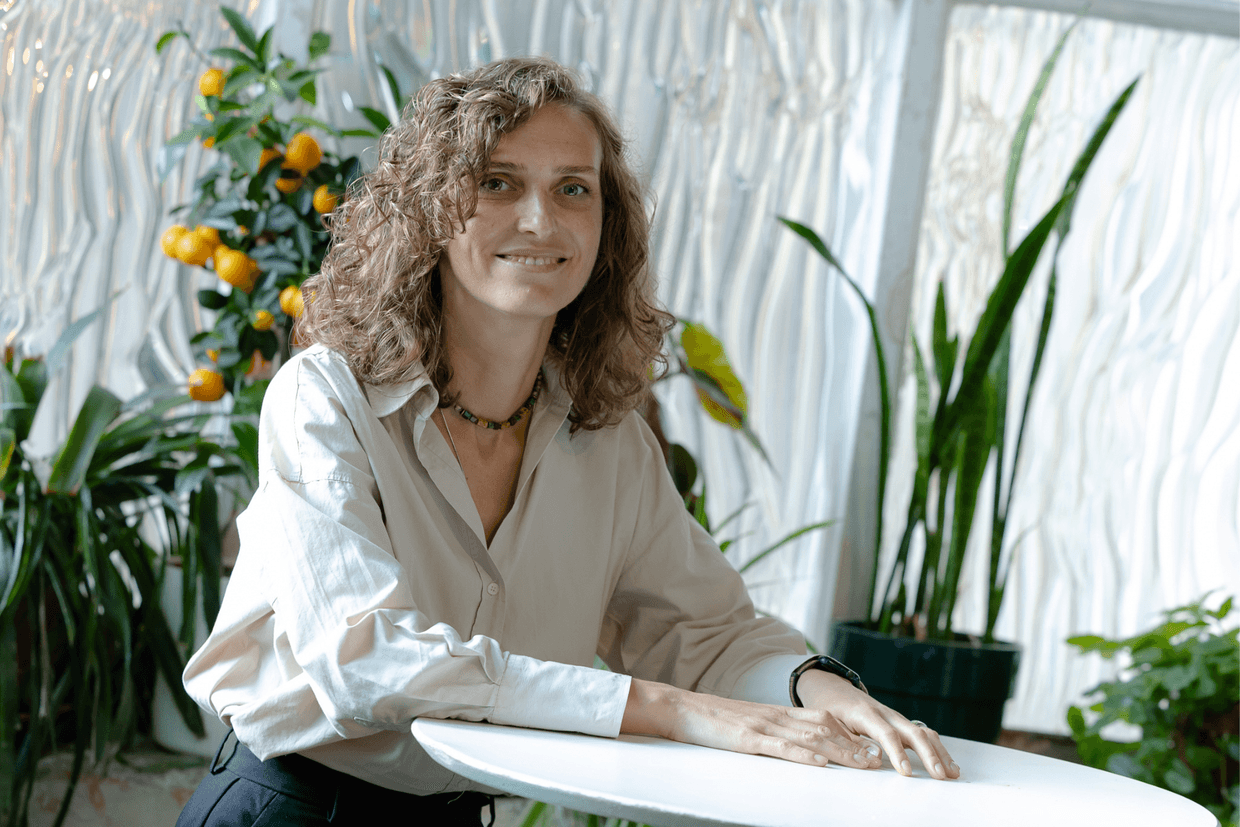
The first time documentary filmmaker Ketevan Vashagashvili came across the issue of surrogacy in Georgia was through an ad in a Tbilisi metro station.
‘They were inviting women to become surrogate mothers, and I was really surprised that this was happening, because I had no prior idea about it’, she tells OC Media.
At the time, Ketevan was working for Georgia’s public broadcaster on a programme called TV Blog, which allowed journalists to create 26-minute documentaries on whatever theme they wished. Intending to cover surrogacy as a part of one such short documentary, she began trying to find women to speak to, but almost immediately faced difficulties. All of the women were in hiding, even from their own families, telling their loved ones that they were going to work abroad instead before returning home with the funds.
In the end, she gave up on the idea — it wasn’t until two years later that Zhana, a single mother who had previously appeared in one of Ketevan’s TV documentaries, decided to become a surrogate mother herself and suggested that Ketevan film the journey.
‘This movie started as more of a journalistic piece, because from the beginning, I was thinking to follow the same path, to do something for TV, more concept-driven than observational’, Ketevan says.
‘But then, on the way, I realised that there is something deeper here than just a feeling about surrogacy, that maybe I could expand on that, the concept that people don’t really know how many surrogates there are, that it’s not something public’.
Thus forms the origin story to Ketevan’s debut feature creative documentary 9-Month Contract, which won the Human Rights Award at the 2025 Copenhagen International Documentary Film Festival (CPH:DOX).
 Xandie (Alexandra) Kuenning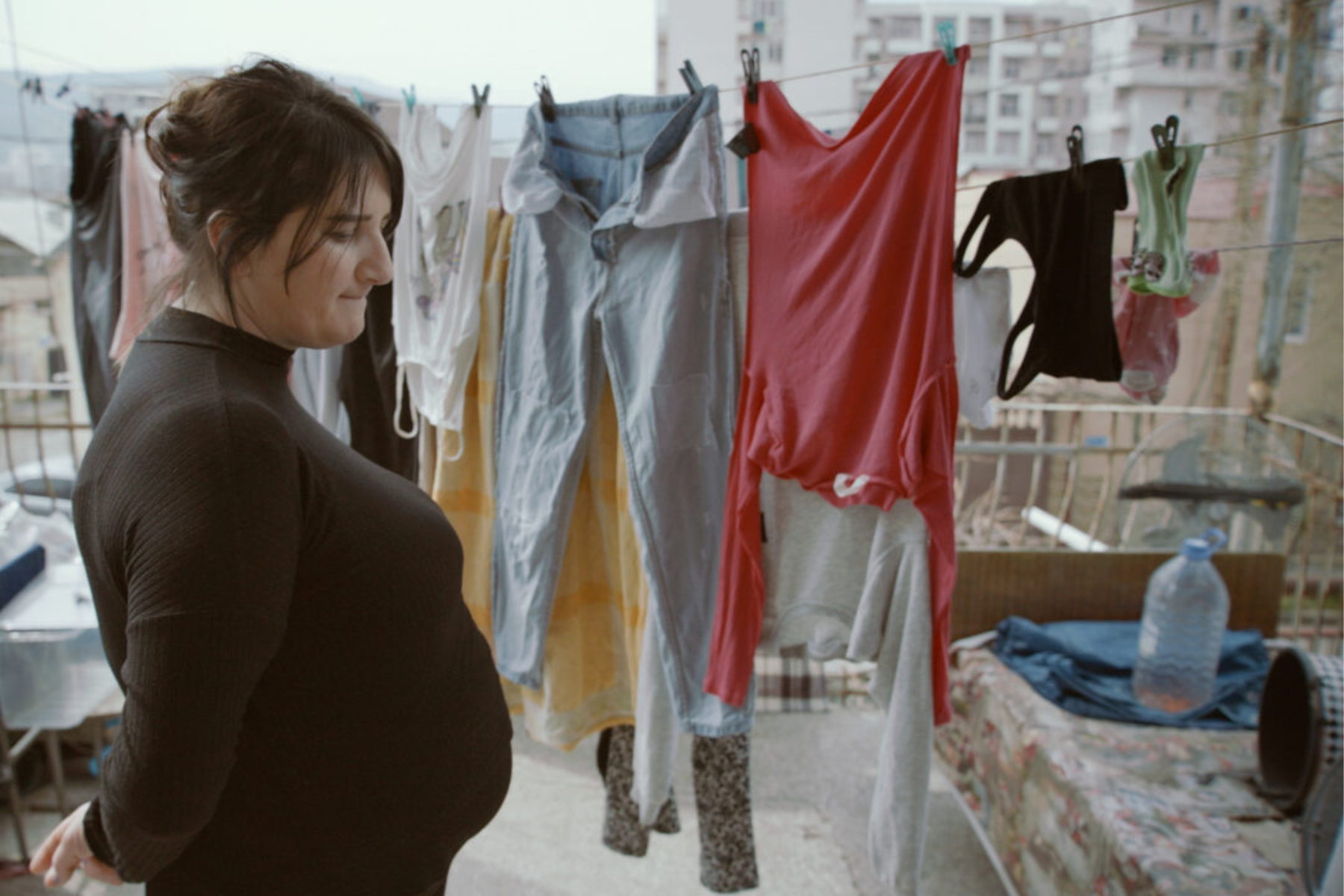
Societal guilt and oppressive silence
Ketevan first became involved in documentary filmmaking rather accidentally. Having graduated from the Georgian Institute of Public Affairs (GIPA), she decided to go into journalism, eventually finding a job in the TV industry. From there, her supervisors decided she should make TV documentaries.
‘I found out that this was the best thing I could do to express myself’, Ketevan says.
It was through such a documentary she made 14 years ago investigating what happened to young women who left state orphanages upon reaching the age of 18 that Ketevan first met Zhana and her daughter Elene.
At the time, the pair were living on the streets — Ketevan’s documentary helped provide them housing, but even still, their lives remained precarious.
Ever since then, however, Ketevan remained a part of their lives, trusted enough for Zhana to come to her with her proposal.
‘This film is the result of our relationship’, Ketevan says, though she notes it was also about the urgency of the situation.
‘That’s why I naturally moved to observational filmmaking because the camera was something additional in our relationship, and sometimes I was not filming everything also, everything came out very naturally’.
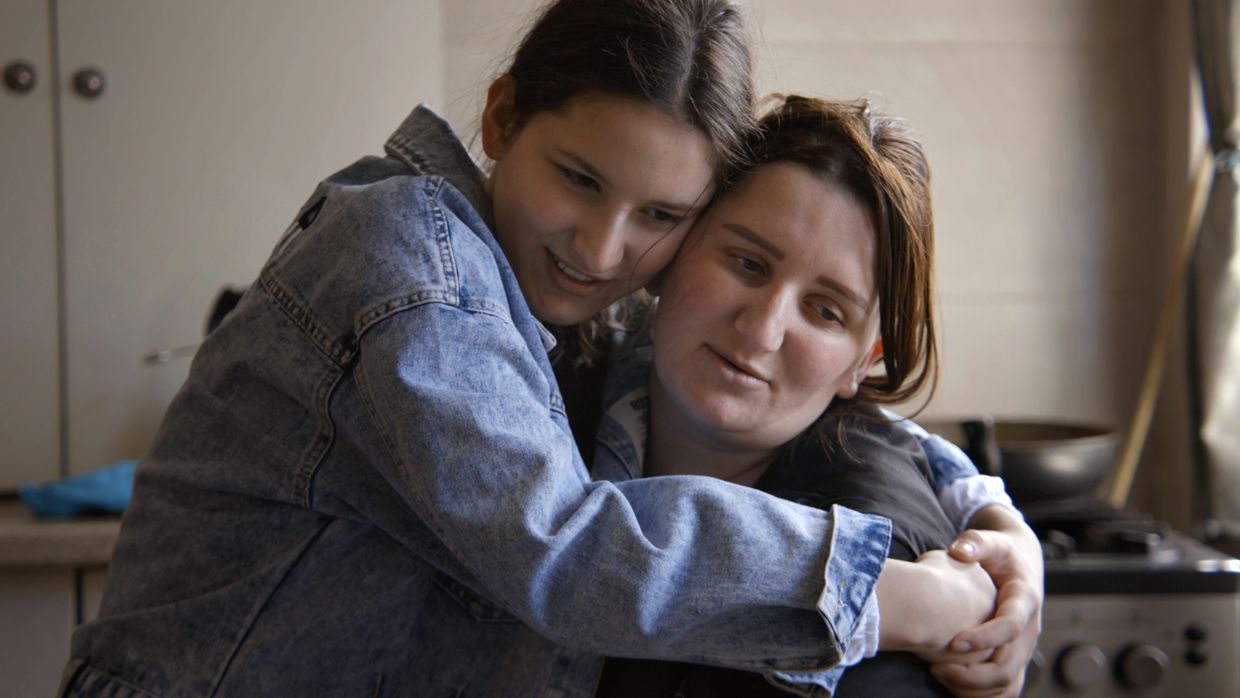
Despite being willing to film, Ketevan emphasises that Zhana was still very careful, hiding her surrogate pregnancies from her neighbours as well as Elene’s friends.
‘She wasn’t going to school [to pick up Elena], and when I asked her why, she said it was because people would look at her differently. She felt that’, Ketevan says.
As Ketevan highlights, to become a surrogate mother is especially stigmatised in Georgia.
‘I think because society is so traditional and also religious, and because those who generally choose to be surrogates don’t have a family, they don’t have parents or other relatives to support them’.
Indeed, Ketevan notes that what she found the most painful was to see how Zhana’s past experiences led her to not appreciate herself — ‘it was so easy for her to sacrifice herself somehow’.
‘I felt guilty. I think this is the guilt of the whole society, that [women like Zhana] are such an easy target and we don’t react to that fact’.
Yet, despite the broad negative opinion within society, Ketevan has found that the number of surrogate mothers in Georgia is only growing.
‘When I was filming, there were only Georgian surrogate mothers in the hospitals, but now there are more foreign women than Georgian. They are bringing them from Central Asia, from African countries’.
Helena Bedwell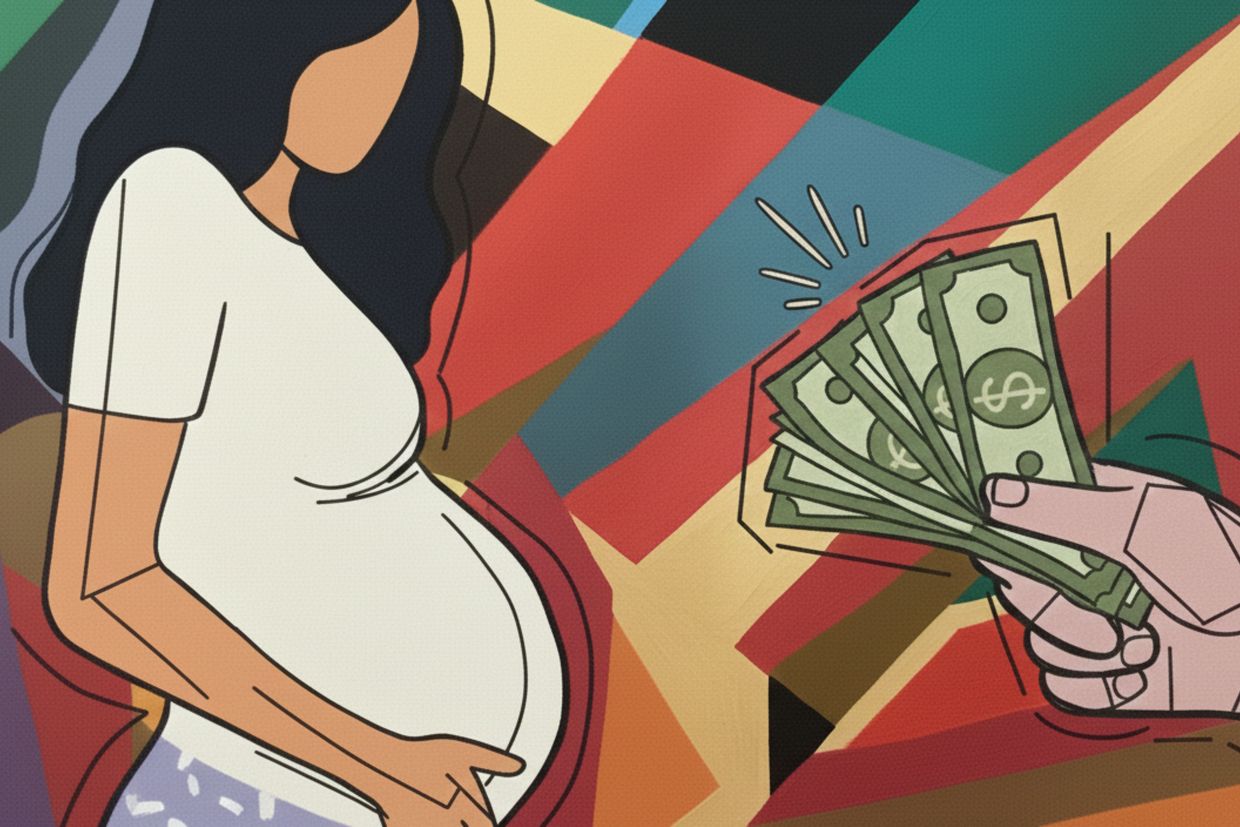
At the same time, Ketevan emphasises that one of the most difficult things in making the film was what she terms ‘the Silence’.
‘This was not only present in society, about surrogacy and those women involved, but also between Zhana and Elena. It was so difficult for them to talk about it’, she says.
‘It’s so natural for our society to be silent when there is an elephant in the room. This was the main driving force for me, because I have experienced this silence in my own family also — I feel that it’s even difficult to talk about certain things with my parents’.
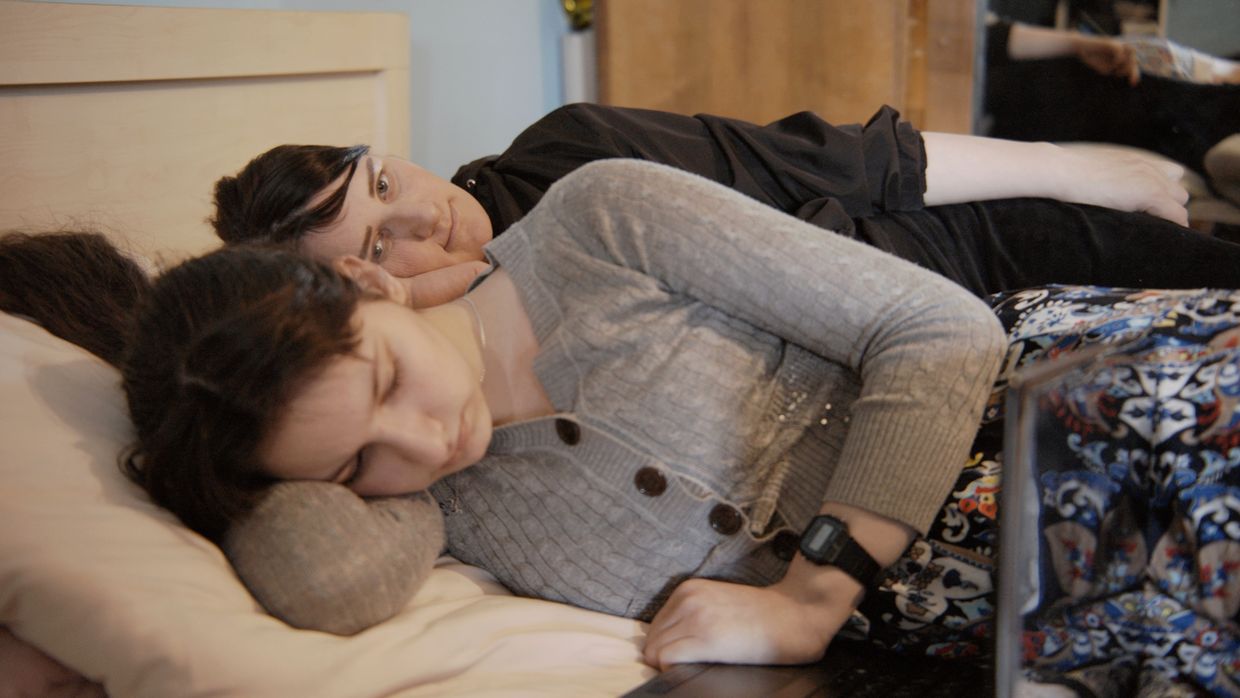
One reason for this difficulty of communication, which Ketevan believes is general throughout Georgian society, is the gap between generations.
‘I think it’s quite usual in Georgia when the parents, especially mothers, cannot achieve something, they try to put this burden on their children instead. That their children should enjoy life instead of them, that they should get a specific profession instead of them’.
She looks to the general trauma of the 1990s, following the collapse of the Soviet Union, when mothers began taking on the majority of responsibilities of the family, in a way, ‘sacrificing themselves for their children’.
‘In this case, they have this demand that they have to justify [such a sacrifice] somehow’.
Ketevan recalls how in her own family, her mother, a doctor, took on the family responsibilities after her father lost his job. She set the baseline for the household.
‘Even today, I can’t talk to my mother about it because I have this feeling that she sacrificed a lot for us, and because of that, she was able to do less in her profession’.
‘It was like it was the women’s responsibility to save this country in the 1990s. And I saw the parallel in Zhana’s situation, because she took all the responsibilities’.
Becoming a part of ‘the Silence’
Ketevan notes that it was very difficult for her at times, as both a friend and a filmmaker, to actually make the documentary due to the silence she could feel lingering between Zhana and Elene.
‘I had the feeling that I was a part of this silence with my camera, which was a bit strange’.
She was struggling with this pressure, as well as figuring out a way to end the film, when Elene decided to cut her hair and join the ongoing anti-government protests, her first real step into adulthood forming the final piece of the puzzle, and a more hopeful ending to the documentary.
For Ketevan, it also became a way to link the film back to the ongoing deterioration of civil society under the ruling Georgian Dream government, including the closing spaces for documentary filmmakers such as herself.
‘With this film, we were the last who participated in the state competition for documentaries. Yet, in spite of the fact that we won the funding, they did not give it to us. And after that, no more documentary competitions were announced’.
Despite the national film centre closing its funding options for independent filmmakers, Ketevan does not see this as the end of the process.
‘In documentary filmmaking, you can find many different ways to deal with such a situation’, Ketevan says.
‘Documentary filmmaking is like an obsession, it’s not a job or work. You want to do it, and when something pushes you, it should be filmed, and this urge is less dependent on funding, at least for me’.
Luiza Mchedlishvili
Even so, she highlights how difficult it is for Georgian filmmakers currently. In particular, co-productions like hers — 9-Month Contract was a co-production with Germany, Bulgaria, and Georgia — are often no longer possible due to requirements that films be supported by their national film centres.
‘The industry is really in a very bad situation’, she says, adding that these changes are also what caused her to leave her job with the public broadcaster in the summer of 2025.
‘There were times like in 2014 [when she had freedom to choose her documentary topics], but after three or four years, that programme was closed, and they started slowly to shrink the number of documentaries’, Ketevan says, noting that the situation changed radically, especially after the start of daily protests in November 2024 following the government’s EU U-turn.
‘Free speech was shut down at the public broadcaster, so I didn’t see myself there anymore’.
She links this back to the silence she sees in society as a whole: ‘People are feeling that they themselves are censoring, or that this is something I cannot talk to my parents about. And now such topics aren’t even being aired anymore’.
‘Of course, the government is trying to silence all this, but I think we can still find ways to show the film to the audience’.
Ketevan is now planning an impact campaign to bring the film to Georgia’s regions, and hopes that it will be made available online as well.
‘In this modern world, I hope that it will be difficult to silence the voices’, she says.
Indeed, while she received a positive reaction to the film in Copenhagen, where it premiered in March 2025, as well as in other international festivals, she did not expect the same in Georgia — yet, the emotions and energy from the audiences surprised her.
‘I really didn’t expect it in Georgia, for it to be like that’, she says, noting that she has received no negative feedback, despite the sensitive subject.
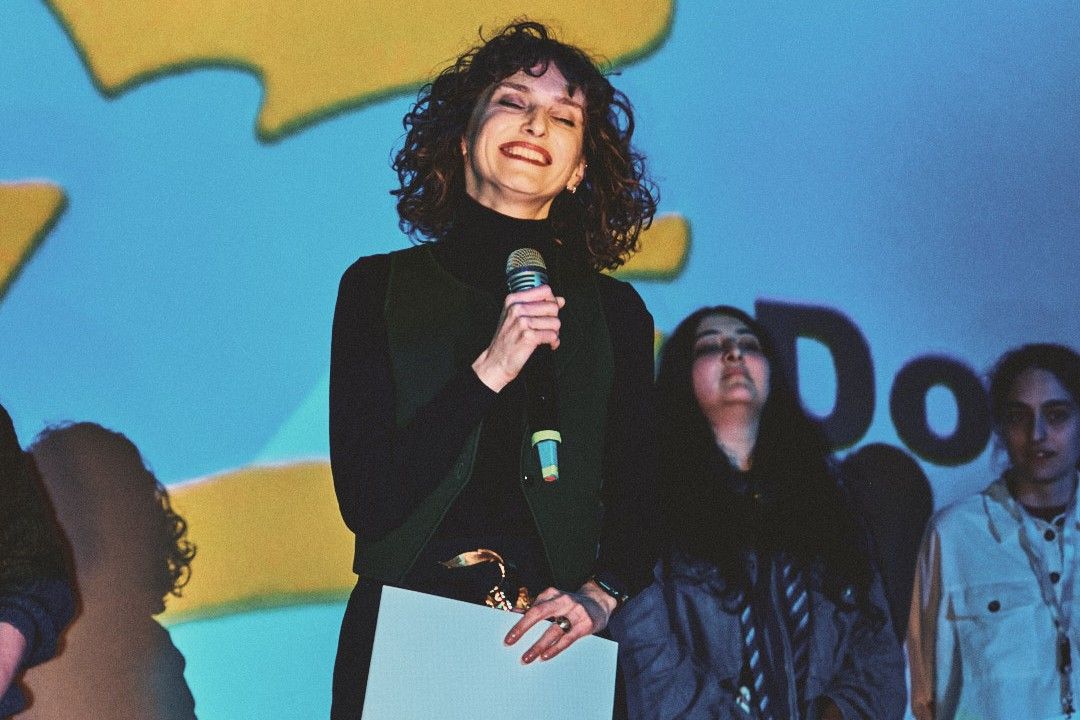
‘I’m really looking forward to meeting the general audience’, she says, adding that she also wants to have the film reach if not surrogate mothers, then at least the women who might become such. Already, she points to the fact that while Zhana was the first surrogate mother to go to the local women’s rights organisation Sapari for aid, now the group is helping 100 or so women, showing how positive change can be achieved through filmmaking.
At the same time, however, there does not seem to be any government response in the works.
‘To tell the truth, I expected more of a reaction from the government, or maybe public organs, but they do not pay much attention. It seems that they really don’t care much as long as money is made’.
Ketevan hopes that there will come a time when they will get more involved and that there will be some regulation in this direction. But she also admits that such a booming industry cannot be regulated in only one country.
She is now planning her next steps, telling OC Media that while she cannot speak concretely of any specific idea, she knows already that her focus will be connected to the experiences of women in Georgia. She is also sure she wants her next piece to be another creative documentary.
‘I think this is unique, that this medium somehow connects to people, not to just tell the facts, but to tell the story deeply’.
9-Month Contract will be screened in Tbilisi by DOCA Club on 1 June, after which it will be released in theatres from 5 June.