Tbilisi dodges blame as UK sanctions three Georgian companies over Russian sanctions evasion

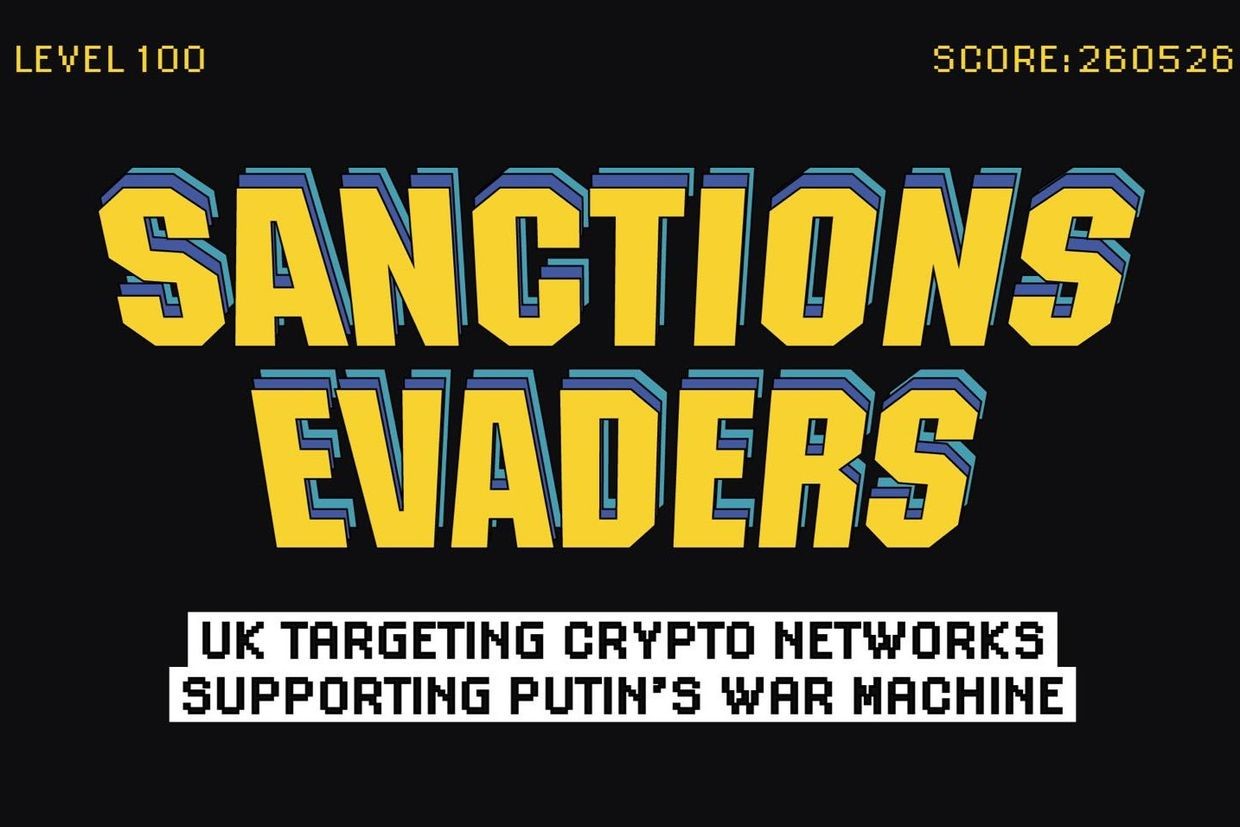
The UK has sanctioned three Georgia-registered companies accused of helping Russia evade sanctions. In response, the Georgian National Bank stated that the three firms fell entirely outside its regulatory oversight, while the financial police said they had already acted against the companies.
The three companies — Arvix, Rapira, and Aifory — were sanctioned on Tuesday for ‘operating Russia focused exchanges seeking to evade sanctions’. The package included 18 new designations in total targeting crypto and illicit financial networks allegedly assisting Russia.
The newly expanded sanctions list includes entities and individuals from Russia, the UK, Georgia, Kyrgyzstan, the UAE, Panama, and El Salvador.
Georgia’s National Bank clarified today its position to OC Media, saying all three sanctioned companies operated without registration and therefore did not fall under its purview.
Georgia’s Ministry of Finance Investigative Service told Business Media that investigations into all three companies had been underway prior to Monday’s announcement and had already yielded legal results.
According to the Investigative Service, Aifory and Arvix were fictitiously registered in other individuals’ names in exchange for payment, while in reality operating out of Moscow, with no assets or offices in Georgia. In a court ruling dated 28 April, three defendants were fined ₾30,000 ($11, 000) each and given suspended sentences, while the alleged organiser of the scheme, Davit Jincharadze, was sentenced to nine years and six months in prison.
As for Rapira Group, investigators established that the company — registered by a British national via power of attorney — operated exclusively through the website rapira.net, serving only Russian citizens, with its domain registered under a Russian registrar. The company had no recorded turnover in Georgian bank accounts, no assets, and no offices in Georgia, with its registration described as purely formal.
The Investigative Service also noted that none of the three sanctioned companies conducted any meaningful business activity within Georgia.
Other notable designations include EXMO Exchange Limited, Bitpapa IC FZC LLC, and Alistera Limited, along with several individuals including Sergei Mendeleev and Liran Cohen, listed as making funds or economic resources available to entities in the Russian financial sector.
Roman Gotsiridze, former National Bank governor and current opposition economist, was sceptical about the government’s efforts.
He told OC Media the designations represent a serious blow to the government’s narrative of GDP growth, arguing that the sanctioning of Georgian-registered companies exposes deeper vulnerabilities in the country’s financial oversight and its entanglement with Russia-linked illicit activity.
Gotsiridze noted that the companies were registered in free industrial zones in Gldani and Kutaisi. He said the zone in Gldani, which he called a ‘crypto vampire’ for its heavy energy consumption, was linked to Bidzina Ivanishvili, founder of the ruling Georgian Dream party. Gotsiridze says the site in Kutaisi is associated with the Chinese industrial zone linked to the Chinese company Hualing Group, which recently acquired Liberty Bank.
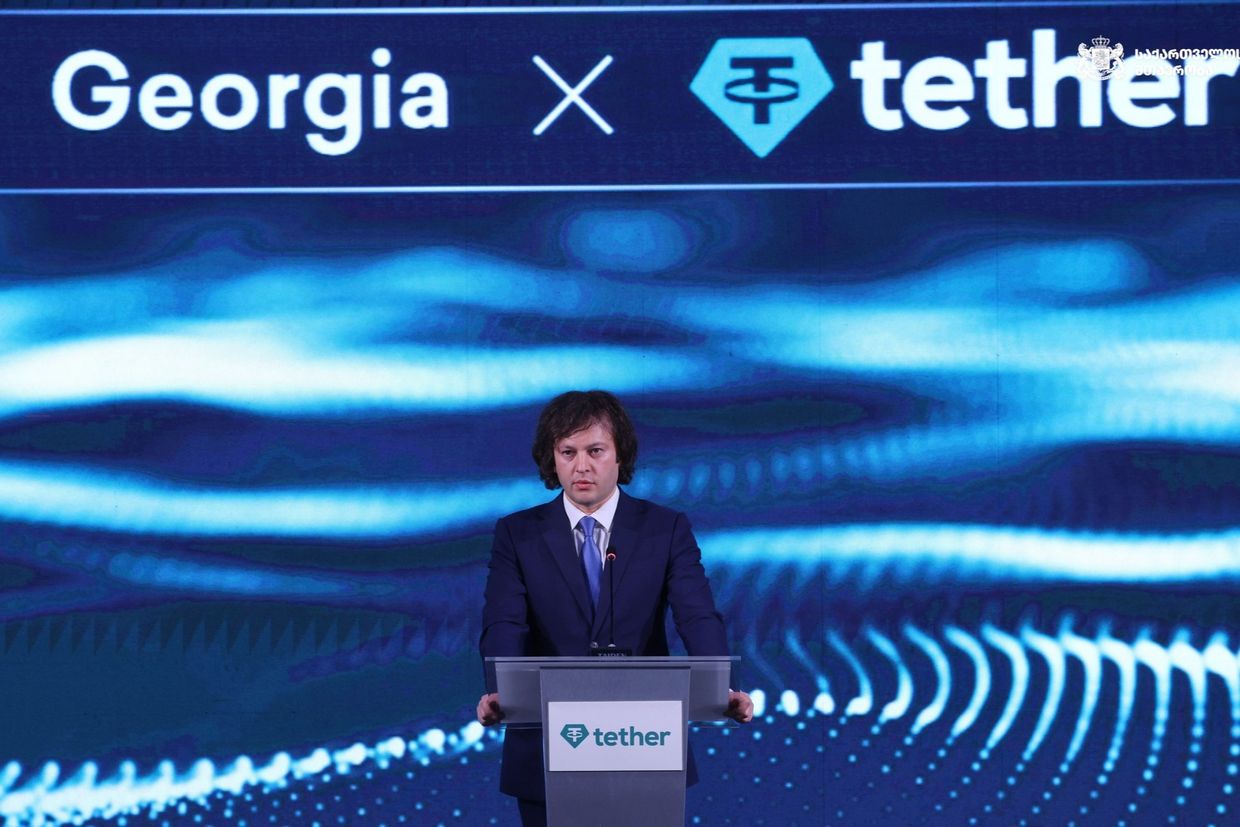
Tether, the world’s largest stablecoin issuer, recently chose Georgia as its latest expansion target, with Prime Minister Irakli Kobakhidze describing the move as a watershed moment for the country’s investment credibility.
Tether manages roughly $200 billion in assets and gold reserves and has formally launched operations in Georgia, with plans including a digital version of the Georgian lari — GELt — alongside investments the government says will cover education, social programmes, and broader economic development.
However, one source who asked not to be named told OC Media they had serious reservations about Tether’s stability, citing concerns over its exposure to US debt, and questioned whether the partnership would serve Georgia’s long-term sovereign interests.
Georgia is already aware of Western concerns about its role as a potential transit route for goods and money flowing into Russia in breach of international sanctions, a focus that has intensified since Russia’s full-scale invasion of Ukraine in 2022, with the UK increasingly targeting crypto exchanges and alternative financial channels.
 Helena Bedwell