Armenia’s election season kicks off with Armenian lessons and heated foreign relations accusations

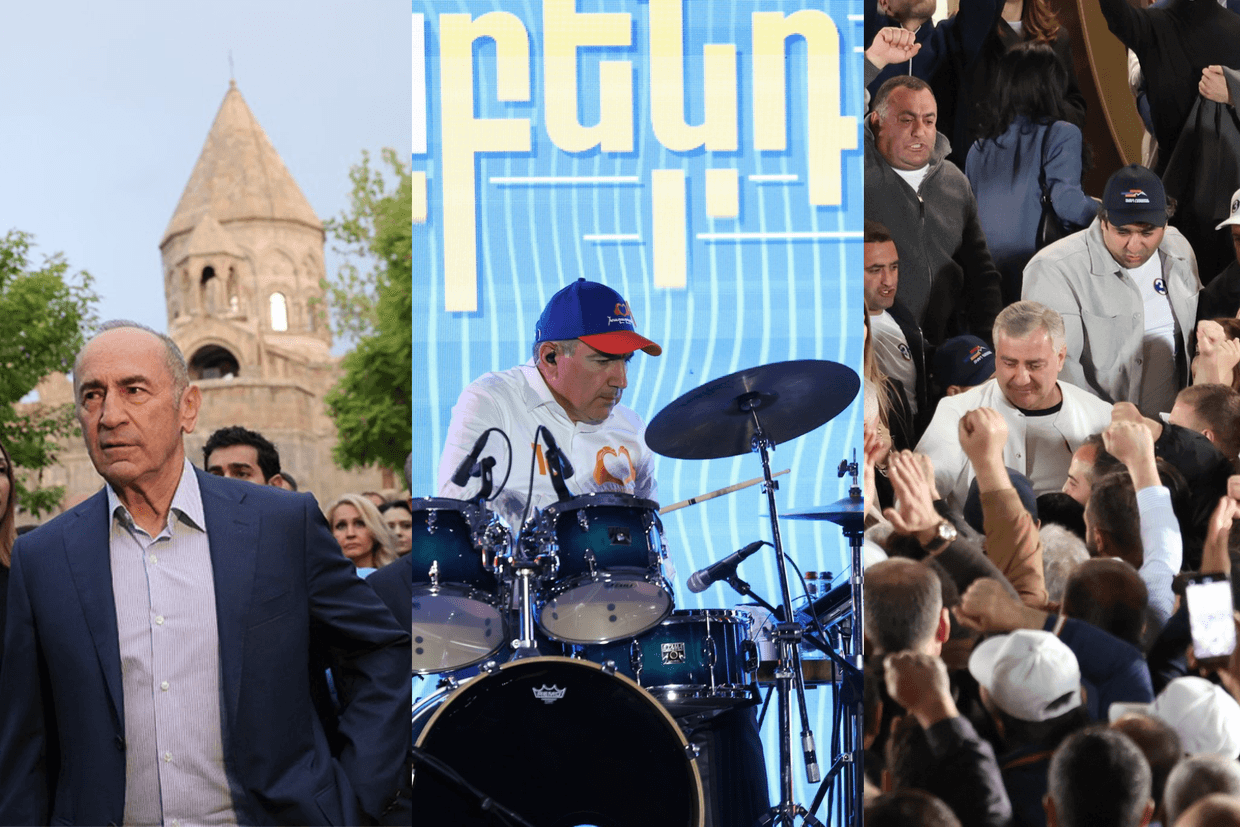
As Armenia kicked off its election season last Friday, discourse around war and peace remained the main talking point, as opponents accused each other of serving foreign interests.
There are 19 parties and alliances participating in the election, campaigning to win the votes of less than 2.5 million Armenians.
The ruling Civil Contract party, which, according to public opinion polls, has the highest rating, has incumbent Prime Minister Nikol Pashinyan as its candidate. Pashinyan, currently on vacation along with members of his cabinet, has been campaigning in Armenia’s southern Syunik and Vayots Dzor regions since the start of the election campaign, with Monday’s events taking place in Yerevan.
The ruling party has been travelling through the regions aboard the ‘happy bus’, where officials dance, go live on social media, and Pashinyan also holds discussions with cabinet members during the trips. The prime minister has appeared in campaign attire, with a hand heart gesture symbol associated with the campaign and party’s slogan, ‘Stand for Peace’.
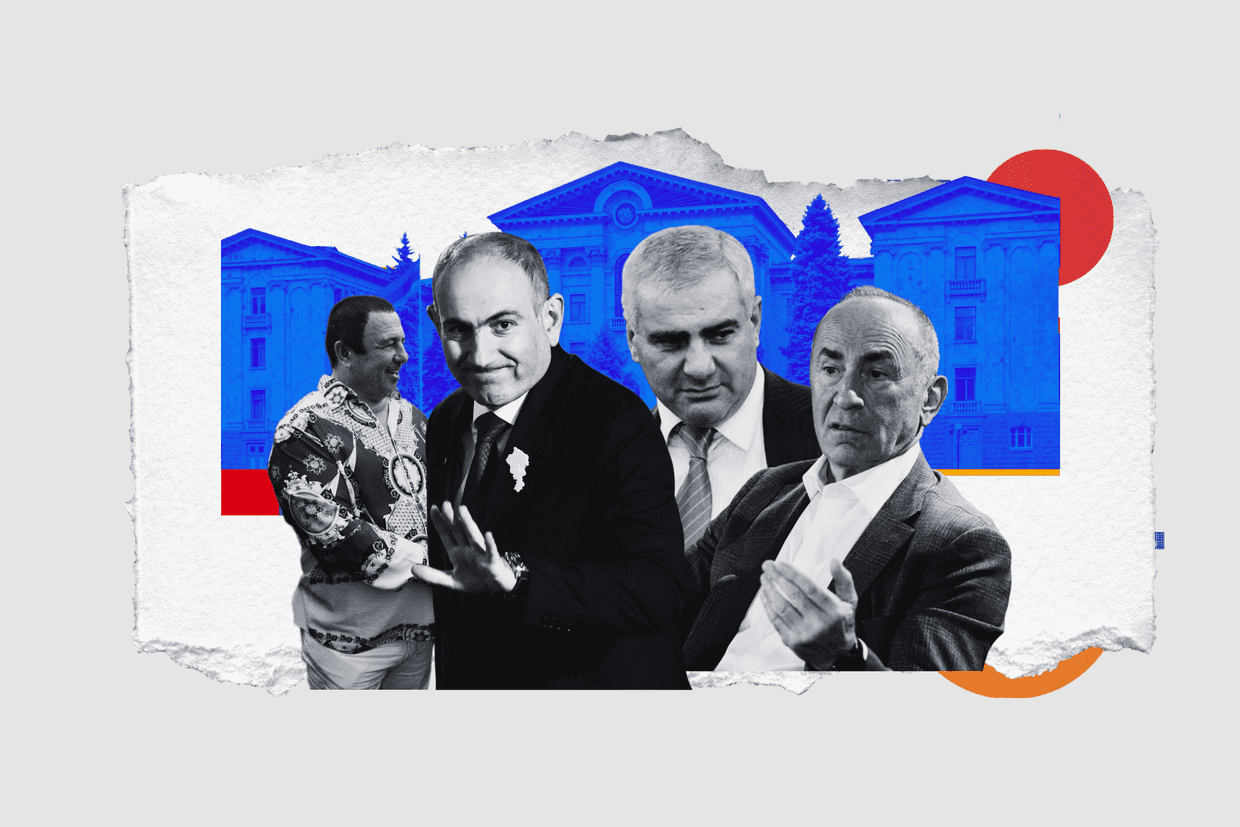
As the country gears up for the elections, in the past months, Pashinyan launched his campaign’s main talking points, claiming that Armenia would face a war if the opposition came to power, suggesting that they want to ‘revise’ the peace brokered with Azerbaijan. Pashinyan also calls his main political opponents a ‘three-headed war party’.
 Arshaluys Barseghyan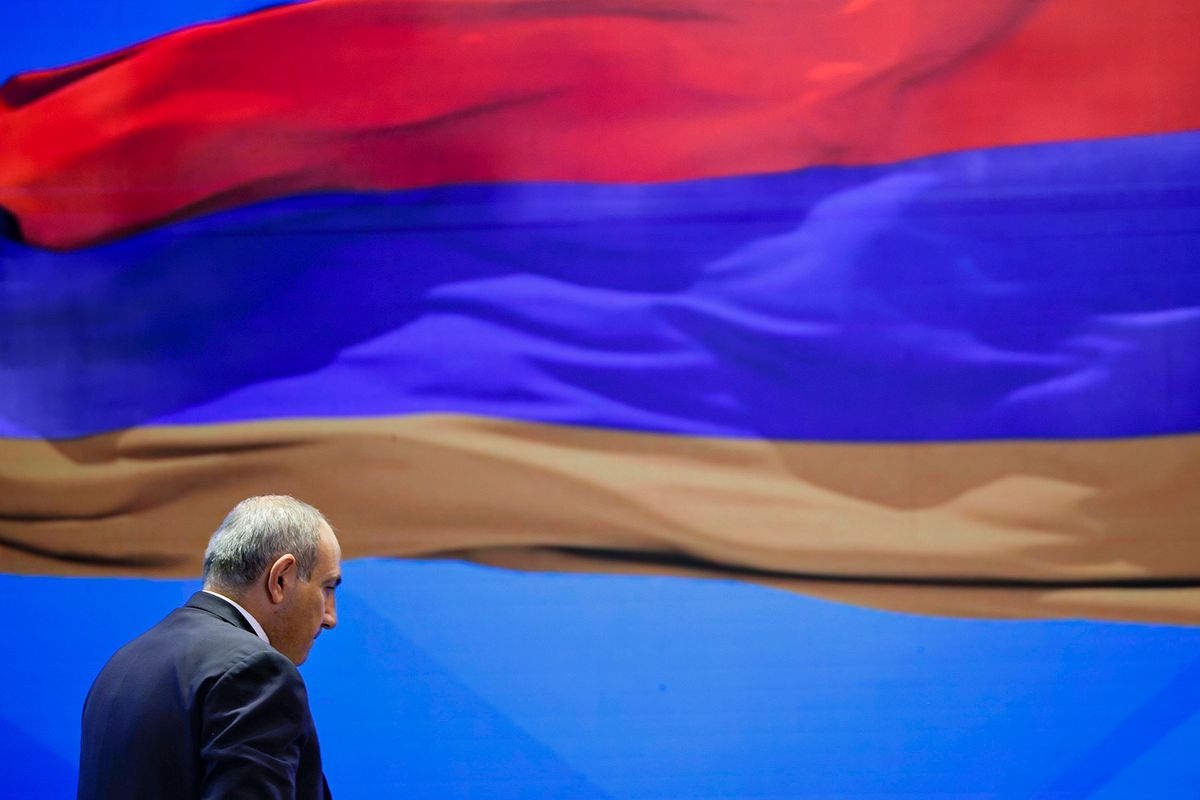
During campaign stops, Pashinyan has handed out ‘Real Armenia’ pins — an ideology insisting Armenians must accept modern Armenia within its current borders — as well as heart-shaped cookies and leaflets.
His main campaign messages continue to focus on peace with Azerbaijan and domestic reforms, including the recent introduction of mandatory state health insurance, pension increases, and the construction of schools and educational institutions ahead of the elections.
Pashinyan further described claims that ‘Karabakh was ours’ as false.
‘Not only was it not ours, but it was also used so that Armenia itself would not belong to us. When they say “Karabakh was ours, now it is no longer ours” — that is a lie. The reality is that Armenia itself was not ours; now it is ours’, Pashinyan claimed.
The rallies in Syunik and Vayots Dzor provinces concluded with musical performances featuring Pashinyan playing drums with his band, Varchaband, playing songs associated with both the campaign and the 2018 Velvet Revolution. This was followed by a drone show.
In an online exchange, Pashinyan suggested he would not pursue legal action against Russian–Armenian tycoon Samvel Karapetyan, who accused Pashinyan of using hallucinogenic mushrooms he had purchased from China and later said it was an assumption, not a fact.
Pashinyan, in response, said that he would feed Karapetyan mushrooms ‘in the legal sense of the word’.
‘In short, there was no need to make him eat [hallucinogenic mushrooms]. He voluntarily ate, of course knowing what I said and that I would make him eat’, Pashinyan said in a video on Facebook on 7 May.
Arshaluys Barseghyan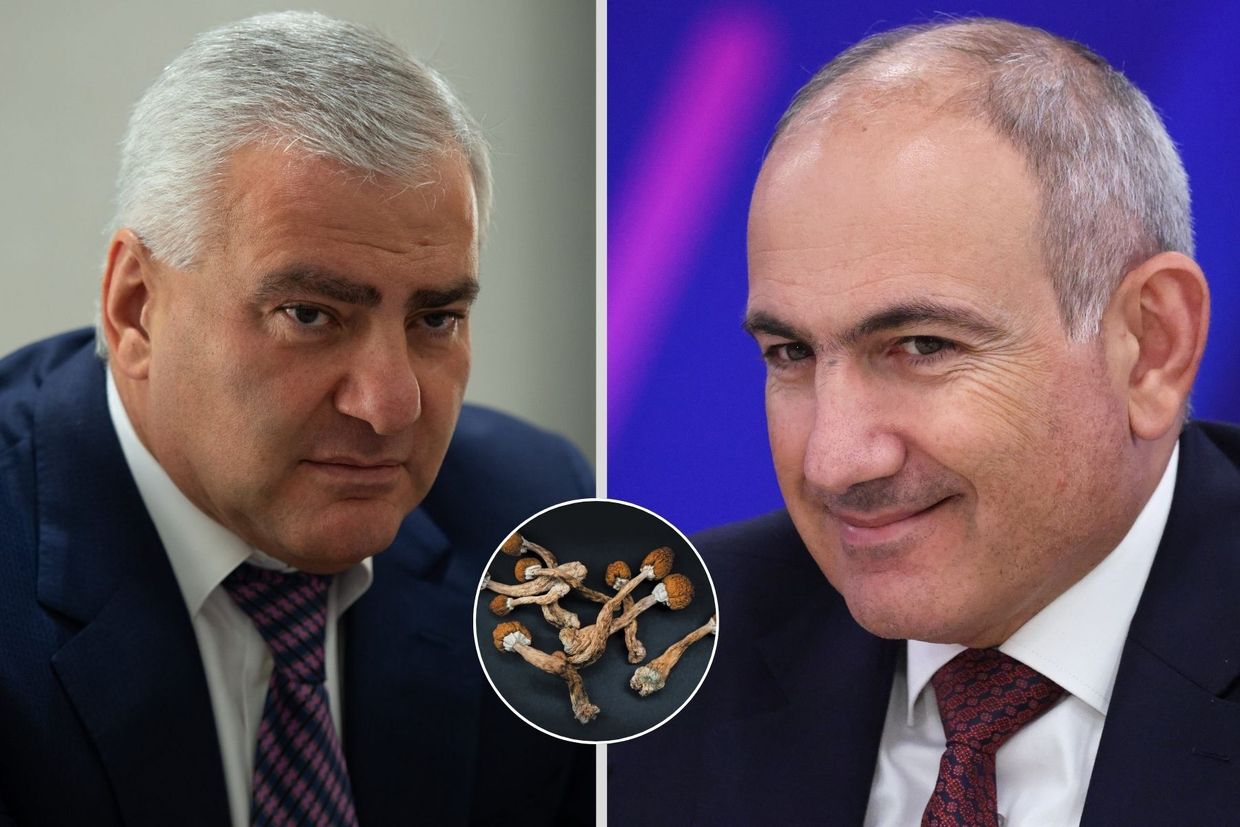
Karapetyan’s struggles to pronounce Armenian word, Pashinyan retorts
The back and forth between Pashinyan and Karapetyan continued. The latter and his newly formed Strong Armenia Alliance of Parties are expected to be Civil Contract’s main challengers in the elections.
The defining moment of Karapetyan’s alliance campaign came with his first public address to supporters, delivered in the courtyard of his mansion. Earlier, his supporters had gathered in Yerevan’s Victory Park, where organisers teased a ‘strong surprise’ at the rally’s end, prompting a march to his nearby residence.
However, in his opening remarks, Karapetyan, who is under house arrest, notably struggled to pronounce the word ‘winning run’ (‘haghtarshav’), which quickly went viral. Pashinyan later responded by spelling the word out for him in what he called an ‘Armenian lesson’. Pashinyan had previously suggested that Karapetyan had poor command of the Armenian language, owing to the fact that Karapetyan spent the bulk of his adult life in Russia.
In his speech, Karapetyan also referred to Pashinyan as Azerbaijani President Ilham Aliyev’s ‘regional governor’.
Earlier during the rally, Narek Karapetyan, the tycoon’s nephew, proposed replacing Pashinyan’s ‘campaign hammer’, a symbol of his ‘steel mandate’, with a shovel, which he said would represent the ‘construction’ and development of Armenia.
He also accused Pashinyan’s government of ‘jeopardising’ relations with Russia and called the elections ‘historic in the sense that the main opposition leader is under house arrest and is not taking part in the campaign process’.
The tycoon was detained in June 2025 after making comments in support of Catholicos Karekin II in the midst of his feud with Pashinyan and Civil Contract. Following his detention, he announced his entry into politics.
Karapetyan holds Cypriot and Russian passports, rendering him ineligible to run in the elections. His alliance has named him its prime ministerial candidate despite the fact.
Karekin II has also paid Karapetyan a visit over the weekend.
Kocharyan says Pashinyan, Aliyev, and Erdoğan are one and the same
Armenia’s current major opposition faction, the Armenia Alliance, like in 2021, is again headed by ex-president Robert Kocharyan. The alliance launched their campaign with a rally in Armenia’s main religious city, Vagharshapat, following which they marched and entered Etchmiadzin Cathedral.
During the rally, Kocharyan blamed Pashinyan’s government for jeopardising Armenia’s membership within the Eurasian Economic Union (EAEU).
Kocharyan insisted that ‘peace must be guaranteed’, and what was achieved by Pashinyan’s government ‘is not peace’. He suggested a security model of ‘a strong army, a strong leader, and an ally’, implicitly referring to Russia.
‘I also do not remember elections where the main discourse was war or peace. This is unique, and this discourse, this phenomenon, has been brought by the current authorities — dividing our people, our history, our mountains, and this cannot simply disappear. These people must be held accountable for inciting our people against each other and dividing our history’, Kocharyan said.
Seconding Karapetyan and Russia, Kocharyan also criticised Ukrainian President Volodymyr Zelenskyi’s remarks at the European Political Community (EPC) summit in Yerevan earlier in May.
Arshaluys Barseghyan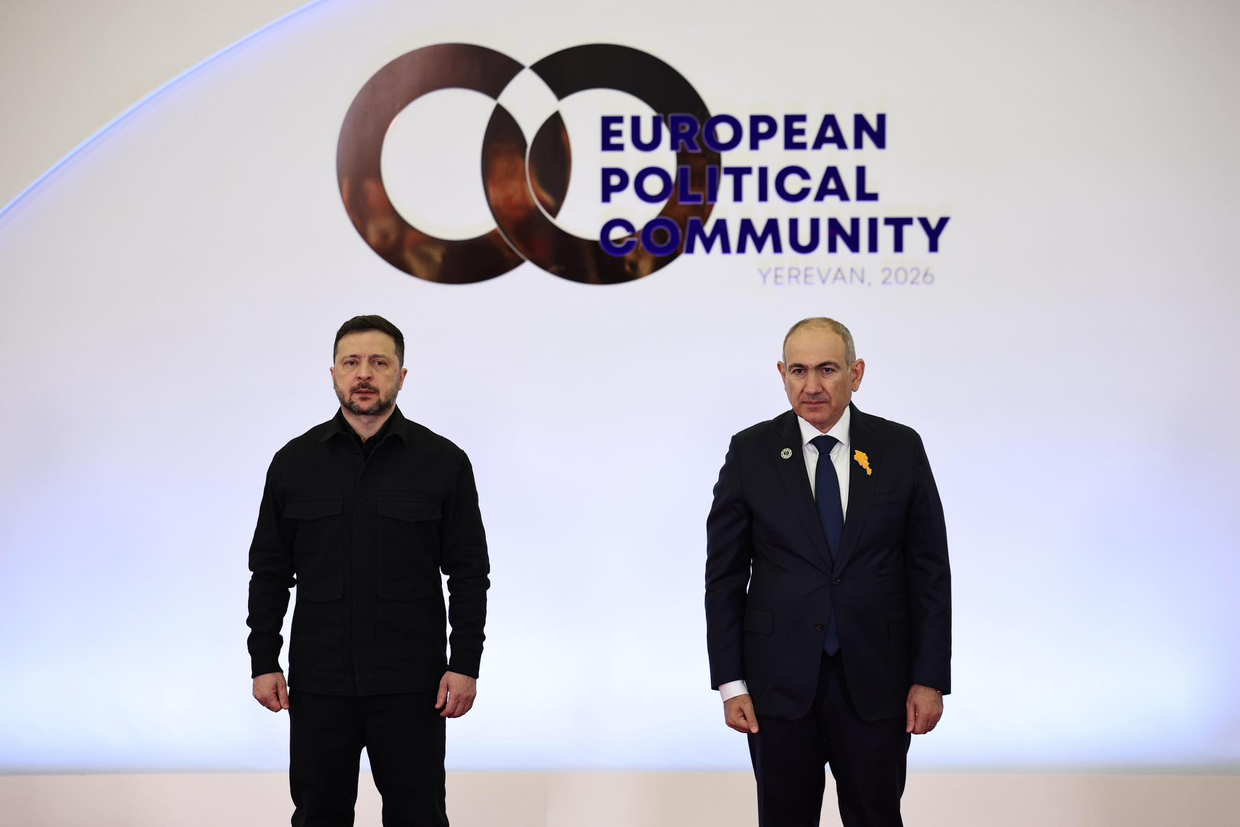
‘They invited Zelenskyi to that gathering. The provocative statements that were made here — they are once again trying to drag us into a new adventure’, Kocharyan claimed.
The following day, as Kocharyan and his alliance visited Yerevan’s military cemetery, where, in a press briefing, he responded to Pashinyan calling him and other main opponents a ‘three-headed war party’. In turn, Kocharyan referred to Pashinyan as part of a ‘three-headed creature — him, Aliyev, and [Turkish President Recep Tayyip] Erdoğan’.
During his campaign, Kocharyan also cited claims suggesting that ‘Pashinyan is apparently fighting for the position of governor of Western Azerbaijan’. He referred to Pashinyan as an ‘alcoholic and of unsound mind’.
Kocharyan, who is originally from Nagorno-Karabakh and previously served as its president, also criticised remarks made by Pashinyan in which he called the Karabakh movement a ‘fatal mistake’.
‘When the leader of Armenia says such things, it means he is serving not Armenian interests, but the interests of Azerbaijan.’