Azerbaijan’s media apparatus goes all-in for Pashinyan
Ahead of elections, incumbent Prime Minister Nikol Pashinyan has found an unlikely cheerleader — Azerbaijani pro-government media.


The world of Azerbaijani pro-government media has long been harshly critical of all things Armenia. Given the tight restrictions on the press in the country, pro-government media forms the bulk of what is actually available, creating a narrow information ecosystem in which narratives are largely uniform and distributed in a top-down fashion.
Yet, in recent months, it appears Azerbaijan’s media apparatus has begun churning out pro-Pashinyan content, just in time for Armenia’s parliamentary elections. At the same time, however, the government has appeared to give its consent to anti-Pashinyan messages to be released by detained former Nagorno-Karabakh officials.
While Azerbaijani media does not often make for the most nuanced takes, analysing the reports can provide valuable insights into how Baku’s media outlets have shifted from bashing Pashinyan to openly suggesting he is Armenia’s only hope — and provide hints to what is behind the contradictory messages.
Contrasting candidates of peace versus war
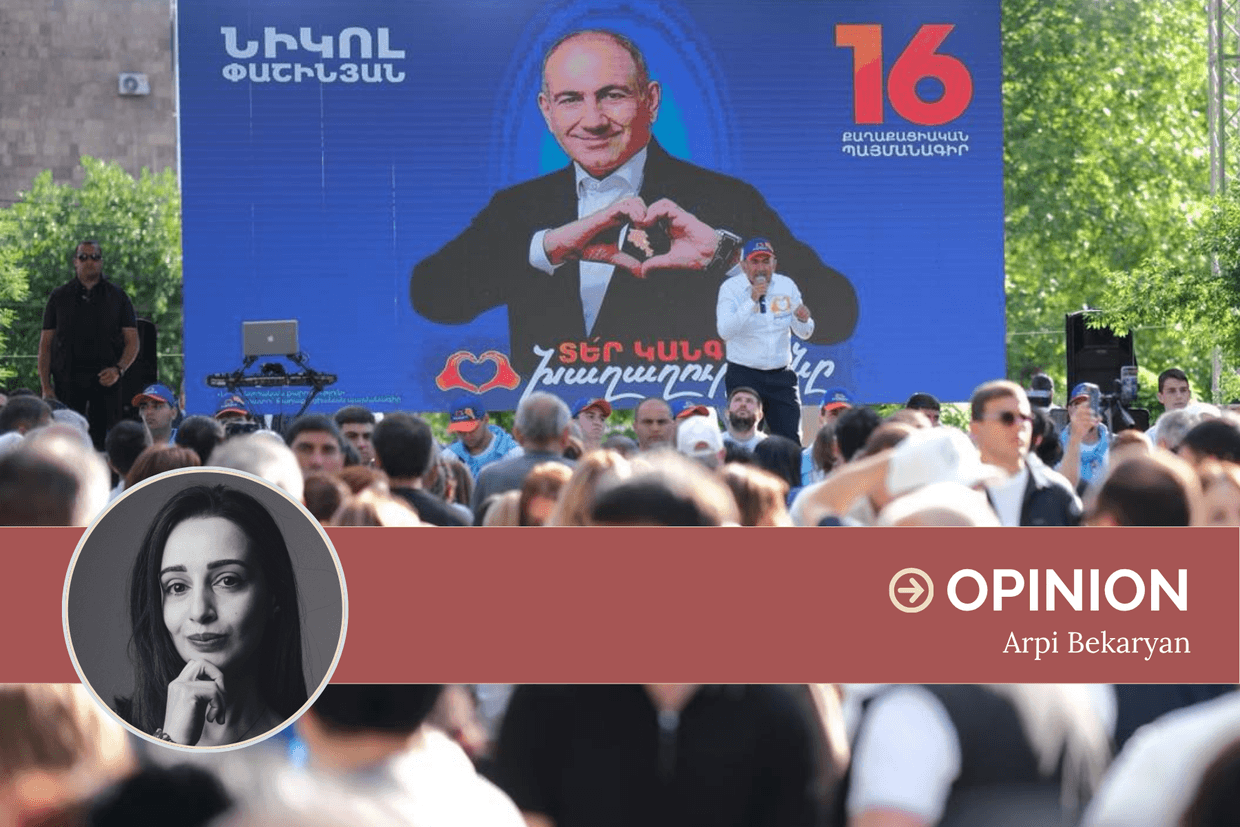
In rough terms, both Pashinyan and Azerbaijani pro-government media have portrayed the upcoming parliamentary elections as a referendum on war or peace. In particular, Pashinyan has declared himself the candidate of peace, looking forward to the future with the promise of a long-awaited treaty with Azerbaijan actually being signed, while casting the opposition as revanchist forces that will draw Armenia back into war.
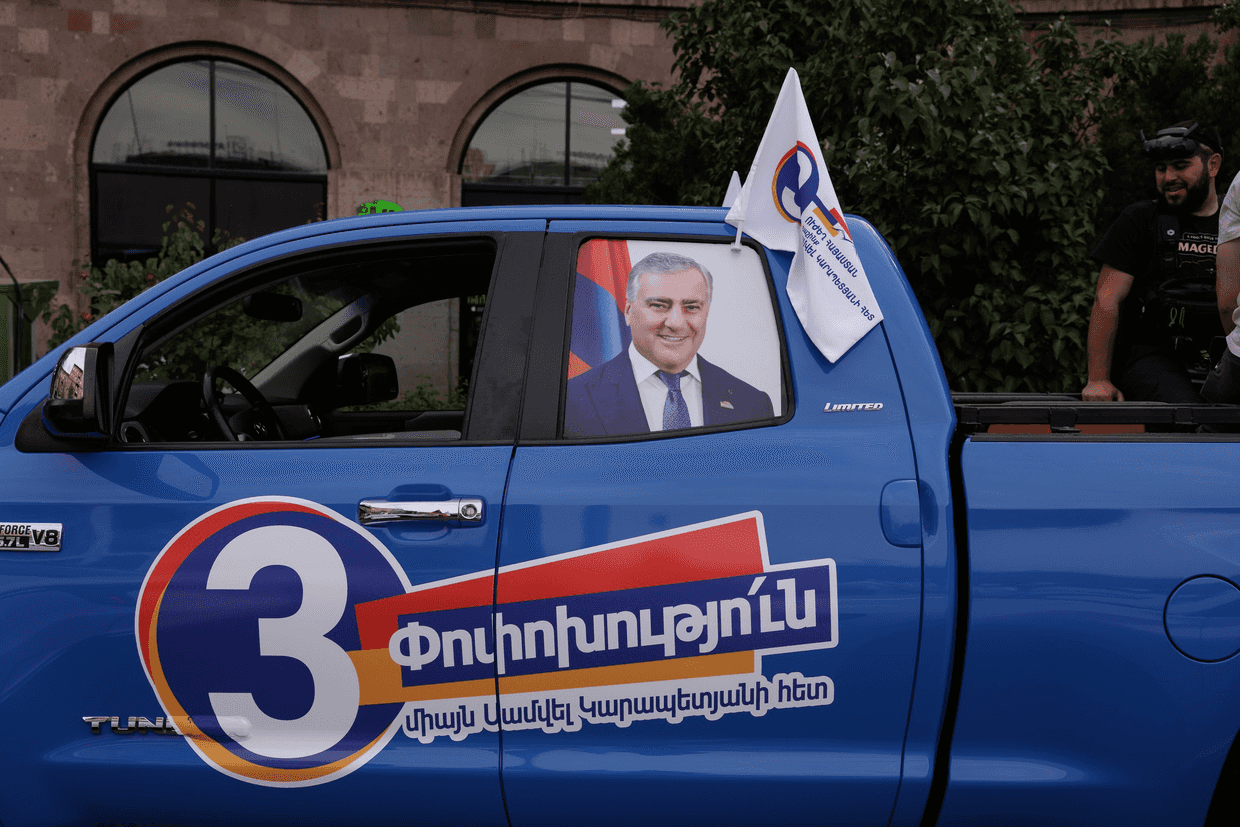
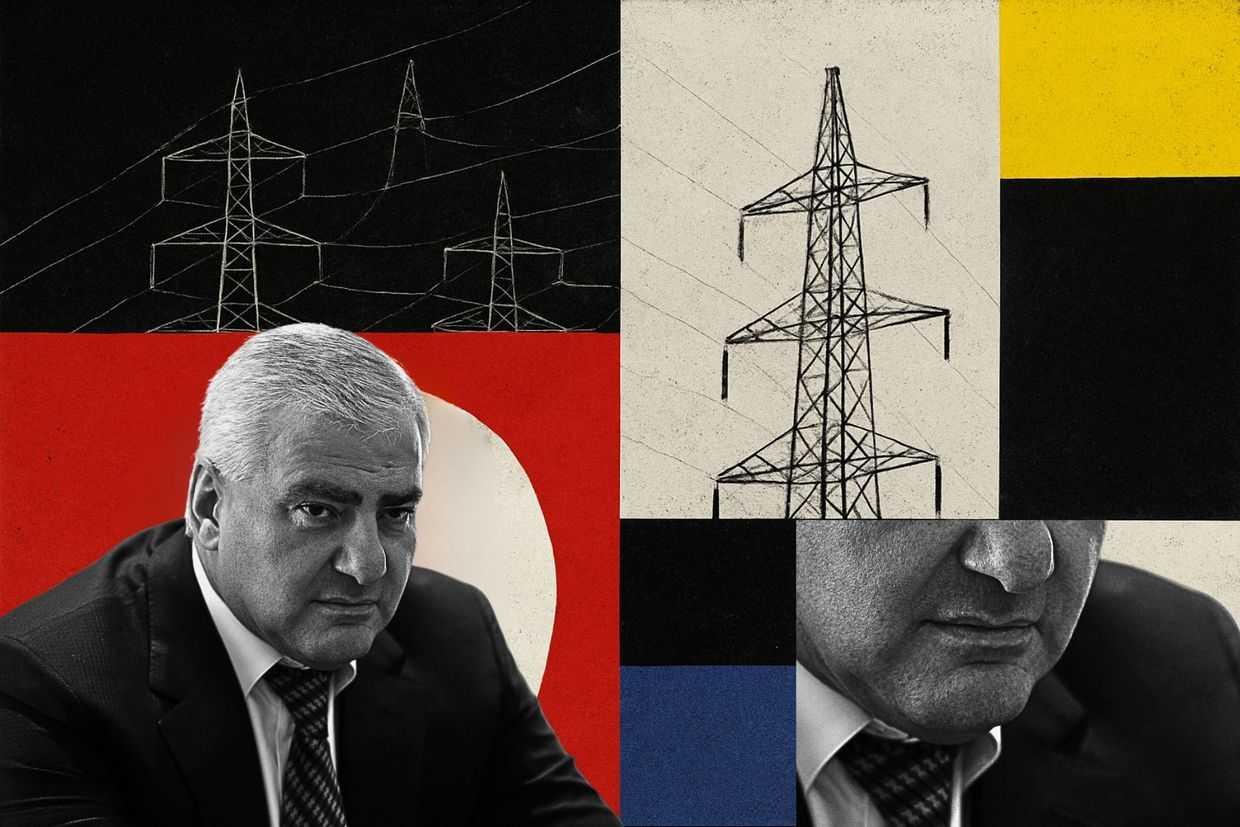
The three main opposition figures — former President Robert Kocharyan, oligarch Gagik Tsarukyan, and detained Russian–Armenian tycoon Samvel Karapetyan — form what Pashinyan has deemed the ‘three-headed war party’, a narrative that Azerbaijani media has echoed.
 Arshaluys Barseghyan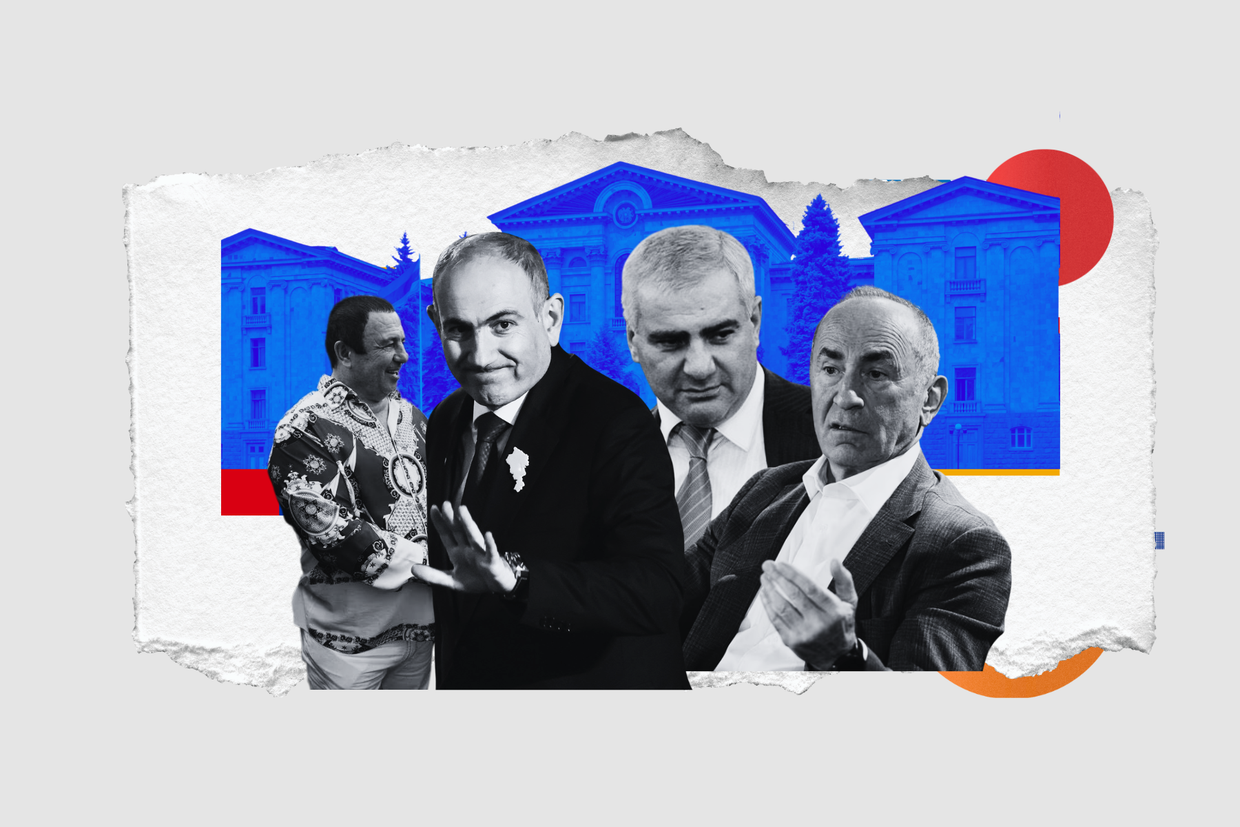
Even Azerbaijani President Ilham Aliyev has used similar language, including in a recent speech on 10 May during which he alleged that ‘within Armenia’s political sphere there are still circles driven by hatred toward the Azerbaijani people and state’.
‘If they come to power, it is the Armenian people who will suffer’, Aliyev added.
For their part, while all three main opposition figures have criticised Pashinyan’s handling of the peace process, none have openly called for using military force to retake Nagorno-Karabakh.
Nonetheless, Kocharyan, who served as the leader of Nagorno-Karabakh in the 1990s, is one of the primary focuses of ire from Azerbaijani media, which views him as one of the ideological backbones of the Karabakh movement. Indeed, Azerbaijan media has repeatedly cast him as an extremist who is engaged in a ‘toothless attempt at revanchism’.
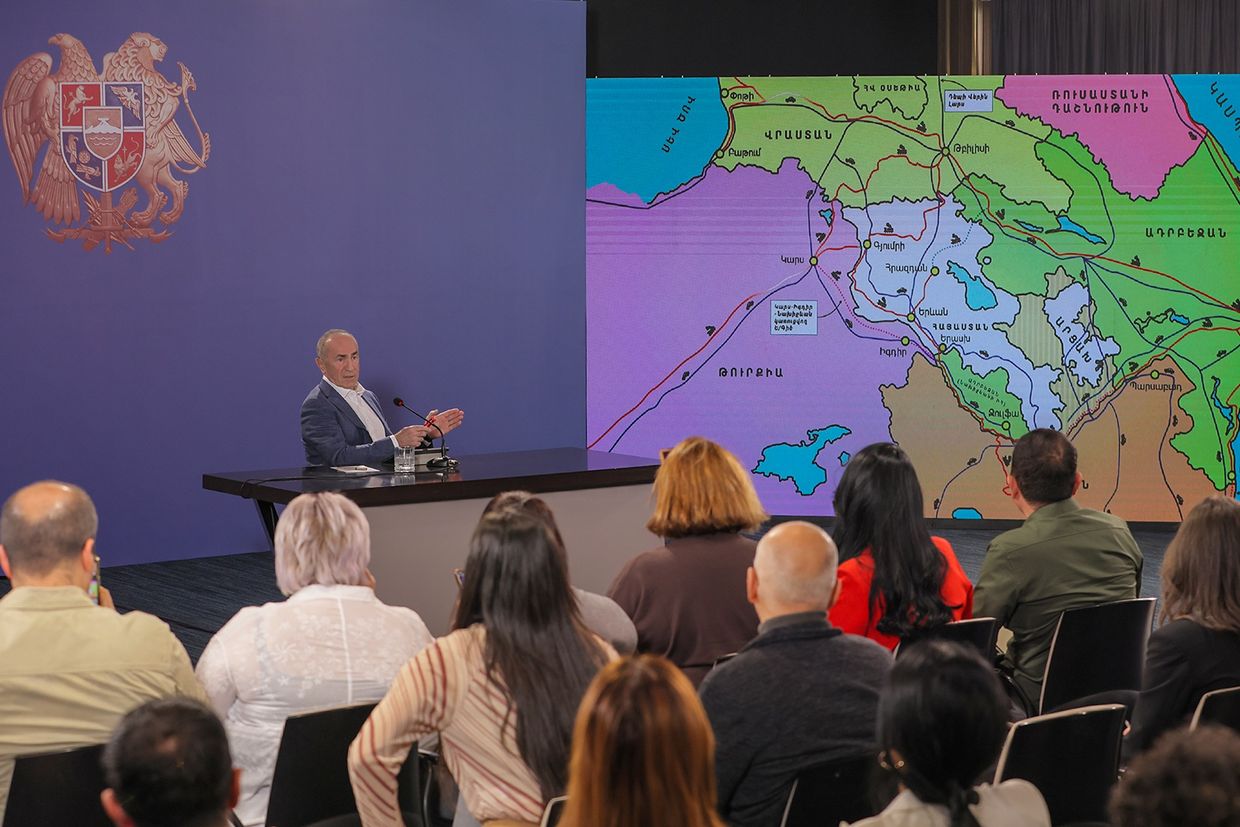
Other articles in the stridently pro-government outlet Caliber, one of the most active (and vitriolic) commentators on foreign policy and Armenia, emphasise Kocharyan’s close ties with Russia and Kremlin propagandists such as Vladimir Solovyov.
Solovyov has become an effective persona non-grata in Azerbaijan amidst the breakdown in ties between Moscow and Baku.
Not all of the attacks on Kocharyan have focused solely on his connections to the conflict over Nagorno-Karabakh, however.
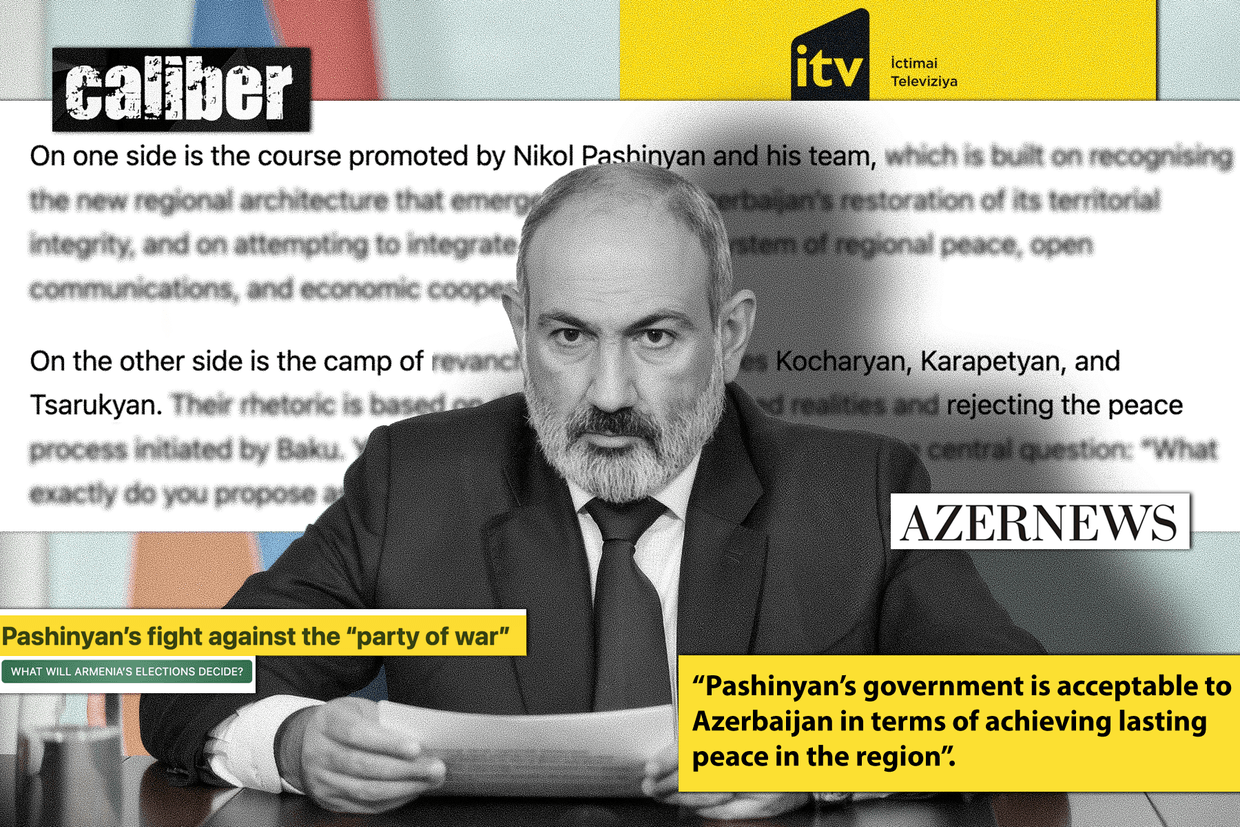
In one ‘analytical’ Caliber article entitled ‘Pashinyan’s fight against the “party of war” ’, unsurprisingly focusing on echoing Pashinyan’s narratives about the opposition, there were also appeals to Armenian voters that had nothing to do with threats of war.
‘The opposition is further weakened by the fact that a significant portion of Armenia’s population vividly remembers the dark times when the country was led by Robert Kocharyan and Serzh Sargsyan — both now fervently seeking power. That period was marked by a relentless economic crisis, total dependence on external patrons, rampant corruption, and unbridled abuse of authority’.
Similar articles critical of Karapetyan no longer focus solely on either past conflicts or the perceived threat the opposition poses for future fighting, but instead read almost as if they could be found in a pro-Pashinyan Armenian media outlet.
A piece in Caliber in March ostensibly centred around allegations that Karapetyan’s My Way party was operating a social media bot factory instead stooped to personal, sophomoric attacks on Karapetyan’s nephew Narek, who is effectively managing his uncle’s campaign. In addition to calling him ‘pampered’, the article took a pot-shot at Narek Karapetyan’s weight, describing him as a ‘well-fed man’.

Tsarukyan, arguably the least likely among the three to find success at the ballot box, was described by Caliber as a ‘clown in [an] Armenian political circus’. Most other reporting by Caliber on Tsarukyan has focused on his run-ins with the law.
Careful praise for Pashinyan
Name-calling, insults, and characterisation of Armenian politicians by Caliber and other Azerbaijani media outlets is nothing new, of course.
Indeed, much of the country’s entire media ecosystem has long been focused on not just demonising Armenia, but also pushing pseudo-history that claims Armenians are actually from India, among other fantastical theories.
Against this backdrop, seeing these same media outlets slowly increase their open support and praise for Pashinyan can be a jarring experience.
It has not always been this way.
Pashinyan’s rise to power after the 2018 Velvet Revolution was greeted by some in Azerbaijan, particularly in the country’s opposition, with careful optimism.
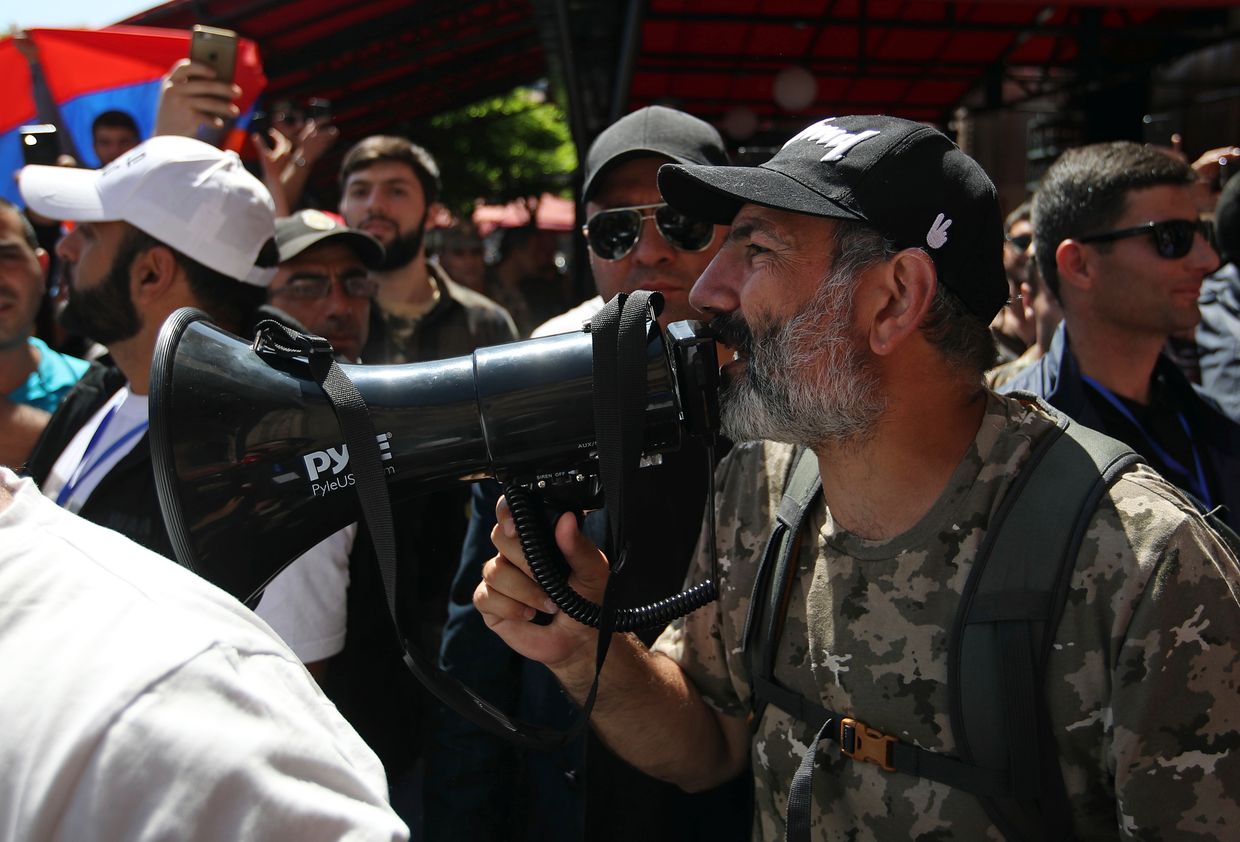
For the most part, however, Pashinyan has been subject to the same type of attacks in Azerbaijani media previous leaders had received. After his election, a number of media outlets claimed there was foul play, that Pashinyan would become a dictator, and other criticisms. The full-throated attacks continued for the first few years of his tenure in office — an article in Trend following the Second Nagorno-Karabakh War in 2020 cited an Armenian cleric who called Pashinyan ‘mentally ill’ and said he was ‘leading Armenia to death’.
However, the coverage of Pashinyan shifted alongside Armenia’s defeat in the war in 2020, the surrender of Nagorno-Karabakh in 2023, and subsequent progress towards peace that has occurred in the following years.
‘At the moment, a Pashinyan victory is more beneficial for the region, for Azerbaijan, and for Armenia as a whole, and the Azerbaijani leadership understands this well’, says Jamil Hasanli, chair of the National Council of Democratic Forces, an opposition coalition.
‘That's why anti-Armenian rhetoric in government media has decreased today’, he says. ‘The government orders the media to do what suits it, and they carry out these orders’.
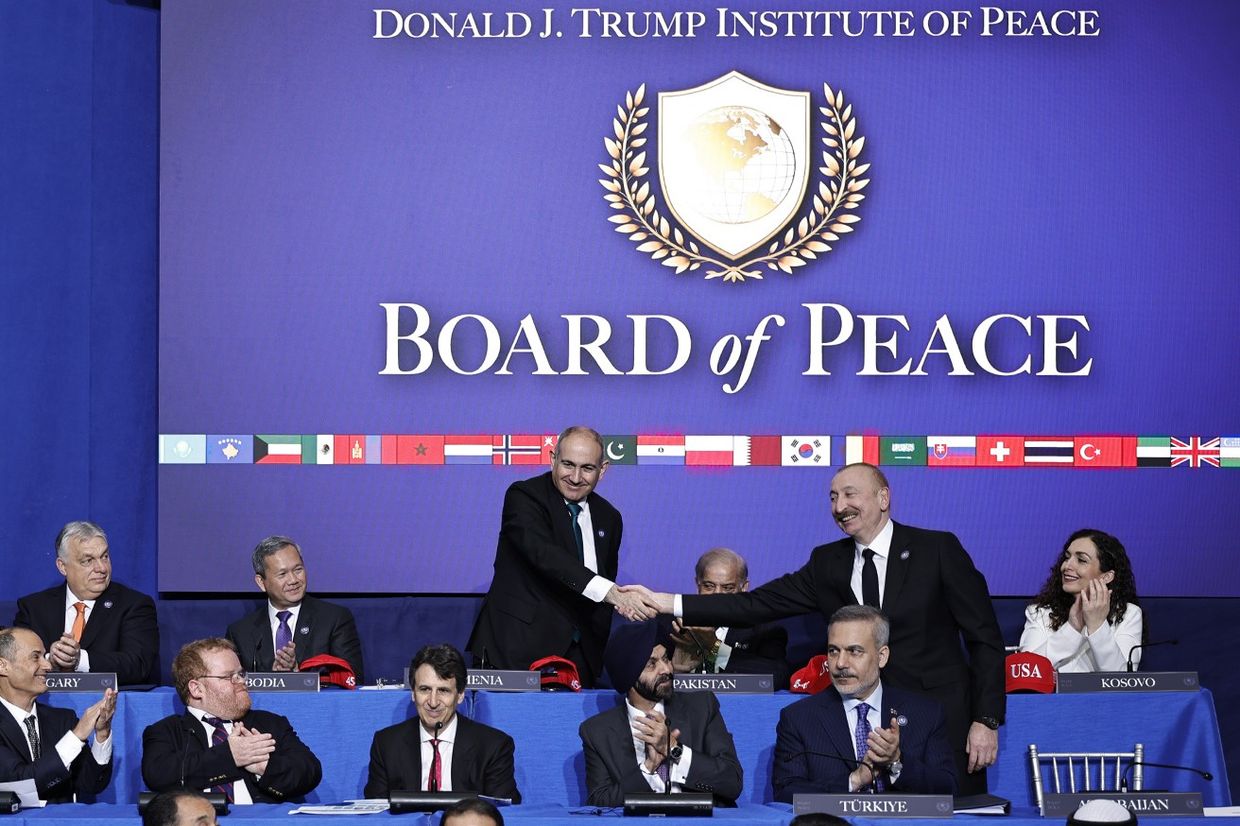
Indeed, in the leadup to the election, coverage of Pashinyan in Caliber and other media outlets is typically favourable, if not openly laudatory — a trend that is present in both articles produced by Caliber writers as well as external experts and respondents cited.
Azerbaijan’s public broadcaster has also openly supported Pashinyan’s election campaign, stating that ‘Pashinyan’s government is acceptable to Azerbaijan in terms of achieving lasting peace in the region’. Similarly, the state-run television channel AzTV has provided constant monitoring of Pashinyan’s campaign, translating all of his official statements into Azerbaijani.
In general, the narrative often promoted echoes that of Pashinyan’s own campaign strategy, that the election is existential, and that Pashinyan is the only one who can lead Armenia to victory.
An article in Caliber on 13 April described Pashinyan’s campaign strategy as being aimed at ‘recognising the new regional architecture that emerged following Azerbaijan’s restoration of its territorial integrity, and on attempting to integrate Armenia into a system of regional peace, open communications, and economic cooperation’.

In contrast, the opposition figures of Kocharyan, Tsarukyan, and Karapetyan were characterised not just as ‘revanchists’, but as figures who have avoided ‘providing a direct answer to the central question: “What exactly do you propose as an alternative?” ’.
Later on in the article, the black-and-white dichotomy is made even more clear:
‘For a significant portion of society, the choice appears to be between an imperfect but understandable strategy of peace and an uncertain, potentially dangerous course of revanchism. The prime minister and his team articulate the risks of returning to a confrontational policy fairly clearly and, importantly, speak to society in the language of reality rather than illusions’.
Azerbaijani historian Altay Goyushov, who currently lives in exile in France, told OC Media that Pashinyan’s re-election would be beneficial to Azerbaijan because ‘he rejects military rhetoric, renounces revenge, and also declares an interest in establishing relations with Azerbaijan and Turkey’.
He stressed that the issue of rapprochement with the EU would be very beneficial to Aliyev, since he is trying to restore relations.
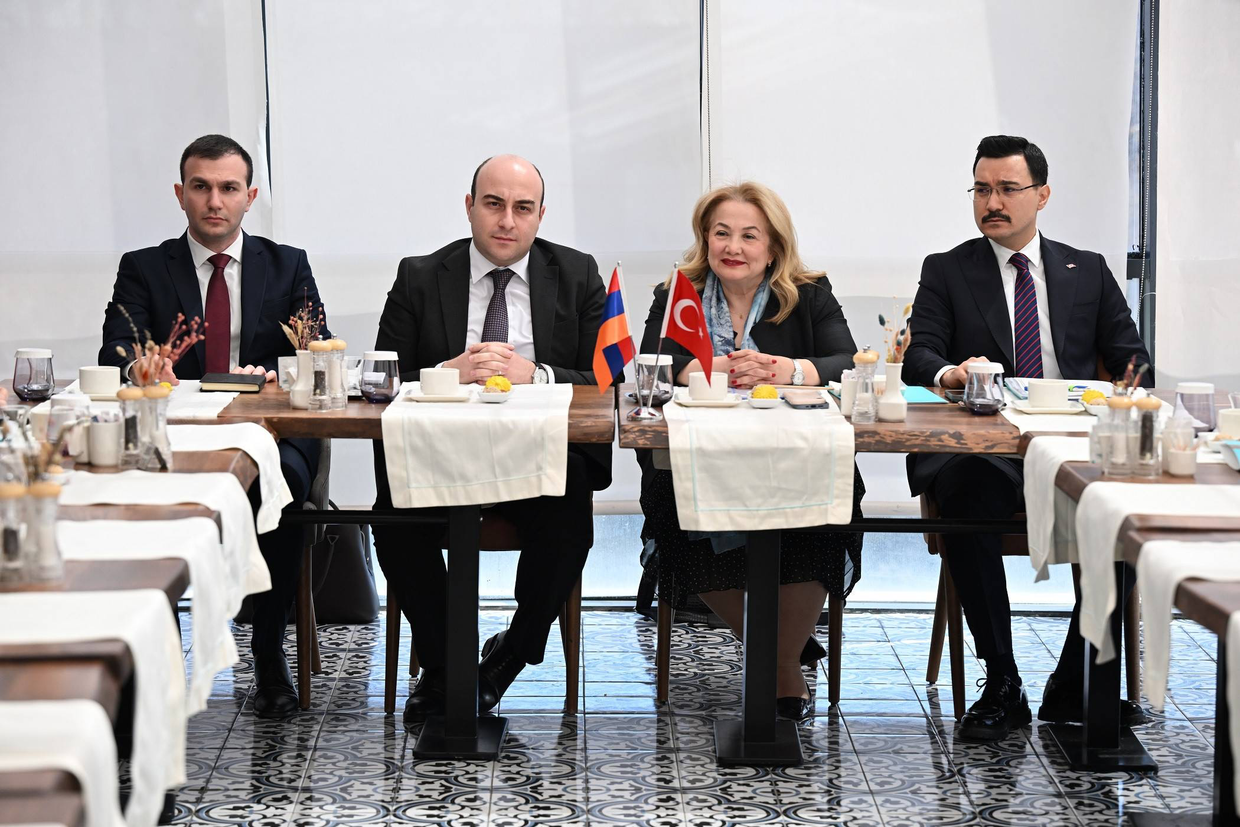
At the same time, Goyushov emphasised that Aliyev did not want forces close to Russia — as most of Armenia’s opposition has been linked to — to come to power in Armenia, likely reflecting the tense relations Baku and Moscow hold currently.
Yet, the underlying narratives remain the same
Critics often co-opted Azerbaijan’s apparent preference of Pashinyan and his Civil Contract party, regularly accusing the prime minister of being in Baku’s pocket. Yet, these current trends do not mean Azerbaijani attacks against him, his associates, or the overall antagonism directed towards Armenia has ended.
‘For example, on social media, even on television, the rhetoric of “Western Azerbaijan” hasn’t weakened at all. It’s intensifying’, historian Altay Goyushov tells OC Media. Western Azerbaijan is a term used by some Azerbaijanis to describe some or all of Armenia.
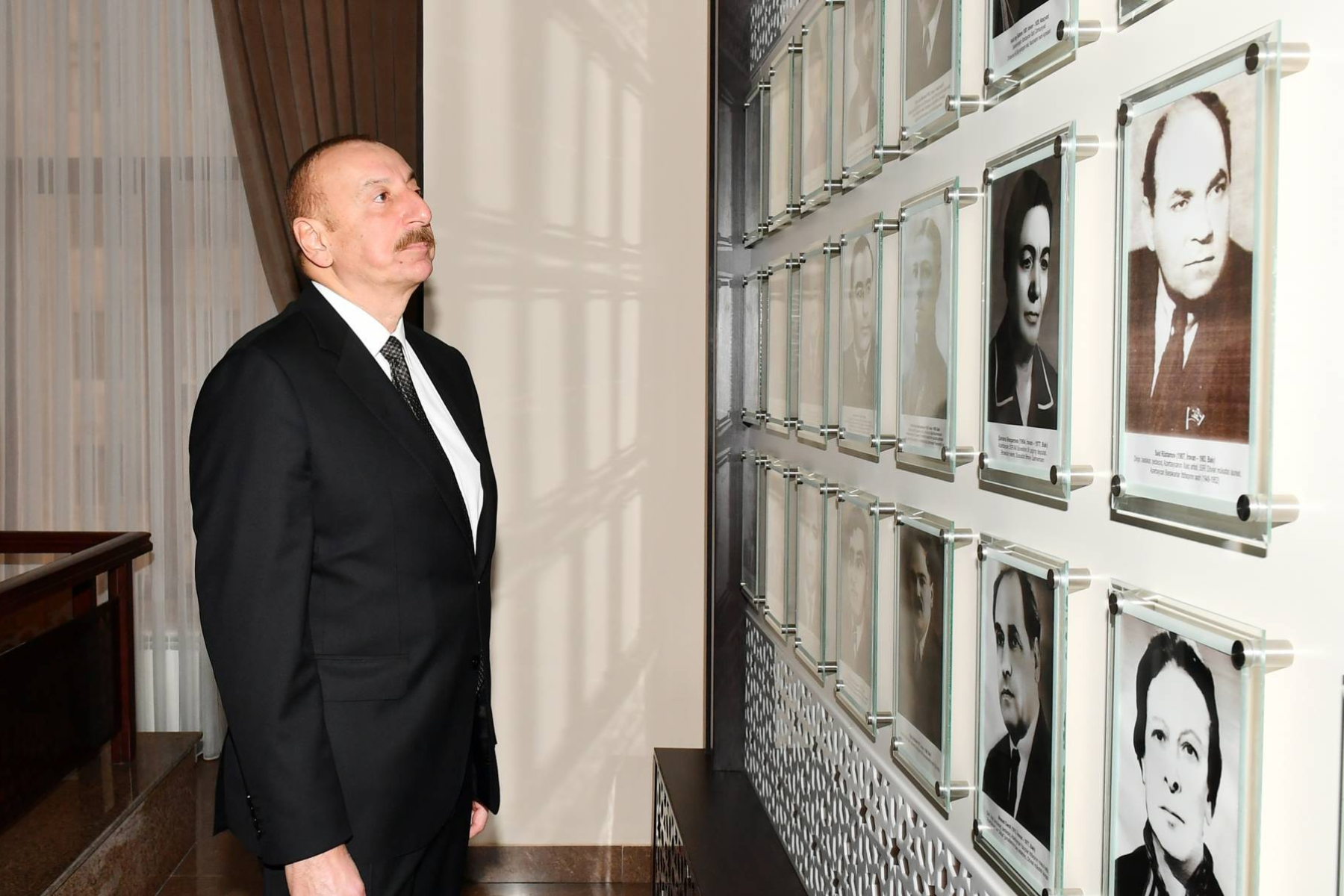
Other rhetorical broadsides appear aimed at framing specific members of Pashinyan’s coterie as being extremist or revanchist, while others attempt to display the divisions on issues involving history and policy toward Azerbaijan within the government.
At times, there can be a jumbled mix of several of these elements within the same article, such as a piece in Caliber on 11 April that criticised the Armenian Foreign Ministry’s use of the Armenian toponym Maraga (Maragha) in a commemorative post about an Azerbaijani massacre of Armenian civilians during the First Nagorno-Karabakh War.
‘The peace agenda is declared at the level of Prime Minister Pashinyan, while the conflict-driven narrative is implemented at the level of the diplomatic apparatus, as if the left hand does not know what the right hand is doing. Or, more likely, it knows perfectly well’, the article read, arguing that ‘Armenian policy suffers from a severe form of institutional schizophrenia, in which official statements by one branch of government completely negate the efforts undertaken under the auspices of another’.
Elsewhere, even state-run outlets like Azertac continue to directly attack Pashinyan. In an interview the outlet published in December 2025 with political analyst Sahil Karimli, the analyst accused Pashinyan’s government of being a ‘dictatorship’ and carrying out human rights violations.
Karimli conceded ‘radical and occupation-minded forces in Armenia have become more active, attempting to create tension in the peace treaty process with Azerbaijan’, but argued it was no justification for increased ‘repression’.
Pashinyan’s feud with the Armenian Apostolic Church has also been criticised in Azerbaijani media — even as the same outlets describe the Church as a bastion of revanchism and pro-Russian sentiment.

Any comment or policy suggestions made by Pashinyan or his associates can garner condemnation in Azerbaijani media, as can the failure of the government to actively undertake measures that align completely with Baku’s preferences.
The issue of changing Armenia’s Constitution, which Azerbaijan says contains territorial claims and must be altered as a precondition for the signing of any peace treaty, is one such example. Pashinyan has pushed for the constitution to be changed, but rather than changing it unilaterally, he said it should be connected to a national referendum.
Although the end goals appear aligned, the process is not close enough to what Azerbaijan wants, creating a space for further criticism.
Caliber and other media outlets have published articles questioning Pashinyan’s sincerity about the constitution issue and suggesting that he is attempting to pass the buck on the difficult decision on to Armenian society.
Beyond the direct comments, Azerbaijani media has also continued to spread disinformation about Pashinyan and the Civil Contract party, Armenian fact-checkers have found.
Beyond Azerbaijan’s pro-government media, the Azerbaijani government itself has taken steps that could hinder Pashinyan in the elections.
Several former Nagorno-Karabakh officials detained in Azerbaijan have issued audio messages criticising Armenia’s government, and sending anti-Pashinyan remarks. Given the strict control exercised by Azerbaijani authorities over detainees and the absence of international monitoring in court, the frequency of such audio-messages in the pre-election period appears deliberate.
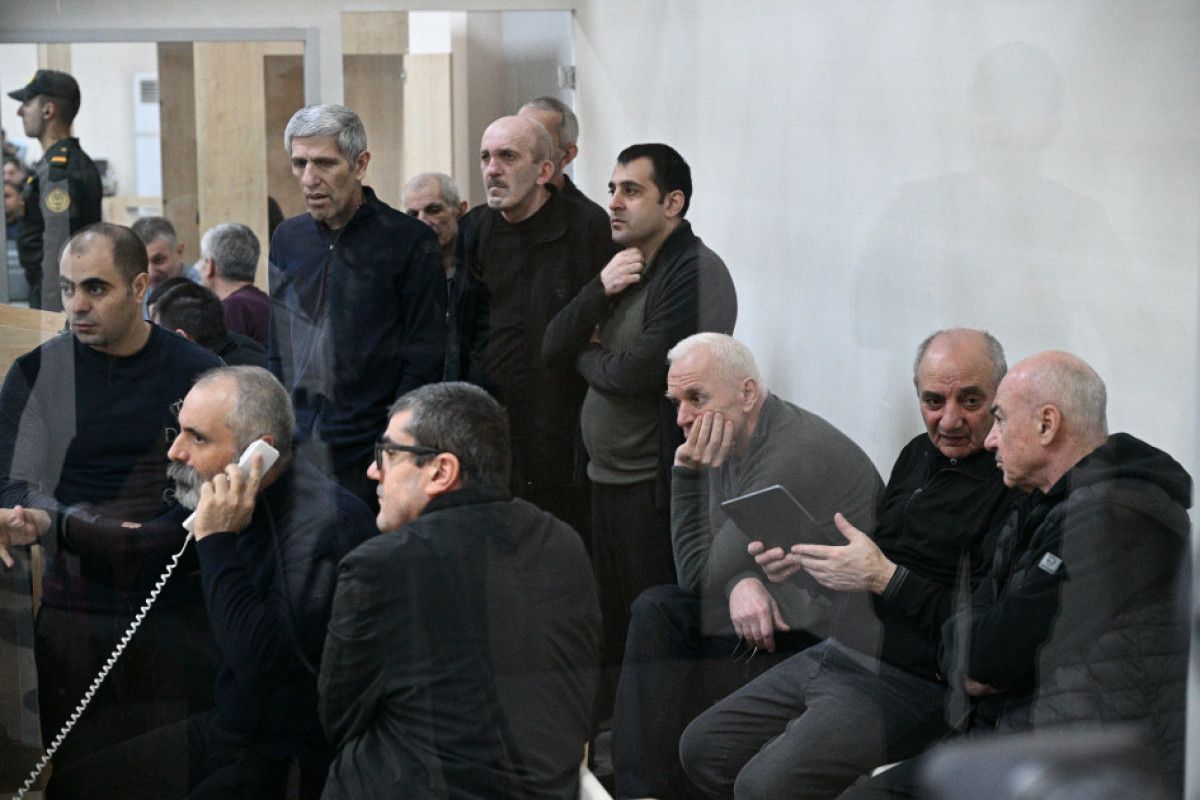
For example, in former State Minister and Russian-Armenian tycoon Ruben Vardanyan’s latest address, published on 25 May, Vardanyan launched his strongest criticism yet of Pashinyan, calling him ‘a liar, a fantasist, and a plagiarist’, after reading a copy of a book authored by Pashinyan.
Commenting on the elections, he said that the war was not over, but continued ‘in other forms’.
‘We are in great danger. If we do not change our conduct, neither Russia nor the European Union awaits us. What awaits us is becoming a Turkish [province]’, Vardanyan said.
Two days after Vardanyan’s message, former Nagorno-Karabakh Parliamentary Speaker Davit Ishkhanyan shared what appears to be a second audio message, in which he claimed that the length of their detention in Azerbaijan was up to the will of the Armenian authorities.
These messages, which could only have been shared with the permission of the Azerbaijani authorities, appear to go against the rhetoric shared more broadly within Azerbaijani media in support of Pashinyan.
‘The main problem here is that I don’t believe Ilham Aliyev wants peace’, Goyushov argues.
‘That is, I don’t believe he wants peace of his own free will. Therefore, I don’t believe the nationalist spirit and sentiment in the country, the issue of Western Azerbaijan, Zangezur — all of these are very important issues for Ilham Aliyev to exploit and retain power’, he concludes.