Opinion | Does the concept of ‘peace’ change when the government monopolises the discourse?
What happens when words such as ‘peace’ and ‘peacebuilder’ become politically instrumentalised in Armenian discourse?


A few months ago, I accidentally met with an acquaintance of mine who, during our short conversation, asked me with a suspicious smile: ‘So, do you still believe in peace?’.
I felt like a child who had become caught up in a lie she hadn’t told. I had no easy response to this question. I don’t even clearly remember how I answered, except that my last sentence concluded with, ‘yet, we need to do something’.
Later that day, and for several months afterwards, I kept thinking: Is peace something abstract, like God or a higher power, something we should simply believe in, or is it something people have to constantly fight and hope for? Do we need to believe that a better world is possible in order to work for it? When I say I believe in women’s equal rights, is that truly a belief, or is it an ongoing struggle that I, and probably the generations after me, will still have to fight for?
As these thoughts emerged, I realised it had not been the first time I had heard similar queries, though this was the final straw that triggered something in me.
Over the last three years, ever since the blockade of Nagorno-Karabakh followed by the mass exodus, many people have asked me the same question, one that I myself did not have an answer to.
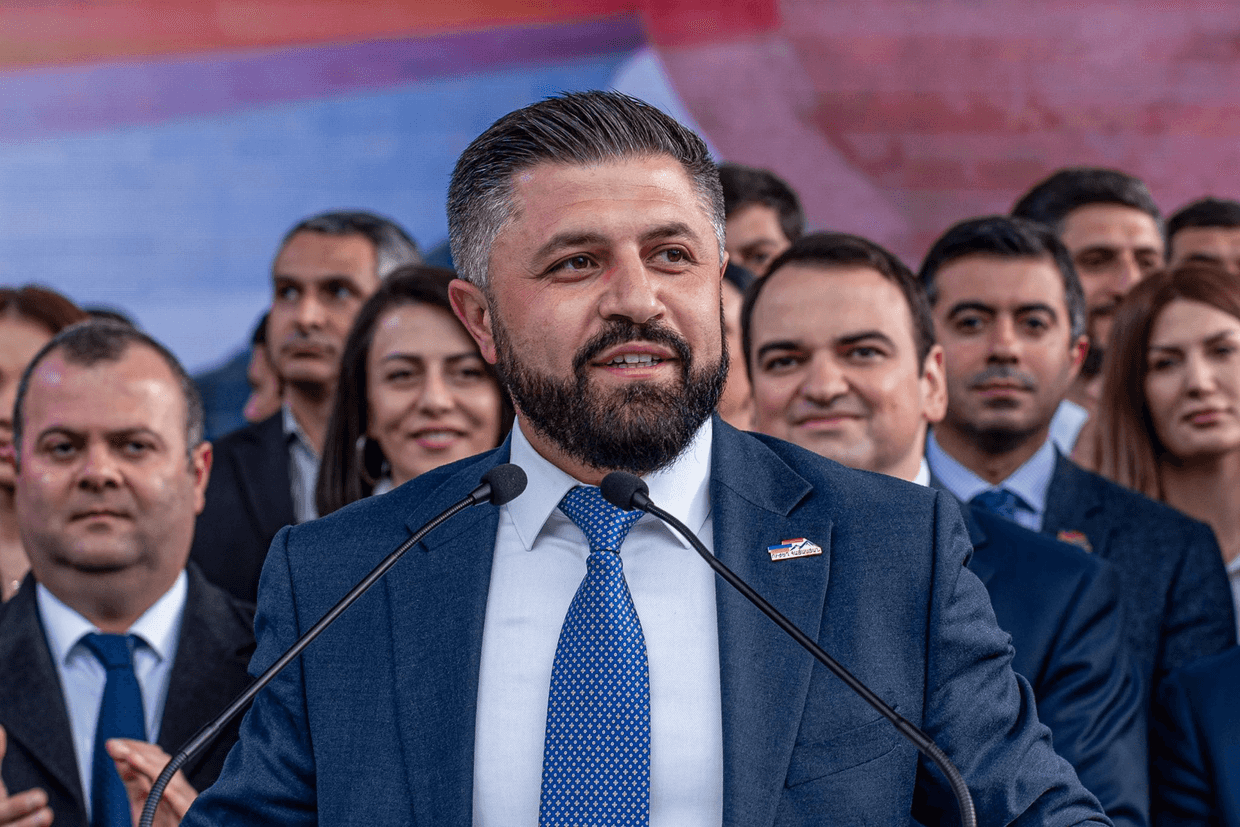
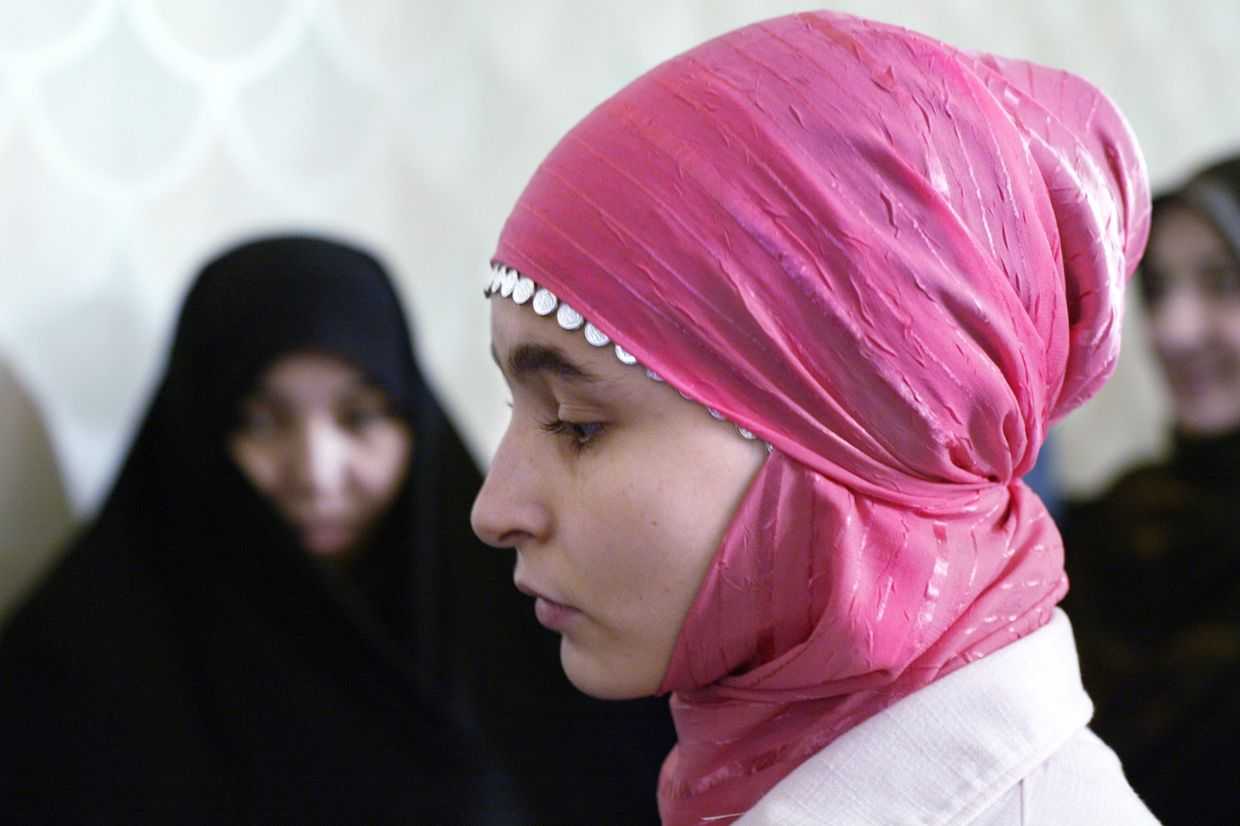
 Arshaluys Barseghyan
I understand why this question comes up for many people. In the past two or three years, the word ‘peace’ and the discourse around it has become a trigger for many, closely associated with the political branding of Armenia’s ruling Civil Contract party. As a result, to speak about peace often requires justification and explanation that you are speaking from outside that framing. One has to constantly explain what one means, what one believes in, and how it differs from the language and narratives used by political actors who have appropriated the term.
Of course ‘peace’ is not misused or overused only by politicians in Armenia. In these difficult times across the world, the word is widely used, reshaped, and instrumentalised by many political leaders globally.
We live in times when we watch the genocide of Palestinians online, Russia’s ongoing full-scale war against Ukraine, the brutality of the Iranian regime toward its citizens, and then the US–Israel attacks on Iran, the genocide in Sudan and in Congo — the list feels endless and continues to grow. Can we really ‘believe in peace’ in such times? I am not sure, but I do believe the world is in a deep state of unrest, and that we cannot simply watch it unfold while staying in a passive, standby position, letting political leaders change our understandings and perceptions of ‘peace’.
The collapse of beliefs
I did have hopes in 2019 and in the beginning of 2020, regionally speaking. But then my world collapsed, several times: there was July 2020, with the Second Nagorno-Karabakh War; the 2022 attacks on Armenia, then the blockade of Nagorno-Karabakh; the war of 2023 and the exodus of Nagorno-Karabakh Armenians; and many incidents in between and after.
Dozens of times I wanted to leave the field, to do something entirely different. To not to have this feeling of hitting the same wall over and over again; not to feel hopelessness, or depression.
Starting from the Second Nagorno-Karabakh War, the general populace began viewing those working in peacebuilding as naive idealists, people looking at the world through rose-coloured glasses.
Yet in reality, the peacebuilders in our region were some of the most depressed and emotionally exhausted people during these years. Talking about peace doesn’t mean you believe in fairytales — it means falling apart with every new escalation. It means feeling responsible for not having done enough with every new incident at the border. It means feeling hopeless when your work seems to serve no purpose. And yet, somehow, continuing anyway, driven by a force that tells you that if this work is not being done, it will leave behind a void, one that will be filled with hatred, with inter- and intra-communal hostility, or with the desperation and loneliness of people who feel as isolated as you do.
The collapse of self-definition
Yet, at the same time, the word ‘peacebuilder’ has never sat well with me. The term feels too declarative compared to what reconciliation actually is: a fragile, exhausting, contradictory, emotionally devastating process.
I have never fully been able to consider myself one because I always come back to the same question: who is a peacebuilder, and how is someone defined as one? The term feels vague, but also very large, almost too ambitious. Does someone become a ‘peacebuilder’ simply by talking about peace, or even shouting about it? Does someone who works on inter- or intra-communal dialogue automatically become someone who ‘builds’ peace? And how exactly is peace built?
I don’t have answers to these questions, even after six to seven years in the field, studying conflict transformation and conflict management, reading extensively on peacebuilding, and at times being guided by my own role models. Still, the word has always felt too big. And I suspect it does not only feel that way for me, but for many people who speak about peace and who have been among its most consistent advocates. There is a certain contradiction in the term, something oversized, even slightly pathetic, and many people in the field, who often carry relatively modest egos, may not fully identify with a label that suggests they are ‘building peace’.
I used to resonate more with the word ‘peace activist’, as I considered writing, filming, and engaging in conversations with people as forms of activism. But can someone who moves into institutional NGO work, managing programmes, writing donor reports, handling endless administrative tasks, still be called an activist? The more work that is done through an NGO, the more such ‘activism’ begins to fade. Even when there is no prohibition on activism, still, all the reports, administration, and email-writing takes time and energy away from other pursuits.
Therefore, I no longer fully identify as a peace activist either. I find myself saying things like: I am in the field, or I used to be vocal about peace. Yet, there remains a gap, a missing sense of identity for someone who has spent years in this field but has not found the right language for what she is doing, or perhaps for what she fundamentally believes in.
And still, regardless of what we are called or what we are comfortable calling ourselves, I feel deep discomfort when I observe how state actors and political powers take the language of peacebuilders and peace activists, yet with a completely different intonation, monopolising an ideology that they didn’t carry to begin with, and completely shifting the meaning and the tone of peacebuilding.
The collapse of moral language
I have been engaged in the field of peacebuilding since 2019, though I had some relevant beliefs and ideas even before, since 2017, when I first met Azerbaijanis and began to reflect on the four-day war of 2016. Later, I went to study at the Georgian Institute of Public Affairs (GIPA), where I had my first constructed dialogue, or rather an attempt at it, with my Azerbaijani groupmates.
That experience affected me greatly. I began to dig deeper into the conflict, to understand what I did not know, what had been hidden from us as a society, what types of propaganda I had carried from school and from the media. I began to actively talk about peace, about the conflict, and about the other side. I remember that on every post I made on social media about peace, there were people who would show up in the comments telling me, ‘It’s not the time to talk about peace’, trying to shut me down.
Around this same time period, Armenian Prime Minister Nikol Pashinyan visited Shushi (Shusha), declaring that ‘Artsakh [Nagorno-Karabakh] is Armenia’ while insisting that negotiations would begin from his own position. Soon after came the July clashes, followed by the Armenian Defence Minister’s response to Azerbaijani protesters demanding war: ‘New war, new territories’. Just a few months later, in September 2020, the Second Nagorno-Karabakh War began.
During the war, Pashinyan addressed parliament, saying that painful compromises were possible, that Armenia could return the five surrounding regions to Azerbaijan, stop the war, and continue negotiations. But then he posed the question of whether society truly wanted that, or whether it wanted to continue fighting. The response from parliament, both from the ruling party and the opposition, was overwhelming support for the continuation of fighting until the end. And so, the war went on, all under the hashtag #WeWillWin, with calls from Pashinyan for volunteers to join the fighting in Nagorno-Karabakh.
Now it is 2026. The same prime minister who six years earlier rejected compromises, declared ‘Artsakh is Armenia’, and encouraged society to believe in victory rather than stepping back and compromising, partly out of fear of being branded a traitor, has now become the country’s most popular ‘peacebuilder’.
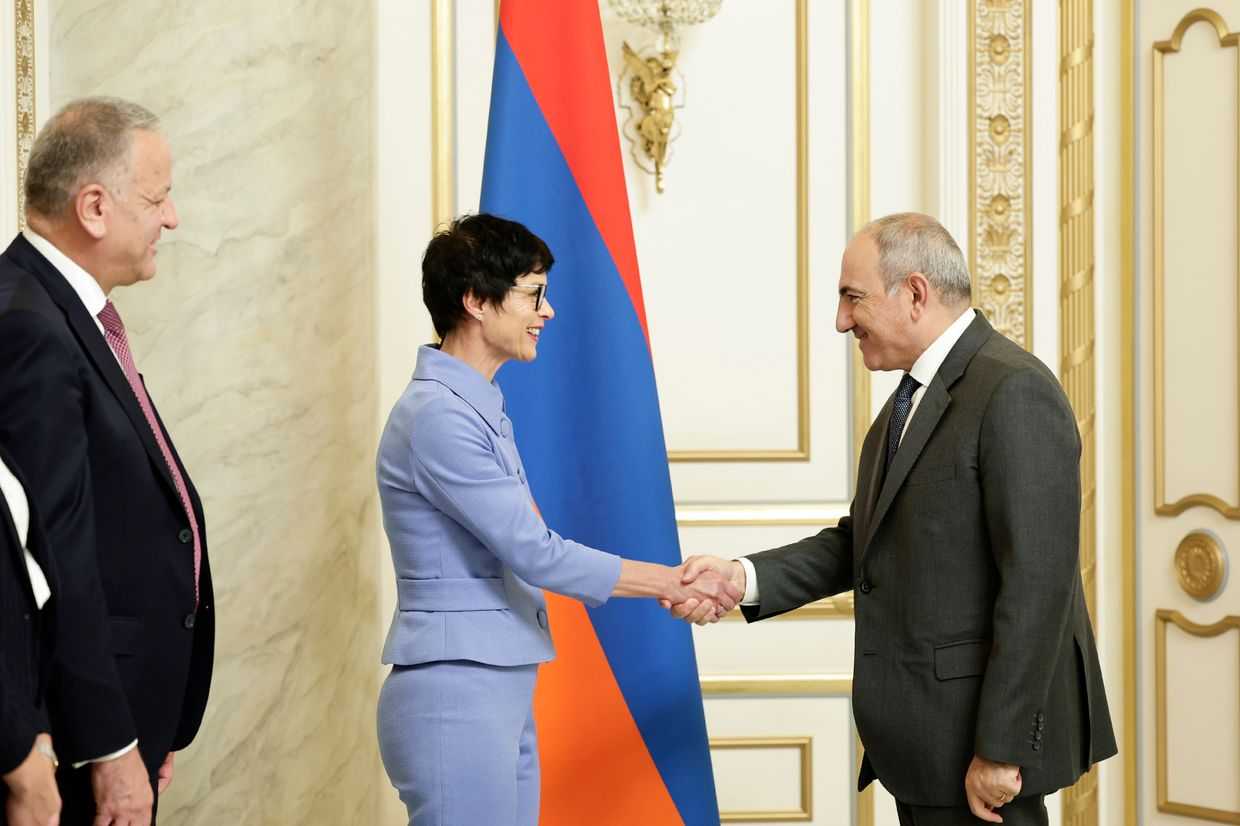
Tigran Grigoryan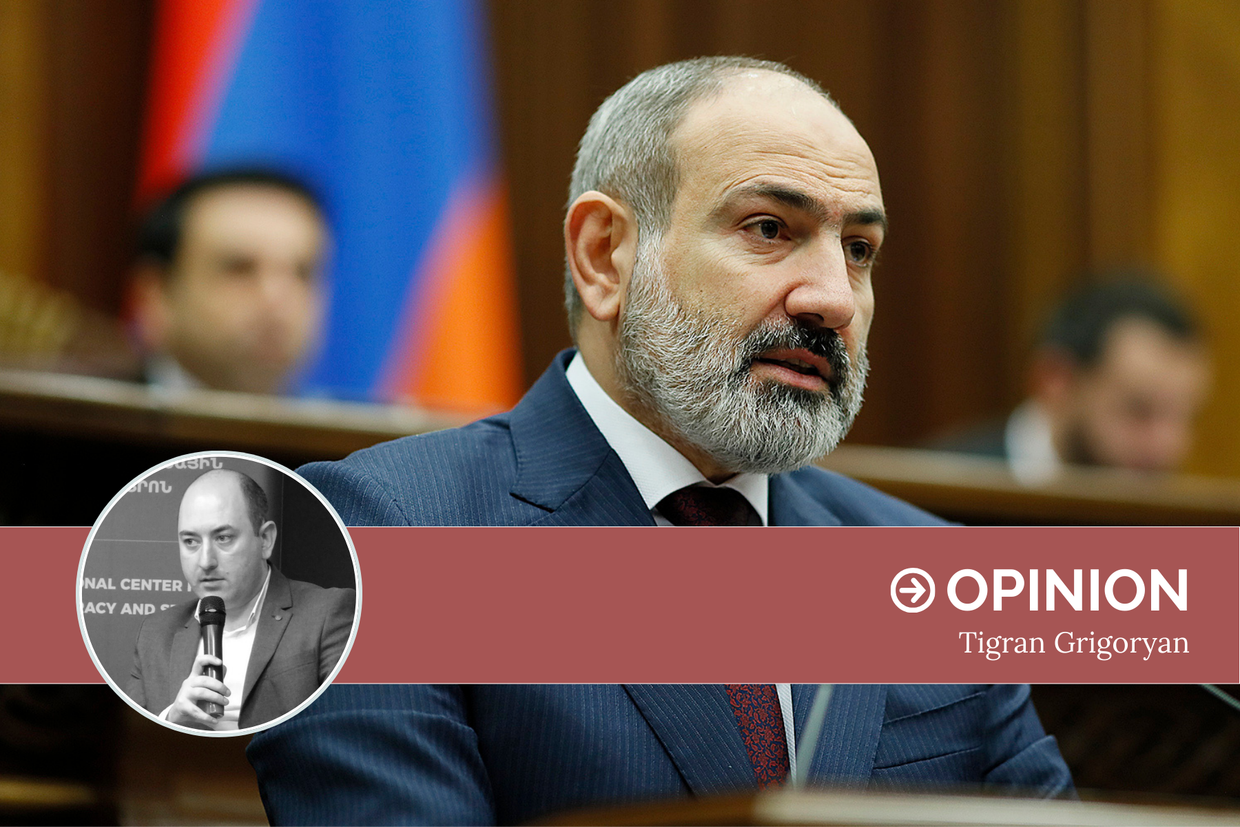
Pashinyan has spent his campaign period sharing Instagram reels featuring heart symbols and slogans like ‘Own the Peace’. Yet, at the same time, he shakes a miniature map of Armenia at those forcibly displaced from Nagorno-Karabakh, accusing them of being run-aways, blaming them for having complaints, for being alive and not dying in the war, for surviving it and living in Armenia.
For decades, Armenian society had no ‘green light’ to speak publicly about peace or compromise. Those who did were often met with criticism, threats, or outright hostility. Today, that has changed. Peace, at least in the form promoted by the government, has become an acceptable and even popular idea. People can openly say they are tired of war and want peace. Yet many of those who now embrace this rhetoric are the same people who once attacked, blamed, or silenced peace activists when such views were unpopular.
The problem is that this new ‘green light for peace’, much like the nationalist rhetoric that preceded it, is still rooted in hatred. The target has simply shifted: from Azerbaijanis to those within Armenian society who continue to carry the weight of loss, of homeland, loved ones, health, and dreams. Because it is easier to hate than to feel the pain of someone else. It is easier to hate than to understand, to have empathy and compassion. As a result, the hostility that was once directed outward is redirected toward displaced and grieving people at home, while being presented under the guise of ‘peace’.
Peace has turned into a form of branding by the ruling party, being sold to the people, while genuine reconciliation, not only with the neighbouring society, but also within our own society, remains ignored. This branding overlooks the past, as well as the grief and trauma people continue to carry. Instead of creating space for dialogue and reflection, this discourse is often imposed aggressively: people are targeted, mocked, silenced, or dismissed when they express pain, anger, or disagreement.
‘Peace’ has become an instrumentalised weapon used to threaten people with its absence in case another party comes to power, and to get ‘permission’ for any behaviour, including hate speech towards displaced people. ‘Peace’ that was not reached because of maximalism and because of war propaganda is now a tool in the hands of the same government.
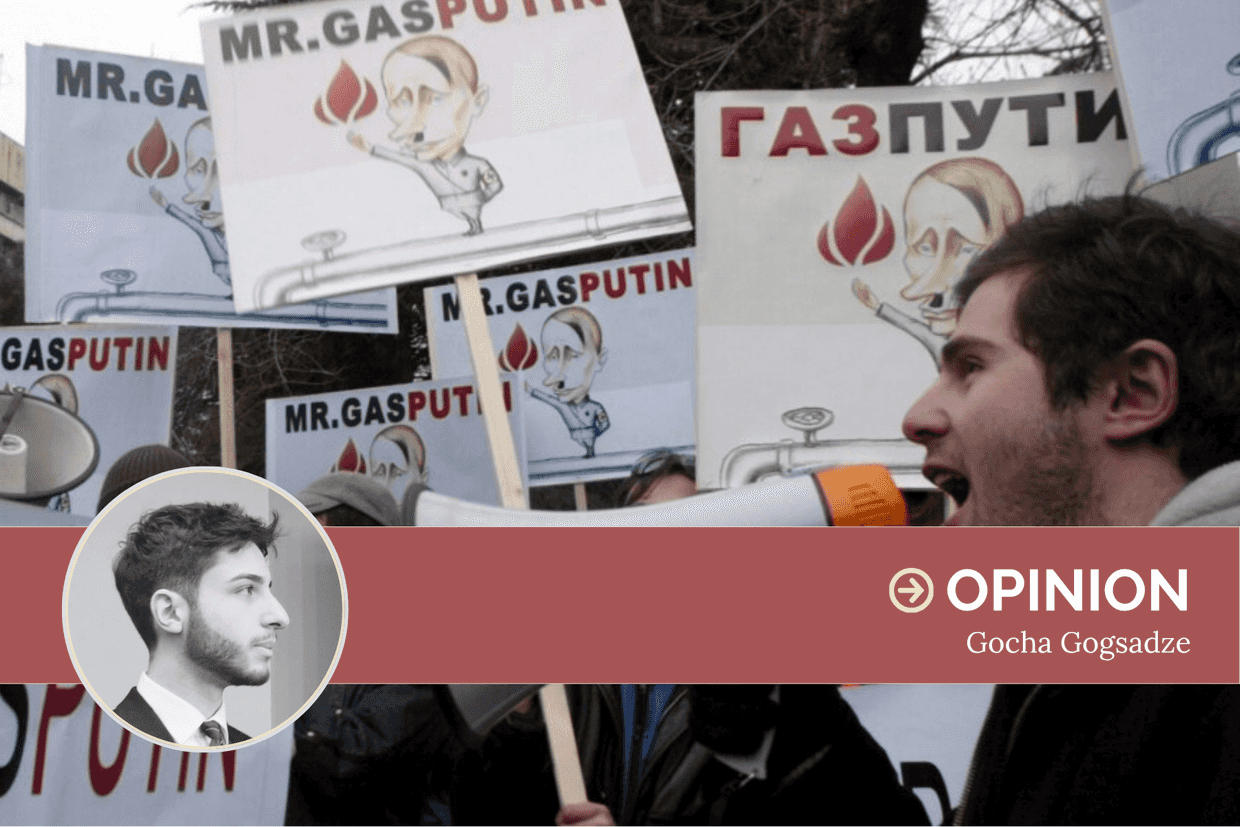
Lilit Gizhlaryan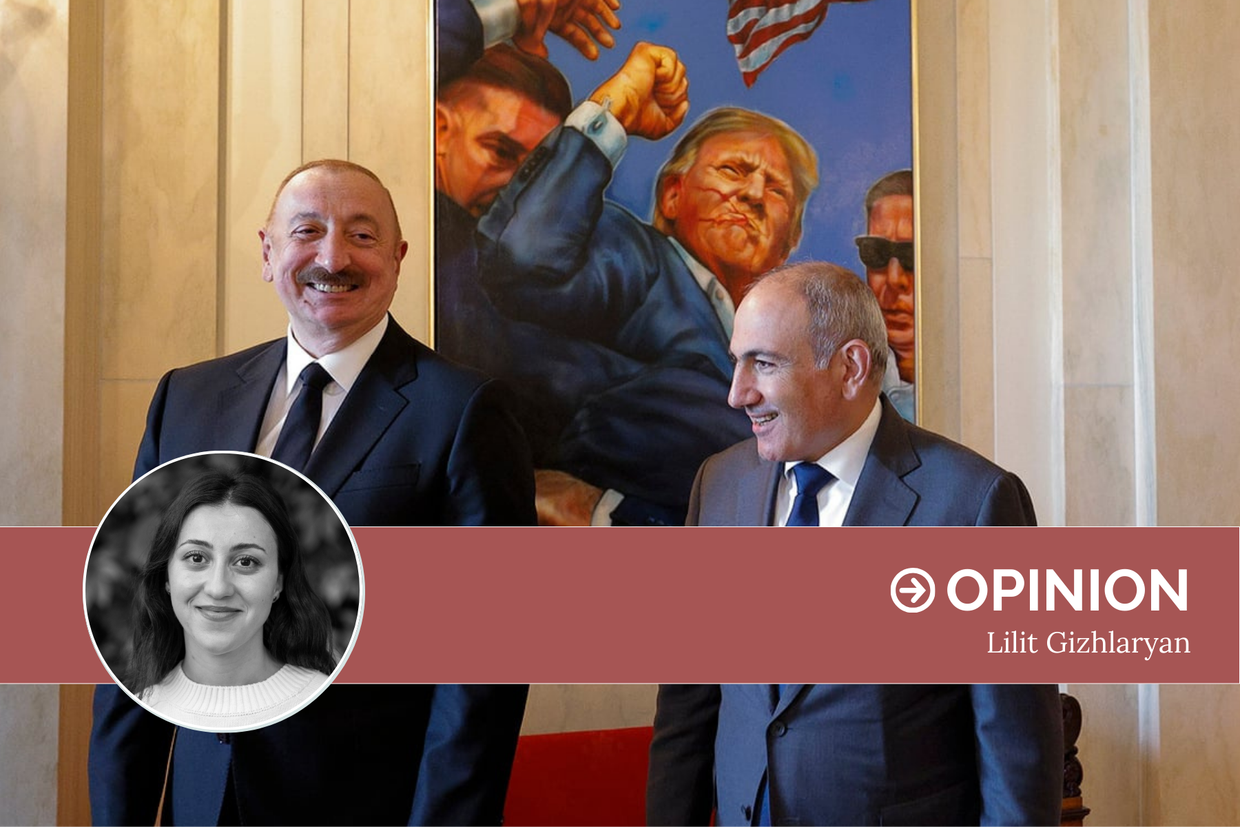
But in my world, peace is not and should not be about branding. It is instead a painful social work between wounded people: a fragile, exhausting, contradictory, and emotionally devastating process. Peace might not be something we believe in, or a slogan, but a constant ethical position taken despite distrust toward all grand narratives surrounding it. And maybe my discomfort and disconnection from the word ‘peacebuilder’ is a result of mistrust towards people who have taken on this identity without taking historical accountability, without taking into consideration the grief of the society.
Peace is a resistance against social disintegration and dehumanisation. Yet what I see now is the complete opposite of that.