Opinion | The silent revolution: What happens when Armenia’s diverging generations meet at the polls?
Armenia’s youth have undergone different experiences than their elders, affecting what they consider important when voting in a new parliament.

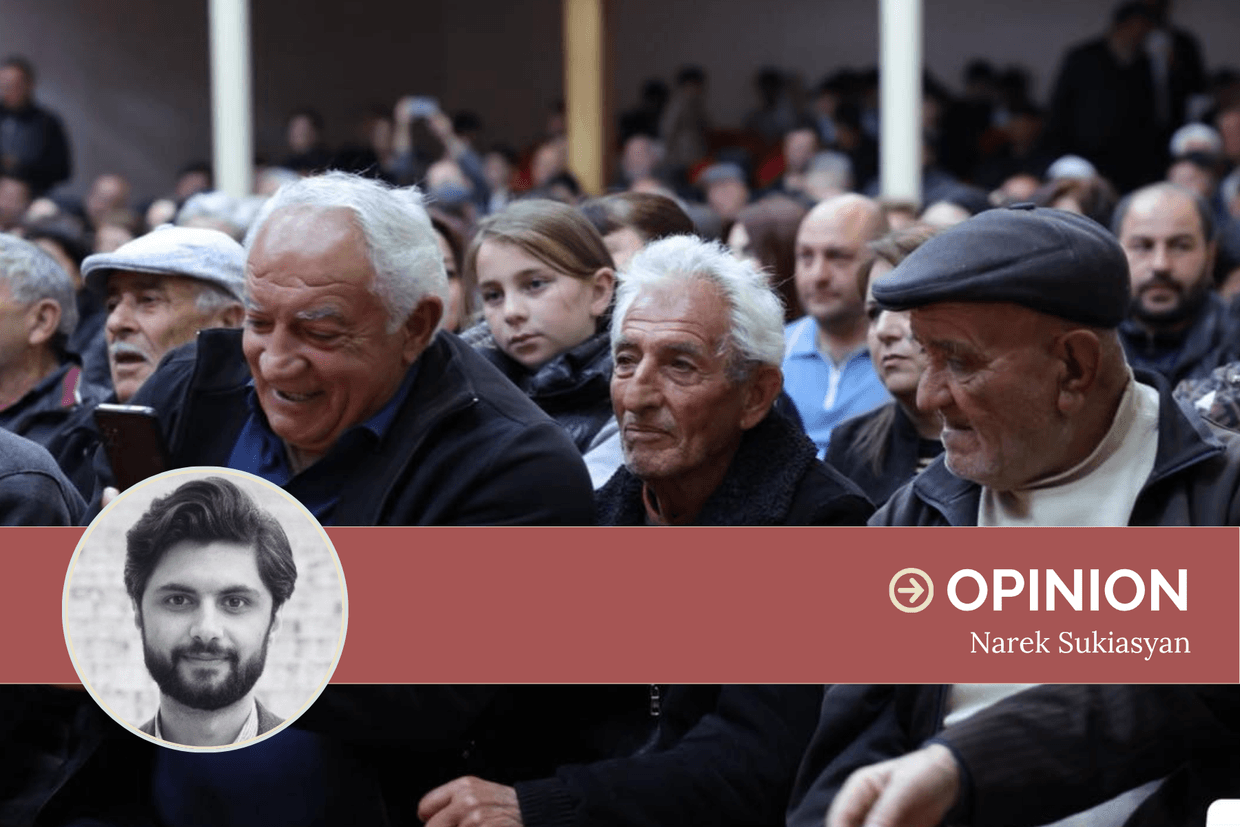
A May 2026 survey by the International Republican Institute (IRI) has revealed a nuanced divergence between the political and cultural preferences of Armenia’s 56+ demographic and the country’s youth.
According to the data, although Armenian youth generally favour a pro-Western foreign policy stance, they are actually less supportive of formal EU accession than the 56+ demographic, who stand out as the most enthusiastic proponents of joining the bloc. Indeed, while younger citizens tend to be more sceptical about the nation’s trajectory, the older generation expresses a much stronger belief that the country was heading in the right direction, a view that aligns with their high levels of support for Prime Minister Nikol Pashinyan and his regional infrastructure platform, the Trump Route for International Peace and Prosperity (TRIPP).
Societal and media habits also differ between the generations; older Armenians report being the least satisfied with the Armenian Apostolic Church — an institution that sees higher favourability among the youth — and they remain far more connected to traditional media, showing the highest interest in politics while relying primarily on public TV and general television broadcasts for their information.
Especially when compared to Georgian polls, the preferences of Armenian youth seem puzzling.
Yet, the answer may lie in the generational changes that have occurred since the collapse of the Soviet Union and more recently the defeat in the Armenia–Azerbaijan conflict over Nagorno-Karabakh, and which may have led to different value preferences among the Armenian populace, and which may affect the results of the upcoming parliamentary elections.
Diverging experiences
In 1977, American political scientist Ronald Inglehart published his seminal study, The Silent Revolution: Changing Values and Political Styles Among Western Publics. In it, he claimed that the European left and right switched positions as the generational change in post-war Europe brought about different value preferences among voters who were brought up in the survival mode of wars, economic depression, and famine, and those whose formative early years were spent in peace and economic prosperity. The older working class demanded stability and supported the status quo, while the younger bourgeoisie that was better off became revolutionary.
Is this same change also occurring in Armenia? Not entirely, but there are similarities.
As someone who teaches political science to Gen-Z students, many of whom were just entering their adolescence when the Velvet Revolution took place in 2018, I am fascinated every semester by how little they know of the politics of pre-2018 Armenia, and just how much their minds are blown when I explain all the tricks used in the past to falsify elections. It is not just simply a lack of knowledge — it is a lack of cultural comprehension of possibilities and alternative politics.
 Hermine Virabian
The older generation, in contrast, has not only seen the alternative past, but also experienced it first hand, or suffered from it, to be more precise. The political socialisation through systemic corruption, injustice and inequality, foreign dependencies, rigged elections, mob-like security, and business elitism has left a profound mark on how they view and will continue viewing politics in Armenia. Anything better than that, or, at least, the perception of things being better, is largely going to receive more endorsement, even if what’s on the offer may not be perfect. Construction of a road in a remote district or village may not satisfy someone who expects it as the bare minimum, but it may be decisive for others whose infrastructure needs have been neglected for decades.
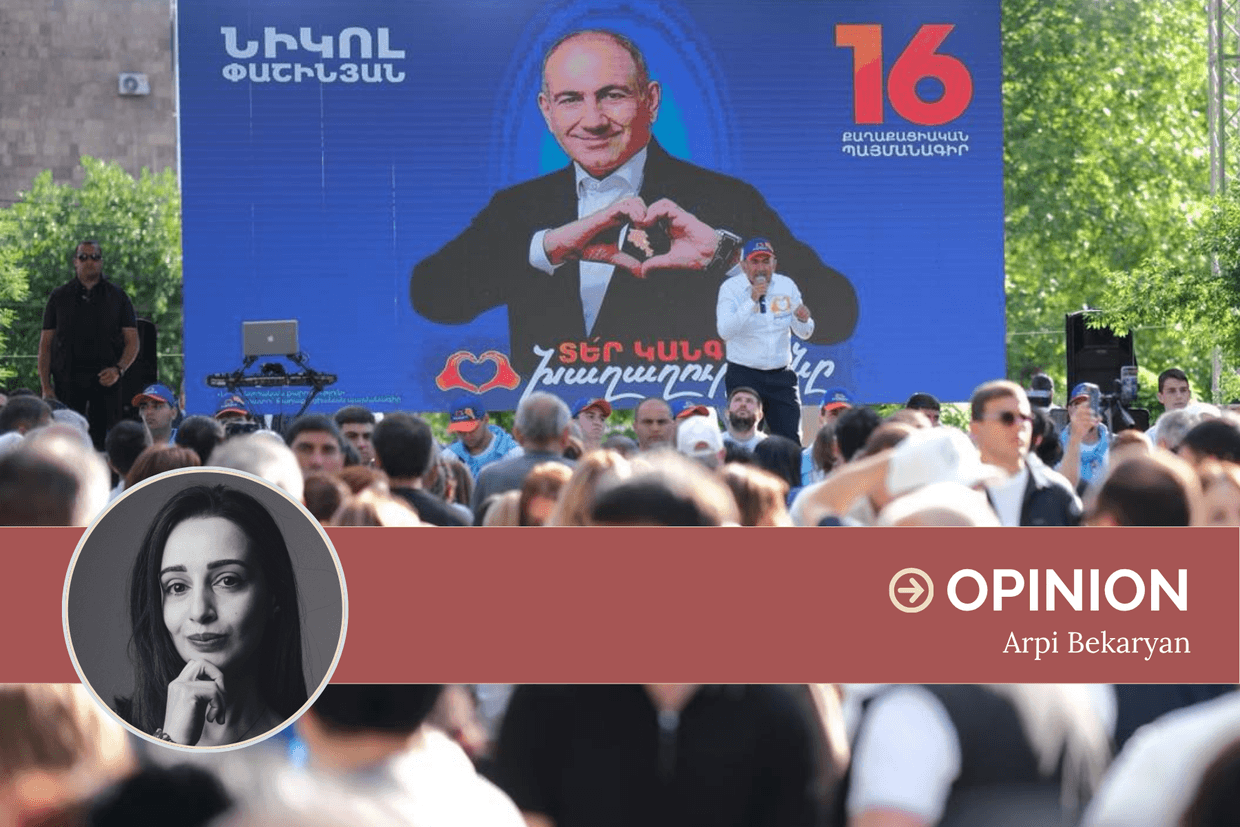
The same is true about the lack of corruption at the lower echelons of public services such as education, healthcare, and the mandatory military service. The saying goes — comparison is the thief of joy. But for those who have suffered before and suffer less now, or even benefit from the state of affairs, comparison is by large unavoidable, and moreover, by large in favour of the ruling Civil Contract party and its leader, incumbent Prime Minister Nikol Pashinyan.
Armenia’s youth on the other hand, have undergone a different socialisation. For many, the first big political event was the Velvet Revolution — successful, victorious, and positive. However, the Second Nagorno-Karabakh War and the calamities of 2020–2023 have arguably had a more profound formative effect on them. Many lost their classmates. Others saw that a democratic Armenia lost to an autocratic Azerbaijan and drew hasty conclusions about regime preferences and associations between weak and strong. Though youth are more critical and share more protest sentiments in general, this nuance might explain the detachment from politics, apathy, and cynicism found in Armenian youth in particular. Indeed, the majority do not trust any politician.
Naturally, therefore, this is the weakest demographic for the ruling party, though it still scores better among them than Samvel Karapetyan’s Strong Armenia in its most successful demographic. However, when combined, the support for main opposition candidates among youth is neck to neck to that of the ruling party in other age categories.
Arguably, the ruling party’s main tool for mobilisation is the illustration of the populistic and polarising contrast between themselves and Armenia’s former leaders. Many still go to polls choosing the least of the evils.
It is no surprise, then, that the generation that has experienced the formers’ rule least is also least receptive to such manipulations. This contrast is not as alarmist for them as for those who have seen 1 March 2008, massive electoral fraud, and the vassal-like system of rent seeking, among other things. And that is arguably good. Not only because those were horrible experiences, but also because it may help them to demand more and not settle for a lesser evil. Very much like the post-war West European youth when compared to their parents whose point of comparison was utter hell.
At the same time, my anecdotal observations suggest that the military defeats and Azerbaijan’s continued policy of symbolic humiliation has also pushed young people to cling tighter to what they see as national symbols and Armenian identity. This might make Pashinyan’s attempt to reformulate national identity along the lines of his ‘New Armenia’ ideology, and in contrast to Nagorno-Karabakh, Ararat, and what many interpret as an attack against the Armenian Apostolic Church, problematic to them, regardless of how the ruling party frames it. For some liberal youth, especially the many who are not particularly religious, solidarity for the Church is an act in defence of civil liberties and rule of law against encroachments of the secular rule of freedom of religion and belief. An illustration of that is the overwhelming and continuously growing trust towards the Church among this group in parallel to the campaign against its leadership led by Pashinyan.
Tigran Grigoryan
But what effect will these generational gaps have on the parliamentary elections?
Much will depend on the turnout in each group. The polls show an overwhelming likelihood of voting across all age groups, though with slightly less enthusiasm amongst youth. Indeed, traditionally, youth appear at the polls proportionally much less when compared to the older generations or those in the regions, which is where the ruling party’s stronghold is. If the pattern is to continue, all things equal, we might see even more impressive results for them than the polls expect.
However, to speak of the wider implications of my hypothesis on Armenia’s generational cultural divide one must first study it closer.
Only then, if confirmed, one or a combination of three things must happen to change the status quo — generational change, exhaustion of the current vs former populism, and widespread adoption of post-materialist liberal values where elections are expected to be not only free but also fair, where refugees not only receive aid but also are free from hate speech, where the government is not just better than what was before, but actually democratic.