During the US–Israel attack on Iran earlier in 2026, Israel reportedly deployed ‘elite military and intelligence units’, as ‘part of a network of covert sites across the Middle East to facilitate operations against Iran’, CNN reported on Friday, citing four sources familiar with the matter.
According to two of the sources who spoke with CNN, the Israeli forces operated across several locations in southern Azerbaijan, including in one place only around 100 kilometres from the Iranian city of Tabriz, which was struck by Israel during the conflict.
‘Special commando units were also deployed to the location and carried out intelligence-gathering missions and drone operations, the other two sources said, giving Israel a valuable perch from which to see into northern Iran during the war’, CNN wrote.
They noted that the Azerbaijani deployment was just one of several military positions maintained by Israel across the region — including reportedly in Iraq, the UAE, and Somaliland — in order to help facilitate its operations against Iran.
‘The locations in Azerbaijan were among numerous covert military sites and bases in multiple countries’, CNN wrote, citing its anonymous sources.
‘The forces, initially planned as potential rescue teams in the event of an emergency, expanded in scope to become military and intelligence gathering positions’.
A source additionally told CNN that the Azerbaijani operation ‘consisted of several dozen troops, including members of Israel’s special operations forces, its elite heliborne combat and rescue force, and Mossad personnel’.
In response to a request for comment from CNN, Azerbaijan’s Embassy in the US rejected what they termed ‘unfounded claims regarding the alleged use of Azerbaijan’s territory for operations against third countries’.
A history of close ties
Azerbaijan and Israel have had close relations for decades, largely based on mutual beneficial interests.
In particular, Israel has long imported a significant share of its oil from Azerbaijan, something which increased further after the Baku–Tbilisi–Ceyhan pipeline went online in 2006.
By 2023, Azerbaijan was by far the largest exporter of oil to Israel, reaching some $1.4 billion a year, more than double the next largest exporter, Gabon, at $680 million. In total, Azerbaijan supplies around 65% of Israel’s oil, making it an indispensable energy partner.
During roughly the same period, Israeli arms exports to Azerbaijan also increased. According to data from the Stockholm International Peace Research Institute (SIPRI), the figure reached up to 69% of all arms imported into Azerbaijan from 2016–2020 — right before the Second Nagorno-Karabakh War.
While Russia continued to be Azerbaijan’s largest arms supplier, the more advanced Israeli weapons are widely believed to have given Baku the upper hand over Armenia in both the Second Nagorno-Karabakh War and the final lightning offensive in 2023 that ended with Nagorno-Karabakh’s capitulation and exodus of virtually all of the ethnic Armenian population. At the time, Armenia’s missile and drone arsenal came almost entirely from Russia, while Azerbaijan had more modern supplies, largely from Israel and Turkey. The drones in particular are thought to have given Azerbaijan a decisive advantage in the 2020 war.
 Nate Ostiller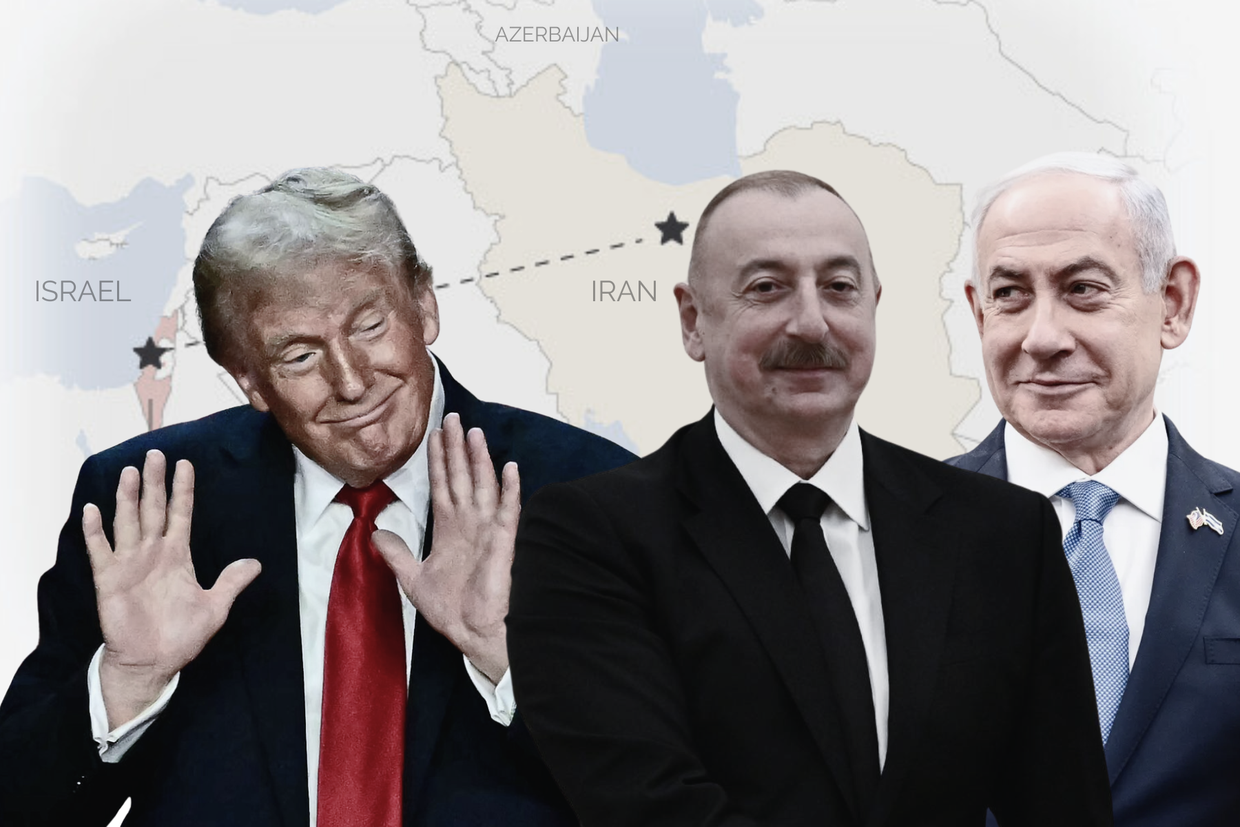
As a result of these ties, there has been some speculation that Azerbaijan would aid Iran in a tit-for-tat manner. Indeed, during the brief Iran–Israel war in 2025, there was conjecture — which Baku denied — that Azerbaijani territory had been used by Israel to conduct military operations against Iran.
In January 2026, Azerbaijani Foreign Minister Jeyhun Bayramov reiterated to his Iranian counterpart Seyed Abbas Araghchi that Azerbaijani territory would ‘never’ be used by ‘any state’ to launch attacks against Iran.
‘Azerbaijan’s airspace or territory will never be allowed to be used by any state for conducting military operations against neighbouring Iran or any other country’, Bayramov stressed.