Director Sokurov snubbed at Venice Biennale after criticism from Russian and Ukrainian activists

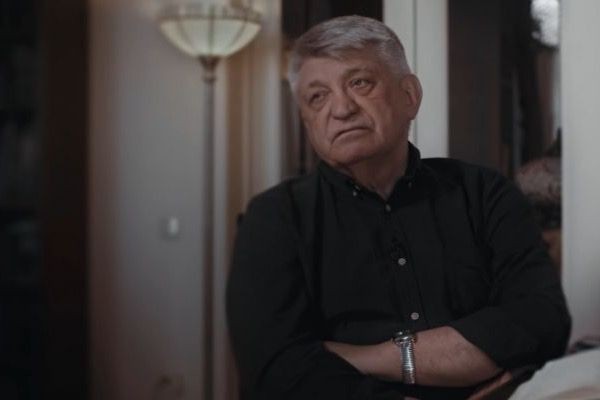
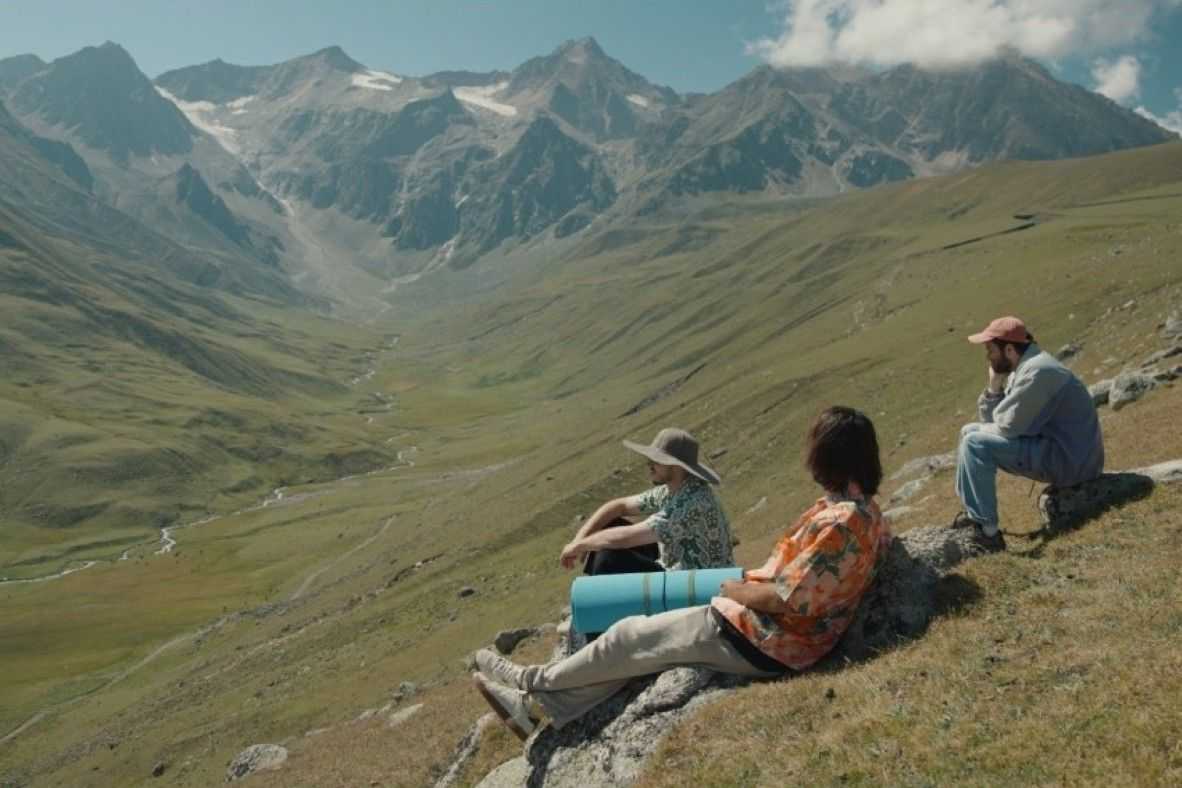
The director worked in the North Caucasus for many years and founded a film workshop in Nalchik whose graduates include Kantemir Balagov and Kira Kovalenko.
Russian film director Aleksandr Sokurov has denied Venice Biennale’s claims that his appearance at the exhibition was cancelled ‘due to sudden unavailability’. The director, who had ushered in a new generation of North Caucasian filmmakers, had faced criticism from Russian and Ukrainian activists who opposed the participation of Russian figures in the exhibition.
Sokurov had initially said that he had not traveled to Venice ‘for reasons beyond his control’.
Speaking to the Russian outlet Pod’em (‘Rise’), he described the organisers’ statement about his sudden unavailability as ‘nonsense’, stressing his readiness to attend the Biennale.
‘What nonsense! I don’t know who is inventing this: sudden unavailability. […] Everything is fine, I am available. I even wrote the text of my speech’, the director said.
‘I am very sorry’, Sokurov told the independent Russian media outlet Agentstvo, declining to comment further.
Sokurov had been due to participate in the conference Dissent and Peace, held as part of the Biennale’s pre-opening programme on 6–7 May. Palestinian writer and architect Suad Amiry had also been expected to take part in the event. The organisers later announced that neither Sokurov nor Amiry would appear.
On the eve of the Biennale’s opening, a group of Russian and Italian cultural figures published an open letter addressing the organisers. They authors criticised the participation of Russian representatives in the programme and described the conference in which Sokurov was to take part in as a ‘staged performance’. The letter also expressed disagreement with Sokurov being chosen as a symbolic participant in a discussion about dissent and freedom of expression.
Among the signatories were former Pussy Riot member Nadezhda Tolokonnikova, Oscar-winning documentary filmmaker Pavel Talankin, artist Sasha Skochilenko, and others.
The letter’s authors described Sokurov as someone who ‘circulates between power and international recognition without risk’. According to the activists, inviting Sokurov as a symbolic voice of ‘dissent’ sharpened the problem of a ‘managed spectacle of proper discussion with convenient voices’.
At the same time, Sokurov attended the trial of Sasha Skochilenko in Saint Petersburg, where she was charged under legislation criminalising the spread of ‘fake news’ about the Russian army.
This edition of the Biennale saw Russia’s return to the exhibition years after it was banned for its full-scale invasion of Ukraine in 2022.
Parallel to this, protests took place outside the Russian pavilion involving activists from Pussy Riot and the feminist Femen movement.
After Agentstvo’s editor sent him footage of the protest in Venice, Sokurov replied: ‘It is all bitter, it is all hard’.
The Biennale organisers did not officially link the cancellation of the director’s appearance with the protests or the open letter.
Despite criticism from some opposition activists, Sokurov has repeatedly spoken publicly against the war since the start of Russia’s full-scale invasion of Ukraine. In 2022, he made anti-war statements and criticised the Russian authorities. The director had previously also clashed with the Russian Ministry of Culture. In 2023 his film Fairytale, which features Joseph Stalin, Adolf Hitler, Winston Churchill, and Benito Mussolini, was denied a distribution licence in Russia. Sokurov then stated that his work had effectively been banned.
The North Caucasus occupies a separate place in the director’s biography. In 2010, with support from the Ministry of Culture of Kabarda–Balkaria and the Sokurov Foundation, he launched a filmmaking workshop in Nalchik at the North Caucasus State Institute of Arts.
The workshop produced directors who later gained international recognition. Among them were Kantemir Balagov, whose film Beanpole won an award in the Un Certain Regard section at the Cannes Film Festival, as well as Kira Kovalenko, whose film Unclenching the Fists received the Grand Prix in the same section at Cannes. Sokurov’s students also included directors Vladimir Bitokov and Aleksandr Zolotukhin.
The films made by Sokurov’s students covered themes including life in the North Caucasus, family conflict, violence, the position of women in the region, and the consequences of war.
Sokurov himself has also repeatedly commented on the situation in the Caucasus. In 2021, during a meeting with Russian President Vladimir Putin, he spoke about interethnic relations and the right of peoples to determine their own future. Following these remarks, the director faced sharp criticism from pro-government Russian politicians and the Chechen authorities.
Sokurov is a member of Russia’s Presidential Council for Human Rights. At its latest meeting attended by Putin in December 2025, he spoke about an ‘atmosphere of fear’ in Russian society and complained about the censorship of his work.
The Venice Biennale is an international contemporary art exhibition held in Venice from May to November 2026.
Russia’s Pavillion at the exhibition this year was closed to the public and was only allowed to run from 6–8 May on an invitation-only basis. On Monday, the pavilion’s curator, Anastasia Karneeva, daughter of the deputy director-general of Rostec (‘Russian Technologies’), a Russian state defence and technology conglomerate, issued an appeal thanking the Biennale ‘for supporting the idea of representing all countries here’ and confirming that ‘art must remain independent’.
The EU Commission did not approve of Russia’s return and threatened to suspend a €2 million ($2.3 million) grant to the Biennale. On 23 April, the EU Commission confirmed this decision.
EU Commissioner Henna Virkkunen stated that the EU ‘firmly condemns’ the Biennale’s decision to allow the return of Moscow-linked artists, noting that the event’s opening coincides with Europe Day, ‘an occasion to celebrate peace’ and ‘the protection of democratic values and freedom’, which, according to her, are not respected in present-day Russia.