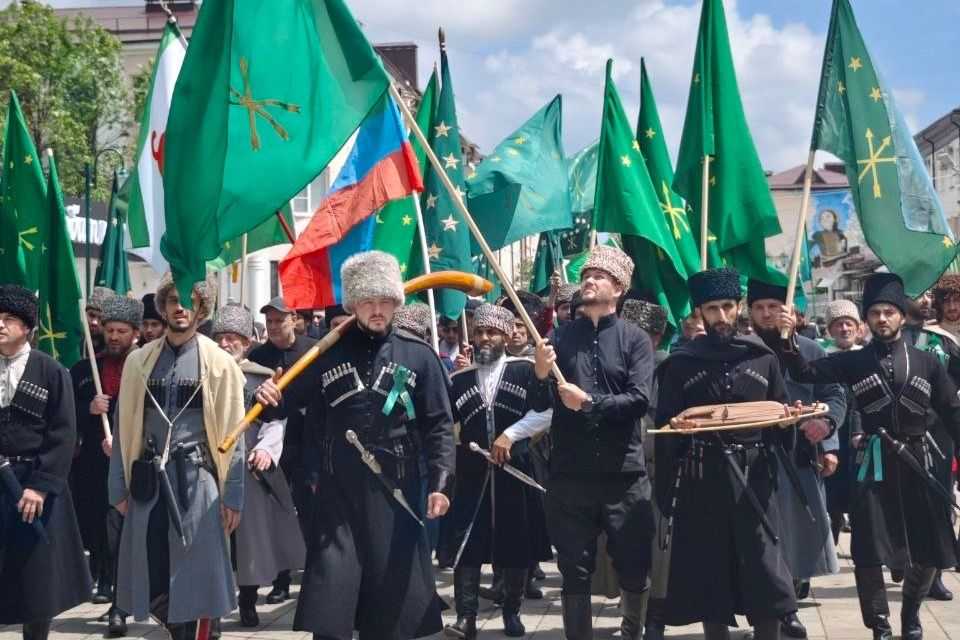
For the second year in a row, authorities in Kabarda–Balkaria have refused to approve a mourning march commemorating the Circassian Genocide, observed on 21 May — the anniversary of the end of the Russia’s conquest of the North Caucasus in 1864. The regional human rights centre reported about the ban on the march on Sunday.
An initiative group had planned to hold a march in Nalchik in memory of the victims of Russia’s conquest of the North Caucasus. However, the republic’s authorities refused to authorise the event. The official reasons for the refusal were not explained in detail. At the same time, back in April, the Head of Kabarda–Balkaria Kazbek Kokov held an anti-terrorism commission meeting, after which the authorities announced the cancellation of large public marches in open spaces during the May holidays, citing security concerns.
On 17 May, the regional human rights centre published an appeal addressed to the Kokov stating that several days before the memorial date, residents had begun being summoned to police stations to receive ‘warnings’ about the inadmissibility of violating the law while participating in mass events. According to the authors of the appeal, dozens of people received such summons. Human rights defenders described these actions as ‘intimidating’ and ‘completely unfounded’.
‘When the mourning march was not held in 2020 and 2021 due to the coronavirus pandemic, society treated the situation with full understanding, since the restrictions were objective in nature and applied to all public events without exception. No one questioned the necessity of the prohibitive measures. But after life returned to normal, all restrictions were lifted except the ban on the mourning march on 21 May, thereby entrenching the practice of deliberately suppressing citizens’ right to remembrance. Since then, the Nalchik city authorities and republican officials, while refusing to approve the 21 May march, have begun citing entirely far-fetched and politically motivated arguments linked to the events in Ukraine. As we remember, first a ban was introduced on the horse procession, then on the pedestrian march along Nalchik’s central street. Only one final step remains — to ban gatherings at the “Tree of Life”, where the mourning events traditionally conclude’, the appeal states.
According to the appeal, in 2022 the Kokov’s administration described the march as ‘undesirable’ because of Russia’s full-scale war against Ukraine. At the time, administration chief Muhammed Kodzokov explained the position by saying that residents ‘must demonstrate full solidarity’. At the same time, entertainment events continue to be regularly held in Nalchik despite the ongoing war.
‘The mourning date of 21 May has become an “undesirable” occasion for the local authorities, which are seeking to eradicate it using any pretext available’, the human rights defenders claimed.
The remembrance day is observed annually on 21 May in the North Caucasus republics where Circassians live — Kabarda–Balkaria, Karachay–Cherkessia, and Adygea. The date marks the end of Russia’s conquest of the North Caucasus and the genocide of the Circassians.
The genocide led to the killing and mass expulsion of the Circassians from the Caucasus to the Ottoman Empire. According to some sources, the population of Greater and Lesser Kabarda — both historical Circassian regions — fell from 350,000 before the war to 50,000 by 1818. According to other sources, the population stood at 200,000 in 1790 and 30,000 in 1830. Russian authorities do not officially recognise the 19th-century massacres and expulsions as a genocide.
On 21 May, mourning events are held around the world in countries with large Circassian diasporas, including Turkey, Syria, Jordan, Germany, the US, France, and Israel.
In previous years, marches and mourning events in Kabarda-Balkaria repeatedly became a source of disputes between activists and the authorities. In 2025, the authorities also refused to approve a march in Nalchik, but the action went ahead regardless. Several dozen young people then marched through the city streets carrying Circassian flags after a rally near the Tree of Life monument. At least eight people were detained after the march, and they received administrative sentences ranging from three to 10 days under charges of participating in an unauthorised action and obstructing traffic.
 Elizaveta Chukharova
Few activists challenged the authorities’ refusal to approve the event in court. The Nalchik City Court and subsequently the Supreme Court of Kabarda–Balkaria ruled that the officials’ actions were lawful.
According to the case materials, the Ministry for Nationalities and Public Projects of Kabarda–Balkaria referred to restrictions related to ensuring public safety and holding other events. Activists’ representatives argued in court that the march was peaceful, commemorative in nature, and was held annually.
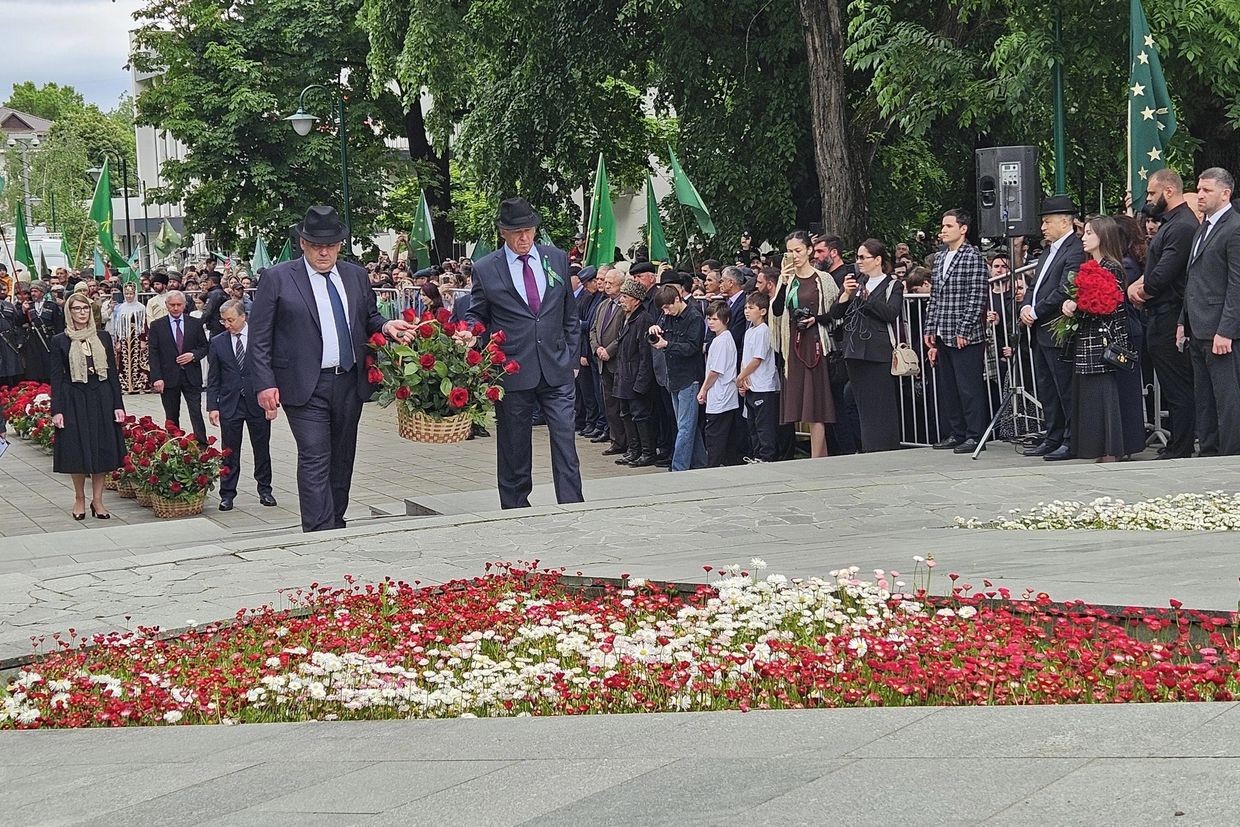
Despite the restrictions surrounding mourning marches, official memorial events in the republic usually continue to take place. In previous years, the authorities organised flower-laying ceremonies, requiem rallies, and cultural events.