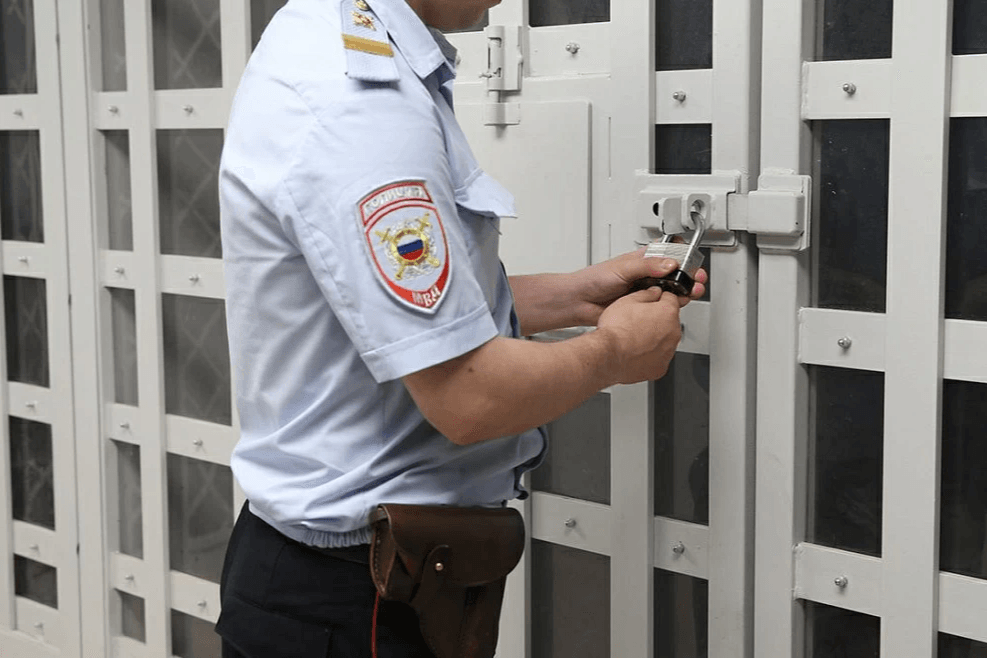
A 52-year-old owner of a furniture factory in the village of Kantyshevo has been detained in Ingushetia over use of forced labour, and has been charged with organising illegal migration. According to Russia’s Interior Ministry, the businessperson employed eight foreign nationals from ‘far abroad’ countries, arranging their unlawful stay in the region.
Authorities say the men, whose citizenship has not been disclosed, had been living and working on the factory premises since September 2024 without proper documentation. Investigators believe the employer misled them in their home countries by promising jobs in Abkhazia with a monthly salary of around $1,000.
According to the Interior Ministry, upon arrival in Moscow the migrants were transported by minibus to Ingushetia, where their passports were confiscated and they were allegedly forced to work at the factory. Their wages amounted to about ₽20,000 ($260) per month, part of which was transferred to their families, while the remainder was paid in cash.
A criminal case has been opened under the article of the Russian criminal code on organising illegal migration using forged documents, which carries a maximum sentence of up to ten years’ imprisonment. The suspect’s name has not been officially disclosed.
Cases of exploitation and forced labour in Ingushetia and across the North Caucasus have previously drawn the attention of human rights groups. In February 2025, the anti-slavery movement Alternativa reported that three men had been held at construction sites in the Sunzhensky district. According to their accounts, their documents were also confiscated, they were not paid wages, and were subjected to violence.
Activists from Alternativa say such cases often remain hidden, as victims are afraid to seek help due to threats and dependence on employers. Experts have noted that it is even difficult to compile official statistics, as forced labour is often prosecuted under other charges such as unlawful deprivation of liberty or migration-related offences, complicating both documentation and investigation.
Under current legislation, practices resembling slavery are addressed through provisions of the Russian criminal code, including articles on kidnapping, unlawful deprivation of liberty, human trafficking, and the use of forced labour.
However, across Russia, only 13 people were convicted for the use of forced labour over a five-year period from 2016 to 2020. According to analysts from the Esli Byt’ Tochnym (‘If You Count’) project, the real scale of exploitation may be significantly higher. Over a 15-year period, only 53 cases were officially registered under the article on forced labour. By analysing convictions under other articles, the project estimated that the actual number of such cases could be at least 17 times higher.
International organisations estimate the number of victims of modern slavery in Russia at no fewer than 7,000 people. In 2021, the Global Slavery Index reported that 1.8 million people worldwide were living in conditions of slavery, equivalent to 13 per 1,000 people. According to the Counter-Trafficking Data Collaborative, between 2002 and 2023, human traffickers brought around 6,600 people into Russia and trafficked approximately 850 Russian nationals abroad for exploitation.
For ease of reading, we choose not to use qualifiers such as ‘de facto’, ‘unrecognised’, or ‘partially recognised’ when discussing institutions or political positions within Abkhazia, Nagorno-Karabakh, and South Ossetia. This does not imply a position on their status.