Tbilisi City Court handed down lengthy prison sentences to defendants in the case related to the 4 October 2025 protest and clashes in Tbilisi. The defendants included opposition politicians and anti-government protesters.
The verdicts announced on Thursday by Judge Tornike Khuskivadze marked the first rulings in the high-profile case, in which dozens of people have been charged and detained under various criminal articles. Most of the defendants have yet to receive their verdicts.
Of those convicted, opera singer and opposition figure Paata Burchuladze was sentenced to seven years in prison. Burchuladze was a key figure in the protest The same sentence was handed down to four others whom Burchuladze identified, alongside himself, as members of the protest’s ‘organising committee’ in a video published on the day of the rally:
- Irakli Nadiradze, a representative of the opposition United National Movement (UNM) party;
- Murtaz Zodelava, an opposition politician;
- Paata Manjgaladze, a representative of the opposition Strategy Aghmashenebeli party;
- And Lasha Beridze, a former colonel.
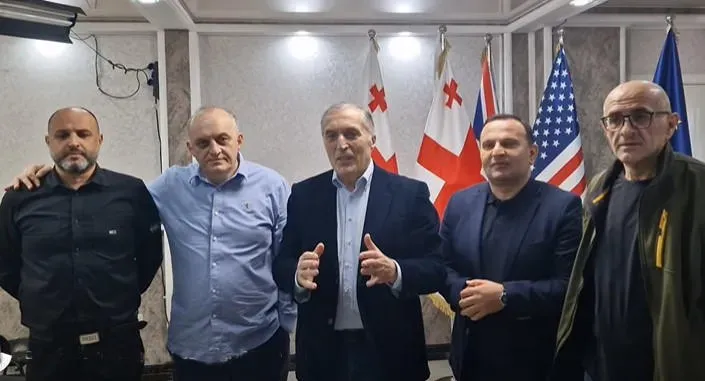
Burchuladze, Zodelava, and Nadiradze had been charged with attempting, as a group, to seize facilities of special importance, as well as with organising and leading group violence and calling for the overthrow of the government. Beridze had been charged with the first two offences, while Manjgaladze had been charged with organising group violence.
Four others involved in the case — demonstrators Nika Gventsadze, Irakli Chkhvirkia, Guri Zhvania, and Tornike Mchedlishvili — were sentenced to five years in prison each.
Gventsadze, Chkhvirkia, and Mchedlishvili were convicted of attempting, as part of a group, to seize facilities of special importance and of participating in organised violence, while Zhvania was convicted solely of participating in organised group violence.
In addition, the court sentenced Irakli Shaishmelashvili to two years in prison in absentia. A former senior official in the Interior Ministry’s riot police, Shaishmelashvili left the country in December 2024 and became a critic of the authorities. He was charged with calling for the overthrow of the government.
 Mikheil Gvadzabia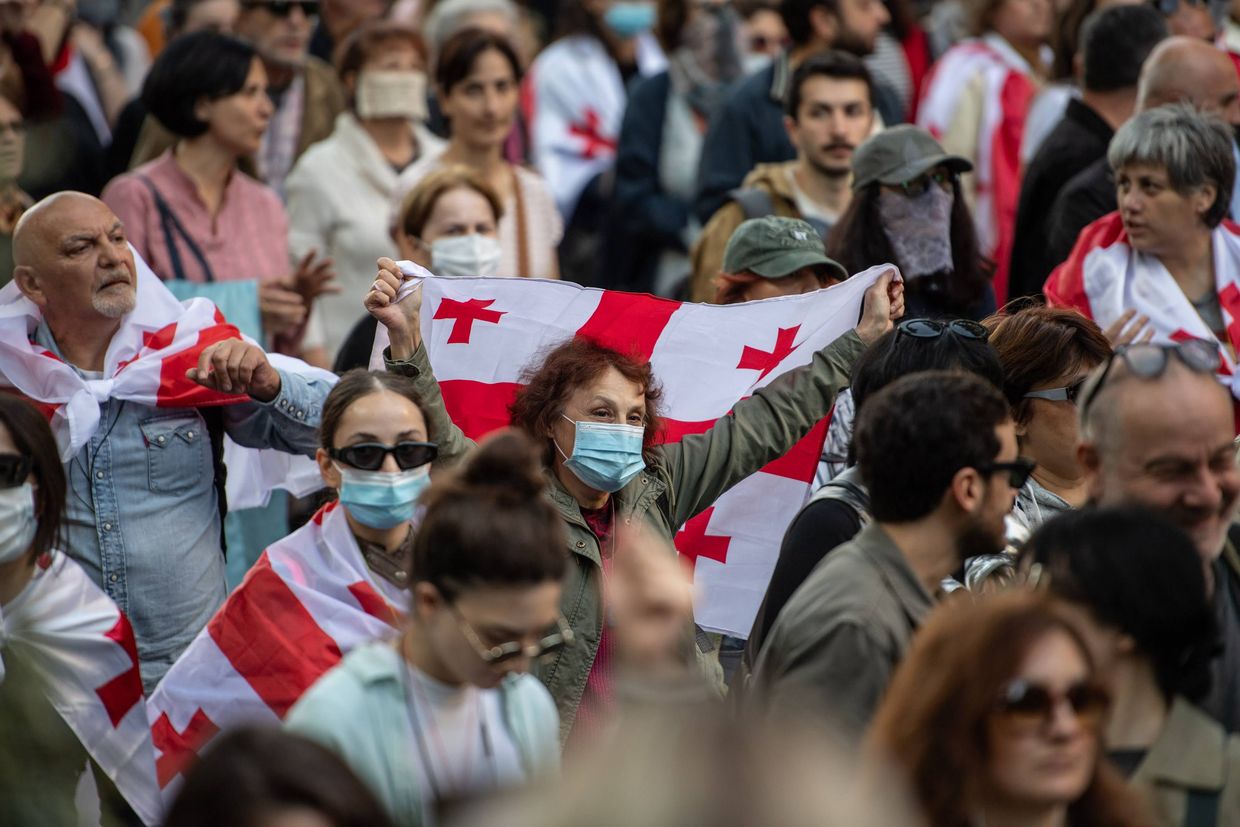
‘A peaceful revolution’
The 4 October protest was timed to take place with the widely boycotted municipal elections. Months prior to the elections, some opposition figures promised to end Georgian Dream’s 13-year rule in a single day, but did not announce any concrete plans.
The protest was billed as a ‘peaceful revolution’ meant to achieve what months of leaderless protests could not.
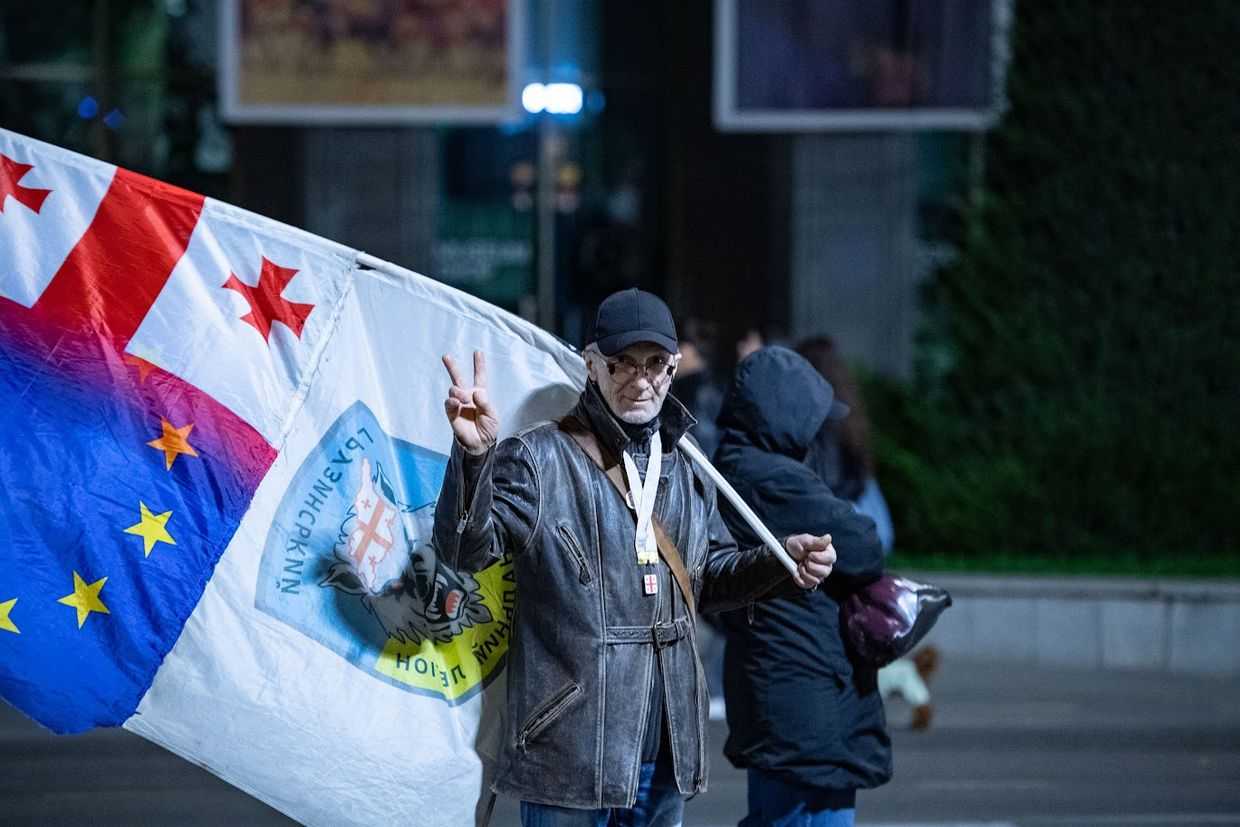
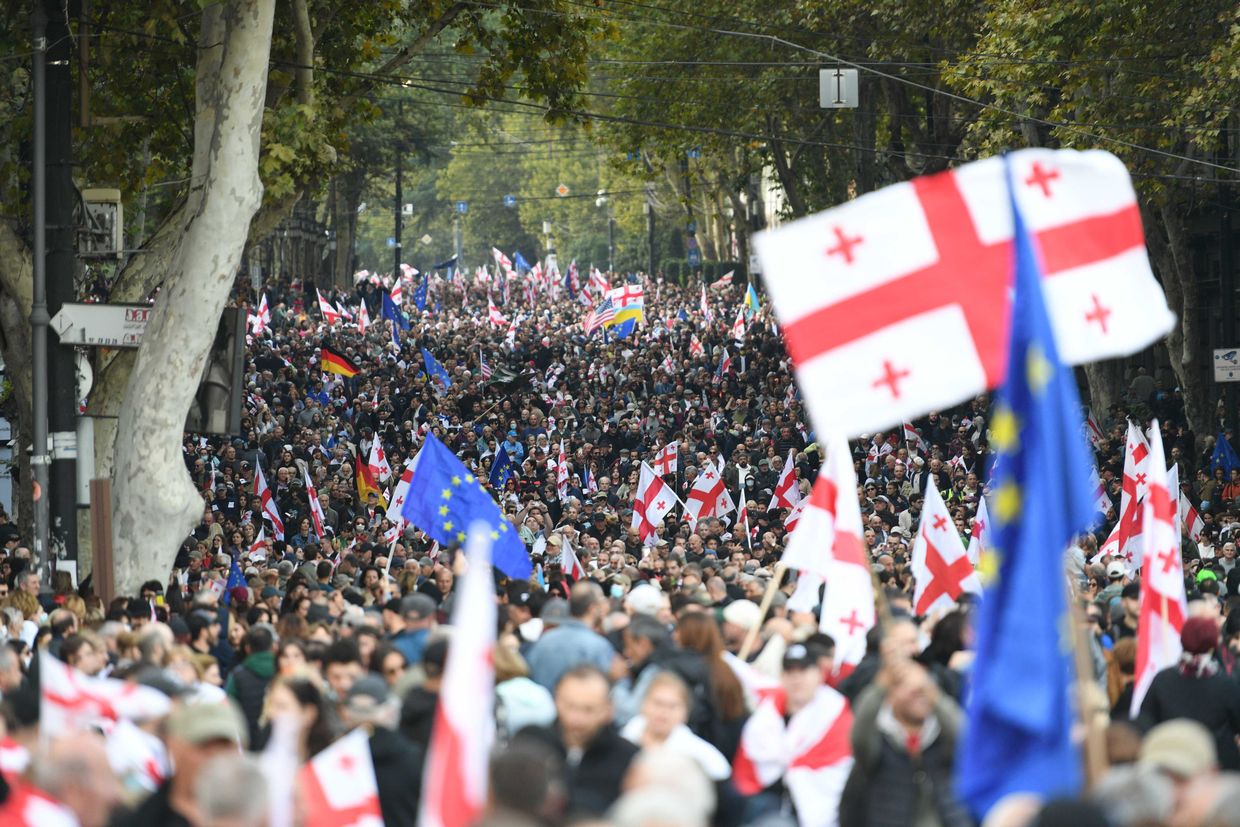
Initially, the campaigners’ efforts seemed to pay off. On the day, tens of thousands gathered in central Tbilisi, briefly reviving the dwindling daily protests.
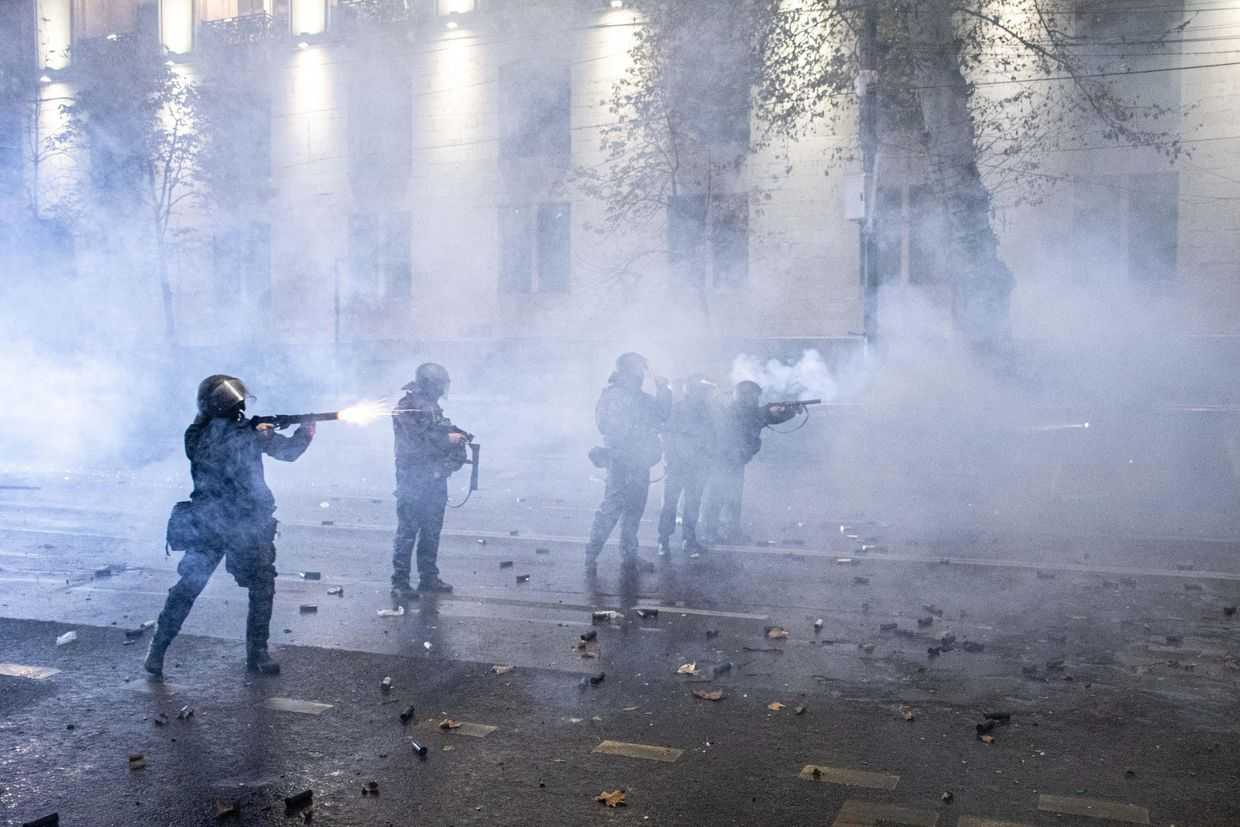
Chaos soon followed: Burchuladze declared that power belonged to the people, and Zodelava called for a march on the nearby Presidential Palace. A small group then breached a section of the palace fence, but was quickly pushed back by riot police, sparking sporadic clashes.
The crowd split, frustration spread, and the rally fizzled out.
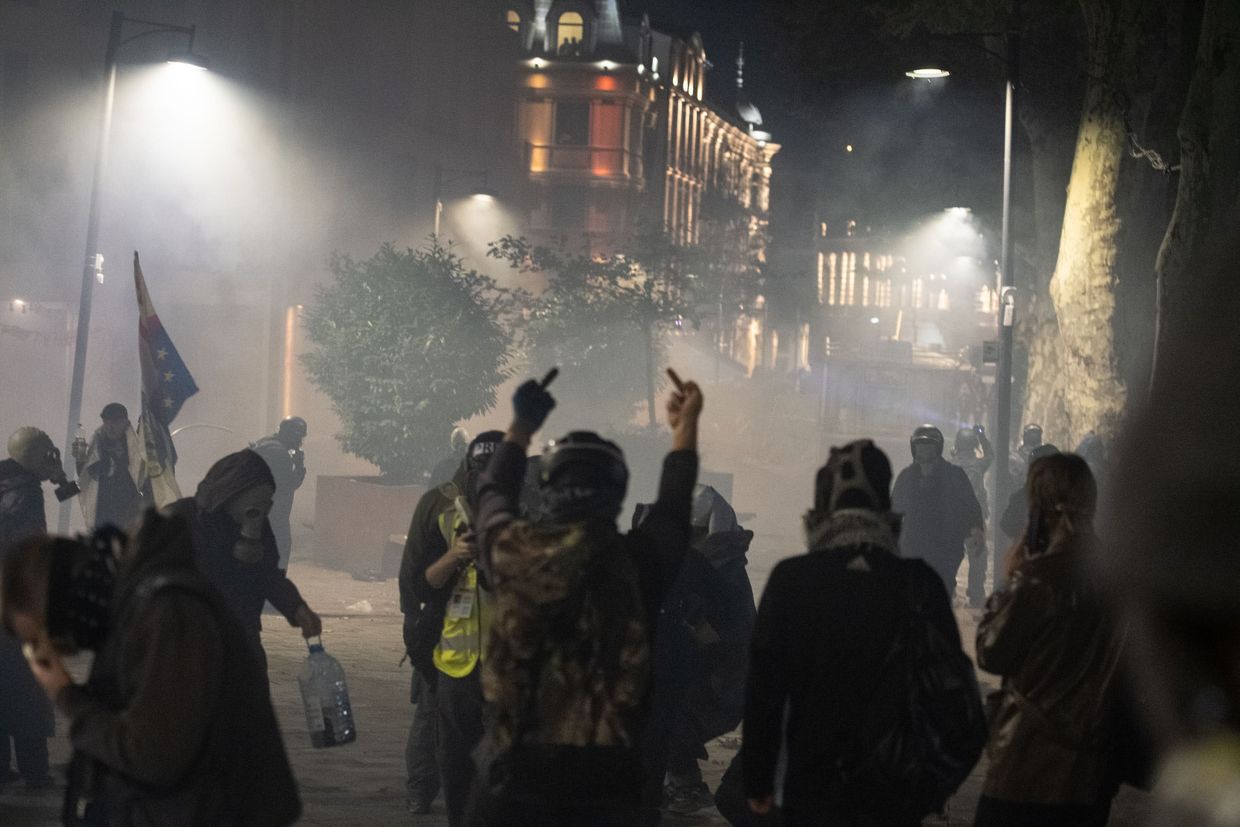
The ruling party quickly seized on the Presidential Palace episode to once again attack the anti-government movement, branding it, as many times before, a violent, foreign-orchestrated coup attempt.
According to the Transparency International (TI) Georgia, on the eve of 4 October and the following days, 66 people were detained, adding to the many already arrested during earlier waves of demonstrations.
The arrests targeted people from across Georgia, including those facing severe social and health issues. In the following period, a few detainees had their pre-trial detention replaced with bail, though the majority remained in prison.
‘Intimidation of the population of Georgia’
Following Thursday’s verdicts, the case prosecutor, Tamar Bezhuashvili, pointed to what she said was extensive evidence against the convicted individuals, which she argued confirmed their guilt.
‘The evidence obtained confirms that following the calls that were made, the organised group moved toward the Presidential Palace, where they attempted, through violent actions, to enter and storm the strategically important [building]’, she added, as quoted by RFE/RL.
According to the outlet, none of the defendants pleaded guilty.
Beridze said the case was intended to ‘intimidate the population of Georgia, to extinguish the momentum of protest or prevent people from developing a protest stance against government policy’.
Burchuladze, who is 71-years-old, in turn, called the case against him an ‘obituary’.
‘Know and remember this: what happens to me is not important. Georgia will never surrender, and you will all inevitably be held accountable before the people’, he added.
During the court proceedings, people who had appeared in Burchuladze’s 4 October video showing the protest’s ‘organising committee’ denied playing a part in organising the protest. Burchuladze himself told the court that the video was spontaneous and his wording may have been a mistake.
According to defence lawyer Beka Basilaia, who represented some of the defendants, ‘this was a completely unsubstantiated and unlawful decision’, and ‘the court delivered what the authorities had ordered’.
The opposition alliance, consisting of nine opposition parties, dismissed the verdicts as ‘political intimidation’.
‘Our key means of fighting this illegality is peaceful protest!’ the alliance said, calling Georgians to join its rally planned for 26 May in Tbilisi.
Following the verdicts, TI Georgia published a critical analysis of the case, examining the charges used by the prosecution against the defendants.
The organisation said the case lacked the essential elements of incitement to violence or armed action, and that there was no conclusive body of evidence proving the existence of a pre-planned, coordinated, and violent group action. The analysis also criticised the ‘group’ element, arguing that there was no evidence of prior agreement or of specific individual actions by the defendants indicating an intent to seize or block a strategic facility.
TI Georgia’s analysis was titled ‘the Presidential Palace fence case’, a term used by some critics to emphasise what they see as the exaggeration of the episode.
In the days that followed 4 October, suspicions grew that the palace fence may have been deliberately weakened to make it easier to breach, giving police a pretext for mass arrests. Footage showing the fence easily being tipped over, without any significant effort, lent weight to this theory.
After 4 October, despite increased pressure from the authorities and the adoption of new legislations further restricting protests, daily anti-government demonstrations continued in Tbilisi and several other Georgian cities. The rallies have been held continuously since 28 November 2024, when Georgian Dream announced the ‘postponement’ of Georgia’s EU integration bid until 2028.