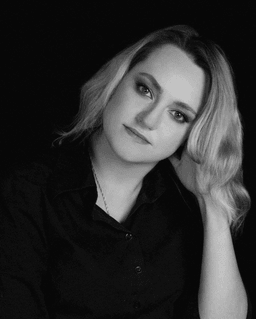
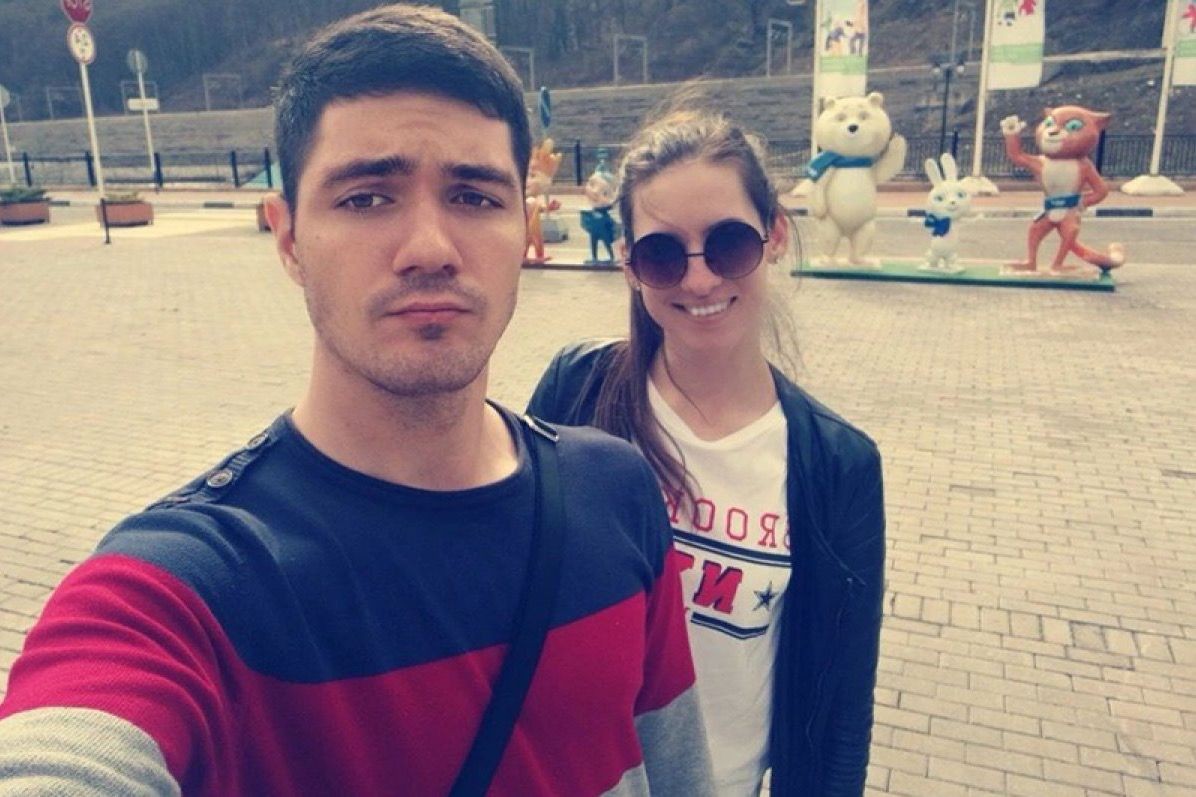
Bislan Nekhai, a native of Adygea accused of murdering his partner, 28-year-old Nadezhda Pervusheva, and their two-year-old daughter Bella, has expressed a desire to fight in Russia’s full-scale war against Ukraine.
The desire was first reported by Viktoria Selezneva, Pervusheva’s sister, who has been representing the family’s interests in court. According to her, the request was submitted by the defence during the criminal proceedings.
Nekhai was in a relationship with Pervusheva for five years. However, according to the victim’s relatives, his affluent Circassian family — his father is the chief physician of the Takhtamukay Central District Hospital and his mother heads a polyclinic — did not allow him to marry a Russian woman. When Pervusheva informed him that she was pregnant, he decided to end the relationship altogether.
For some time, Nekhai took no part in the life of either his former partner or their daughter. However, in the summer of 2023, the couple resumed their relationship, although, according to Pervusheva’s relatives, conflicts between them remained frequent.
In January 2024, the day after Bella’s second birthday, another argument reportedly broke out in the flat where Pervusheva lived with her daughter. According to investigators, during the dispute, Nekhai struck Pervusheva on the head, causing her to lose consciousness. He then killed her and strangled Bella. He allegedly transported the child’s body to Adygea and abandoned it on the outskirts of the village of Afipsip. After that, he threw Pervusheva’s mobile phone into a river. Several hours later, he returned to the flat carrying a canister of petrol and started a fire.
‘In the morning my mother and I, as usual, began calling and messaging Nadya, but there was no response all day and her phone was switched off. That had happened before when she was at work, so we were not immediately alarmed. In the evening, I messaged Bislan asking him to check on them. I sent the message at 17:18. According to him, he arrived at 21:44. and then wrote back saying everything was fine’, Selezneva recalled.
The following day, police informed the family that a body had been found.
During the investigation, Nekhai changed his testimony several times. Ultimately, he claimed that the child had been killed by her mother and that, after discovering his daughter’s body, he strangled his former partner in a state of emotional distress. However, he was unable to explain why he had removed the girl’s body from the flat.
‘At the first hearings he asked me for forgiveness, cried, and asked where Nadya and Bella were buried. Now Bislan looks us straight in the eye. He sits behind the glass as though he ended up in the courtroom by accident. My entire family hopes that this man will face the maximum punishment for the deaths of my loved ones’, Selezneva said.
The investigation was completed in early 2025, after which the case was transferred to court. However, proceedings have since been delayed. Nekhai was sent for a psychological and psychiatric examination, and later, the trial had to be restarted again because of a change of judge. In April 2026, the Krasnodar Regional Court confirmed that the case would be reheard from the beginning by a new judicial panel. If convicted, Nekhai could face life imprisonment.
According to Selezneva, Nekhai is now ‘trying by all means to get sent to the SVO’ — the term Russia uses to refer to its full-scale invasion of Ukraine.
‘The defendant’s family has sufficient connections and financial resources to secure him an easy posting. While studying at university, Nekhai completed military training and holds the rank of reserve lieutenant. Earlier during questioning, his mother asked that he be sent to the combat zone so that he could, in her words, “repay blood with blood’’ ’, Selezneva said.
She argued that if Nekhai is allowed to go to war, he will return as a ‘hero’ without ever having spent time in a trench carrying a weapon.
‘A person who committed such a brutal crime should not escape prison and a real sentence’, Selezneva said.
Russian legislation allows defendants and convicted prisoners to sign contracts with the Defence Ministry. Following the start of the full-scale invasion of Ukraine, the practice became widespread.
Since 2022, participation in the war has repeatedly served as grounds for suspending criminal prosecutions, releasing convicts from serving the remainder of their sentences, or easing pre-trial restrictions. Recruitment of prisoners was initially carried out by the Wagner private military company, but later similar mechanisms were formalised through contracts with the Ministry of Defence.
Human rights advocates and relatives of crime victims have criticised the practice, arguing that people accused or convicted of serious offences are given an opportunity to avoid a verdict or delay punishment. Russian authorities, by contrast, maintain that participation in combat is a form of civic duty and contributes to the social rehabilitation of defendants and convicts.
‘Men who left to fight in this way have repeatedly returned from the war zone with medals, continuing to live free and full lives, unlike their victims. Bislan Nekhai’s relatives are wealthy and influential people who can secure favourable conditions for him even in the SVO zone,’ the human rights project Marem wrote.