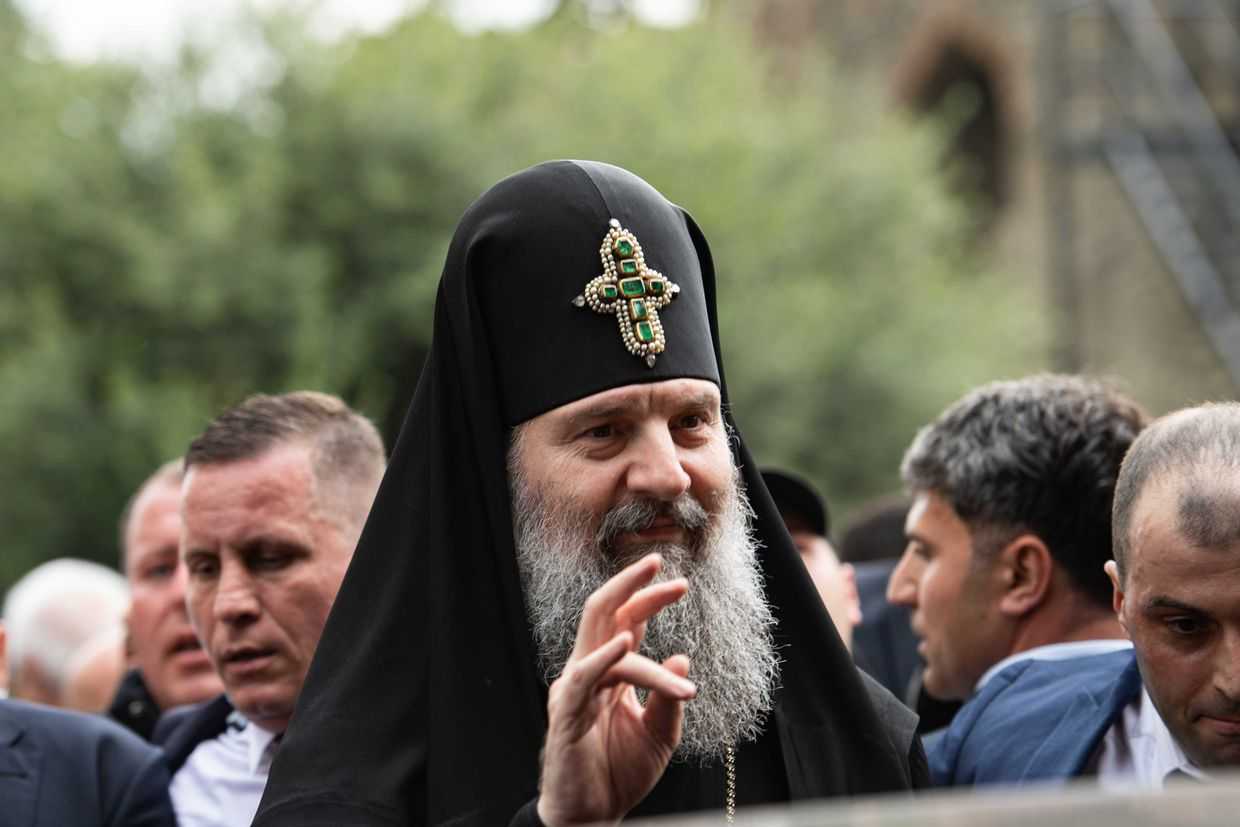
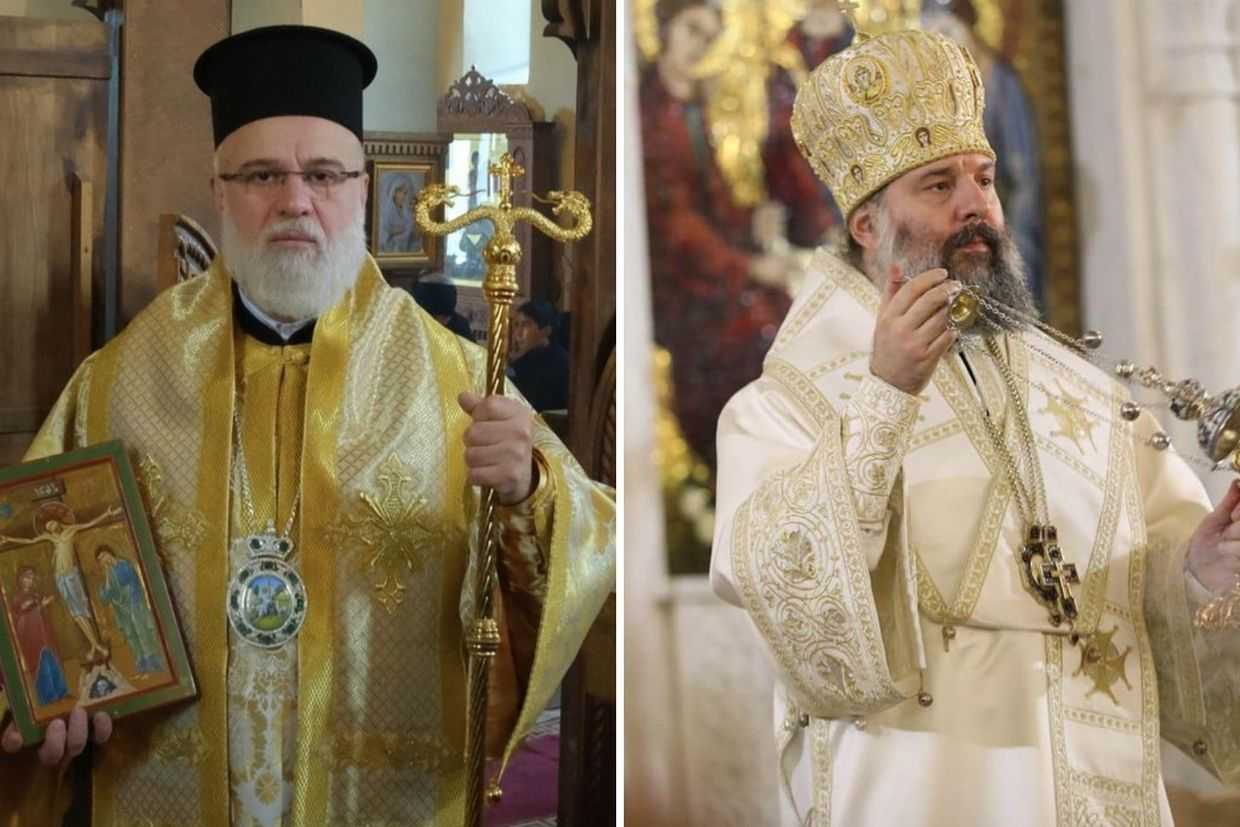
Metropolitan Shio Mujiri has been elected as Georgia’s next Patriarch. The 57-year-old senior bishop, who will be known as Shio III, will succeed Georgia’s longest-serving Patriarch, Ilia II, who passed away in March.
Mujiri was widely seen by critics as the favoured candidate of the ruling Georgian Dream party.
Mujiri was elected at the Holy Trinity Cathedral (Sameba) in Tbilisi, with 22 out of 39 votes. He ran against two other metropolitans, Iob Akiashvili and Grigol Berbichashvili, who received nine and seven votes respectively. One vote was rendered invalid.
His election as Patriarch concludes a relatively lengthy process of choosing a successor for Ilia II, who had led the Church since 1977.
Mujiri announced that his enthronement will take place on Tuesday at Svetitskhoveli Cathedral in Mtskheta, just northwest of the capital Tbilisi.
The succession process unfolded amid strong public interest and extensive media coverage, with senior clergy and political figures adding to the debate through public commentary.
Tuesday’s expanded assembly was convened in accordance with the statute of governance of the Georgian Church, which stipulates that both clergy and laypeople must be represented at the gathering — ranging from members of the Holy Synod to defined numbers of lower clergy and lay delegates from each diocese, in addition to delegates from monasteries, theological academies, and seminaries.
Despite this expansion, however, the right to vote is reserved exclusively for hierarchs of the Holy Synod, leaving all other participants with a merely consultative role.
According to the Patriarchate’s website, after finishing secondary school, Mujiri enrolled at the Tbilisi State Conservatoire. Named Elizbar Mujiri in his secular life, he was ordained as a novice in 1991, and two years later he was tonsured as a monk and given the name Shio. He was consecrated as a bishop in 2003, elevated to archbishop in 2009, and became a metropolitan the year after.
Mujiri received his theological education both in Georgia and Russia, where in 2015, he defended his dissertation at Moscow’s Saint Tikhon’s Orthodox University.
Alongside with his candidacy and metropolitan position, in 2017, Ilia II designated Mujiri as Locum Tenens — the incumbent responsible for the governance of the Church in the event of the Patriarch’s passing.
Mujiri gained broad public recognition outside his diocese after 2017. His perceived lack of involvement in internal Church scandals that had increasingly tarnished the institution were among the reasons cited by some observers as a factor in his selection.
In the years that followed, Mujiri’s visibility — and, in the view of observers, his influence over internal Patriarchate affairs — grew, against the backdrop of a marked decline in Ilia II’s health.
A controversial career
Although the statue of governance does not consider the incumbent the Patriarch’s successor or grant him any advantage in the election, Mujiri’s supporters have repeatedly portrayed him in social media and public statements as Ilia II’s chosen candidate, and therefore, the inevitable choice for Patriarch.
Nevertheless, even before the death of Ilia II and prior to being nominated as a candidate, he already had critics among both clerical and lay circles.
Some observers argue that, after being appointed incumbent, Mujiri built ‘parallel structures’ within the Patriarchate to strengthen his own group in the Church. Critics have also accused him of steering the Church towards a greater alignment with the state and increasing support for the ruling Georgian Dream party and their policies.
Another controversy linked to Mujiri concerns the alleged influence of the Kremlin-aligned Russian Orthodox Church. Possible influence from the Russian Church over the Georgian Church has long been a subject of debate and part of a broader public discussion.
On all those issues, bold statements were made by Holy Synod member Archbishop Zenon Iarajuli just days before Mujiri’s election. Speaking on TV, he openly described Mujiri as the preferred candidate of both Russia and the Georgian government.
Months prior, in late 2025, some priests supporting the anti-government movement publicly condemned Mujiri. One priest, Archimandrite Ilia Toloraia, called him an ‘exarch’ — a term historically used for a Russian Church-appointed representative in the Georgian Church during the Russian Empire. Toloraia, alongside another archimandrite, Dorote Kurashvili, was later suspended from clerical duties.
Mujiri himself rarely makes public statements — or responds to critics — outside of sermons, but in 2017 dismissed allegations regarding his links with Moscow as ‘gossip and slander’.