Senior Georgian bishop calls leading patriarchal candidate Mujiri ‘dangerous’ and preferred by Russia

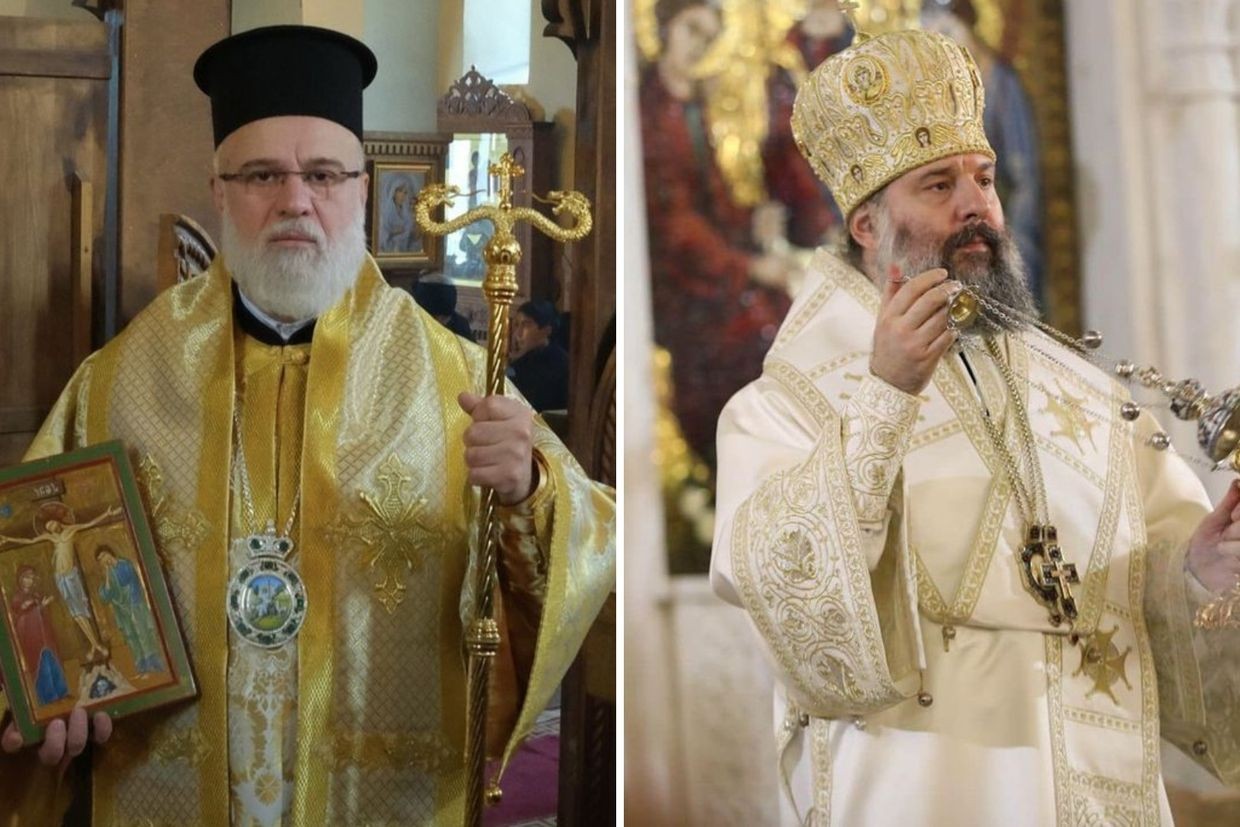
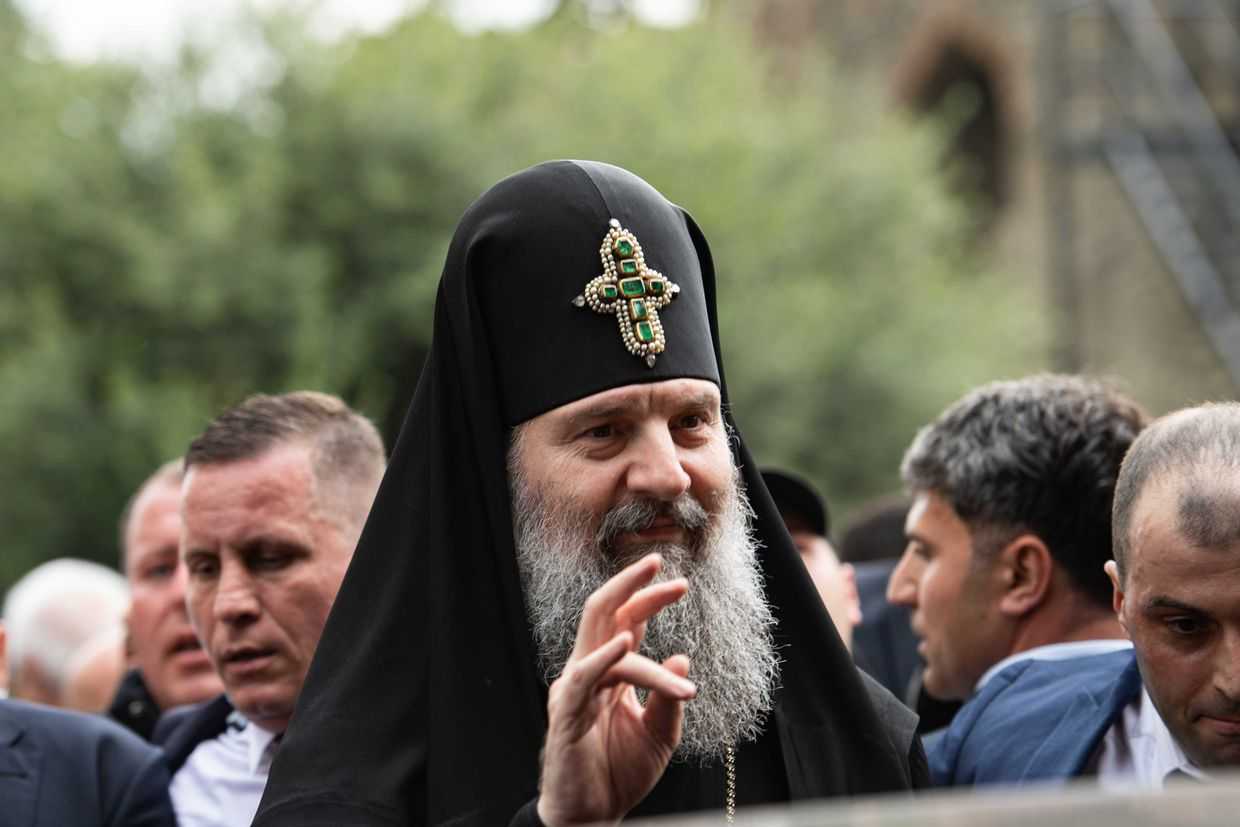
Archbishop Zenon Iarajuli of the Georgian Orthodox Church said Metropolitan Shio Mujiri, the incumbent of the patriarchal throne, will be ‘dangerous’ as patriarch if he wins the election. He also described Mujiri as a preferred candidate both for Russia and Georgia’s authorities, prompting harsh reactions from pro-government media and figures.
Iarajuli’s remarks appear to be the sharpest public criticism among senior clerics during the succession process following Patriarch Ilia II’s death, with the final vote set for 11 May.
Iarajuli, head of the Dmanisi and Agarak-Tashiri diocese within the Georgian Orthodox Church, gave a lengthy interview to the opposition-leaning TV Pirveli on Tuesday. He, like Mujiri, is a member of the Holy Synod — the Church’s highest governing body, currently composed of 39 bishops. Only Holy Synod members can participate in the patriarchal election either as voters or candidates.
Mujiri, whom Iarajuli criticised, is one of the three candidates for the patriarchate and received the most votes at the 28 April meeting of Holy Synod, where the shortlist of three candidates was decided. Alongside his candidacy, Mujiri is a designated incumbent temporarily responsible for Church governance, including organising elections. Ilia II appointed him to this position in 2017, nine years before his death.
Iarajuli accused Mujiri, along with several other bishops, of forming what he called an ‘illegal group’ within the Patriarchate in past years, acting arbitrarily and effectively sidelining the vast majority of bishops.
According to Iarajuli, this process led to a reality in which members of the Holy Synod were, in practice, presented with decisions already made before meetings began, even though these very decisions were supposed to be discussed during the meetings.
‘Primarily it’s that group which is [now] holding elections’, he said.
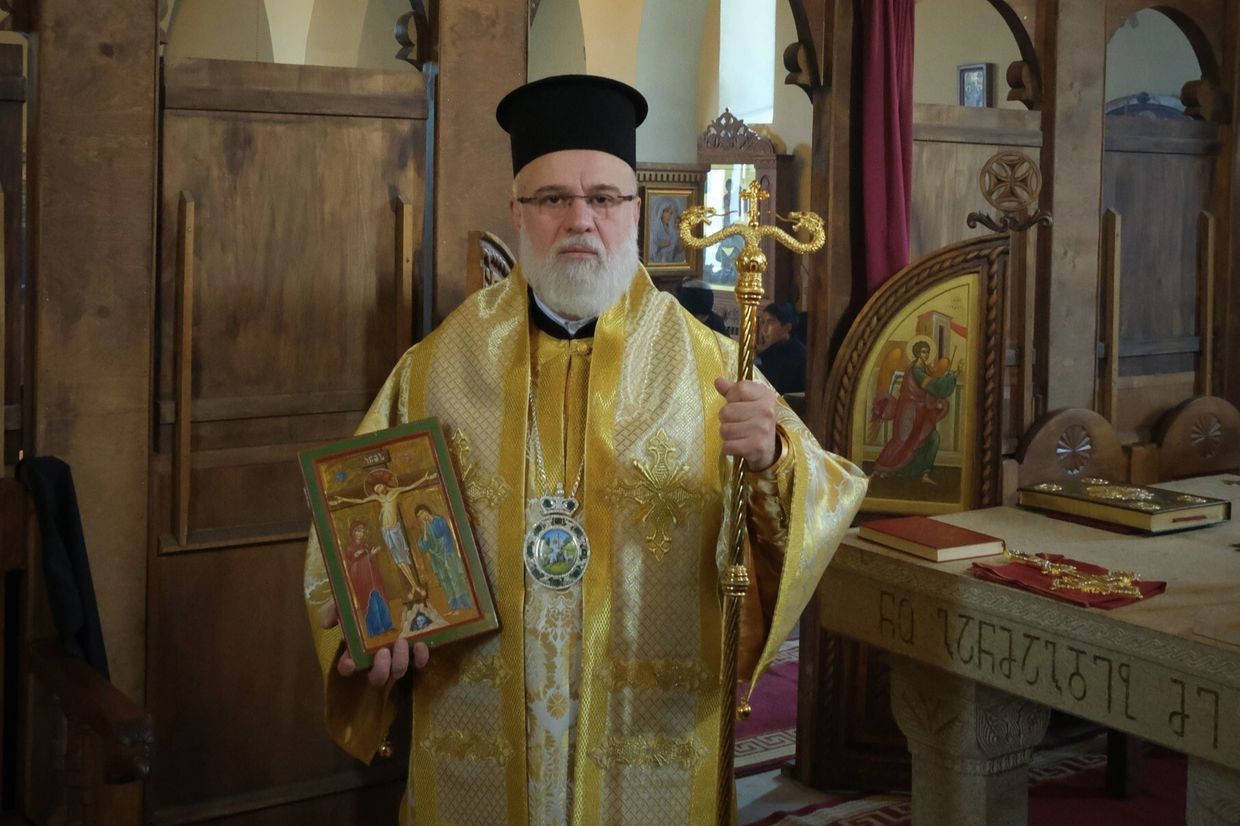
The Archbishop also noted that the group had consistently tried to use Ilia II’s name against ‘something or someone’.
According to Iarajuli, the past developments made clear for him that Mujiri is ‘unjust’. He further noted that representatives of the Moscow Patriarchate — whose alleged influence on the Georgian Church has long been a subject of debate — view Mujiri as their ‘preferred candidate’ for ‘certain reasons’. He made a similar claim in a TV interview days earlier as well, but emphasised that this does not necessarily mean Mujiri is a Russian ‘agent’.
Iarajuli did not specify why Russia might support Mujiri’s candidacy. However, he claimed that in the 1990s, when Mujiri was still living a monastic life in Shio-Mghvime monastery near Tbilisi, he was part of a clerical circle where a ‘very dangerous’ worldview was formed:
‘[This was] a Russian worldview in terms of religious outlook, social relations, and beyond’.
In what was likely the most explosive remark of the interview, Iarajuli said: ‘Given what we are facing now, I say that Metropolitan Shio would be dangerous for the Georgian Church as patriarch’.
Mujiri himself said in 2017, responding to a question regarding his alleged links with Moscow, that it was ‘gossip and slander’.
 Mikheil Gvadzabia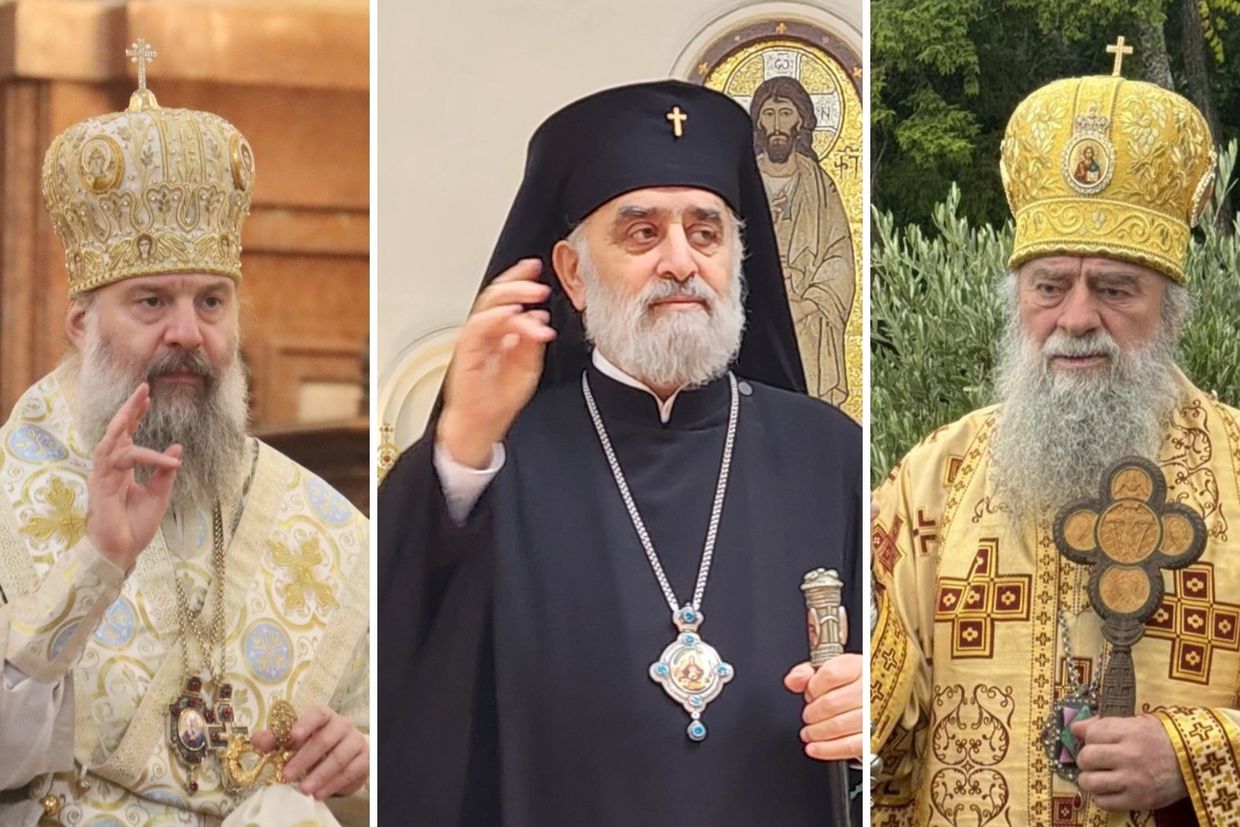
‘The government was summoning the bishops’
According to Iarajuli, Mujiri has been a mostly passive figure in the Church until the 2017 February cyanide scandal — when priest Giorgi Mamaladze was arrested and accused of plotting to murder Shorena Tetruashvili, the secretary of Patriarch Ilia II. Mamaladze denied the allegations, and the scandal became a major topic of discussion in the media, political circles, and among the wider public.
Iarajuli claimed that, after the scandal, the government was summoning certain bishops ‘individually’ and making ‘a direct demand’ that ‘this person must become patriarch’, in a reference to Mujiri.
Although Iarajuli said that there was a ‘will’ of Ilia II regarding Mujiri’s appointment in November 2017, he stressed that the late patriarch nominated him only as a future incumbent and not as a ‘successor’.
Although canonical tradition does not consider the incumbent the Patriarch’s successor or grant him any advantage in the election, Mujiri’s supporters have repeatedly portrayed him in social media and public statements as Ilia II’s chosen candidate, and therefore, the inevitable choice for Patriarch.
While Georgian Dream leaders have avoided explicitly backing any candidate, pro-government TV host Gia Gachechiladze drew attention by claiming in March that Ilia II had effectively named Mujiri as his successor, and that any hierarch who does not withdraw in his favour would be a ‘traitor’. He later apologised for the statement.
Asked by the host whether the authorities are currently interfering in the patriarchal election process, Iarajuli said he had no such information at present, though he mentioned an unnamed businessperson who, according to him, has been asking bishops to vote for Mujiri.
Iarajuli further noted that ‘until everything becomes clear among ourselves, there can be no talk of any election or enthronement’. He did not specify how he envisioned postponing the vote.
Mujiri, who rarely makes public statements outside of sermons, has not responded to Iarajuli’s remarks.
For his part, Archpriest Andria Jaghmaidze, who heads the Patriarchate’s public relations service, said in response to a journalist’s question that during Ilia II’s tenure, ‘not a single step or statement was made without his agreement’.
‘It was completely inappropriate to spread such claims’, he added, apparently referring to Iarajuli’s allegations about the existence of a self-directed group within the Patriarchate.
Pro-government circles furious
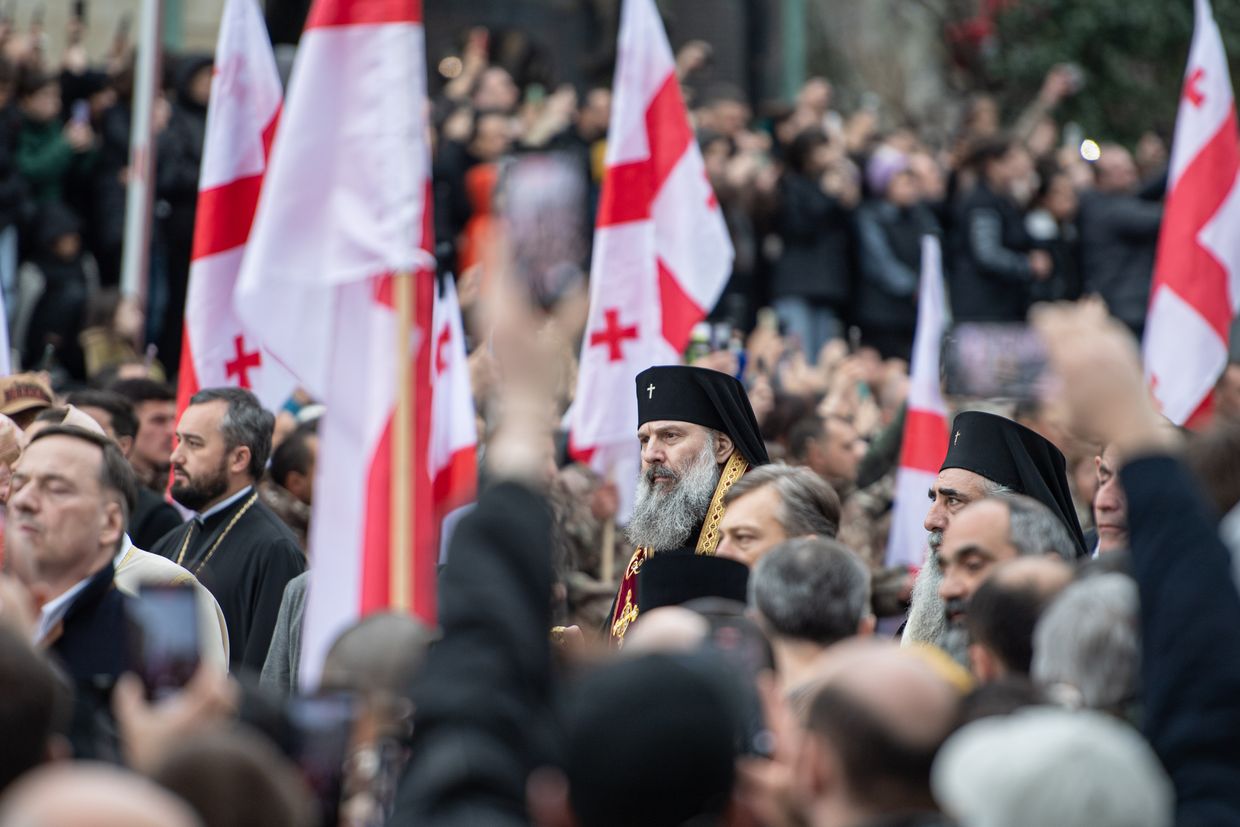
The day after his interview with TV Pirveli, Iarajuli came under heavy condemnation from pro-government circles. They described the Archbishop’s remarks and their follow-up outlets as an attack on the Church — something Georgian Dream often accuses its opponents of.
In its social media post on Wednesday morning, the biggest state-affiliated TV channel Imedi described the archbishop as a ‘praiser’ of the ex-ruling United National Movement (UNM) — reflecting a common tactic in pro-government circles of associating government critics with the formerly ruling party.
The post included a photo showing Iarajuli together with the EU Ambassador to Georgia, Paweł Herczyński, who has repeatedly been targeted by the ruling party and its affiliates over his criticism of Georgian Dream’s policies.
An hour later, Imedi appeared to soften its rhetoric, editing the post and removing the part describing Iarajuli as a praiser of UNM. However, it continued to reprimand Iarajuli throughout the day.
During the afternoon news broadcast covering Iarajuli’s remarks, the host Natia Songhulashvili, who also is a shareholder of the channel and the head of its news department, spoke of a ‘new campaign against the Church’. Songhulashvili referred to what she described as ‘insults and serious allegations’ made by Iarajuli.
Alongside Iarajuli, Imedi also appeared to rebuke TV Pirveli, stressing that the channel had ‘given him airtime’. The broadcast also showed screenshots of Iarajuli’s remarks as covered by government-critical outlets, as well as aired remarks of an opposition politician Armaz Akhvlediani criticising the election process.
‘Insulting members of the Holy Synod and interfering in Church affairs is unacceptable for the authorities’, Songhulashvili later said, while airing comments from the ruling Georgian Dream party and its ally People’s Power on the issue.
Speaking to the channel, Georgian Dream MP Davit Matikashvili said that ‘the aim of the attack is directed at Metropolitan Shio’ by those for whom the ‘line left by the Patriarch [Ilia II]’ is unacceptable. Another ruling party MP, Mariam Lashkhi, said that ‘a targeted attack on the Church primarily serves an attack on the nation’s identity’.
MP Davit Macharashvili of the People’s Power party noted that ‘attacks’ on the Church serve the interests of ‘foreign powers’, referring in this context to certain European politicians critical of Georgian Dream, as well as parts of Georgia’s political opposition and civil society.
Iarajuli has previously voiced criticism toward the political authorities on several occasions.
In December 2024, amid police violence against anti-government and pro-EU protesters in Tbilisi, Iarajuli called on state institutions to stop the ‘torture’ of demonstrators. A few weeks later, as dozens of protesters had already been detained, he expressed solidarity and wished freedom to those ‘imprisoned for their love of Georgia’.
In February 2025, he publicly rebuked the founder of Georgian Dream, Bidzina Ivanishvili, saying that he ‘does not bring peace’.
In previous years, Iarajuli became involved in internal tensions within the Patriarchate. In 2022, a synodal commission removed him from overseeing the parish in the UK, leaving him responsible only for Dmanisi and Agarak-Tashiri, following a reported dispute between him and part of the congregation.