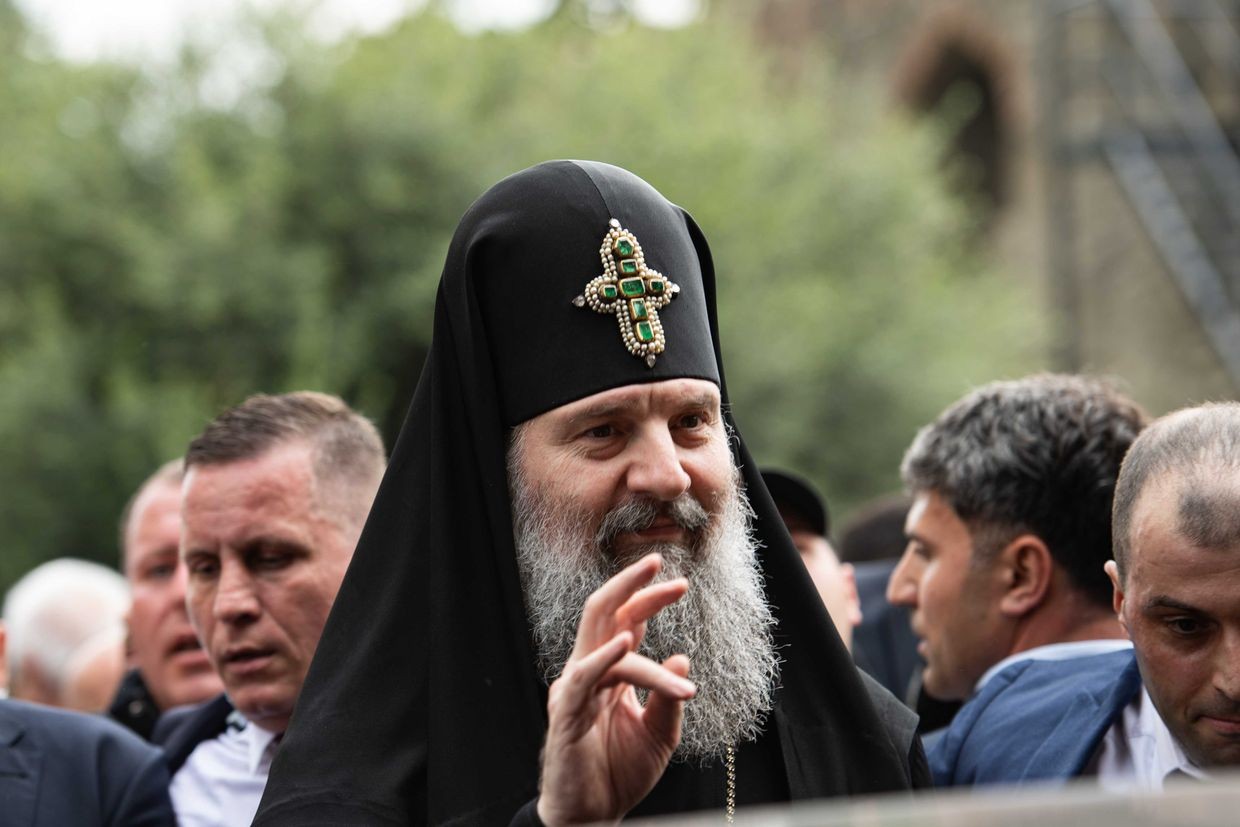
Shio III, the new Georgian Patriarch, has condemned abortion and called for strengthening legislation against what he described as ‘gender ideology’. He made the remarks on Sunday, during the Church-established Family Purity Day, which is observed as a counter-event to the International Day Against Homophobia and Transphobia (IDAHOT).
Addressing congregants gathered at the Holy Trinity Cathedral, Shio III said that ‘if a grave sin exists within a family, such as abortion, then no happiness can be built on such a foundation’.
‘Such a family is doomed because, as we know from the Bible, the blood of the slain cries out to God for vengeance. Conversely, where a child is born every two or three years, there is happiness, because by their very existence they bring warmth and light to everything around them’, he added.
Speaking energetically and loudly — in contrast to the late Ilia II’s final years, with his health having deteriorated — the new patriarch warned congregants that ‘if we do not improve our demographic situation’, Georgia faces ‘a real danger’.
Shio III framed as a danger the prospect that ‘other peoples’ could settle in the country — people who, in his words, ‘love children, do not get rid of them, protect their religion, and therefore multiply successfully’.
‘God forbid, of course, but if we continue like this, there is a real danger that they will outnumber Georgians’, he added.
Shio III also expressed a desire for legislation that would protect Georgian families from ‘gender theories’ and ‘ideology’ — without specifying what that ideology actually means or how it allegedly threatens Georgian society.
‘Rather than rejecting this legislation, as some urge us to do, we should instead strengthen and reinforce this direction of protecting and preserving the family. This is a prerequisite for our country’s survival and growth, as well as for God’s grace’, he added.
Shio III was likely referring to the anti-queer legislation passed by the ruling Georgian Dream party in 2024. The legislative package banned what the authorities call ‘LGBT propaganda’, as well as same-sex marriage — which has never been legal in the country — and gender-affirming medical treatment.
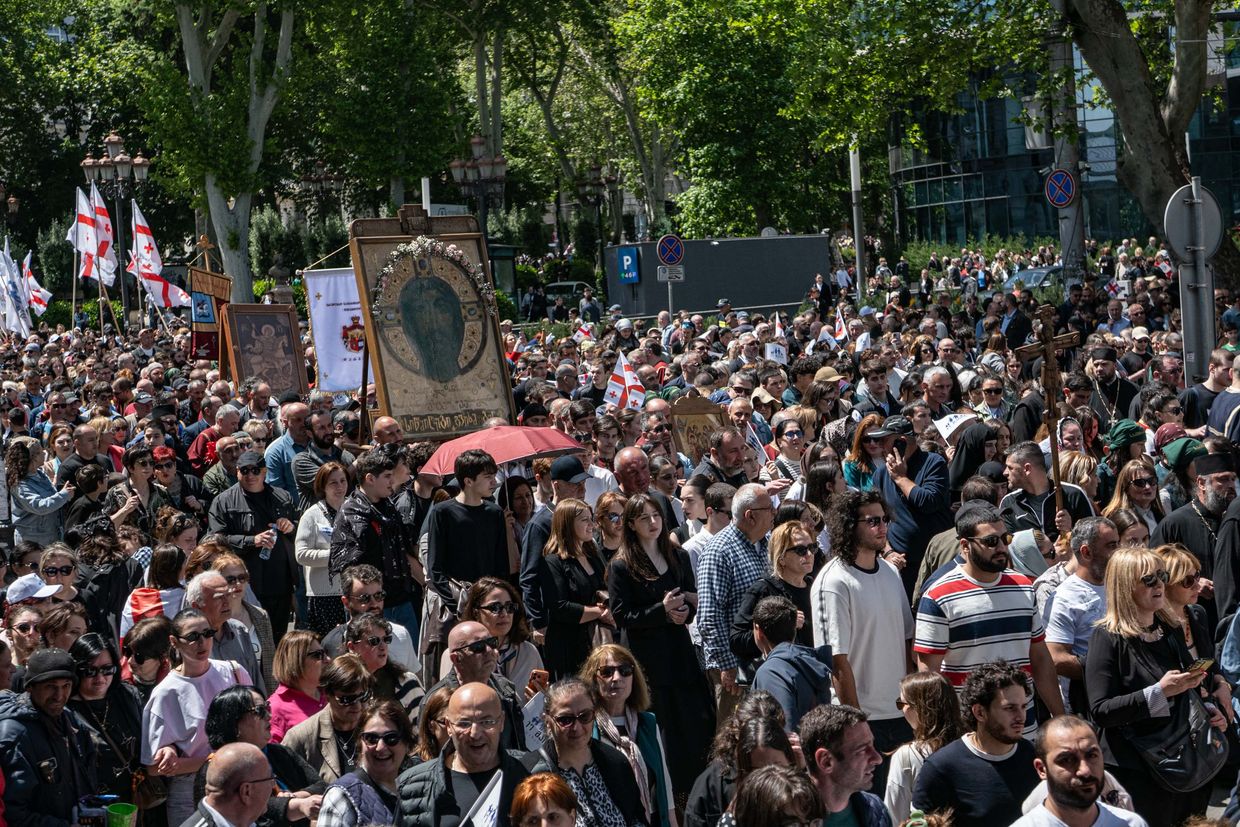
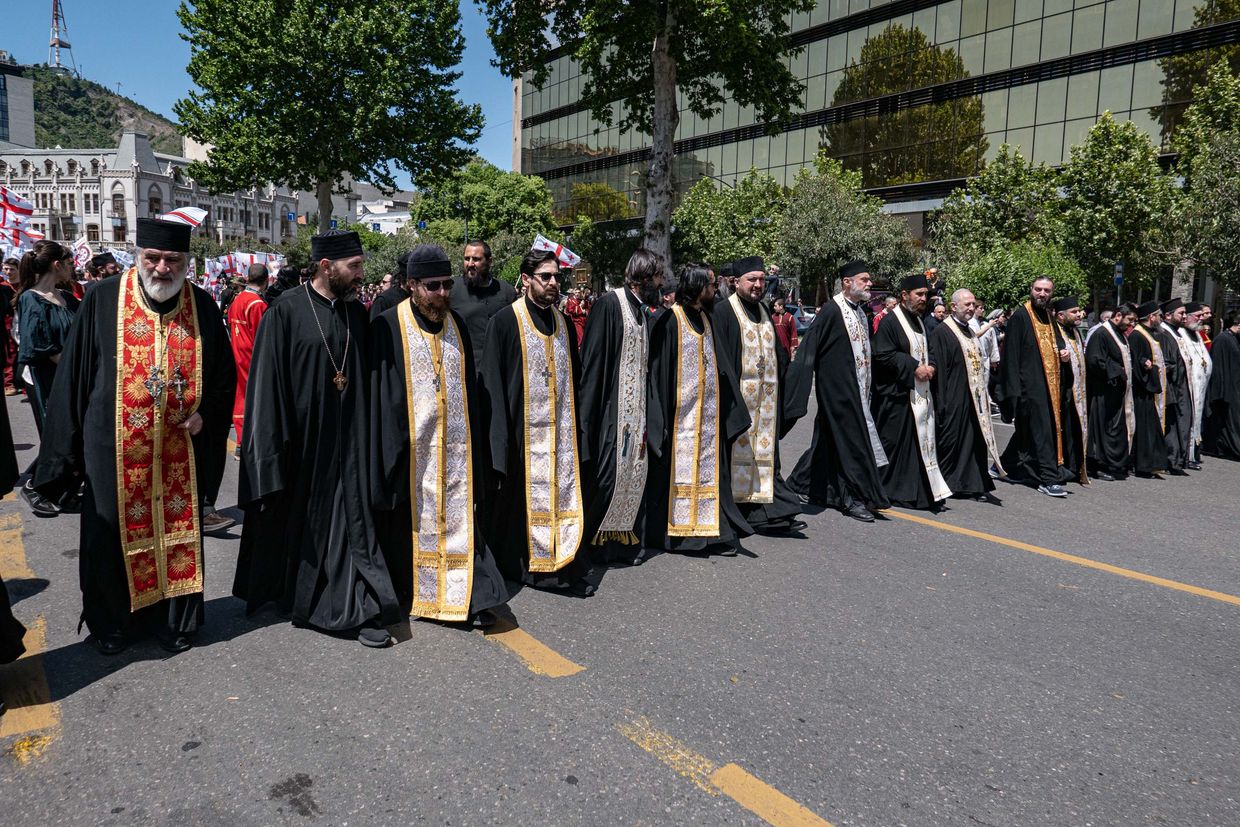
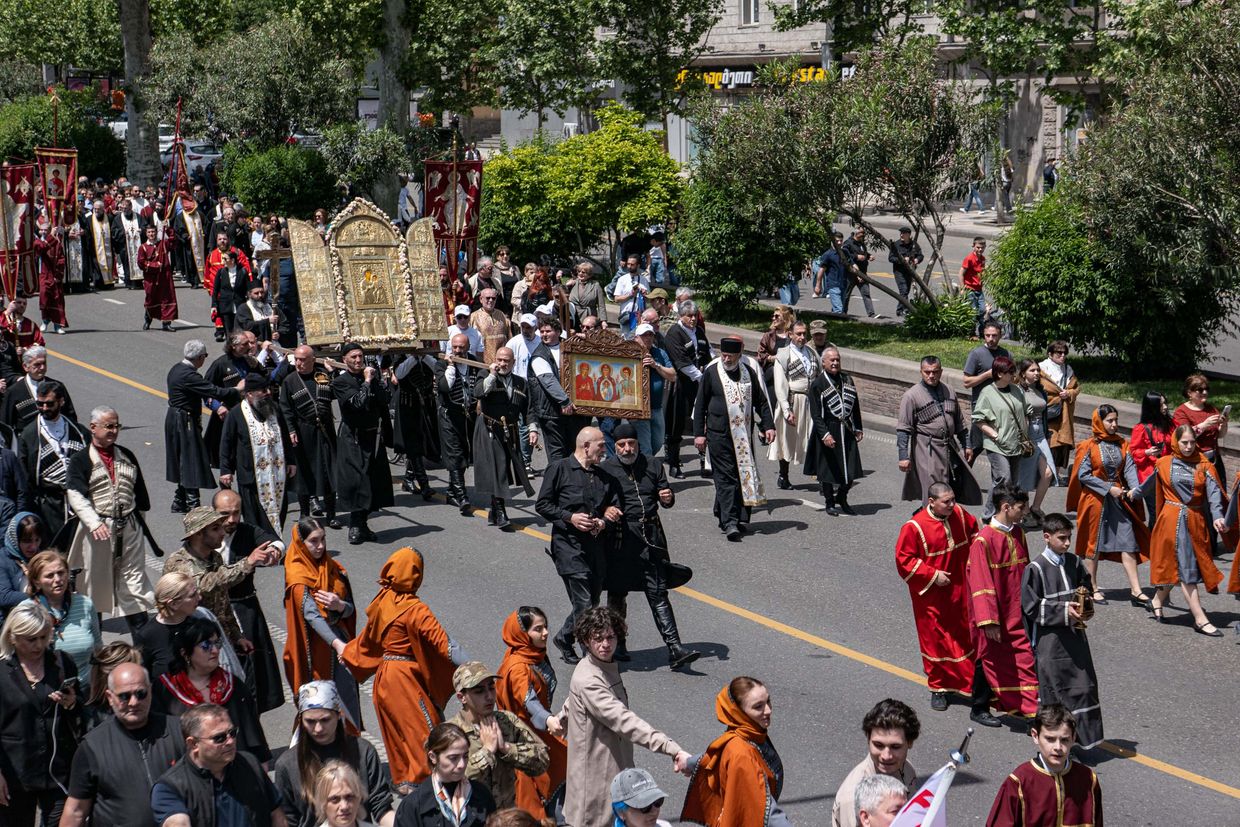
The Holy Trinity Cathedral, where the Patriarch delivered his speech, served as the final stop of the Family Purity Day march. The day was established by the Patriarchate in 2014 and has since been observed annually on 17 May as a counter-event to IDAHOT.
The establishment of the day was preceded by dramatic events on 17 May 2013, when violent groups chased several dozen people who had gathered in central Tbilisi to mark IADHOT. Large counter-demonstration groups attempted for several hours to locate and queer individuals and their allies. They also chased the vehicles in which participants of the small rally were later evacuated by the police.
The events of that day — led and participated by numerous clergy — remain one of the darkest symbols of anti-queer violence in Georgia.
Amid the sharp rise of political homophobia under the ruling Georgian Dream party in recent years, Family Purity Day was officially declared a public holiday in 2024. The event is actively attended by officials, including Prime Minister Irakli Kobakhidze.
‘we refuse to give in to despair’
IDAHOT was marked on social media by Georgian queer organisations. Tbilisi Pride noted that ‘it was on our bodies that the authoritarianism was trained, which is now visible to the whole society’.
‘In recent years, Georgian Dream has sought to erase queer people from public spaces and social life. Hate, censorship, and persecution have intensified. However, despite everything, we refuse to give in to despair, it noted, adding that ‘every authoritarian regime is transient’.
Founded in 2019, Tbilisi Pride has repeatedly been targeted by violent groups, with little state action to stop them. In recent years, the organisation has found itself in an even more vulnerable position amid the ruling party’s declared anti-queer policies.
In its statement, the Equality Movement, a long-established queer rights organisation, emphasised that ‘due to hate cynically incited, members of the LGBTQ+ community are often deprived of the privilege of family care, support, and solidarity’.
‘Unfortunately, the possibilities for protecting the rights and physical safety of LGBTQ+ people, as well as addressing their socio-economic challenges, have been rapidly disappearing in recent years’, the organisation added.
‘Such merciless words, such harsh judgement’
Shio III’s sharp remarks came just days after his enthronement, as Church observers are still discussing what the new patriarch may bring to both the Church and wider society. Sunday’s statements were swiftly criticised by some on social media.
‘Such a family is doomed? Such merciless words, such a harsh judgement; one that leaves no room for hope’, Salome Zourabichvili, the former President of Georgia and a harsh opponent of the ruling party, wrote on Facebook.
Reacting to the issue of abortion, reproductive specialist Eka Kvirkvelia stressed that reducing abortions requires not restriction or stigma, but rather ‘sexual education, real access to contraception, social and economic support, and strengthening the healthcare system’.
‘It is especially dangerous when the state, religion, or political groups treat a woman’s body as a demographic instrument’, she said, noting that ‘society often condemns abortion more than the circumstances that lead people to unintended pregnancies’.
According to official 2025 statistics, 37,867 children were born in Georgia — the lowest figure in the past 32 years. However, the same official data also showed a decline in abortions: around 11,800 in 2024, compared to approximately 14,900 the previous year, about 19,000 in 2020, and roughly 39,200 in 2012.
‘Statistically, there is no clear direct correlation between a decline in abortions and an increase in birth rates’, wrote Tamta Mikeladze, the director of the Social Justice Center (SJC).
‘What appears more clearly is an overall decline in reproductive activity in the country, which may be linked to the emigration of the reproductive-age population, economic difficulties, and, in my view, also a sense of political depression’, she added.
Providing a general assessment of Shio III’s sermon, including his emphasis on ‘gender ideology’, Mikeladze concluded that the new patriarch ‘represents and will likely more actively advance a neoconservative ideology, grounding his social positions in these right-wing theories’.
Some criticised Shio III over his remark about the settlement of ‘other peoples’ in Georgia, interpreting it as being directed at ethnic minorities living in the country.
‘It is very painful when people in our country are divided by origin’, noted human rights defender Samira Bayramova, pointing to social and healthcare problems in the country and asking: ‘In light of all this, are other people really to blame?’
‘Or is the problem the state itself, which cannot protect and provide for its citizens and ultimately forces them to leave the country?’
‘Please help us save our children’
The Church commemoration took place against the backdrop of weeks of protests in central Tbilisi by children with Duchenne muscular dystrophy (DMD) and their parents, demanding access to modern medications.
The large march, led by clergy, was already moving through central Tbilisi when several parents approached it with their children. One of the parents, Kakha Tsikarishvili, asked the priests to bless the children and appealed for help.
‘Please help us save our children’, he told the clergy. Several priests blessed the children, while one, after doing so, told Tsikarishvili, ‘Let the march proceed’.
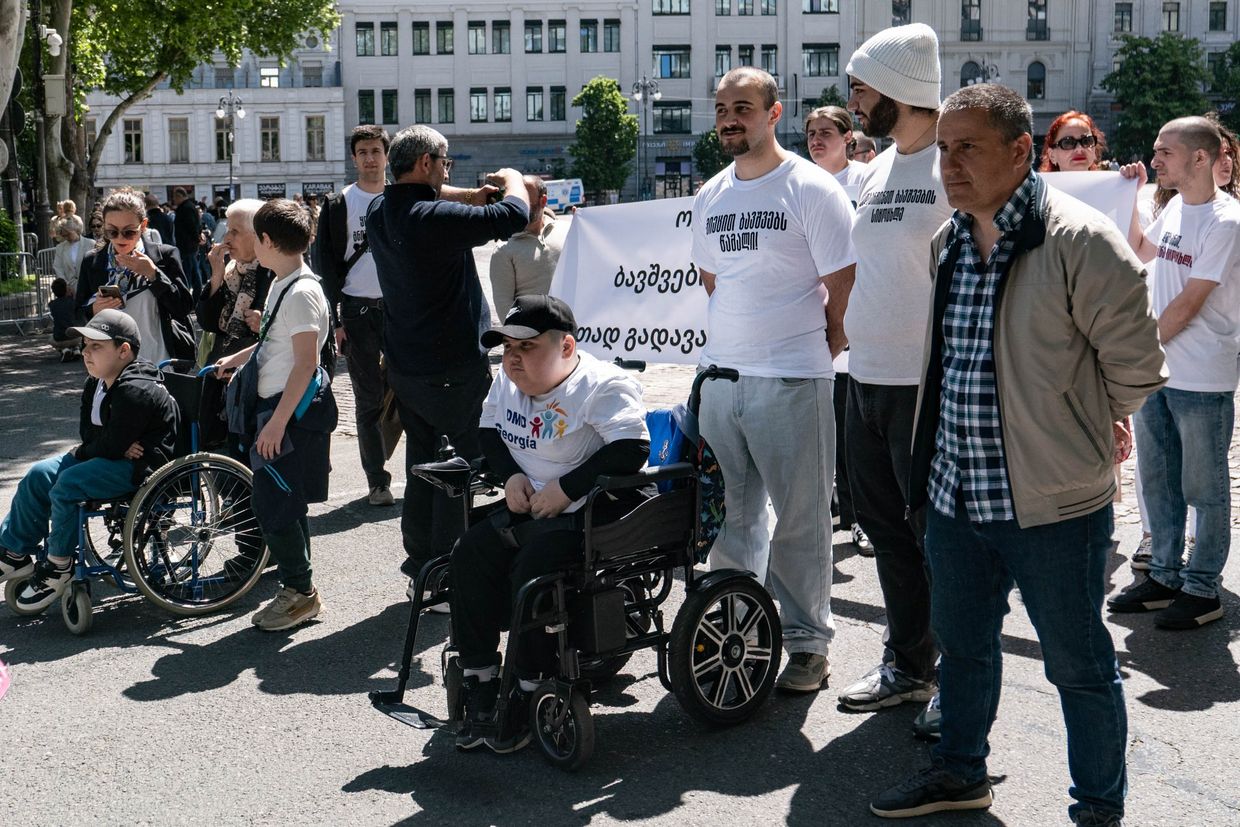
A video published by the Publika news outlet gained hundreds of thousands of views on social media, drawing numerous critical comments directed at the march and clergy.
‘Family purity is a child!!! Stand by these children — they are fighting for their lives! Otherwise, your “Family Purity Day” is nothing but a hypocritical celebration’, one comment read.
Earlier, the parents attempted to draw the Church’s attention by communicating directly with the Patriarchate, asking it to act as a mediator with the authorities. After initial unsuccessful attempts, a meeting between them and representatives of the Patriarchate took place on 8 May.
At the time, Andria Jaghmaidze, the Patriarchate’s spokesperson, said that after the process of electing the new Patriarch was completed, the Patriarchate would try ‘as far as possible’ to help encourage ‘the possible decision’.