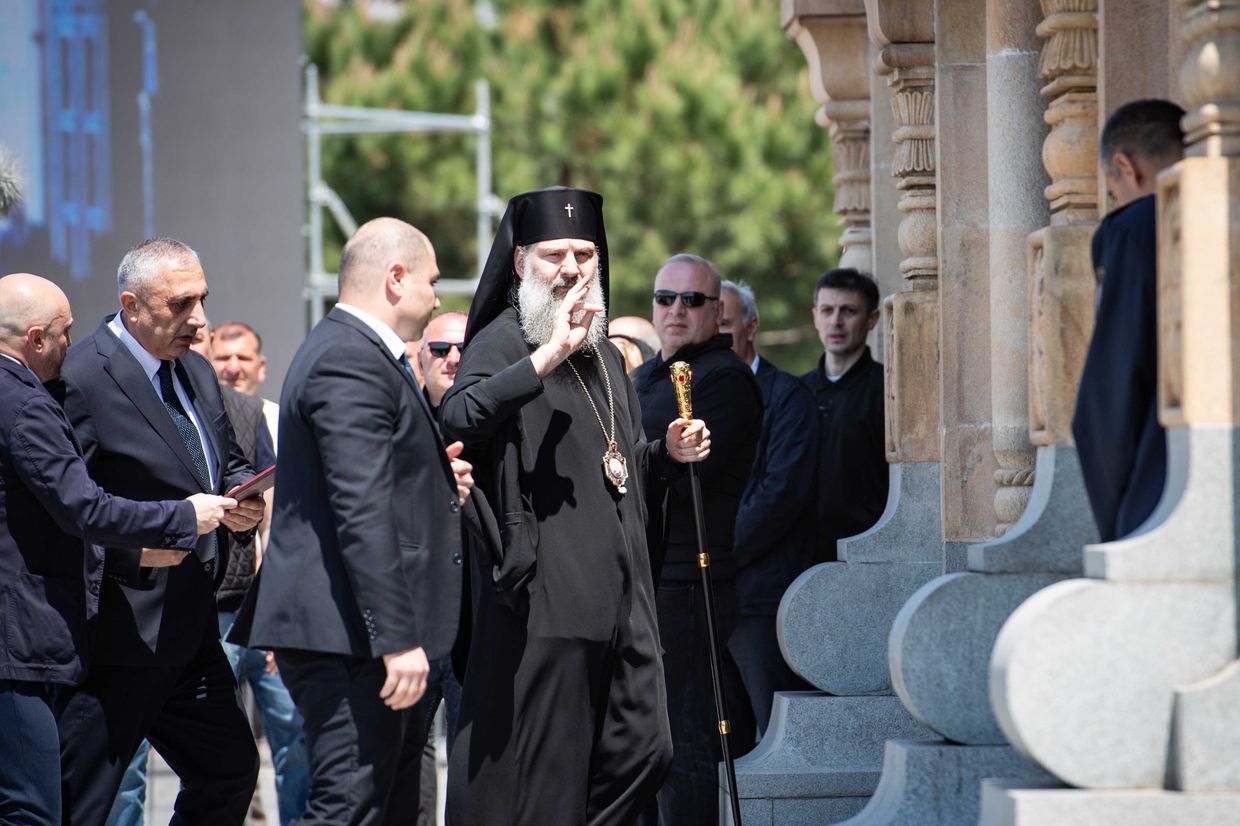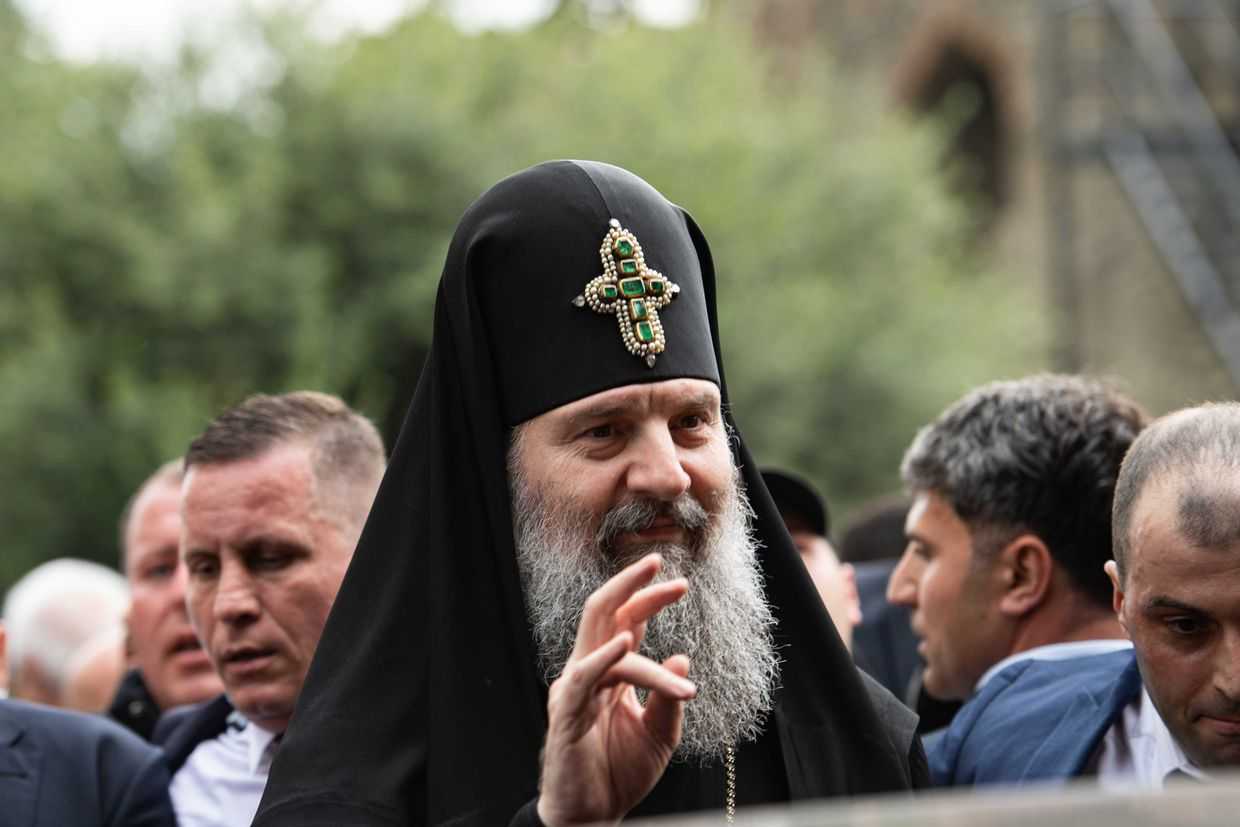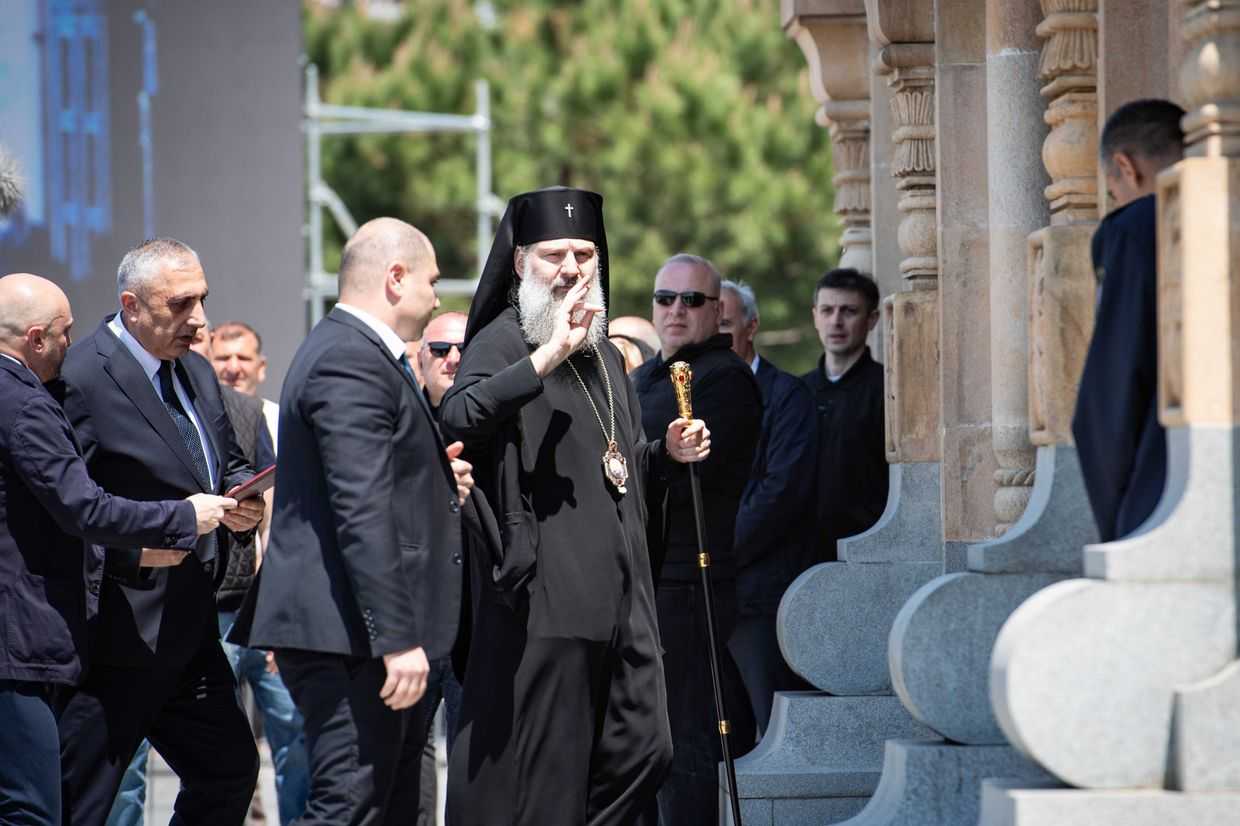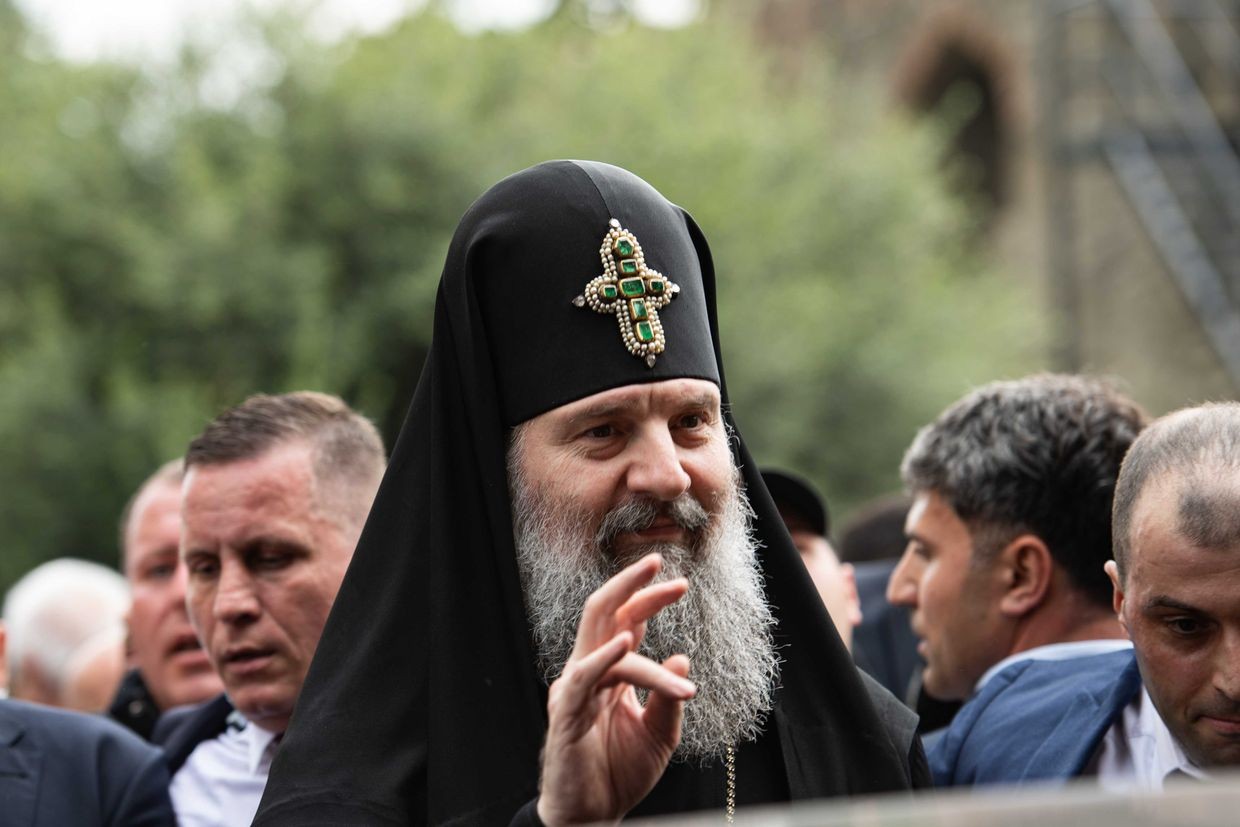
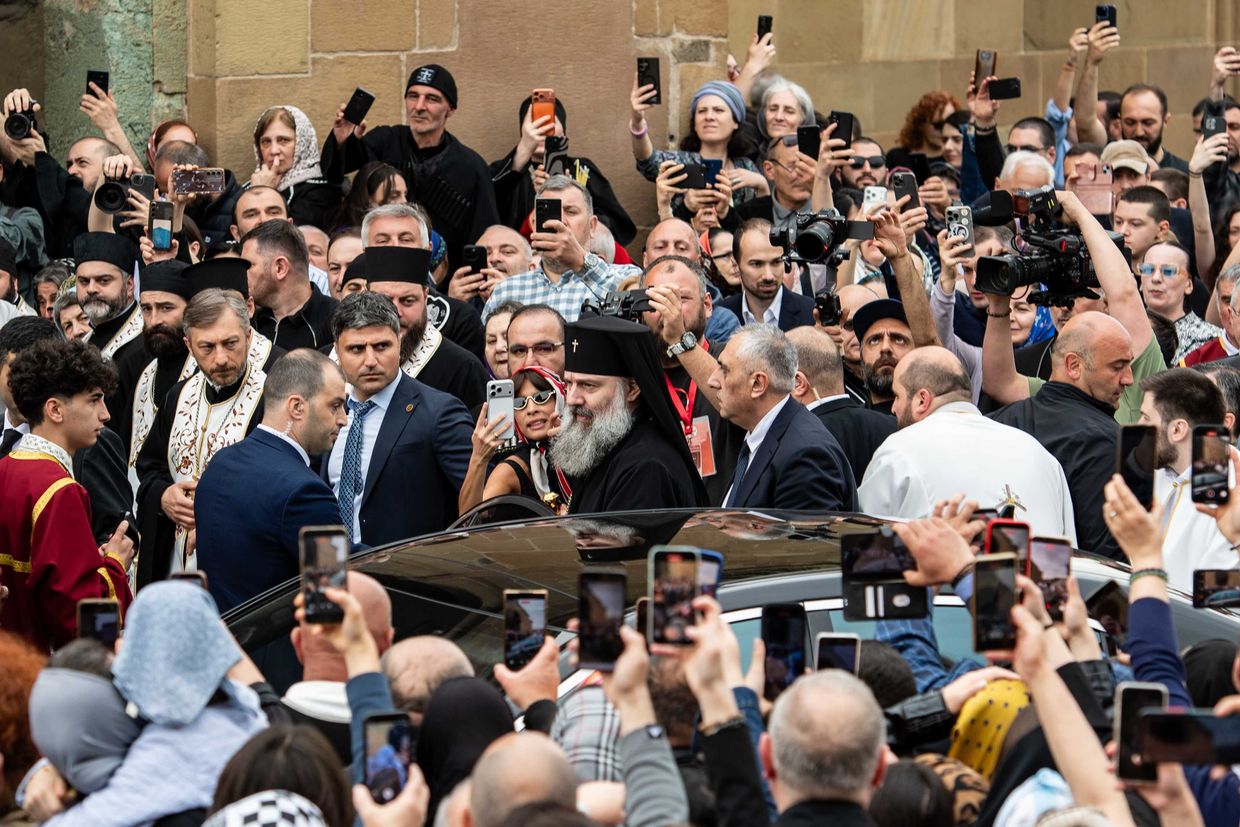
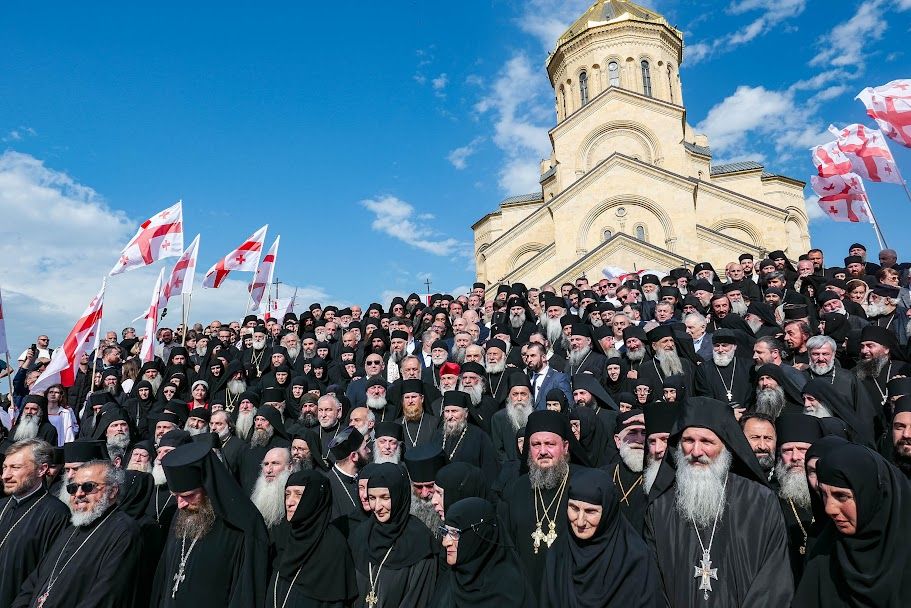
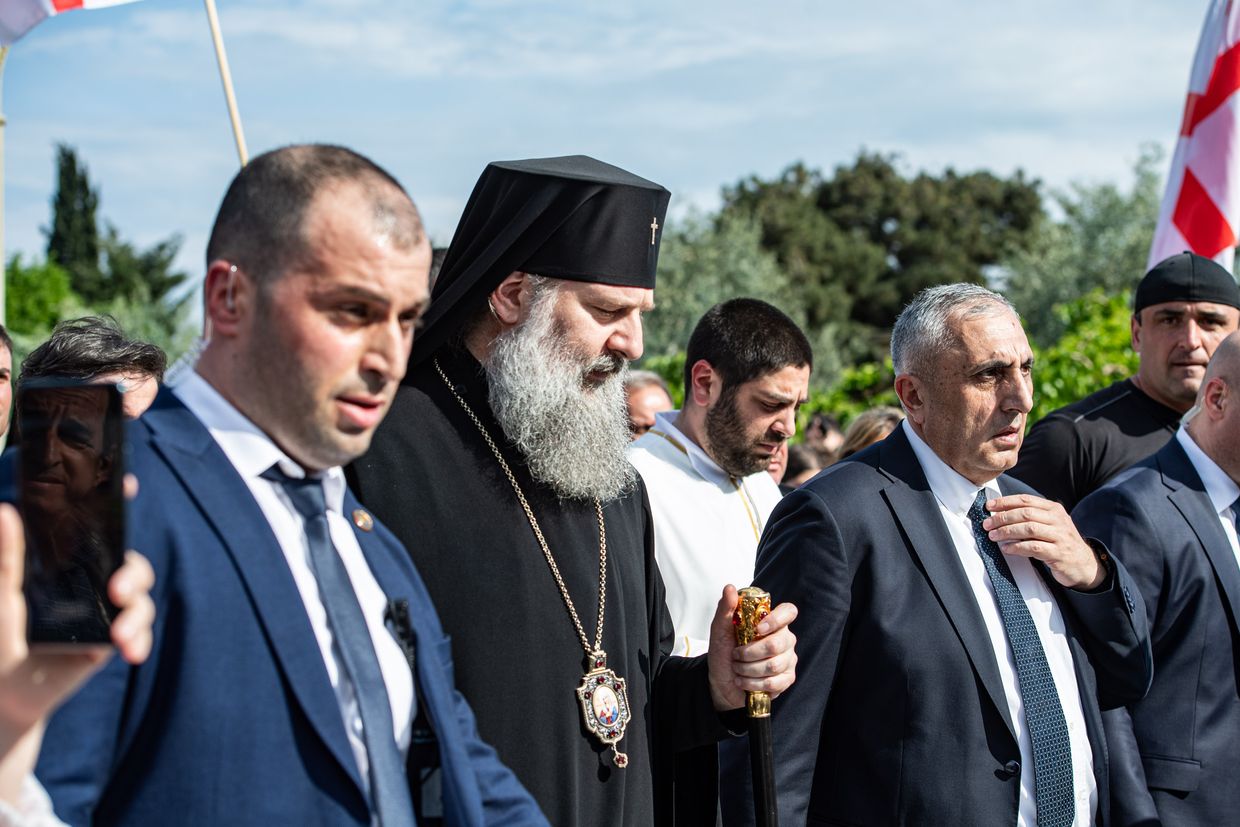
The newly elected Patriarch of the Georgian Orthodox Church, Shio III, was enthroned at the historic Svetitskhoveli Cathedral in Mtskheta on Tuesday. He became the 142nd Patriarch of the Georgian Church.
Shio III has succeeded the longest-serving head of the Georgian Church, Ilia II, who died in March after 48 years in office. His full title, like that of his predecessor, will be Catholicos-Patriarch of All Georgia, Archbishop of Mtskheta-Tbilisi, and Metropolitan of Bichvinta and Tskhum-Abkhazia.
Shio III, 57 years old, was elected Patriarch on Monday at the Holy Trinity Cathedral of Tbilisi. At the expanded church council, attended by around 1,200 delegates, where only 39 bishops had voting rights, he received 22 votes and won by a wide margin against his two rivals — Metropolitans Iob Akiashvili and Grigol Berbichashvili — who received nine and seven votes respectively.
Before becoming a candidate for the patriarchal throne, Shio III was appointed by Ilia II in 2017 as locum tenens — an incumbent in case of the Patriarch’s death, illness or other inability to perform duties. Accordingly, he was tasked with preparing the Church for the election following Ilia II’s passing.
Previously known as Shio Mujiri, he served as a bishop of Senaki and Chkhorotskuri and Australia and New Zealand before his enthronement
Congratulations and praise
On the same day, the newly elected Patriarch received congratulations from churches abroad, as well as from Georgian government and opposition circles and the diplomatic corps.
In his congratulatory message, Metropolitan Epiphanius I of Kyiv and All Ukraine first described the work of the previous Patriarch, the late Ilia II, as an ‘example of faithfulness to Christ’. He wished Shio III ‘many blessed years of service, wisdom, spiritual strength, and God’s help in being the spiritual leader of the Georgian people’.
The Georgian Orthodox Church has still not recognised the independence of the church headed by Epiphanius. Its autocephaly was granted in 2018 by the Ecumenical Patriarchate of Constantinople, a move that angered Russia.
Patriarch Kirill of Moscow also congratulated Shio III. He expressed hope that ‘the traditions of fraternal communion established under your esteemed predecessors — especially under the ever-memorable and widely venerated Catholicos-Patriarch of All Georgia Ilia II — will find worthy continuation in your primatial ministry’.
In their letter, the founder of the ruling Georgian Dream party, billionaire Bidzina Ivanishvili, and his wife, Ekaterine Khvedelidze, noted that ‘it is an immense historical responsibility to serve the Church and the country at a time when society is especially in need of spiritual strength, unity, and peace’.
‘We believe that your ministry will become a foundation for peace, solidarity, and national unity, and will further strengthen the centuries-old traditions and values of the Georgian Church upon which our national identity rests’, they added.
Mujiri was widely seen by critics as the favoured candidate of the ruling party.
The formerly ruling United National Movement (UNM) party also extended its congratulations, stressing that its 2003–2012 period in power was marked by a ‘harmonisation of state and church interests’, including state budget funding for the Church.
The party added that, amid global challenges, the Georgian Church faces a need for ‘wise renewal’, as well as ‘integrityprincipledness and courage’ on issues such as the independence of the Ukrainian Church, ‘the protection at the international level of the legal status of our churches and dioceses located in territories occupied by Russia’ and the condition of historic Georgian Christian sites in Turkey.
‘We hope that the ministry of His Holiness and Beatitude Shio III will be grounded in national interests, spiritual strength, and public consensus’, the statement read.
The opposition Lelo for Georgia party also congratulated Shio III, expressing confidence that under his leadership the Church will continue the ‘historic mission’ of the late Patriarch Ilia II and will ‘play an important role in achieving national unity, social consensus, spiritual peace, and the country’s stable development’.
For Georgia, another opposition party, also congratulated the new Patriarch, expressing confidence that ‘the Church will remain a pillar of peace, solidarity, and national unity’. In turn, the Freedom Square party wished Shio III ‘success in strengthening the unity of the Georgian people and Christian humanist values’.
Joining the congratulations, Germany’s Ambassador Peter Fischer sent the new Patriarch his ‘good wishes’.
‘Be shepherds of God’s flock’, he wrote on social media, quoting the New Testament.
Israel’s Ambassador Walid Abu-Haya wished Shio III ‘wisdom, strength, peace, and fruitful service in leading the Georgian Orthodox Church and its faithful with faith, compassion, and unity’.
A controversial career
According to the Patriarchate’s website, after finishing secondary school, Mujiri enrolled at the Tbilisi State Conservatoire. Born Elizbar Mujiri, he was ordained as a novice in 1991, and two years later he was tonsured as a monk and given the name Shio. He was consecrated as a bishop in 2003, elevated to archbishop in 2009, and became a metropolitan the year after.
Although the statue of governance does not consider the incumbent the Patriarch’s successor or grant him any advantage in the election, Mujiri’s supporters have repeatedly portrayed him in social media and public statements as Ilia II’s chosen candidate, and therefore, the inevitable choice for Patriarch.
Nevertheless, even before the death of Ilia II and prior to being nominated as a candidate, he already had critics among both clerical and lay circles.
Some observers argue that, after being appointed incumbent, Mujiri built ‘parallel structures’ within the Patriarchate to strengthen his own group in the Church. Critics have also accused him of steering the Church towards a greater alignment with the state and increasing support for the ruling Georgian Dream party and their policies.
Another controversy linked to Mujiri concerns the alleged influence of the Kremlin-aligned Russian Orthodox Church. Possible influence from the Russian Church over the Georgian Church has long been a subject of debate and part of a broader public discussion.
On all those issues, bold statements were made by Holy Synod member Archbishop Zenon Iarajuli just days before Mujiri’s election. Speaking on TV, he openly described Mujiri as the preferred candidate of both Russia and the Georgian government.
Months prior, in late 2025, some priests supporting the anti-government movement publicly condemned Mujiri. One priest, Archimandrite Ilia Toloraia, called him an ‘exarch’ — a term historically used for a Russian Church-appointed representative in the Georgian Church during the Russian Empire. Toloraia, alongside another archimandrite, Dorote Kurashvili, was later suspended from clerical duties.
Mujiri himself rarely makes public statements — or responds to critics — outside of sermons, but in 2017 dismissed allegations regarding his links with Moscow as ‘gossip and slander’.
 Mikheil Gvadzabia