
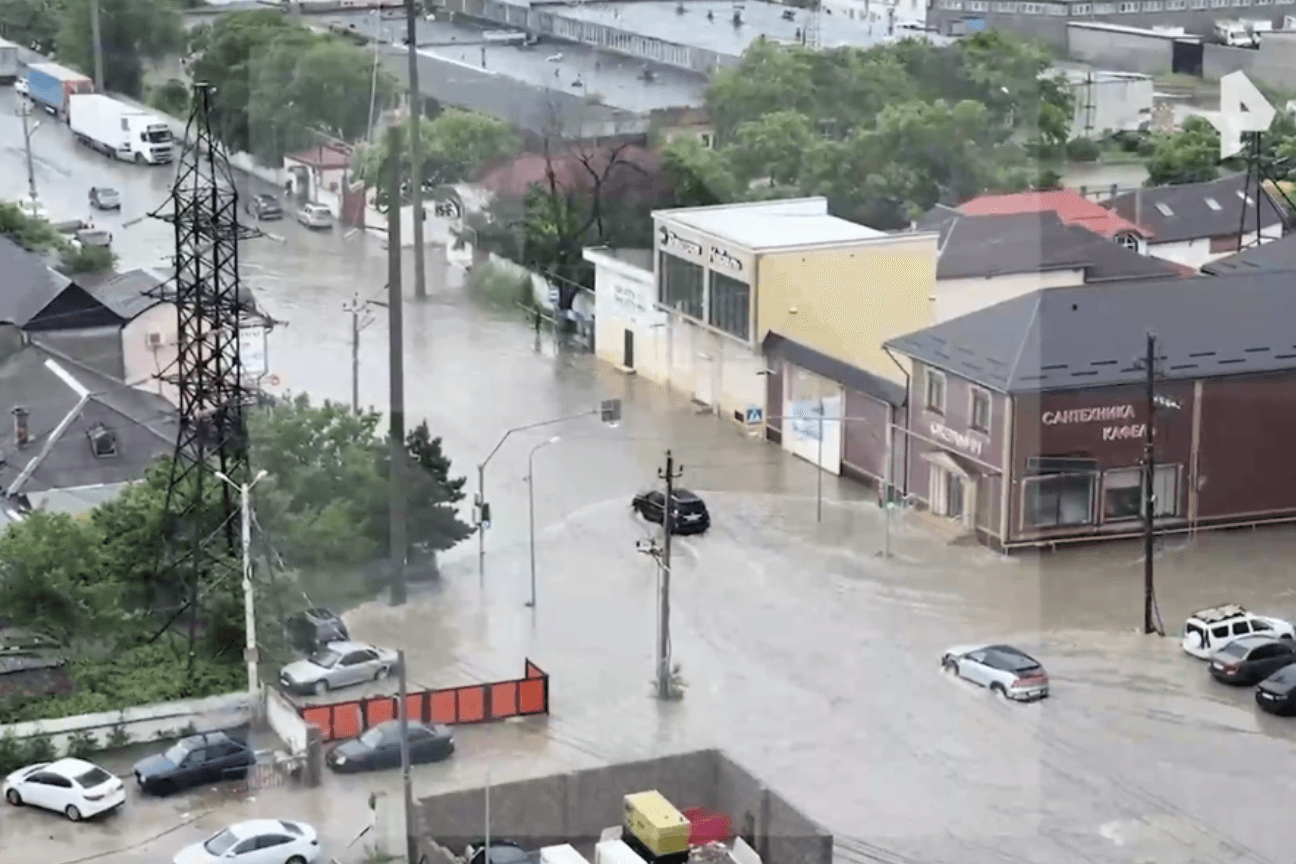
Heavy rainfall has once again caused flooding, road damage, and power outages across the North Caucasus and Abkhazia. The most serious situation in recent days has been reported in Daghestan, Chechnya, and Ingushetia, where authorities say infrastructure has been damaged, residents evacuated, and transport links disrupted.
According to regional authorities and emergency services, at least two people have died as a result of the latest wave of flooding.
A resident of the Prikubansky district of Karachay-Cherkessia attempted to drive across a flooded bridge together with friends during a severe overflow of the Ovechka River. As they were crossing, the rushing water submerged the road and the vehicle’s engine stalled.
‘A resident of the village of Svetloe, born in 1982, got out of the vehicle and was swept away by the current. His body has been recovered’, the authorities said, adding that the two other passengers were unharmed.
In Chechnya, around 20 families were evacuated after a dam flooded near the village of Agishty. Heavy rainfall also caused the Dzhalka River to burst its banks in the village of Mesker-Yurt, flooding 45 residential compounds, including eight homes that were completely submerged. According to the administration of the Shali district, residents were evacuated and temporarily accommodated with relatives.
Chechnya also recorded one fatality. Following heavy rains in the Itum-Kale district, a mudslide occurred two kilometres from the village of Terti, killing one person and injuring another. Rescue operations continued for two days. One person was rescued, while the second died.
In Daghestan, floods damaged roads and power lines, while some settlements were temporarily cut off from transport links.
Power outages were reported in Makhachkala and Khasavyurt. According to local authorities, more than 2,000 people were left without electricity.
At the same time, a landslide blocked several mountain roads in Ingushetia, requiring the evacuation of residents from the most vulnerable areas.
Overall, flooding affected 46 residential buildings and more than 270 household plots in lowland areas. Roads and infrastructure facilities were also inundated.
In Abkhazia, heavy rainfall caused flooding in the Gulripsh district. Local authorities placed utility and emergency services on high alert. District officials said that recovery operations were continuing, with specialised services clearing affected areas and restoring damaged infrastructure.
The Tkvarcheli (Tkuarchal) district suffered the most severe damage from the storm that struck eastern Abkhazia, with one village cut off from the district centre. This was reported by the presidential press service following a visit by President Badra Gunba to the affected areas.
Construction crews have already begun repairing damage caused by torrential rain in eastern Abkhazia, where approximately 1,500 household compounds were flooded and around 150 homes were affected, according to the Capital Construction Department.
The latest flooding is a continuation of an exceptionally severe flood season that began in the North Caucasus in late March. Early on, Daghestan and Chechnya experienced one of the most significant floods in recent years. Daghestan was the hardest-hit region, with residential buildings inundated, roads destroyed, and energy infrastructure damaged. Thousands of residents were evacuated.
 Aytan Farhadova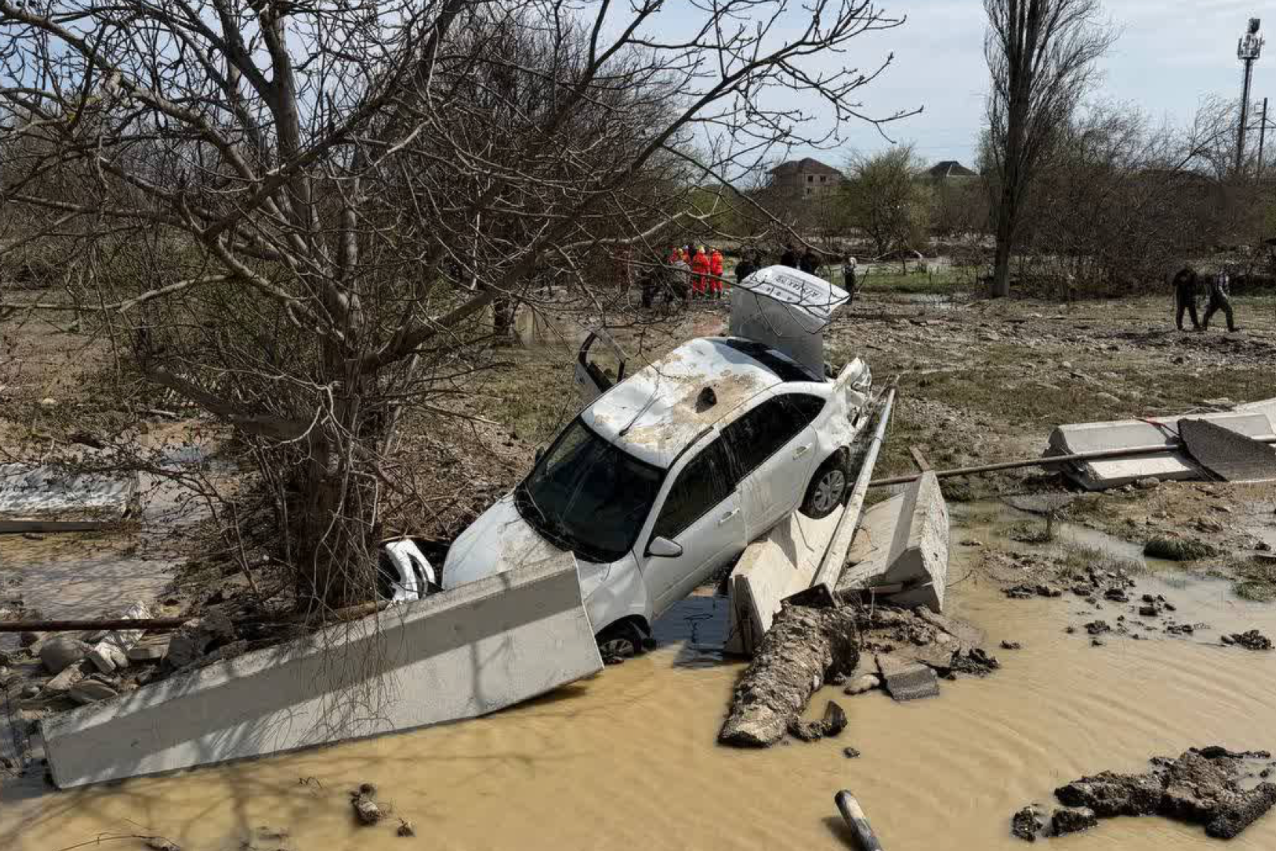
At least eight people died during the floods in the North Caucasus. In Daghestan and Chechnya, dozens of bridges and road sections were damaged, while some mountain villages were temporarily cut off from the outside world.
Experts attribute the repeated flooding to a combination of factors, including intense rainfall, snowmelt in mountainous areas, the region’s terrain, and the condition of local infrastructure.
Heavy rains are also a recurring problem in Abkhazia. In mid-May, local meteorologists warned of the possibility of severe rainfall and mudflows in mountainous regions. Residents and tourists were advised to exercise caution when travelling in the mountains and to avoid riverbeds during periods of bad weather.
As of 26 May, emergency and utility services in the affected regions continue to deal with the consequences of the flooding, restore electricity supplies, and reopen routes. Authorities in the North Caucasus and Abkhazia say the situation is under control, but meteorologists warn that unstable weather conditions are expected to persist in several parts of the region.
On 26 May, the Ministry of Emergency Situations also issued an emergency warning about a sharp deterioration in weather conditions in Daghestan over the next three days.
For ease of reading, we choose not to use qualifiers such as ‘de facto’, ‘unrecognised’, or ‘partially recognised’ when discussing institutions or political positions within Abkhazia, Nagorno-Karabakh, and South Ossetia. This does not imply a position on their status.