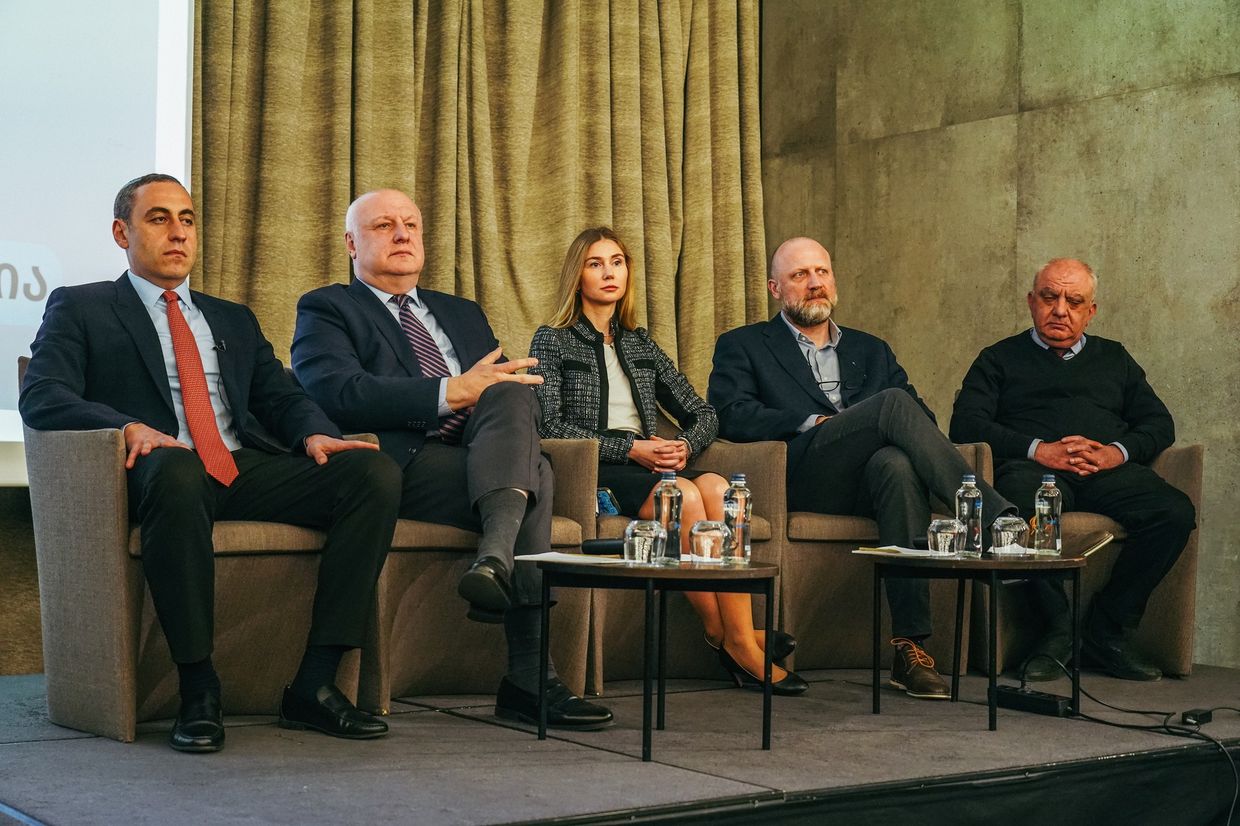
Amid the formation of an opposition alliance among Georgian opposition parties, the ruling Georgian Dream party has stated that it will expand its constitutional lawsuit against its opponents by adding the Federalists party to the list.
The decision was announced on Monday by the Georgian Parliamentary Speaker Shalva Papuashvili, who noted that Georgian Dream will withdraw its original case filed with the Constitutional Court in October 2025, and will submit a new one that also includes Federalists.
Until now, the ruling party had requested the banning of three opposition parties — Ahali, the formerly ruling United National Movement party (UNM), and Lelo. These three parties finished in the top three positions after Georgian Dream in the disputed 2024 parliamentary elections, marked by major violations.
Georgian Dream has repeatedly accused the UNM of acting against national interests, both during its time in power and after 2012, when it moved into the opposition. It has also argued that many other opposition parties in the country are linked to the UNM and therefore should also be banned.
 Mikheil Gvadzabia
The Federalists party was founded in 2024 by Giga Bokeria, a former Secretary of the National Security Council during the UNM’s rule, and his wife, politician and journalist Tamar Chergoleishvili. Amid internal disagreements, Bokeria left the UNM in 2017 and founded European Georgia, which he left in 2024.
Explaining the reasoning behind the latest decision, Papuashvili referred to an opposition alliance formed in March by nine parties, whose founders said they had agreed on a ‘common strategy and joint rules of action’. Soon after its creation, Prime Minister Irakli Kobakhidze suggested that the proposed ban on political parties could be extended.
According to Papuashvili, by signing the alliance’s founding declaration, several parties have ‘embraced the same strategic objectives’ as the three parties named in the original lawsuit. He accused them of intending to ‘delegitimise’ the elections and refuse to recognise the authority of constitutional bodies.
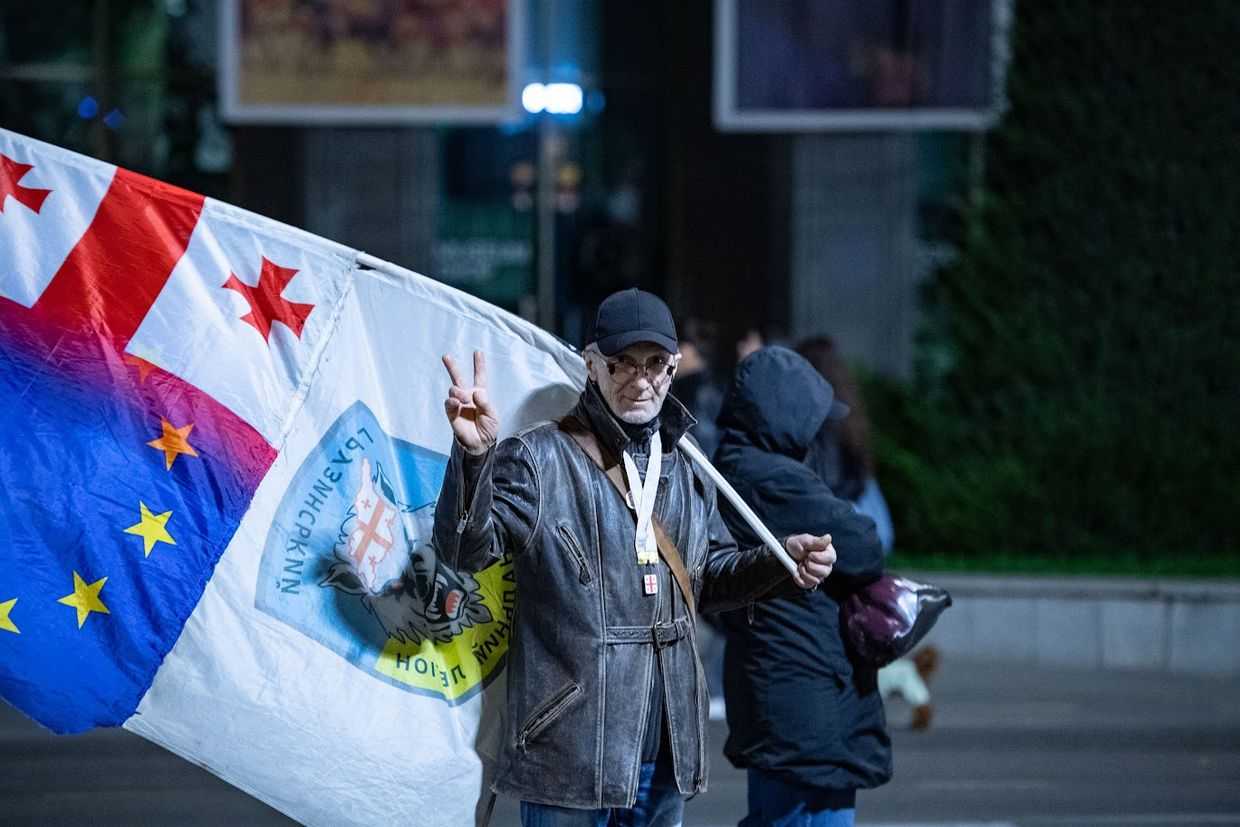
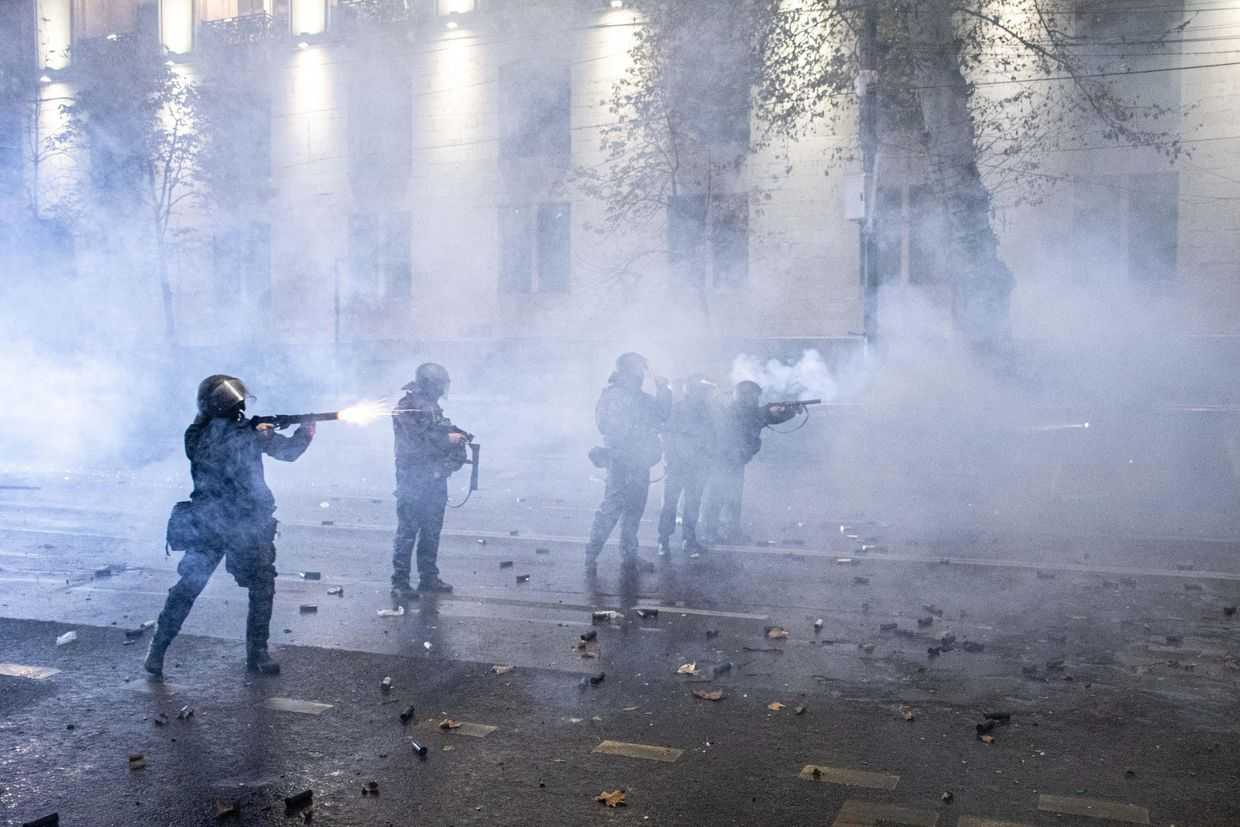
‘They have united with the organisers of the 4 October attempt to overthrow the government’, Papuashvili added, referring to the protest and clashes in Tbilisi on 4 October 2025, branded as a ‘peaceful revolution’. While some opposition figures promoted the idea, others refrained from supporting it or, like the Federalists, openly opposed it, citing the risk of creating false expectations.
Seeking to explain why the Federalists were singled out despite other smaller parties also joining the opposition alliance, Papuashvili said that Georgian Dream assesses ‘the extent of unconstitutional aims’ of a specific party, as well as ‘the significance of their influence on politics’ in determining whether a party should be banned.
‘Today, the leaders of the alliance are Mikheil Saakashvili, Giga Bokeria, and Nika Gvaramia’, Papuashvili claimed.
Saakashvili served as president when his party, the UNM, was in power. Gvaramia was a former official during the party’s rule.
‘These are three senior figures of the UNM’s criminal regime who today, once again united under the banner of a UNM alliance, are trying to turn the country into a puppet state’, Papuashvili claimed.
While announcing the initial lawsuit in October 2025, Georgian Dream said that, at present, smaller parties did not have ‘significant influence, including a realistic prospect of overcoming the electoral threshold’, and therefore there was ‘no necessity to ban them’. However, the ruling party issued a warning that the question of their constitutionality could be revisited later if they gain substantial political influence.
Responding to Papuashvili’s statement on Monday, Chergoleishvili said that ‘nothing changes’ for the Federalists, as it does not intend to participate in ‘formal political process’ if even one party is banned.
‘As long as even one party is banned, regardless of our attitude toward that party, we believe the political process is dying, and we will not take part in any formal political process and will not serve as a decoration for the regime’, she said.
She added that Georgian Dream could be refiling its lawsuit to include the Federalists due to a nine-month deadline for cases at the Constitutional Court. Chergoleishvili has added that Georgian Dream ‘does not have the capacity’ to secure a ban on the three parties targeted in the original filing.
‘Accordingly, they withdrew [the first lawsuit] and submitted a new one so that the clock resets. This is nothing but a demonstration of the regime’s weakness’, she added.
Georgian Dream had said even before the 2024 parliamentary elections that they would pursue a constitutional ban of the main opposition parties, referring to them as the ‘collective UNM’, if they received a constitutional majority in the election. Although they fell short of attaining that goal, Georgian Dream still has moved forward with its pledge.
Kobakhidze and other Georgian Dream officials have long used the term ‘collective UNM’ as a vague catch-all to lump together all opposition parties, which critics have widely viewed as a rhetorical precursor to Georgian Dream explicitly seeking to ban virtually all of the country’s political opposition.
Among the provisions of the new opposition alliance’s founding declaration is the non-recognition of the Georgian Dream government, whose legitimacy has been questioned by many critics following the disputed 2024 vote. The declaration also stated that no single party has the right to declare itself the sole leader of the opposition.
The parties within the alliance have a history of disagreements and grievances, and some of them were founded by politicians who broke away from others following internal disputes.
Anna Gvarishvili