Tbilisi Mayor Kaladze accuses Germany of obeying ‘deep state’ amid twin-city rift

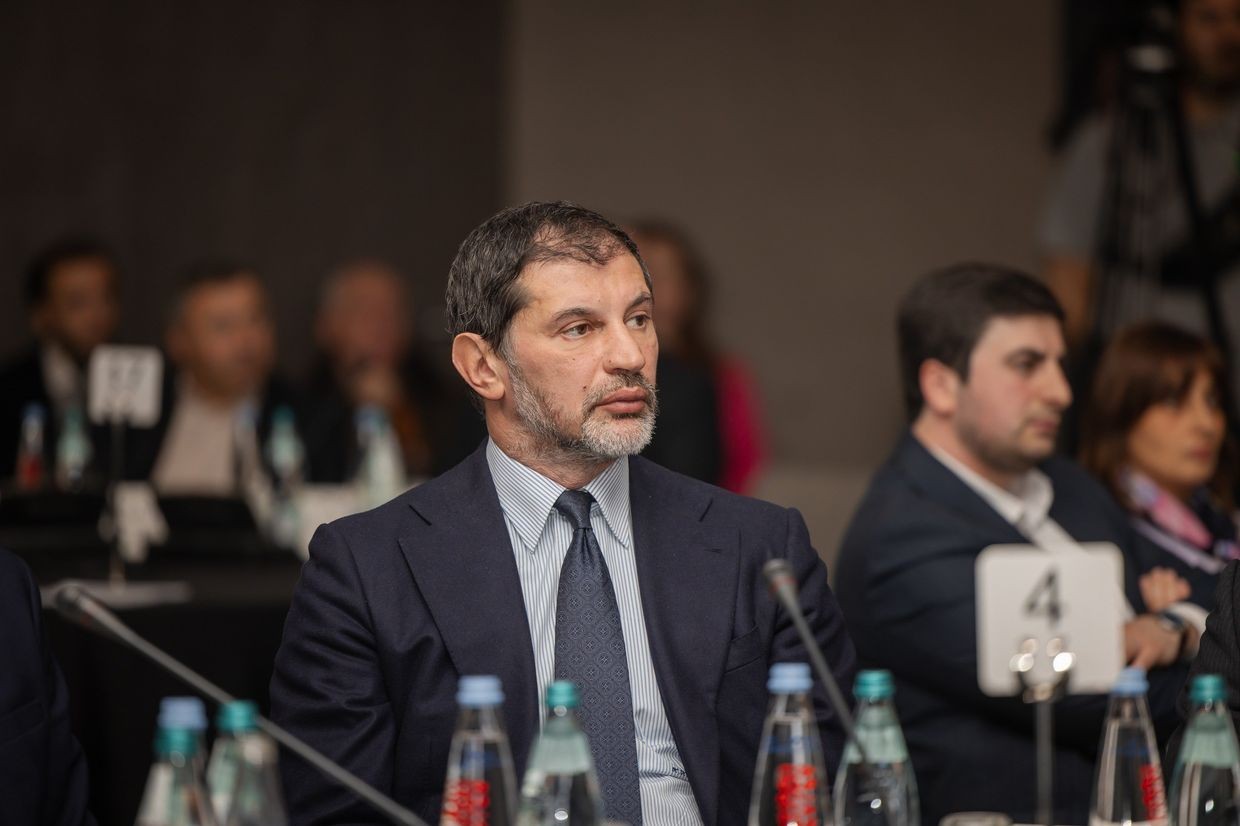
The German city of Saarbrücken, which twinned with Tbilisi in 1975, is planning to sever official ties with the Georgian capital, citing democratic backsliding in the country. In response, Tbilisi Mayor Kakha Kaladze offered his ‘condolences’ to the German people, while claiming that German bureaucracy is currently ‘held captive by the deep state’.
German media reported the expected suspension of official ties in a decades-old town twinning relationship on Monday. According to Saarbrücker Zeitung, the city council was expected to consider a proposal submitted by Saarbrücken Mayor Uwe Conradt.
Conradt represents the centre-right Christian Democratic Union (CDU), which governs Germany in coalition with the centre-left Social Democratic Party (SPD).
‘Naturally, the proposal has not emerged on a whim; there are concrete reasons for this radical step, tied to political developments in Georgia’, the newspaper noted.
In its justification, the city administration pointed to increasing pressure by the Georgian authorities on dissent, emphasising the government’s efforts at ‘actively rolling back democracy, freedom, and human rights’.
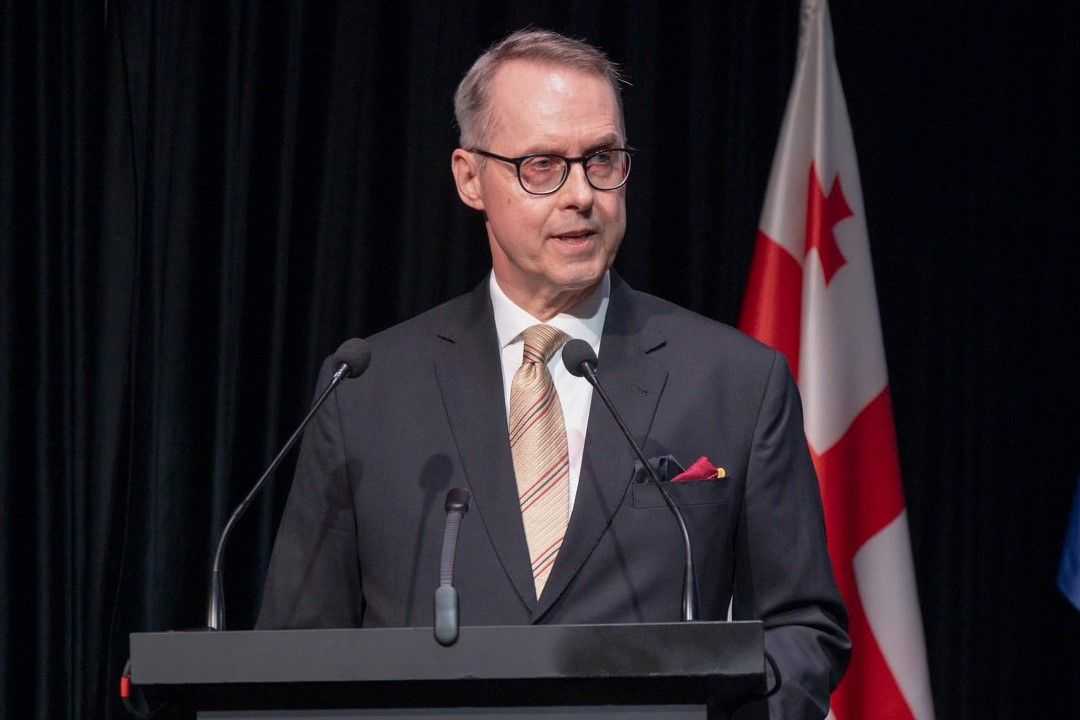
Reacting to the decision, Kaladze, who also serves as the secretary general of the ruling Georgian Dream party, published a lengthy statement on Tuesday. He condemned Germany’s current authorities as a ‘German bureaucracy obedient to the deep state’, arguing that its decisions have turned ‘even a historic friendship into a subject of political speculation’.
According to Kaladze, Germany is ‘practically sinking into a swamp’ because of ‘leaders and politicians acting under informal oligarchic influence’, and is struggling with ‘an economic crisis, catastrophically rising crime rates, demographic problems, a migration-related crisis, social tensions, and a crisis of values’.
‘All of the above perhaps best reflects the absurd — and at the same time tragic — situation in which Germany’s population has found itself under a current bureaucracy, a bureaucracy that serves not the interests of Germans, but those of the deep state’, Kaladze said.
Georgian Dream officials have frequently used the term ‘deep state’, together with ‘global war party’, to describe what they claim are shadowy powers who have been trying to pull Georgia into war and overthrow the government.
Germany is one of several Western countries whose relations with the Georgian government have deteriorated in recent years amid concerns over democratic backsliding in the country. Berlin previously suspended projects with Georgia worth €237 million ($256 million) and imposed entry bans on Georgian officials.
 Xandie (Alexandra) Kuenning
How Saarbrücken explained its decision
The Saarbrücken city administration highlighted what it described as the tailoring of the Georgian electoral system to benefit the ruling party and the packing of courts with state loyalists, as well as restrictive legislation aimed at curbing civil society, restricting press freedom, freedom of assembly, and freedom of expression.
It also pointed to the ruling party’s attempt to ban opposition parties, the brutal dispersal of anti-government demonstrations, and the targeting of the queer community.
‘While mere participation in a demonstration — even one causing traffic disruption — was not considered problematic months ago, the act of standing on the roadway has gradually been upgraded from an administrative offence to a criminal act punishable by imprisonment’, the city’s assessment stated, concluding that the country is drifting ‘toward a one-party state, police state, and dictatorship’.
According to Saarbrücker Zeitung, the city administration has recommended that ‘all contacts with the city of Tbilisi be suspended until further notice’. At the same time, the twinning relationship itself would not be fully terminated, with the city stressing that the move should take place ‘without suspending support for civil society exchange’.
The newspaper added that, according to its information, Uwe Conradt can expect broad support for the proposal in the city council.
Tbilisi and Saarbrücken became twin cities in March 1975, when Georgia was part of the Soviet Union and West Germany — of which Saarbrücken was a part — was a separate state. The agreement was described as the first official town partnership between a West German city and a city in the Soviet Union.
Following the twinning agreement, one of central Tbilisi’s squares was named after Saarbrücken, while a square in the German city was named after Tbilisi.
Relations between the two cities had already cooled even before Saarbrücken’s mayor moved toward the latest decision.
On the 50th anniversary of the twinning partnership, the German city cancelled an official commemorative event and instead met only with representatives of Georgian civil society.
‘This effectively amounted to disinviting Kakha Kaladze. Since then, no official contacts have reportedly taken place’, Saarbrücker Zeitung wrote.