Hunting in the Labyrinth: the lasting effects of Azerbaijan’s raid on queer nightlife
What the latest raid on a queer nightclub in Baku reveals about the future of queer life in Azerbaijan.

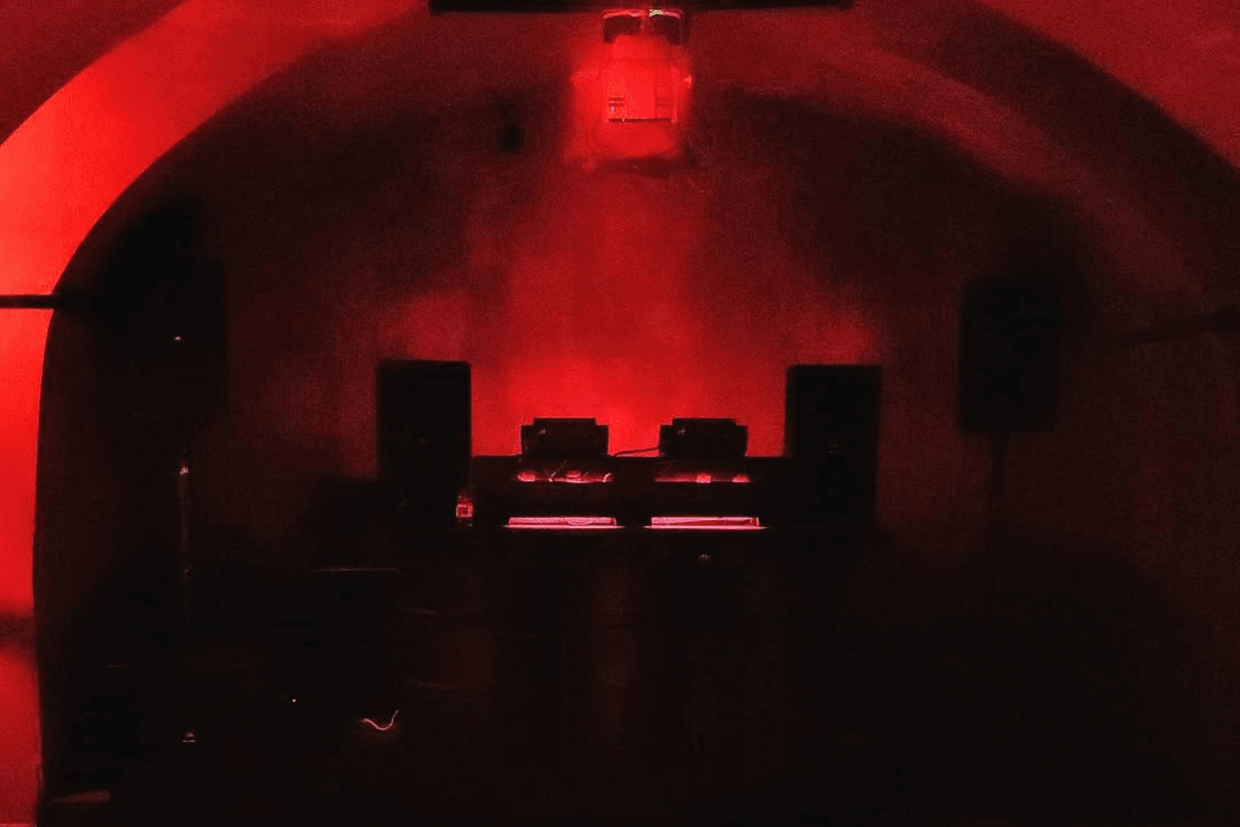
On the night of 27 December 2025, police raided the Labyrinth nightclub in central Baku. According to witness accounts, 106 people were detained, the majority of whom were reportedly subjected to psychological or physical abuse. As one of many queer-safe spaces targeted by the authorities, the events at Labyrinth drew significant media attention due to the extreme brutality and cruelty of the operation.
Despite the routine nature of police harassment against queer people in Azerbaijan, this pressure has become more overt and violent since the latest crackdown on the opposition and civil society. Consequently, the raid stands as a component of a broader anti-queer policy in Azerbaijan, a country already widely recognised as one of the most queerphobic countries in Europe.
Mapping state-led raids
The raid was launched in the early hours of 27 December under the pretext of an anti-drug operation. Detainees were transported by bus to the Nasimi District Police Department, where, according to eyewitness accounts, many were forced to wait in the cold for approximately two hours without coats before being granted entry to the building. Due to the freezing conditions, some individuals reportedly urinated on themselves, after which they were forced to remain in wet clothing.
 Yousef Bardouka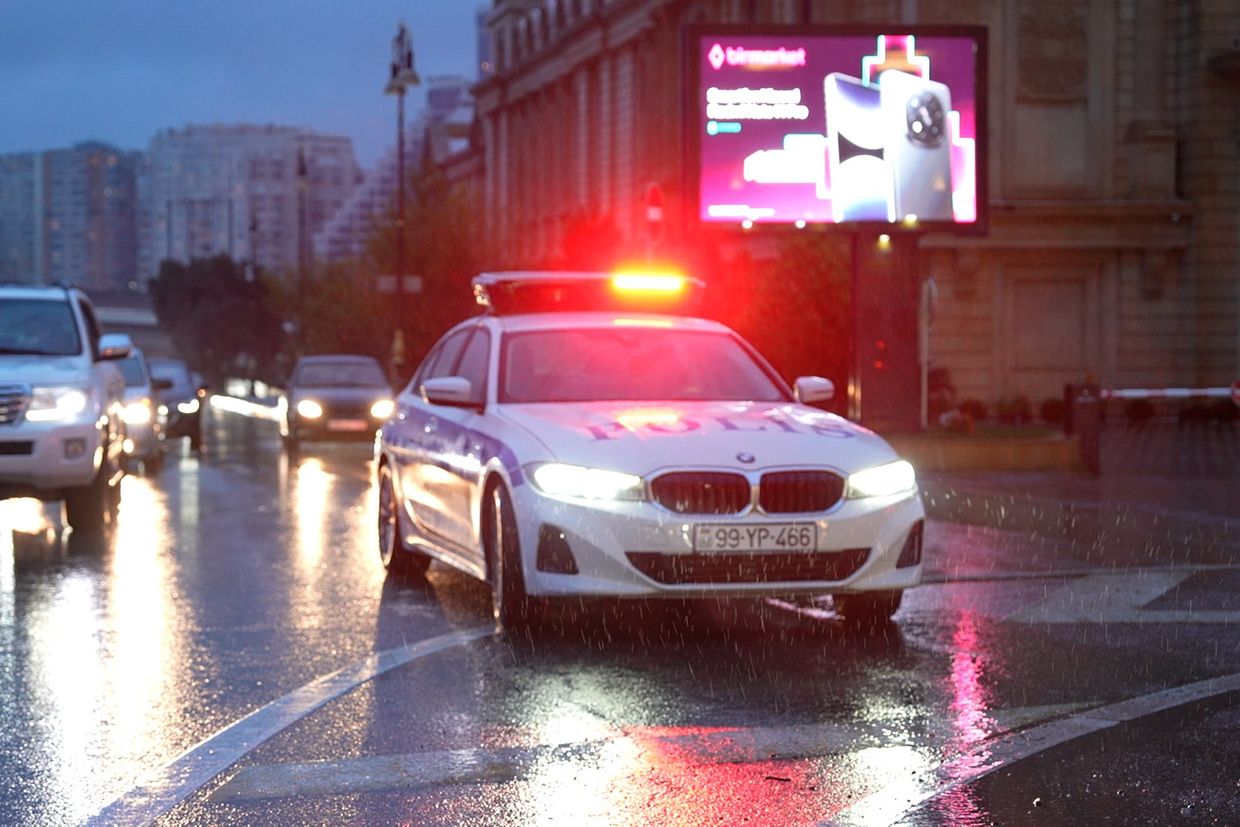
Conditions inside the facility were equally dire. For all 106 detainees, the police reportedly provided only a single loaf of bread and one empty plastic bottle, which they were told to refill with water from the bathroom. Throughout their roughly 12 hours of detention, the detainees reported being subjected to systemic abuse. Officers allegedly shaved the heads of several queer people, urinated on others, and one detainee suffered broken teeth from a physical assault.
‘One person who spoke back was taken into a separate room and beaten so severely that his face was covered in injuries and his lip was split’, one detainee told the Nafas LGBTI Azerbaijan Alliance, an Azerbaijani queer rights group.
‘They even urinated on him. […] His face was completely fine when I saw him in the club. Other officers also tried to falsely accuse him, claiming the injuries were caused by the consistent use of drugs’, they said.
Nearly everyone was reported to have endured psychological abuse: detainees were forced to remain standing for the duration of their detention under the threat of rape for non-compliance. Personal belongings and phones were confiscated; officers also reportedly extorted bribes and threatened to ‘out’ detainees to their families using derogatory queerphobic slurs.
Such police conduct is not a new phenomenon in Azerbaijan. However, the level of violence appears to escalate significantly when the queer community is targeted. The Labyrinth nightclub, which promoted itself as a ‘safe space for all, with zero tolerance for discrimination, was targeted specifically for its prominence as a sanctuary for queer people.
According to Ali Malikov, a staff member of the Azerbaijani queer media portal Qiy vaar!, police raids and detentions are neither new nor exceptional for Azerbaijan’s queer community: ‘It is an experience that almost everyone is familiar with, has lived through, or has directly witnessed’.
OC Media
‘The lack of mechanisms in Azerbaijani legislation explicitly prohibiting discrimination based on sexual orientation and gender identity increases the risk of impunity in such cases,’ the queer organisation Minority Azerbaijan told the International Lesbian, Gay, Bisexual, Transgender, Queer & Intersex Youth and Student Organisation (IGLYO) regarding the raid.
Undoubtedly, many cases go undocumented by the media, and only a fraction are publicly reported. Nevertheless, independent media outlets bring to light other accounts of equally brutal raids.
The political architecture of hate
Officially, the law criminalising homosexual acts was repealed in Azerbaijan in 1998, yet the actual status and rights of queer people has remained problematic. Indeed, Azerbaijan occupies one of the lowest positions in Europe on the ‘Rainbow Index’, a ranking that can be explained by several forces of pressure.
According to state officials, including President Ilham Aliyev, non-heteronormative relationships and non-gender-conforming identities are attributed to ‘European influence’, something foreign to traditional Azerbaijani society and dangerous.
Thus, feminism, queer people, the opposition, civil society, and Europe are merged into a single constructed ‘enemy’. This makes it easy to exert pressure and use the issue of queer people, particularly trans individuals, as a tool to legitimise the state’s own actions and its departure from former ‘European integration’.
Ali Malikov
‘The queer community in Azerbaijan has begun to form as a movement. People understand that this is not just a private matter; it is a political issue’, Malikov says.
It is also important to note that the laws on funding for civil society organisations and media are used to also pressure the queer community. In the absence of legal ways to receive funding or state support, the queer community has virtually no legal means to monitor or support victims of gender and sexual discrimination.
Beyond internal trends, one cannot ignore the similar trajectory of de-liberalisation and the strengthening of anti-queer trends among regional neighbours, including Kazakhstan, Russia, and Georgia, all of whom recently passed laws banning ‘LGBT propaganda’ among other anti-queer legislation.
What lies ahead?
Since the raid, indeed, just in the first few weeks of 2026 alone, platforms monitoring discrimination against queer people in Azerbaijan have reported several instances of pressure and violence against queer people, particularly by police.
On 6 January, a young queer person was stopped in the metro under the pretext of a ‘bag check’. The actual reason cited by officers was ‘an appearance and behaviour like a “faggot” ’. The young man was forced to unlock his phone, had his photos and videos searched, and was subjected to verbal abuse.
In another recent case, a lesbian girl under the age of 18 faced sexual solicitations and assault at a police station. Additionally, reports have emerged of police extorting ₼2,000 ($1,200) from a queer individual, threatening to ‘out’ them to their family and workplace.
In addition to police harassment, hate speech has again appeared to have increased in local media following the raid, such as in the case of Salman Mammadov, a blogger writing under the pseudonym Velizar.
In early February 2026, Mammadov was placed in administrative detention for ‘promoting immorality’, a charge based on recently amended legislation that conceives of ‘immoral’ posts as falling under the category of petty hooliganism. As Mammadov identifies as queer, an onslaught of hate speech filled the comment sections of pro-government media reporting on the detention, with slurs such as ‘faggot’ appearing, as well as calls to ‘cleanse the country of gayness, just as they did in Kazakhstan’, and claims that ‘prison will teach him how to be a man’.
Aytan Farhadova
Beyond state-driven rhetoric, the queer community also continues to face pervasive discrimination in their daily lives, within schools, workplaces, and their own families. Due to constant pressure from the state and society, the mental well-being of queer people remains under continuous strain — it is impossible to calculate the exact number of suicide victims among queer people.
Hate-motivated killings also remain a grave concern as nearly every queer individual has encountered death threats from relatives, many of which escalate into fatal attacks.
Given the overarching trend of de-liberalisation in Azerbaijan and its neighbouring countries, there is little reason to expect a sudden positive shift, particularly regarding the rights and freedoms of queer individuals. In the absence of protection and in the face of state-sponsored violence, individuals are left with very few choices — as a result, many are choosing to flee the country, or are compelled to withdraw into secrecy and severely limit their social presence.
Aytan Farhadova
‘As visibility increases, so do the risks. While visibility used to be an opportunity, it now primarily means being targeted. Independent gathering spots have been replaced by closed-door clubs. Due to increased policing, people are retreating into smaller, secret circles to avoid visibility’, Malikov says.
Nevertheless, activists remain hopeful. According to Malikov, social media has made it much easier to disseminate information and for individuals to discover their identities. Although resources in the Azerbaijani language remain scarce, progress is being made.
‘People are trying to find alternative paths: they create closed groups, establish mutual support mechanisms, and share information. It is difficult to predict what will change in the future, but one thing is clear: people are no longer willing to remain completely silent as they once were. This marks a new stage of the struggle’.