South Ossetian opposition demands President Gagloev’s resignation over embezzlement allegations

Opposition figures in South Ossetia have demanded the resignation of President Alan Gagloev, accusing him of embezzling ₽1.5 billion ($20 million) in concessional loans from Russia.
The first demand for resignation came from MP Vladimir Kelekhsaev, who accused Gagloev of embezzling the funds which were provided by Russia under state guarantees. He recorded a video address in Ossetian calling on Gagloev to leave office.
Kelekhsaev is the leader of the Socialist Party Unity of the People and a former presidential candidate.
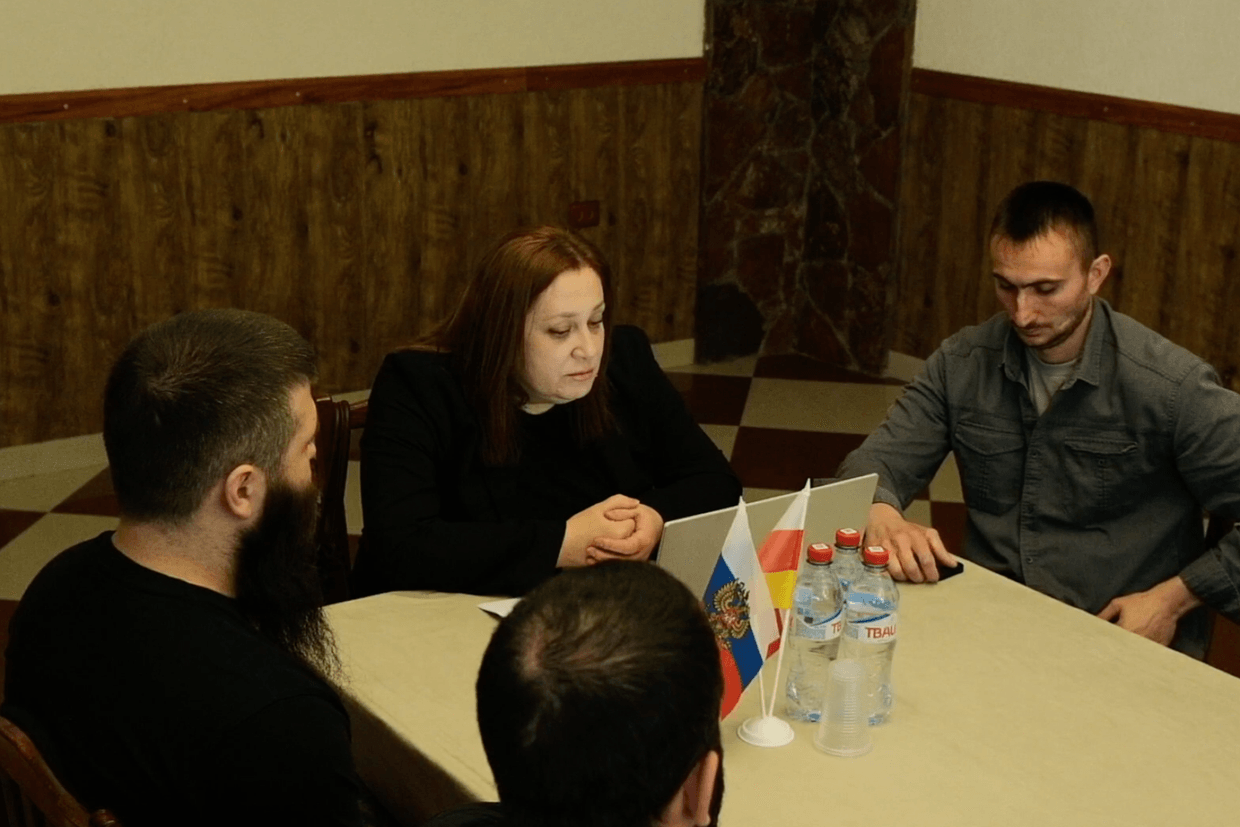
In addition, representatives of the civic movement Civil Platform also demanded Gagloev’s resignation. On their Telegram channel they circulated a video of a round table discussion which they said was attended mainly by former participants in the Russian invasion of Ukraine, as well as ‘defenders of the homeland in the 1990s’.
‘The defenders of our homeland have been deprived of various privileges, including veteran status’, said the chair of the round table, civic activist Inara Gabaraeva.
Among the problems highlighted by participants were the lack of material support for soldiers who had returned from the war in Ukraine and for the families of those killed in action.
‘The problems voiced at this round table once again confirm that a severe crisis has overtaken our republic. We believe the solution is the immediate early resignation of President Alan Gagloev, because there are no signs that he wants or is able to change the situation. Do we have the right to endure for another year the authorities’ disregard for the problems of their own people and the desperate condition of the republic?’, Gabaraeva added.
She also called for highly qualified specialists who had left the republic to be encouraged to return in order to ‘breathe life into the land of our ancestors’.
Gagloev came to power following the presidential election in April 2022. In the second round of the elections, he defeated the then-incumbent President Anatoly Bibilov. Gagloev represented an opposition force and built his campaign on criticism of the previous administration, socio-economic management issues, and dissatisfaction among part of the elite with Bibilov’s course.
For ease of reading, we choose not to use qualifiers such as ‘de facto’, ‘unrecognised’, or ‘partially recognised’ when discussing institutions or political positions within Abkhazia, Nagorno-Karabakh, and South Ossetia. This does not imply a position on their status.