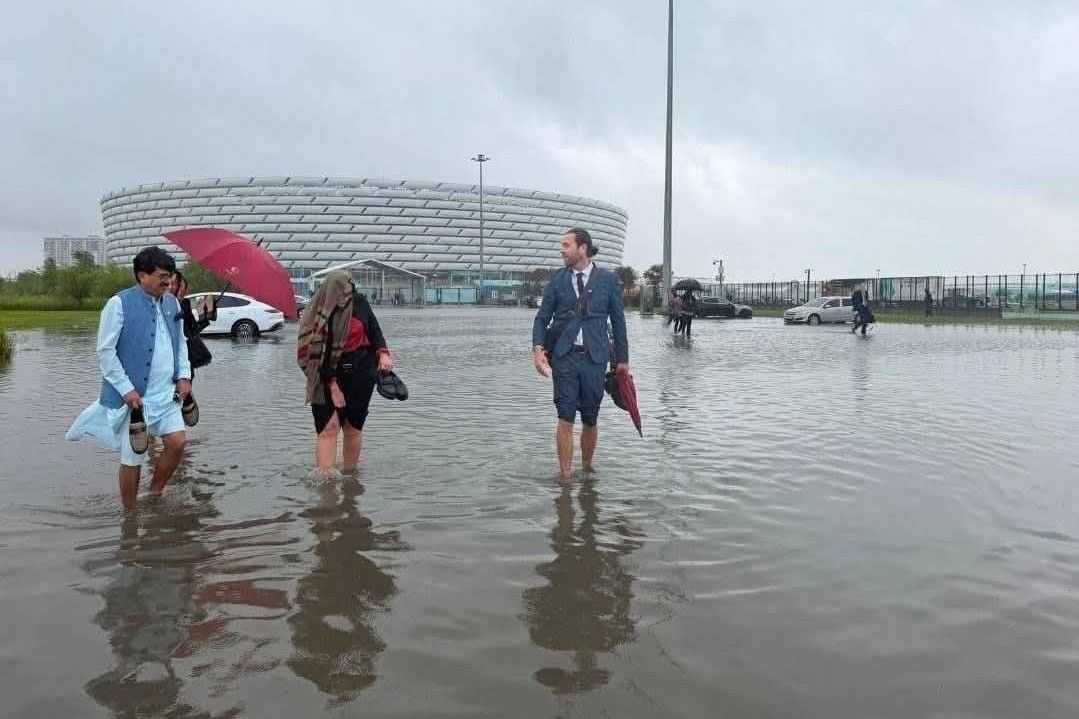
President Ilham Aliyev signed a decree on compensation for the financial consequences of massive flooding in the end of March and early April, on Tuesday. However, the decree did not cover a wide spectrum of flood victims, and many will not receive compensation for the damage they suffered.
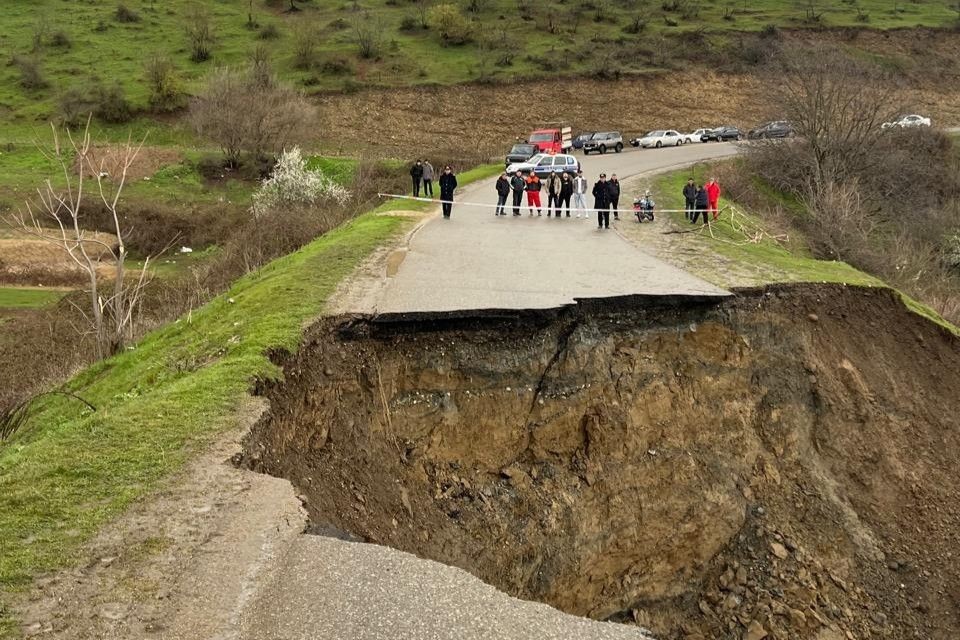
The degree stipulates that around ₼86 million ($50 million) was allocated for the ‘construction of dams on rivers, repair of equipment at sewage pumping stations, elimination of soil subsidence and landslides, subsidence in sewer collectors, and damage to electrical networks’.
The government planned to allocate the Ministry of the Emergency Situation ₼8.9 million ($5.2 million), the Baku City Executive Authority ₼1.4 million ($820,000), the State Agency for Water Resources ₼21.4 million ($12.6 million), the State Agency for Automobile Roads ₼39 million ($23 million), and Azerishik OJSC ₼15 million ($8.9 million).
However, since the flooding affected residents in various regions, Baku and its suburbs, the compensation does not cover everyone, including those in legally constructed buildings, not informal housing built outside of the zoning process.
Ramin Guliyev, a resident of the town of Saray, told OC Media that part of the fence had collapsed and there had been flooding in the basement during April rains.
‘So far, no government agency has shown any interest in this. However, I consider the damage caused to me and this cold-blooded behaviour an insult and humiliation. Because there’s no agency I haven’t complained to, and all my attempts have been fruitless’.
Guliyev stated that his house is a legally constructed building, and despite the fact that his house was built in accordance with the law, state authorities failed to fulfill their obligations. Under government regulations, the State Agency for Water Resources must provide drinking water and construct sewage systems.
‘We installed the sewer pipe on our street ourselves, raising the funds ourselves. The State Agency for Water Resources (former Azersu OJSC) didn’t do it. And when it rains, the street floods due to the poor workmanship of the state-owned company.’
Another Baku resident wrote anonymously on social media that when Baku flooded in March, his house took on 40 centimetres of water.
‘All our documents, everything was destroyed. I rented a place for a month, and I again repaired the house. I spent about ₼10,000 ($5,900), and I’ve lost all my money. Where can I apply for compensation?’.
According to the decree, only 61 private homes in Keshla will be repaired using public funds. Residents of these homes, located on two streets, will be paid three months’ rent and provided with financial assistance for the purchase of household items that have become unusable.
A total of 53 homes in the suburbs of Baku and surrounding districts are also eligible for compensation under the decree.
The independent media outlet Qazetchi reported that the number of homes damaged by rainwater and sewage in Baku and the Absheron Peninsula is significantly higher than officially reported by local authorities.
The media outlet wrote that they counted that approximately 500 private homes were flooded in the town of Masazir alone.
As the government agencies did not provide detailed information, the appendix to the order makes it clear that the most damaged homes are located on the riverbanks in mountain villages.
According to the sum of ₼8.8 million ($5.2 million) allocated for the Ministry of Emergency Situation, the agency responsible for the construction of the houses including districts should spent for per house over ₼166,000 ($98,000) when simply dividing the total amount for the houses number.
The method that these calculations were made was not specified.
An independent economics expert told OC Media on the condition of anonymity that for now, it is not clear how the Ministry of Emergency will act.
‘In fact, the standard and legal method is for the Ministry of Emergency Situations to conduct an assessment. To conduct the assessment, a tender must be announced, and an expert service or assessment company must select the location. They must come and conduct the assessment directly on-site’, the expert said.
‘Based on assessments, the relevant procedure is carried out, and the results are then submitted to the relevant ministry. The ministry must then announce a tender and begin construction. In other words, this is a legal procedure. But how will our people actually do this? They will conduct the assessment themselves and build themselves’.