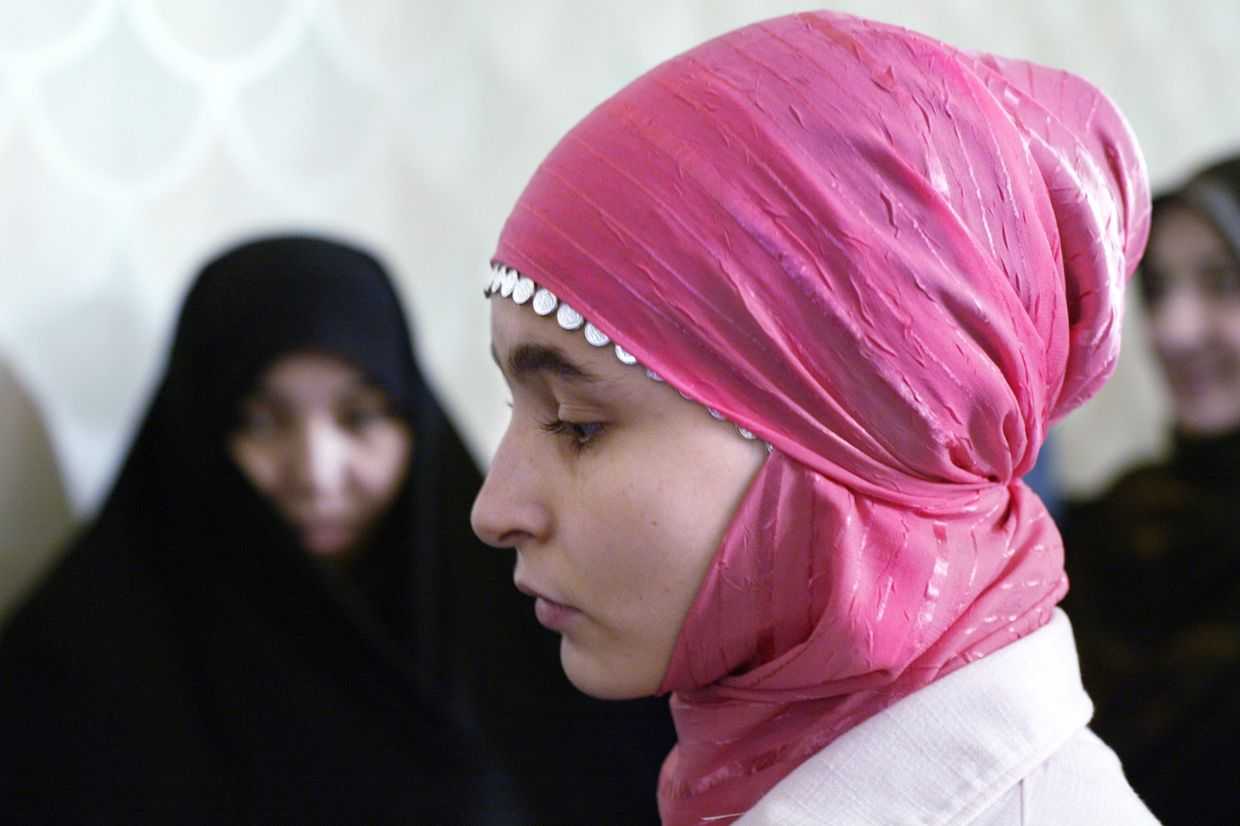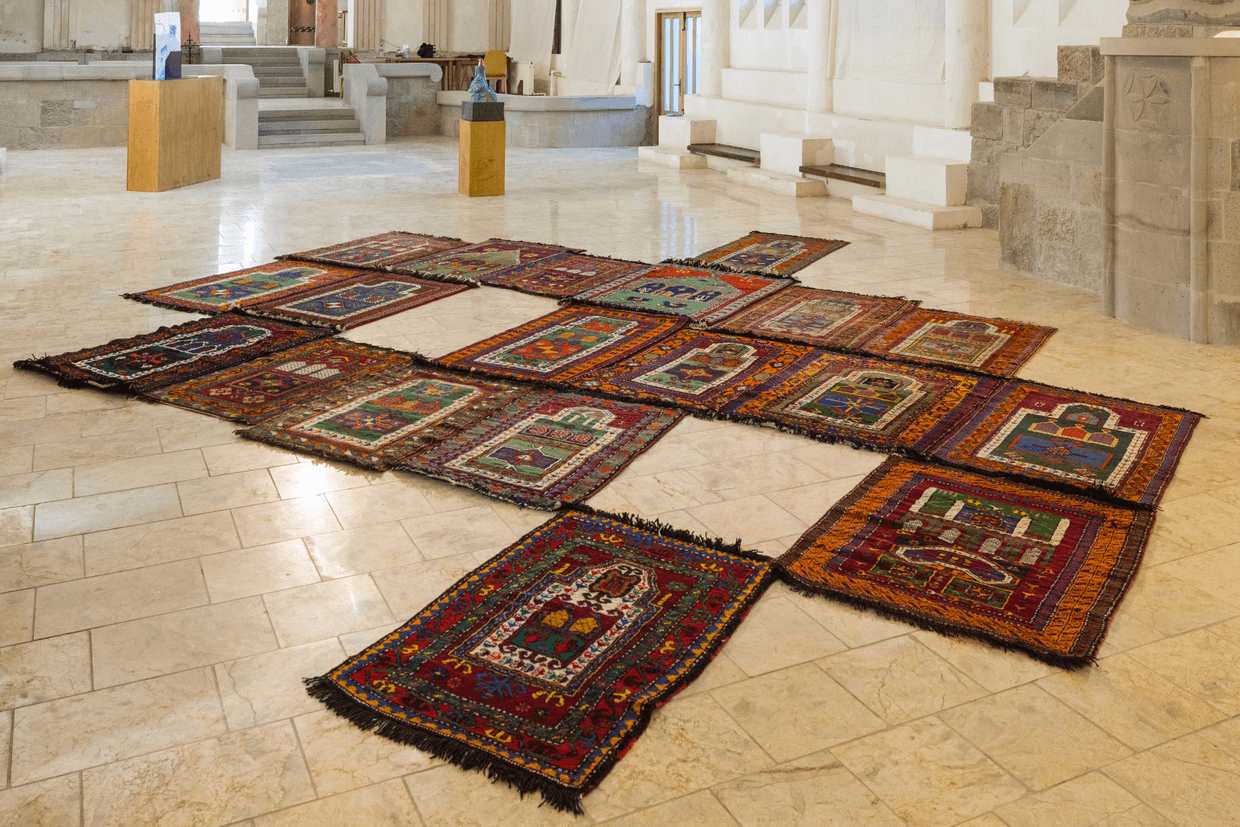

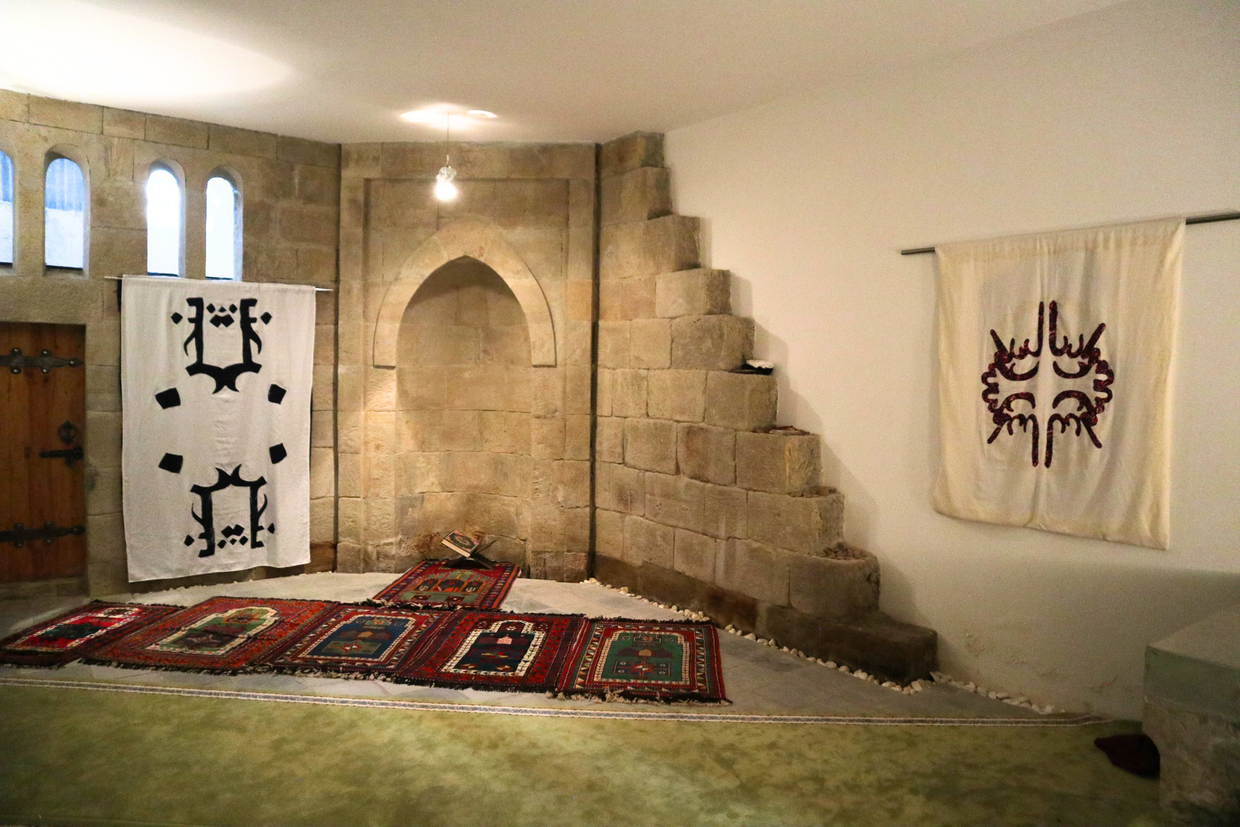
For decades, the old mosque in the village of Lambalo, a part of the bigger Azerbaijani settlement of Mughanlo, was home to dozens of prayer rugs woven anonymously by women artists as dedications. The prayer rugs, dating from the 1950s–1990s, covered the mosque floor — by 2023, however, they had vanished, the floor now covered by an imported, machine-made carpet.
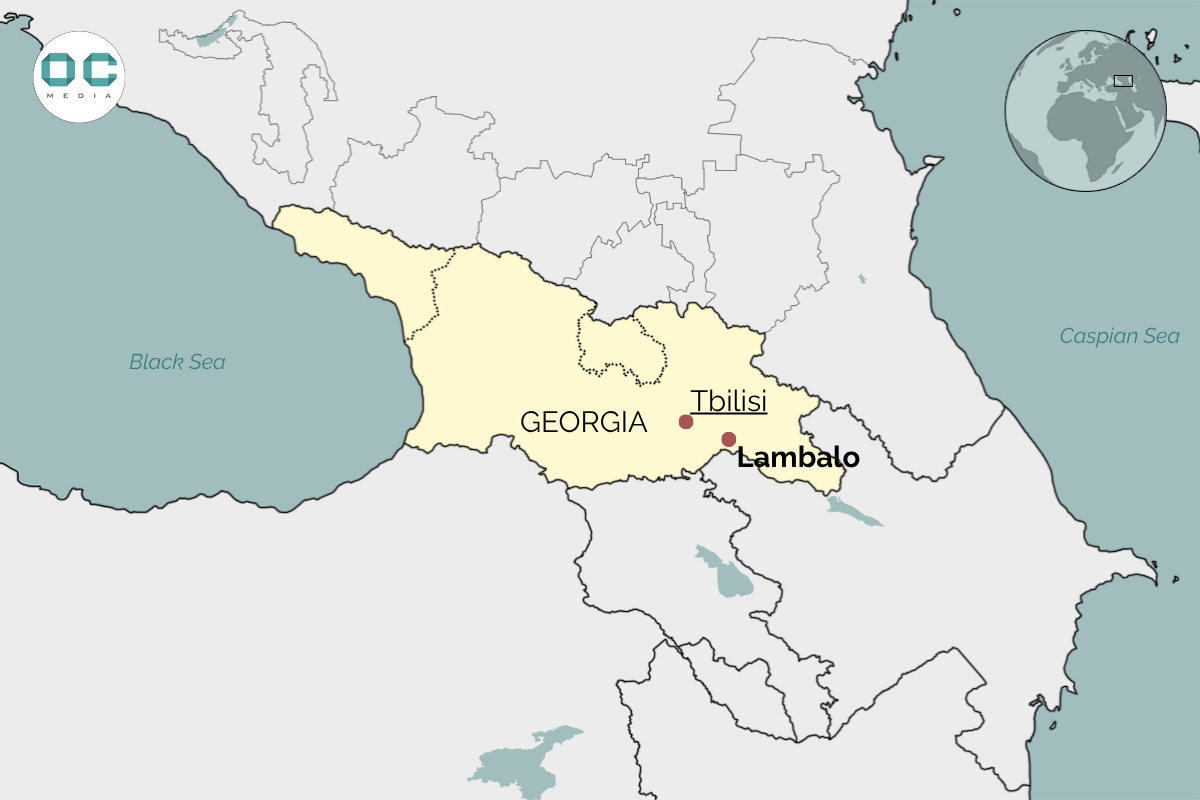
In response, the team behind reWoven, a social initiative dedicated to preserving and reviving traditional Caucasus carpet weaving, recovered and restored around half of the prayer rugs. Now, in collaboration with Kunsthalle Tbilisi, the prayer rugs are being displayed for the first time as a collection, representing both Islamic and Soviet and Georgian and Azerbaijani cultural contexts.
Running from 18–23 May, Prayer of the Outsiders showcases around 20 of the original Lambalo prayer rugs, in addition to several newly woven creations inspired by the designs. The aim, as reWoven’s Creative Director Cosima Stewart puts it, is to display the prayer rugs as contemporary art pieces rather than simply categorising them as folk or outsider art.
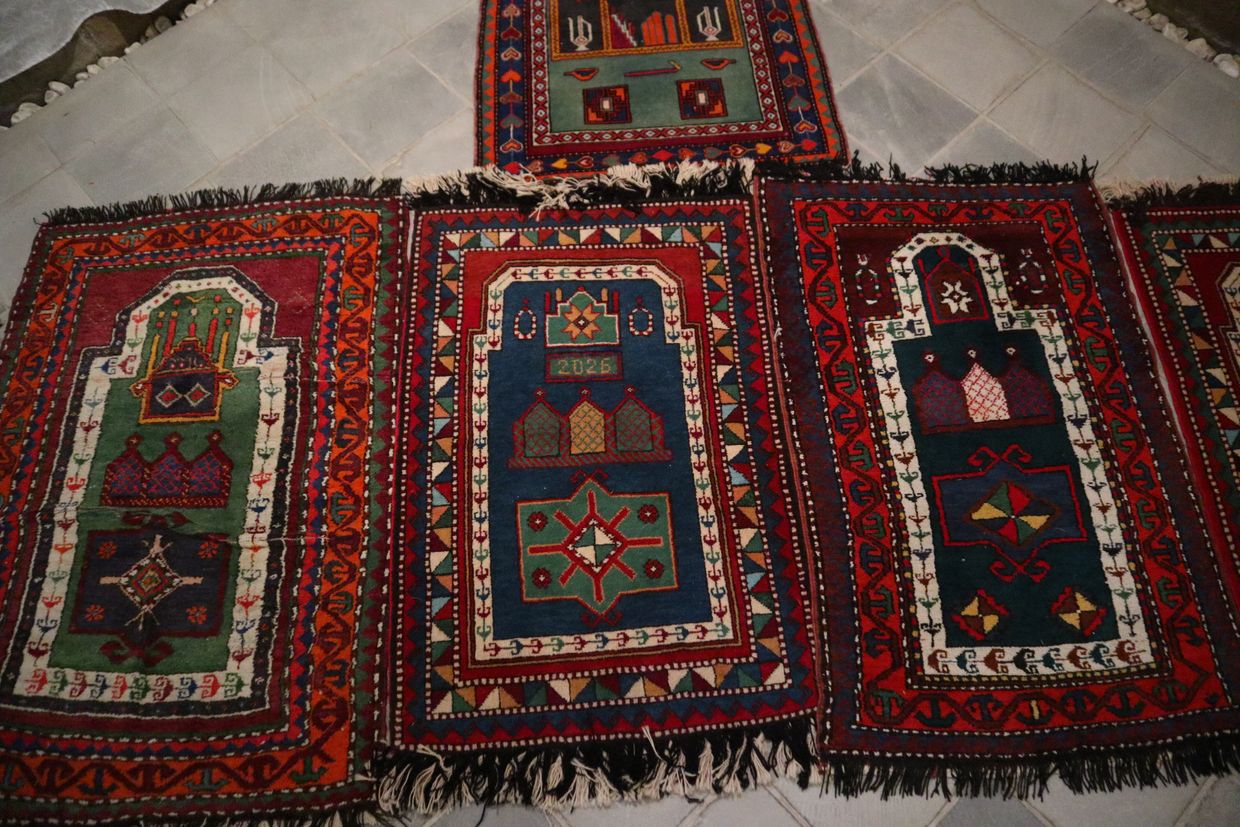
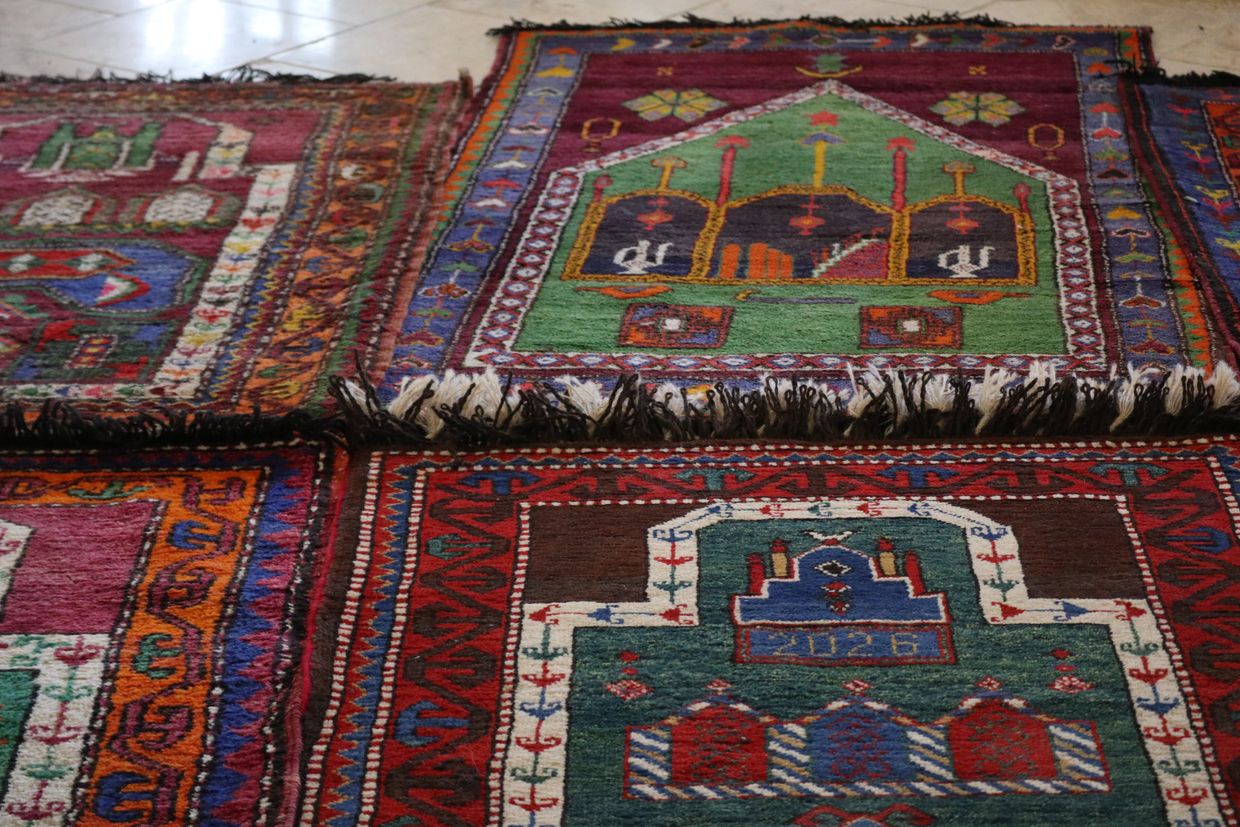
Laid out on the floor of the Peace Cathedral, each prayer rug, whether old or new, can be appreciated, the similarities in design creating a sense of continuity while each artist’s individual decisions still create distinctive differences. Interspersed in the main layout are blank spaces, representing the prayer rugs never recovered, now lost to time.
Throughout the rest of the Peace Cathedral — which itself is a combination of a working church, mosque, and synagogue — are pieces by young women artists as curated by Irena Popiashvili, the founder and dean of the Visual Arts, Architecture, and Design School (VA[A]DS) at Tbilisi’s Free University.
As Popiashvili emphasises, the works all together are intended to draw attention to how the artisans behind the Lambalo prayer rugs did not follow any canonical designs, but rather free-handed their work, just as contemporary artists do, adapting traditional designs to their own creative visions.
Of these newer pieces, the textile artworks by Mari Babaevi, who graduated from VA[A]DS in 2025, are some of the most eye-catching pieces.
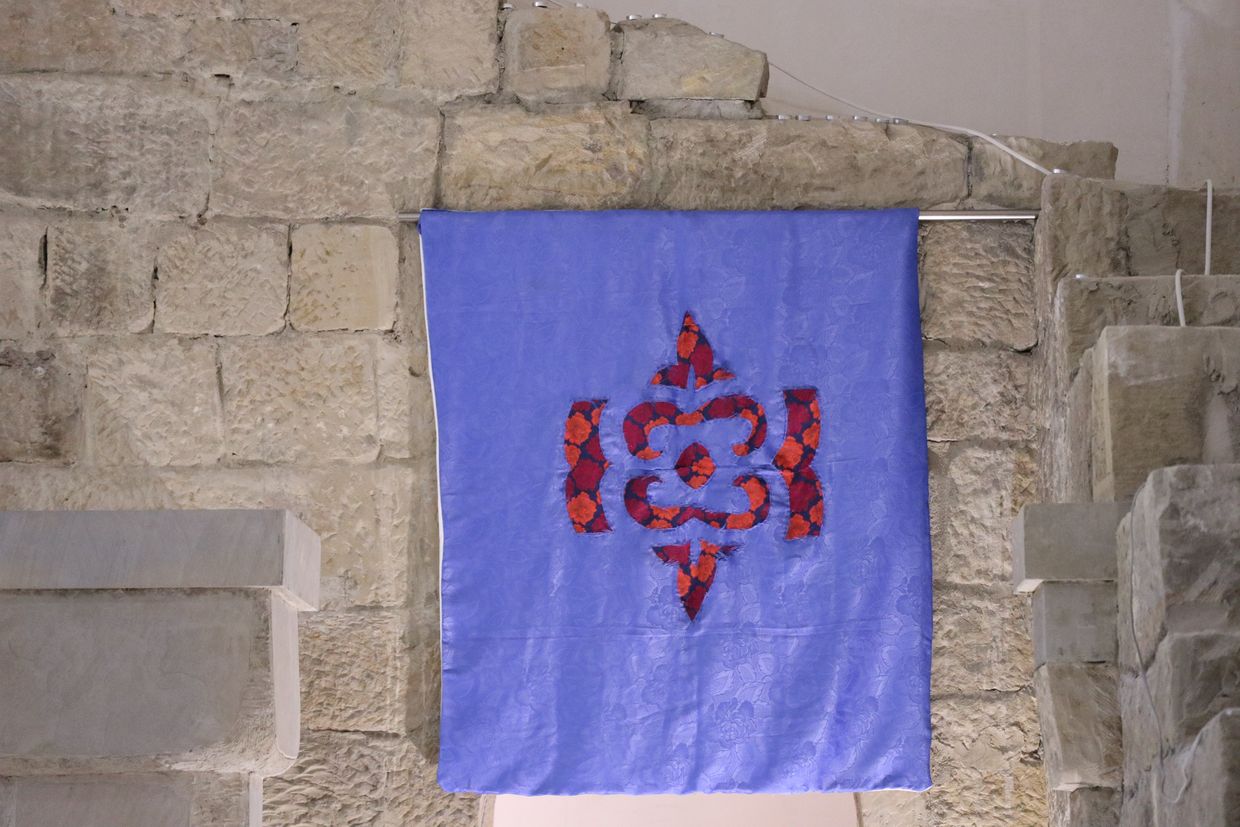
Born and raised in Georgia, Babaevi draws inspiration from her Azerbaijani and Persian heritage (her great-grandfather, who was ethnically Persian, claimed Azerbaijani roots in order to remain in the Soviet Union). Her latest series showcased here, ‘Carrying Home’, reassembles traditional ornaments, cutting them out and placing them within a new background as a representation of adapting to a new environment.
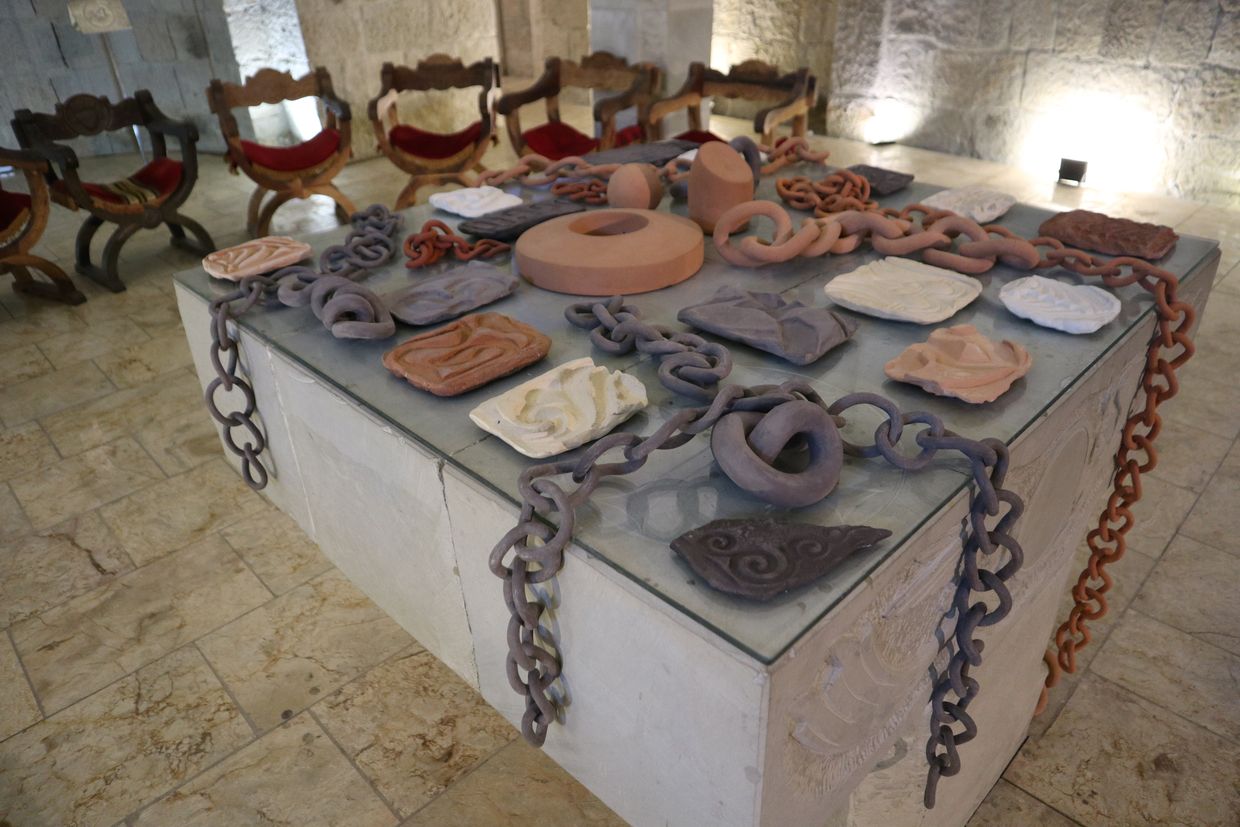
Then there is the work by the China-born, Melbourne-raised, and Tbilisi-based ceramic artist and designer Jia Jia Chen, who created molds of architectural details found in and around Tbilisi. The pieces are multi-layered, full of sensory details, consisting of unusual shapes and forms, with some even making sounds when shook. Placed amongst long strands of chain, viewing the items makes one reflect on how the trappings of history and heritage affect identity and memory.
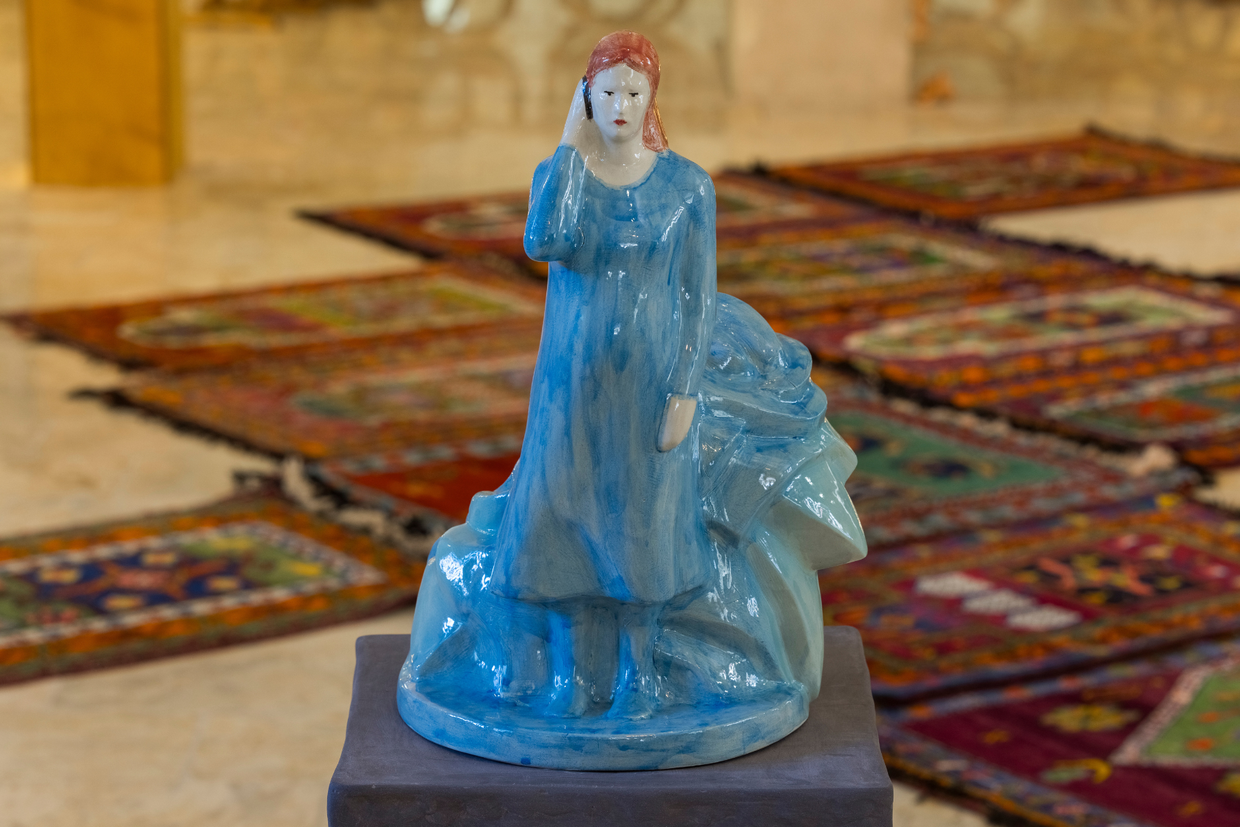
In a very different vein are the ceramic sculptures by Tamuna Gurgenidze, who has two pieces in the exhibition: ‘Pregnant Woman with Mobile Phone’ and ‘Bless Your Souls Beautiful Girls’. These porcelain statues subvert the traditional decorative genre, presenting contemporary subjects recognisable in today’s modern lifestyles. The glazing is simple, letting the structure of the piece speak for itself, rather than focusing on ornamental embellishments.
Other artists featured in the exhibition include Anastasia Akhvlediani, whose three-dimension piece ‘Where Did Pirosmani See a Giraffe?’ engages with one of Georgia’s most famous naïve painters to explore visual memory, and Que Meparishvili, whose steel and aluminum sculptures focus on the ancient technique of Georgian icon painting, combined with mythology and contemporary themes.
Beyond the prayer rugs and individual art pieces, for Popiashvili, the exhibition’s most important aspect is the cultural synergy achieved through said art in combination with the special musical performances spread throughout the week. She has seen an openness amongst visitors based on this cultural synergy that she believes can set an example for the future in terms of embracing cultural diversity.
Overall, Prayer of the Outsiders is a valuable exhibition showcasing an important, and often overlooked, segment of Georgia’s cultural heritage. Taking place on the sidelines of the Tbilisi Art Fair, which began on Wednesday, it is well worth making the small detour to attend.