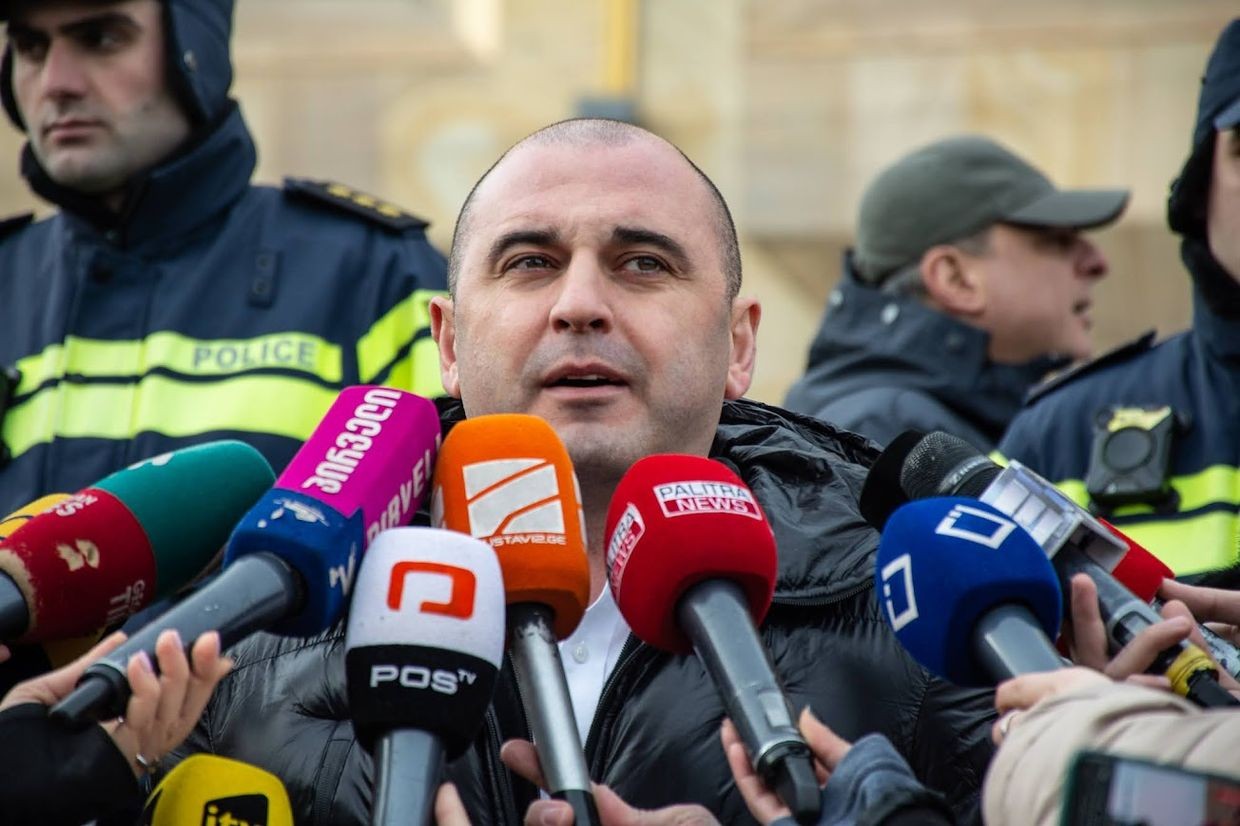
Georgian opposition politician Levan Khabeishvili has been sentenced to 2.5 years in prison over statements he made prior to the 4 October 2025 protests in Tbilisi, dubbed by the initiators at the time as a ‘peaceful revolution’. The original charges against him were reclassified at the last moment.
The Tbilisi City Court Judge Irakli Khuskivadze announced the verdict on Thursday. Alongside Khabeishvili, another opposition politician, Murtaz Zodelava, was also sentenced to nine months in prison. Separately, Zodelava has already been sentenced to seven years in another case connected to the same protest.
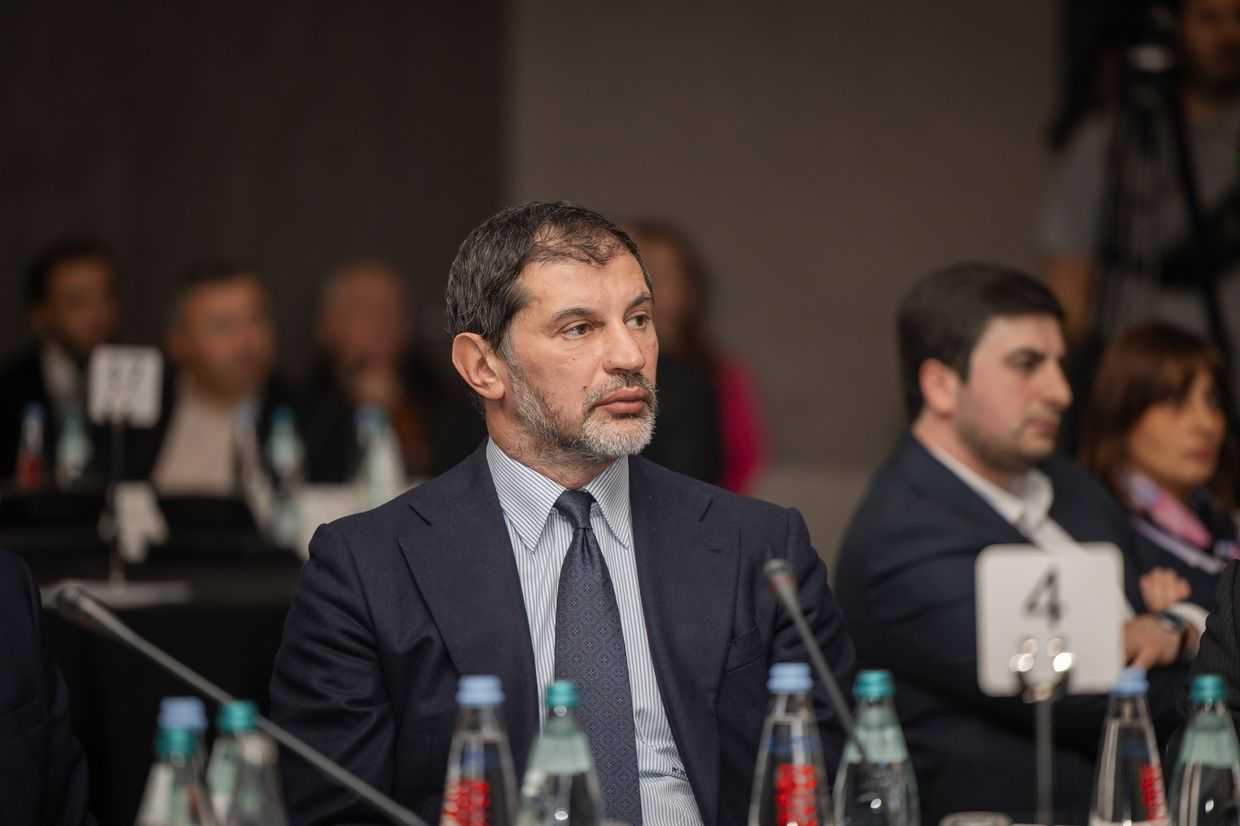
Khabeishvili — a leading member of the opposition United National Movement (UNM) party and a chair of its political council — was detained on 11 September 2025 by the State Security Service (SSG). The detention occurred after he publicly offered riot police officers $200,000 not to disperse protesters and to ‘expose the system’ — described by the prosecution as an act of bribing public officials in exchange for carrying out an unlawful act.
Later, Khabeishvili — one of the main proponents of the ‘peaceful revolution’ — was additionally charged with publicly calling for the overthrow of the state government.
The first charge carried a prison sentence of between four and seven years, while the second carried a sentence of up to three years.
According to independent media outlet Netgazeti, during Thursday’s hearing Khuskivadze reclassified the first charge against Khabeishvili, charging him instead with sabotage — specifically, ‘obstructing the normal functioning of a state or other enterprise, institution, organisation, or service with the aim of weakening Georgia’.
The court left charges of making calls for the overthrow of the state unchanged.
Ultimately, Khuskivadze sentenced Khabeishvili to two years under the sabotage charge and 2.5 years for making calls to oust the government charge. The longer sentence absorbed the shorter one, resulting in a final sentence of 2.5 years of imprisonment.
Zodelava, who was together with Khabeishvili at the time of his detention, was also indicted in the same case. Investigators accused him of attempting to conceal Khabeishvili’s phone during the arrest, viewed by the prosecution as an obstruction to the investigation.
Zodelava was released on bail a few days after his arrest, Khabeishvili remained in pre-trial detention. Shortly afterward, his rights to visits, correspondence, and telephone conversations were restricted. The SSG justified the restrictions by citing the risk of influencing witnesses.
According to RFE/RL, the evidence in the case included Khabeishvili’s public statements made on TV and social media, as well as testimony from three Interior Ministry employees. They interpreted the offer publicly voiced by the politician as ‘offering a bribe’ and described it as ‘insulting’.
Since Khabeishvili’s statements were made publicly on TV, prosecutors selected witnesses using a ‘random selection principle’ — they asked the Interior Ministry to designate several of its employees in order to determine ‘what reaction’ Khabeishvili’s monetary offer had provoked in them.
‘I was not left with any possibility by the prosecution: what exactly would I even confess to, if I wanted to admit guilt? These were public statements’, Khabeishvili said in his closing statement on Wednesday.
‘There is no victim in this case, there is no object, and there is no good or material benefit that I could have obtained [by doing what I am accused of]’, he added.
Zodelava and others sentenced to years in a separate case
Since he was isolated by his arrest, Khabeishvili was unable to take part in the 4 October 2025 protest. The rally was scheduled for the day of the local elections, which a considerable part of the opposition had boycotted.
However, Zodelava was present on the protest stage alongside other opposition figures, including opera singer Paata Burchuladze, who was among the first to publicly propose the idea of the demonstration. Tens of thousands of protesters gathered alongside them.
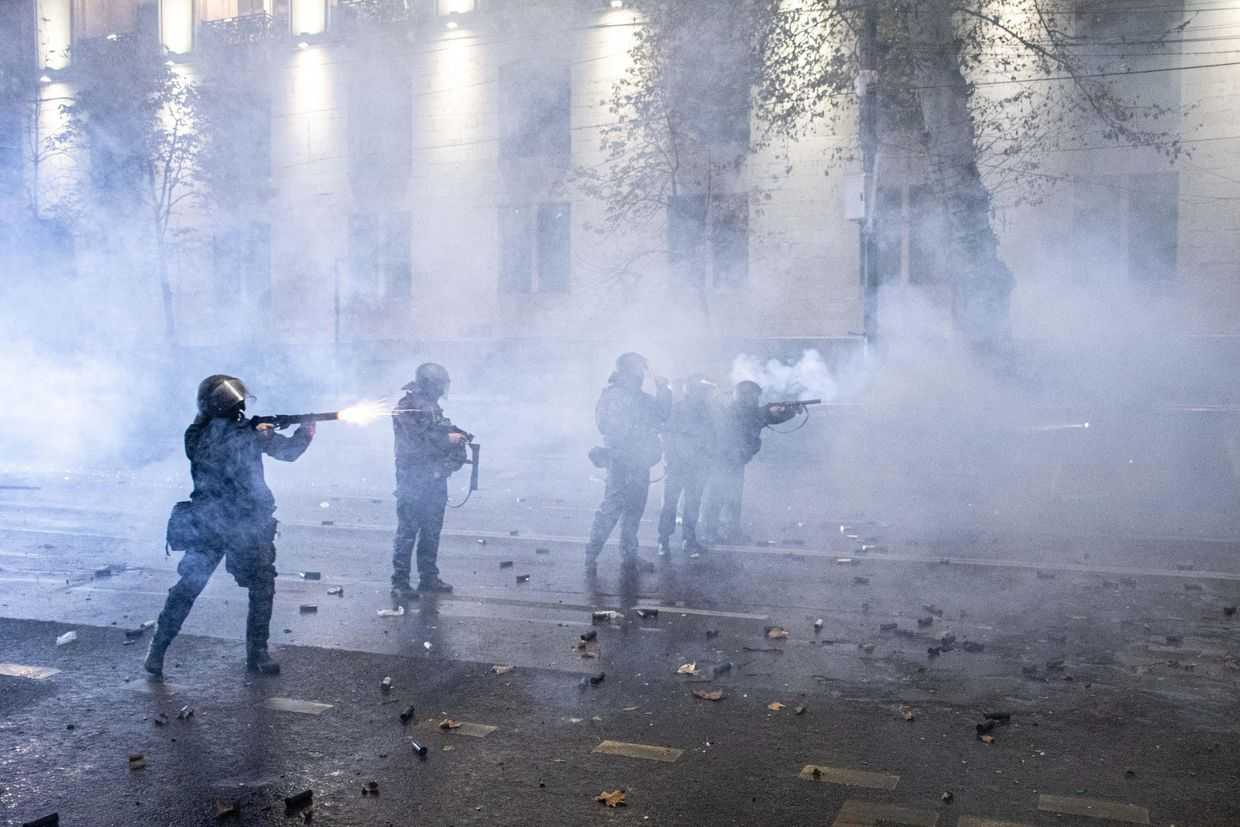
Chaos soon followed: Burchuladze declared that power belonged to the people, and Zodelava called for a march on the nearby Presidential Palace. A small group then breached a section of the palace fence, but was quickly pushed back by riot police, sparking sporadic clashes.
The ruling party quickly seized on the Presidential Palace episode to once again attack the anti-government movement, branding it, as many times before, a violent, foreign-orchestrated coup attempt.
According to the Transparency International (TI) Georgia, on the eve of 4 October and the following days, 66 people were detained, adding to the many already arrested during earlier waves of demonstrations.
The Tbilisi City Court delivered verdicts for 10 of those detained in connection with the case as recently as on 8 May. Among them were Zodelava and Burchuladze, who were each sentenced to seven years in prison on multiple charges, including organising group violence.
None of the defendants pleaded guilty.