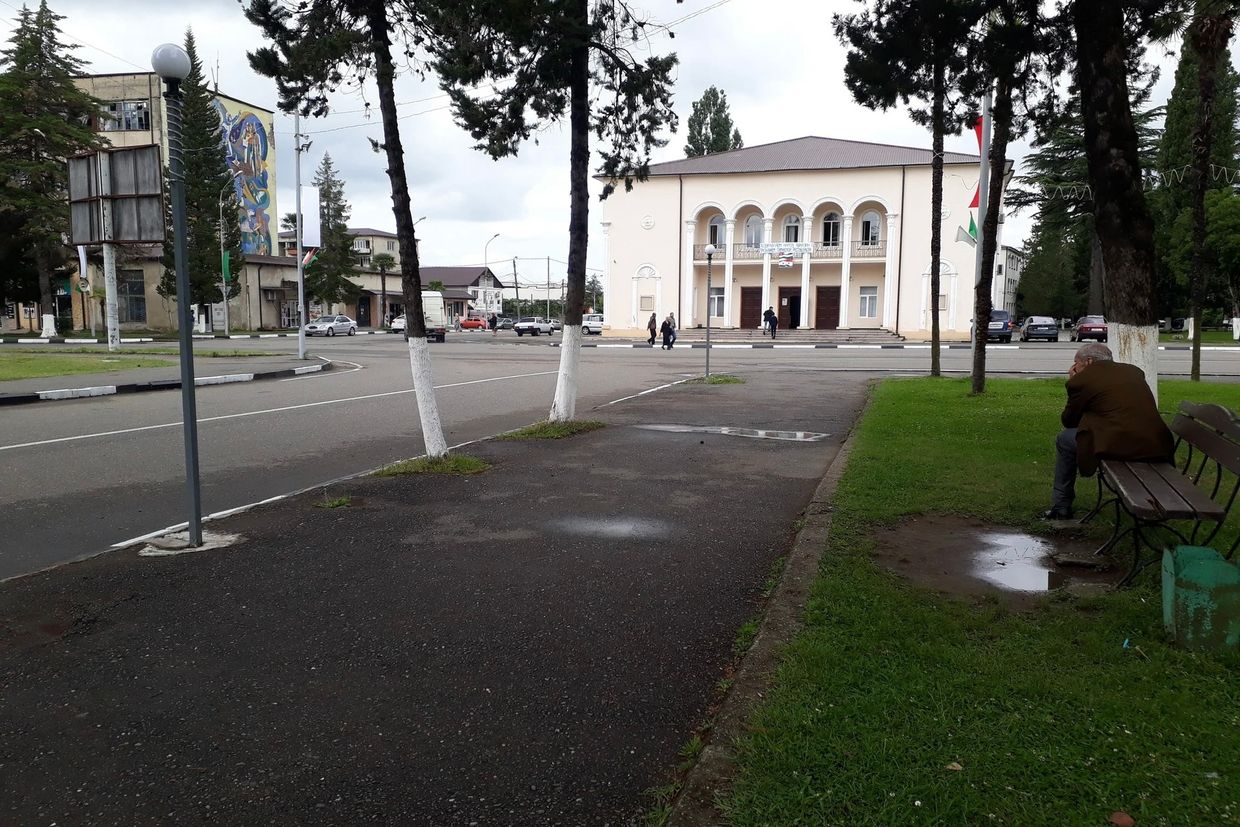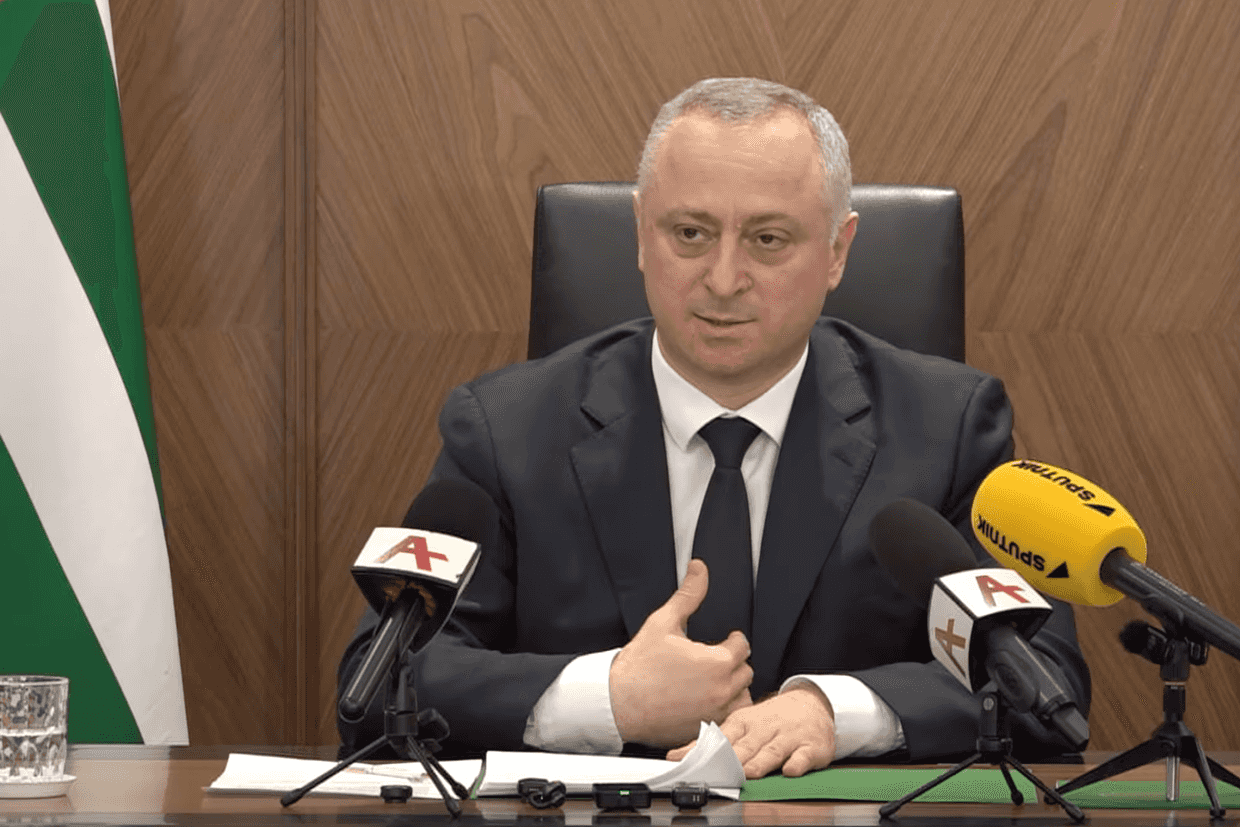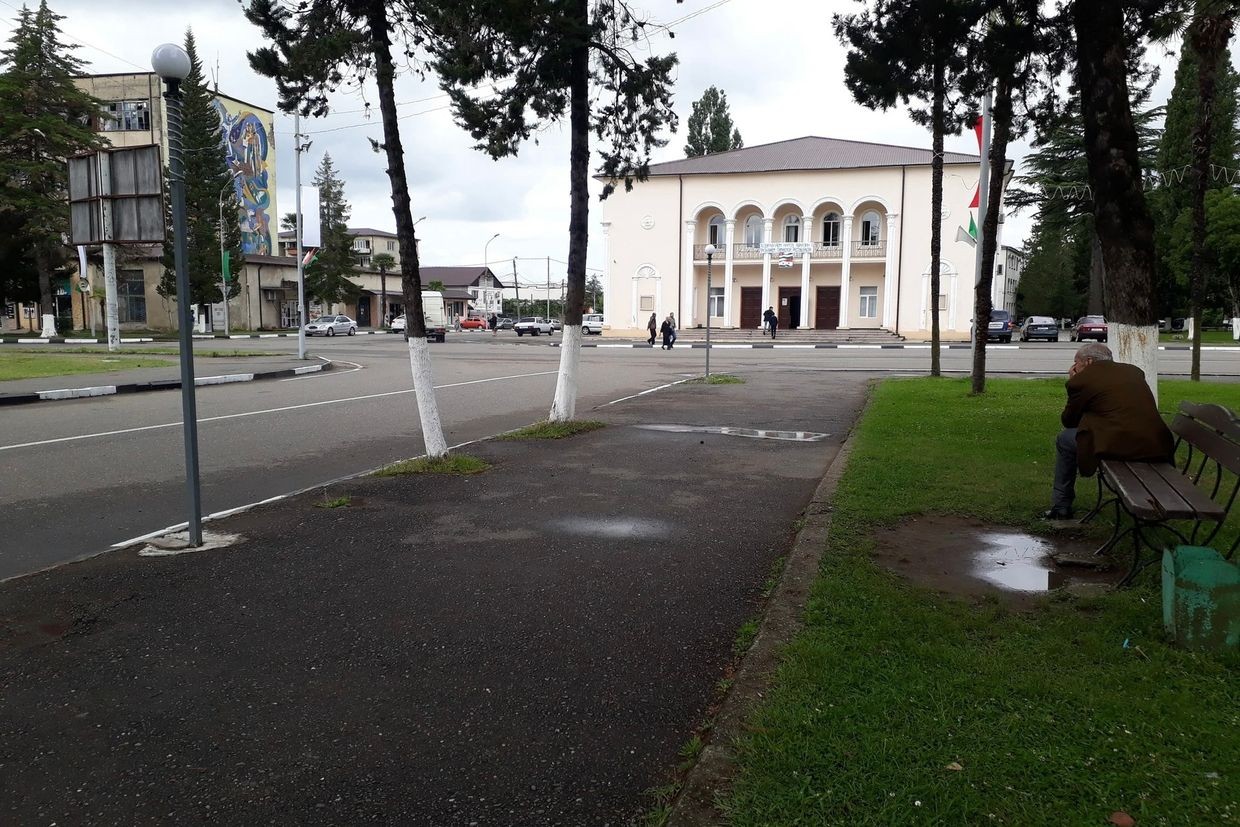
In a lengthy press briefing about issues faced by the Gali (Gal) district, the head of the district, Konstantin Piliya, said that over 2,000 people and 200 vehicles cross over to Georgia daily to transport a variety of goods.
Piliya said in a press conference that the list of exports includes agricultural produce, with the main cargo flowing to Georgia being hazelnuts.
Additionally, exports include spare parts of agricultural machinery and small-sized equipment and fuel and lubricants.
Piliya said on Tuesday that goods were carried as carry-on luggage and were exempt from customs duty, allowing local residents to earn money through retail trade and directly impacting the overall economic activity in the district. The authorities plan to bring the issue of possible further expansion of the list of permitted goods up for broad public discussion.
‘I am in favour of people being able to come and sell consumer goods without any problems. There is always an economic multiplier’, Piliya said. ‘We don’t want to become a dead-end district’.
The Gali district has a complex history of long-standing socioeconomic problems. It is not included in Abkhazia’s Investment Assistance Programme, forcing the local administration to rely on internal resources, its horizontal ties with Russian regions, and targeted government support.
It is entirely dependent on the operation of checkpoints; currently, only the central crossing on the Enguri (Ingur) River and its Hydroelectric Power Station are fully operational.
A cancelled free economic zone project
Prospects for a free economic zone in the Gali district, for which a large area was previously allocated, are currently unfulfilled. A special management company, which acquired the area in 2020 has yet to fulfill its obligations. No real production facilities were opened in the area, and no jobs were created.
During the downtime, the organisation accumulated a substantial land rent arrears to the local budget — almost ₽70 million ($980,000). Due to its failure to comply with the terms of the agreement, the authorities decided to completely scrap plans for the free economic zone.
The management company is currently challenging this decision in court, where the administration’s lawyers are presenting evidence of systematic notification of the structure regarding the violations.
‘I was also criticised: “You have an entire zone, you’re owed almost ₽70 million, and you’re not terminating it.” ’, Piliya told reporters. ‘Well, I didn’t, because I believed in the promises […] God forbid a third world war, what Singapore, what Dubai […] but nothing worked out, the terms were not met, and the President took the measure of annulling the entire zone. […] Of course, it would be good […] but no work has been done there’, Piliya said.
Infrastructure, medicine, and social issues
The district continues to experience high pressure on utility networks and medical infrastructure. The city’s water pipeline, built in 1963, is in critical condition. A major landslide and mudflow completely destroyed the 700mm diameter main pipe and washed out the access road. Currently, the district’s water supply is provided by a backup 500mm pipe, which is temporarily suspended by cables above the riverbed. The Capital Construction Department has already carried out blasting operations to clear the area. The stabilisation of the riverbed with concrete tetrapods is planned to begin at the end of June, after which the pipe will be laid into the foundation of the restored road.
The condition of the Sukhumi (Sukhum) city landfill, located in Gali, is also a serious concern.
‘Right now, the most important thing is that we would at least like to see our landfill fenced off […] Livestock enters and gets poisoned’, Piliya said. ‘The worst thing about this is that it’s located on agricultural land, and all of this ends up in the groundwater’.
Sukhumi pays for each cubic metre of waste transported to Gali — a plan it cannot afford to execute. Piliya said that a compromise solution was currently being discussed.
‘The mayor of Sukhum said: “I’m ready to pay you for this so we can clean it up ourselves”, But then we had to worry about the equipment itself. We need both an excavator and a bulldozer’, Piliya said.
The Gali Central District Hospital effectively functions as an inter-district centre. Local ambulance crews — eight in total, with two working per shift — also quickly respond to calls from the Tkvarcheli (Tkuarchal) and Ochamchira (Ochamchire) districts, reaching border villages in 10–15 minutes.
Piliya said that the centre has cardiology, neurology, traumatology, ophthalmology, and psychiatry departments. The lack of a freight elevator for transporting critically ill patients to the operating floors remains a pressing issue. According to Piliya, the administration has submitted a corresponding request to the government.
Since the Gali district does not receive funds from the Investment Programme, support is provided in the form of targeted subsidies from the government. For example, the government recently allocated funds for paving three of the most critical road sections (600, 350, and 450 metres), as well as for the purchase of tyres for the municipal subsidised bus fleet. Related structures are also involved in the restoration of destroyed structures: for example, the bridge between two villages in the district was quickly repaired with the assistance of the Border Directorate of the Russia’s Federal Security Service (FSB) and members of Gali’s City Hall.
Demographics and legal barriers
During the press briefing, Piliya touched on the district’s demographics, saying it was experiencing a general decline in population, reflected by a decline in the number of students enrolled in local schools
House-to-house surveys reveal a significant gap between official household register data and the situation on the ground. For example, in one village, of the 520 homes listed on paper, only 380 remain inhabited, with Piliya citing the departure of young people and people of working age to Georgia in pursuit of work.
At the same time, residents of Gali aged 40 and older, whose elderly parents have passed away, express a desire to return from Georgia to maintain their family homes and work the land.
However, their return faces severe legal and regulatory barriers, such as current legislation and strict internal regulations. These often prevent returning citizens from being promptly and legally registered and issued the necessary documents. Less complex instances are reviewed on a case-by-case basis by a special registration commission, which includes the head of the administration, the head of the passport service, and representatives of Abkhazia’s State Security Service.
Piliya emphasised the need to adjust the regulatory framework at the national level so that returning residents see prospects and have the legal status required for constructive work in the district.
Located along the River Inguri, the Gali district has a total population of around 30,000 people, according to 2023 census data. The vast majority, roughly 98%, are ethnic Georgians, representing the bulk of the Georgians who have remained in Abkhazia since the war.
For ease of reading, we choose not to use qualifiers such as ‘de facto’, ‘unrecognised’, or ‘partially recognised’ when discussing institutions or political positions within Abkhazia, Nagorno-Karabakh, and South Ossetia. This does not imply a position on their status.
 Lela Jobava